OPPO and realme Go Separate Ways: Which Brand Does OPPO Favor More?
 07/27 2026
 462
462
Editor: Liu Zhicheng
Reviewer: Xu Xu
Recently, OPPO has made a significant strategic adjustment.
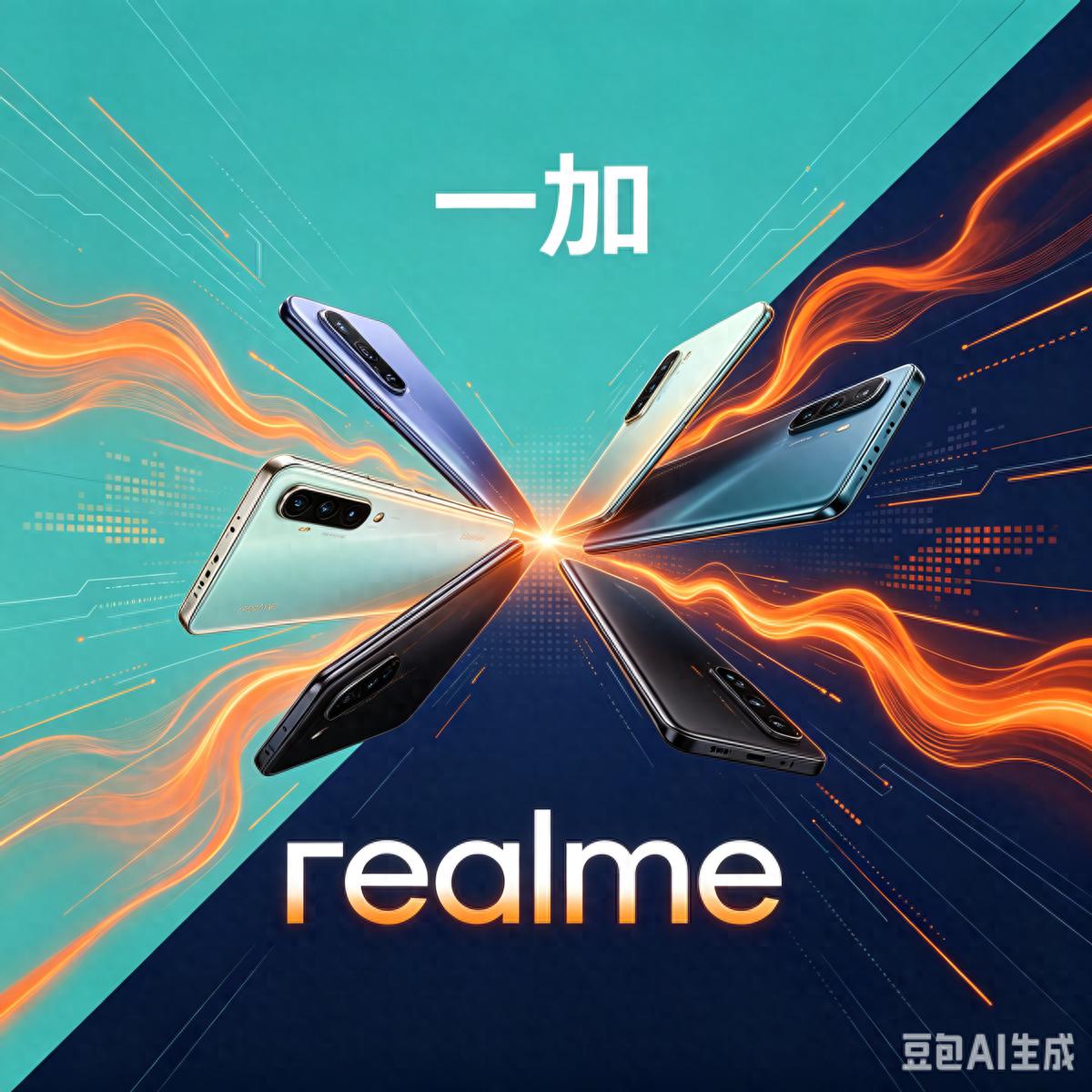
According to its newly defined global product strategy for sub-brands, realme (TrueMe) will now concentrate on overseas markets, with updates in the Chinese market temporarily halted. In contrast, OnePlus will primarily focus on the Chinese market, suspending new product releases in Europe and North America.
In terms of product positioning, both brands will shift their focus to the gaming and performance sectors.
This news has quickly sparked a range of discussions and speculations within and outside the industry. Some express regret, others remain skeptical and unsupportive, while still others choose to believe in and support the move...
However, from a business market perspective, this is already the optimal solution OPPO can provide.
After all, realme's current performance in the domestic market is mediocre, with greater potential lying in overseas markets. Conversely, OnePlus holds certain brand advantages in the domestic market. Therefore, advancing and retreating have become OPPO's inevitable choice for balanced development...
However, understanding the rationale is one thing; from realme's perspective, the situation might feel different.
The main issue is that realme and OnePlus have very similar brand and product positioning. Theoretically, OPPO could have chosen to support either one.
Although there is currently a gap in their domestic market shares, it should not be forgotten that realme only officially rejoined the OPPO system in January of this year. If OPPO were willing to give realme more time for integration and operation, it might not be impossible for realme to catch up with OnePlus's performance in the future...
But now, because OnePlus encountered setbacks earlier in overseas markets and returned sooner, OPPO has chosen to keep the less outstanding but established brand by its side and offer more support, while letting the more promising younger brand venture out and contribute to the family.
Complicating matters further, according to data from agencies like Counterpoint, in overseas markets where realme holds an advantage, such as India, OPPO has been competing with both OnePlus and realme on the same stage.
Now, OPPO has unified the product positioning of realme and OnePlus, only suspending OnePlus's development in Europe and North America...
So, frankly speaking, how does realme feel about this combination of moves?
Emotionally, will there be any subtle dynamics between the two sub-brands and the two OPPO veterans—Li Bingzhong and Liu Zuohu?
Did realme fail to outcompete OnePlus?
Undeniably, from a global planning perspective, OPPO's current strategic adjustment of the two sub-brands is indeed the optimal solution. However, the problem is that what is optimal on a macro level may not always be a satisfying answer on an individual micro level.
Take realme, for example. In terms of overseas market performance, realme smartphones currently have more growth potential than OnePlus.
Although both brands originated overseas, realme became the fastest smartphone brand globally to reach 100 million sales in just 37 months from its establishment in 2018 to 2021.
In 2023, it surpassed 200 million units, and by its seventh anniversary in August 2025, realme officially announced that its global cumulative sales had exceeded 300 million units.
These achievements are indeed impressive...
Moreover, taking the Indian market, where both brands have performed well, as an example, according to Counterpoint data, realme's brand shipment share reached 10% in 2025. Although this was a 1% decline from 2024, OPPO's brand share was only 13% during the same period, with an overall small gap.
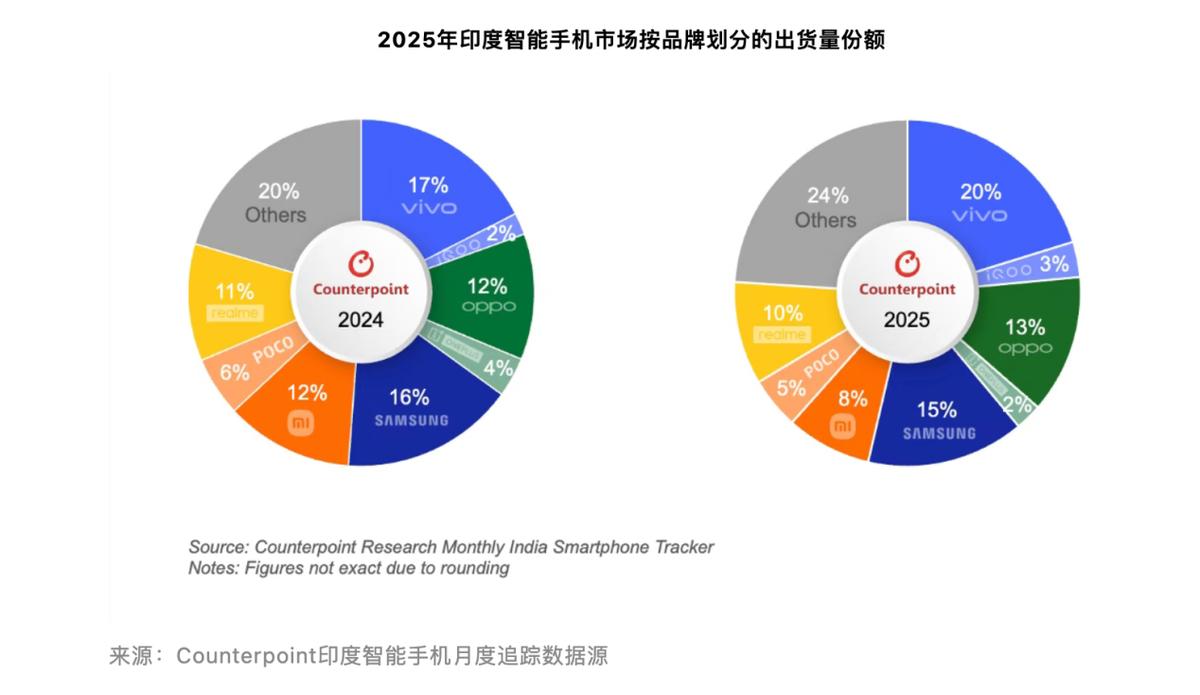
In comparison, OnePlus only accounted for 2%, showing a significant decline from 4% in 2024.
From this perspective, having realme refocus on overseas markets seems like a perfect choice to return to its comfort zone, right?
Actually, not necessarily.
On one hand, timing is crucial.
What time is it now? It's a time when the prices of core components like global memory and chips are soaring. Coupled with realme's past approach of offering "daring to leapfrog" cost-effectiveness, the brand now faces far more sensitive and heavy cost-profit pressures than usual.
In response, from Apple down to domestic brands like OPPO, vivo, Xiaomi, and Honor, all have announced price increases to cope with rising costs. But will the consumer market accept this?
IDC data shows that global smartphone shipments in the second quarter of 2026 declined by 6.7% year-on-year. Counterpoint puts the decline at 11%, marking the lowest second-quarter level since 2013.
As a result, in this round of structural contraction, Apple and Samsung remain steady by leveraging their high-end brand product advantages, while those struggling in the mid-to-low-end market, like OPPO, realme, and Xiaomi, are the ones truly suffering...
This also explains why OPPO unified the systems of its two major sub-brands in this brand adjustment?
Essentially, it's because the external market pressure is too great, and the room for trial and error overseas is constantly shrinking. Therefore, OPPO now needs to "reduce costs and increase efficiency," having its sub-brands join forces and support each other...
On the other hand, looking at the long term, even if realme overcomes this round of cost pressures, it cannot avoid an old problem:
Under the same positioning, same sector, and even the same target user group, how can it avoid internal friction with OnePlus?
This is not a groundless concern but is based on the precedent of OPPO, OnePlus, and realme competing against each other in the Indian market...
Furthermore, as the battle in emerging markets like India and Southeast Asia becomes more solidified, will OPPO push realme into the overseas stronghold of North America and Europe, which OnePlus and Liu Zuohu have painstakingly built over the years?
At that point, the "internal and external relationships" between the two sub-brands will inevitably face a more thorough reshuffle: will they support each other, compete against each other, or have OnePlus completely abandon its overseas dreams to fully support realme?
This may require OPPO to make a final choice.
However, following this logic, we can also see the other side of this adjustment's impact on OnePlus:
To some extent, the greater the market pressure on realme now, the most complex feelings may not be felt by realme's founder, Li Bingzhong, but rather by the seemingly more relaxed OnePlus and Liu Zuohu.
The reason is that OnePlus also rose from overseas markets and had very glorious overseas moments. In 2019, it ranked fourth in global high-end smartphone market share and even became the brand with the highest market share in the high-end smartphone market in India.
So, if it could stabilize, having OnePlus go overseas now would actually be a better choice for OPPO, enabling it to withstand pressure and move forward amid the memory price hike.
Unfortunately, OnePlus's influence began to decline later, and it returned to OPPO in 2021, embarking on a process of comprehensive localization in China...
As a result, OPPO's adjustment this time basically amounts to a final evaluation of the overseas market story told by OnePlus before.
As for OnePlus's performance in the domestic market, at first glance, it seems not bad—in November last year, Li Jie, President of OnePlus China, shared that as of now, OnePlus's brand market share has surpassed 3.3% for the first time. However, upon closer inspection, this achievement is hard to separate from OPPO's support.
An intuitive manifestation is that OPPO's official flagship store (Tmall) now has separate sections for OnePlus and realme, primarily to maximize product sales growth.
So, somewhat ironically: one sub-brand, while not performing outstandingly in the domestic market, has brought many surprises to OPPO in overseas markets; the other has not achieved much independently domestically, has not brought new surprises overseas, and even seems to be internally competing with its teammates...
Moreover, from the current strategic adjustment, if following the traditional route, it will be difficult for OnePlus to find new breakthrough opportunities domestically in the future, while realme may achieve greater growth potential overseas.
This means that while realme and OnePlus seem to have diverged in fate, in reality, Li Bingzhong has not lost, and Liu Zuohu has not won...
With the Advent of the AI Smartphone Era, Are OPPO and Others Choosing Offense and Defense?
As mentioned earlier, OPPO's adjustment of its sub-brands at this time is largely to reduce strategic internal friction in the domestic market and to diversify development risks brought by the chip price hike and the smartphone market winter.
However, to be honest, these are more like temporary fixes rather than fundamental solutions. To truly break through, the key is to find a deterministic growth path.
Currently, there are two directions in front of the entire smartphone industry:
One is to achieve brand premiumization, like Samsung, Apple, and Huawei now, which can rely on brand momentum and pricing flexibility to achieve share growth against the trend in the existing market.
But this path is not something OPPO and vivo can achieve in a short time, so it's somewhat like using distant water to relieve near thirst.
The other is to launch more valuable and innovative products, like how new energy smart driving cars have disrupted traditional fuel vehicles, or how Insta360 has opened up the panoramic drone sector, to stimulate and ignite traditional users' desire to upgrade their devices...
In the smartphone industry, the most imaginative product innovation point currently is AI, AI smartphones.
From the debut of the first-generation Doubao smartphone last year to the recent second-generation Doubao smartphone, StepFun's AI agent smartphone, and Honor's ROBOT Phone, all indicate that the era of AI smartphones has substantially begun.
Coincidentally, before this, the National Cyberspace Administration also announced filing information for seven providers of on-device generative artificial intelligence services, mainly involving Apple, Huawei, OPPO, vivo, Xiaomi, Samsung, and Nubia.
On one hand, new players in the AI era are making waves with their products, while traditional smartphone players are getting regulatory clearance. When viewed together, it's not hard to notice:
This filing announcement seems like a market signal that old players in the smartphone industry are both attacking and defending.
On one hand, the offensive aspect is not hard to understand. As the story of AI smartphones becomes clearer, whoever makes the first move may seize the initiative. Therefore, even without launching new AI products yet, Huawei, Xiaomi, OPPO, and vivo need to fight this marketing positioning battle in advance.
Especially for OPPO, missing out on the AI era ticket this time would be even more regrettable.
After all, it's unfortunate that in the previous wave of chip self-research, OPPO failed to persist, so it didn't build new foundational barriers and even consumed precious time windows amid strategic hesitation;
As for this wave of AI, it's a bit "early"—app data from Tianyancha shows that two years ago, OPPO's leader Chen Mingyong officially sounded the first gun for AI smartphones through an internal letter, announcing the establishment of an AI center and OPPO's commitment to popularizing AI smartphones that same year...
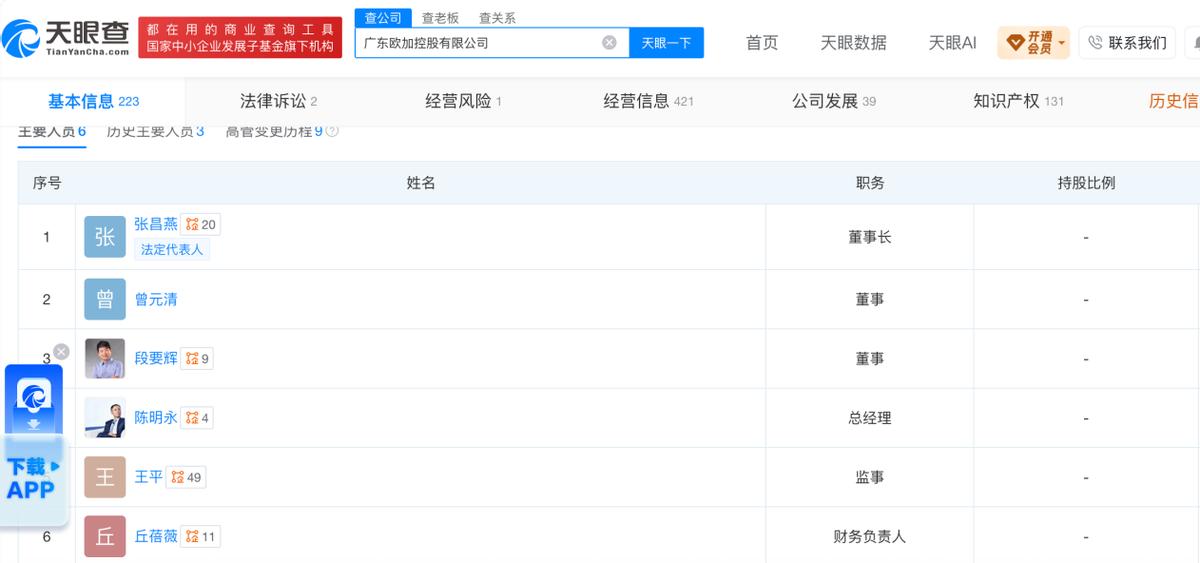
This market foresight deserves recognition, but being "early" also means the brand has to blaze its own trail and bear the cost of trial and error.
As everyone has seen, it wasn't until the debut of the Doubao smartphone last year that AI smartphones truly took shape...
So, returning to the present, we sincerely hope that OPPO will not repeat a third era of regret.
On the other hand, the defensive aspect is also easy to understand. Although in terms of market operations, none of the three AI smartphone brands have aggressively expanded their shipments this time, and except for Honor, the others are not mainstream smartphone players, on the strategic chessboard, winds rise from the ends of the grass, and waves form from the ripples.
Looking back at countless disruptive moments in past industries, the greatest threats never came from entanglement within the same sector but from enemies "not on the same map":
For example, what defeated instant noodles was not another instant noodle brand but food delivery platforms;
What defeated traditional cameras was not better film but smartphones;
And ten years ago, who could have imagined that two smartphone makers today could capture the entire automotive industry's attention?
This cross-border disruptive impact renders many competitions within the original sector irrelevant.
Like when the Doubao smartphone went viral last year, who was still enthusiastically discussing its imaging, screen, or processor? Users only cared about the new AI experiences and scenarios it brought.
Therefore, the disclosure of this filing information can be understood as not letting Doubao smartphones monopolize the spotlight or as a preemptive block against potential fourth, fifth, or sixth cross-border AI smartphone players in the future, erecting a warning sign that says, "There are many here, please give up"...
Otherwise, maybe today's Doubao smartphone hasn't disrupted the existing market landscape, but what about tomorrow's Qianwen smartphone, or the day after tomorrow's Yuanbao or Wenxin smartphone?
No one wants to gamble, and no one is willing to gamble.
However, fortunately, the AI smartphone era has just begun. Short-term wins and losses don't matter; long-term success belongs to those who can endure solitude and rise to the era's challenges.
Just as you can't find a new continent with an old map, OPPO and others are now using actions to chart their new course and direction.
And all future divergences will ultimately converge at a higher dimension...
-
![]()
Mercedes-Benz Halts Production of Electric CLA L in China Less Than a Year After Launch
-
![]()
Tesla: Building Cars Against the Odds, but AI Promises Remain Unfulfilled?
-
![]()
Shocking! 60 Car Models Fail to Reach Double-Digit Sales in Six Months
-
![]()
Fuel Vehicles, Once Deemed 'Unviable,' Are Making a Surprising Comeback
-
![]()
JAC Motors Ascends to High-End Market, Leaves Individual Investors in the Lurch
-
Under the Spotlight, Baidu Dazi Faces ‘Three Major Challenges’
-
![]()
Final Verdict: Put an End to Circulating Baseless Assertions - Fewer Than 100 New Car Models Introduced in the First Half of the Year
-
Aliyun Defends Its Market Dominance, Huawei Cloud Targets Public Sector and Enterprises, Tencent Cloud Secures Key Scenarios, Baidu Cloud Stakes Its Future on AI: Strategic Moves of the Four Cloud Tit