Fuel Vehicles, Once Deemed 'Unviable,' Are Making a Surprising Comeback
 07/27 2026
 367
367
Introduction
In the long term, amidst the high penetration of new energy vehicles, the market space for fuel vehicles is continually shrinking.
The first half of this year has been a rollercoaster ride for the fuel vehicle market.
At the start of the year, seven fuel vehicle models featured in the top ten list of domestic passenger car sales, suggesting that fuel vehicles still held a strong position. Notably, the Geely Boyue L secured the second spot with a monthly sales volume of 34,000 units, trailing only behind the Xiaomi YU7 and outperforming numerous new energy vehicles.
However, the market soon took a turn.
With the introduction of policies promoting new energy vehicle purchases, the competitiveness of electric vehicles surged, and the presence of fuel vehicles dwindled. By May, fuel vehicles had vanished from the top ten retail sales list for passenger vehicles, marking a new low for that period. This sparked a wave of discussions proclaiming that "fuel vehicles are truly unviable" and "the era of fuel vehicles is over," with pessimism about their future reaching a fever pitch.
Yet, looking at the automotive market results in June, it's premature to declare the end for fuel vehicles. According to the latest statistics from the China Passenger Car Association, in June, 17 fuel vehicle models exceeded monthly sales of 10,000 units, four more than in May. This included 13 joint-venture fuel vehicles and 4 domestic fuel vehicles, spanning various mainstream segments such as sedans and SUVs.
In particular, the Toyota Camry and Volkswagen Lavida, two classic fuel vehicle models, made a comeback to the top ten list of passenger car sales, injecting a dose of optimism into the sluggish fuel vehicle market and asserting that fuel vehicles have not exited the mainstream competitive arena.
01 Fuel Vehicles Reclaim Top Ten Sales Spot
The resurgence of fuel vehicle sales in June, defying market trends, was attributed to both market fluctuations and the strength of leading classic models, ending the embarrassing absence of fuel vehicles from the top ten in May.
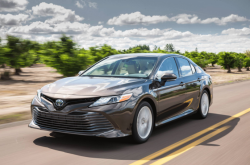
From specific sales data, the Toyota Camry ranked ninth overall with a monthly sales volume of 17,000 units, followed closely by the Volkswagen Lavida with 15,000 units, firmly establishing their dominance among fuel vehicles.
Of course, these figures represent the final monthly results for fuel vehicles in the first half of the year. However, reviewing the trend of fuel vehicle sales in the first half of 2026, this performance is neither the norm nor the best or worst.
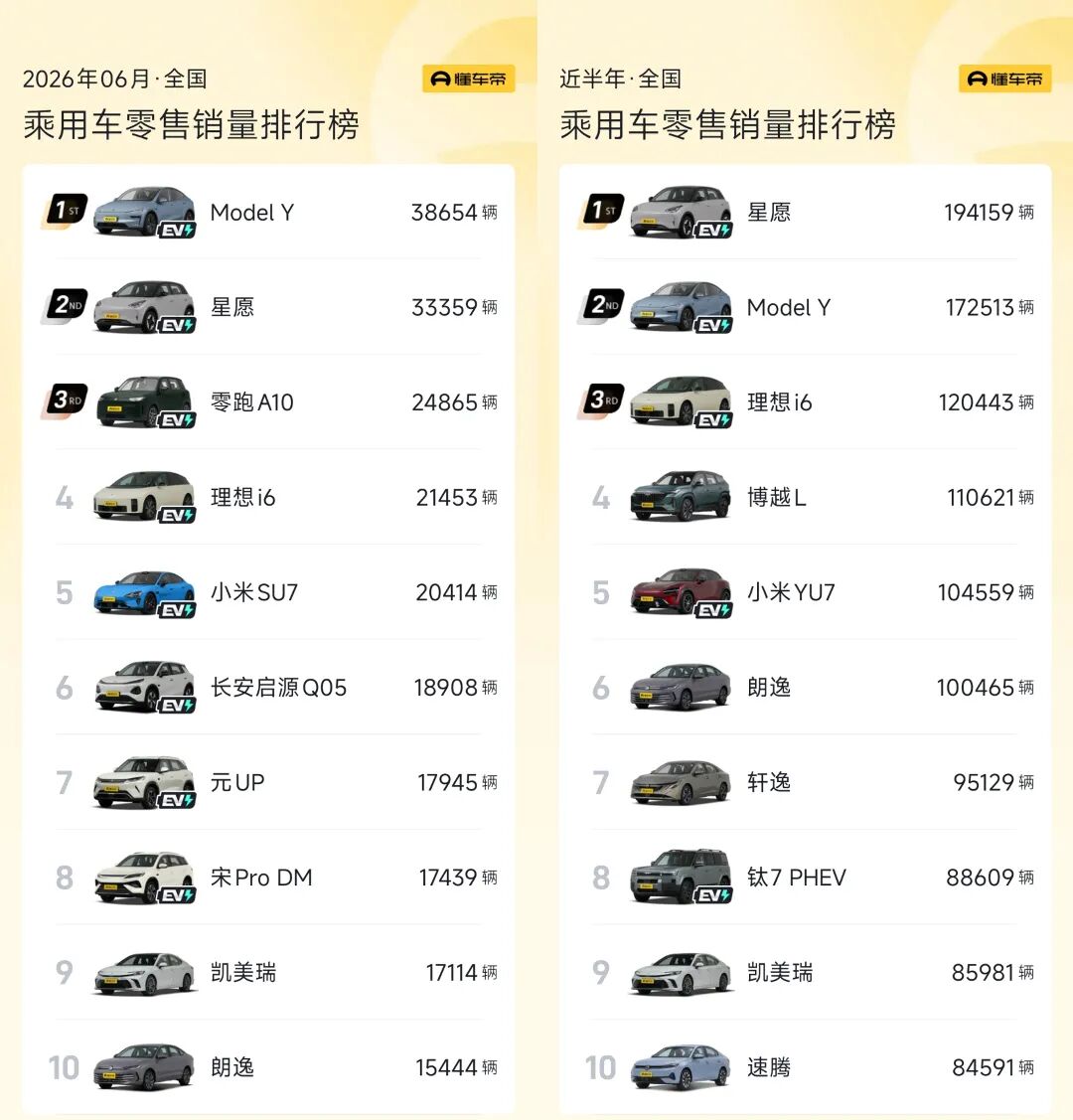
The best performance was at the beginning of the year when fuel vehicles occupied seven of the top ten spots on the passenger car sales list. By March, there were still five fuel vehicle models in the top ten, accounting for half. In April, only the Geely Bin Yue managed to hold onto a top position among fuel vehicles. By May, there was a complete "wipeout," with no fuel vehicle models making it into the top ten.
The decline in fuel vehicle sales was evident, prompting many to exclaim that "fuel vehicles are unviable."
Until June, when many fuel vehicles experienced a temporary rebound in sales.
Focusing on the sedan segment, the return of the Camry and Lavida to the list was not unexpected. Both models are market benchmarks with deep-rooted popularity. The Camry is a global benchmark for mid-size sedans, while the Lavida is a perennial favorite among domestic family sedans.
In the sedan sales rankings for June, both models ranked in the top five, outperforming popular new energy models such as the Tesla Model 3, XPeng MONA M03, BYD Qin PLUS, and Dolphin in terms of sales. This data underscores that in the market for essential family sedans, fuel vehicles still possess strong market competitiveness and have not been completely supplanted by new energy vehicles.
In the long term, both models have a solid market foundation.
In the first half of the year, the Camry consistently ranked in the top three for B-class car sales, alongside the Volkswagen Passat and Magotan, firmly maintaining the foundation of joint-venture mid-size fuel sedans. Between 2010 and 2019, the Lavida won the annual sales championship multiple times. However, in the past two years, its market position has been gradually eroded by new energy models such as the BYD Song family and Tesla Model 3 under the impact of electrification.
Besides these two benchmark sedans, joint-venture fuel SUVs and mid-size sedans also witnessed a collective recovery.
The Volkswagen brand emerged as the core pillar of joint-venture fuel vehicles, with five models—Lavida, Passat, Magotan, Tiguan L, and Tayron—each exceeding monthly sales of 10,000 units in June. Among them, the Passat, Magotan, and Tiguan L maintained stable monthly sales of around 12,000 units.
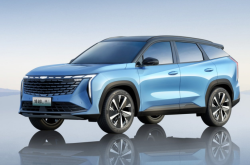
On the other hand, domestic brand fuel vehicles showcased overwhelming advantages in the SUV segment. The Geely Xing Yue L and Boyue L, two compact SUVs, ranked third and fourth in fuel vehicle sales, while the Changan CS75 PLUS also achieved stable output with monthly sales exceeding 10,000 units. The market performance of domestic fuel SUVs far surpassed that of their joint-venture counterparts in the same segment.
02 What Are the Favorable Factors?
The resurgence of fuel vehicle sales in June was the result of multiple short-term favorable factors and the empowerment of long-term brand accumulation. However, this "recovery" is not indicative of an industry reversal, as the long-term trend of fuel vehicle decline remains unchanged.
The primary driving force behind the recovery stemmed from the reduction in fuel costs due to falling oil prices. According to domestic refined oil price adjustment records, oil prices underwent two rounds of adjustments in June, with the cumulative price of 92-octane gasoline dropping by about 0.8 yuan per liter, bringing the retail price back to the "7-yuan era." This significant drop in oil prices alleviated consumers' concerns about fuel costs.
For users, the daily commuting and long-distance travel costs for fuel vehicles and hybrid electric vehicles have significantly decreased. Potential consumers who had been hesitant due to high oil prices quickly released their purchase intentions, directly driving up terminal sales of family fuel vehicles. For instance, Toyota's hybrid electric models, which combine the convenience of refueling fuel vehicles with low fuel consumption, became one of the beneficiaries during the period of falling oil prices.
Secondly, model endorsements and the accumulation of leading brands became the core confidence for fuel vehicles to stabilize their market position.
Ultimately, the fuel vehicle models that recovered in June were mostly long-standing benchmark products that had been tested by the market over time. The Camry has been deeply entrenched in the mid-size sedan market for years, with quality stability, resale value, and fault rates all ranking at the top of the industry. The Lavida precisely meets the essential needs of family transportation, with its cost-effectiveness and durability widely recognized by consumers.
From a brand perspective, the current fuel vehicle market is primarily supported by two major joint-venture brands: Volkswagen and Toyota. Multiple models from Toyota, including the Camry, RAV4, and Wildlander, each exceeded monthly sales of 10,000 units in June, becoming the sole sales pillar for Japanese fuel vehicles, while competitors like the Accord and Altima saw significant drops in sales. Volkswagen, on the other hand, dominated multiple best-selling positions for mainstream sedans and SUVs with its comprehensive product lineup.
The ability of these two brands to thrive against the odds in the "winter" of fuel vehicles is largely due to their deep brand reputation, solid technical reserves, complete product matrices, and precise pricing strategies that align with the family market.
At the same time, the industry practice of automakers rushing to meet year-end sales targets and clearing inventory in June further amplified the recovery effect.
As the closing point for first-half sales, major automakers increased their terminal discounts, with prices for many mainstream fuel vehicles hitting bottom. Models like the Camry and Lavida saw their terminal discounts maximized, significantly lowering the entry threshold for joint-venture B-class and A+-class sedans. The ultra-high cost-effectiveness attracted a large number of first-time buyers and replacement users.
However, behind the lively sales data lies the inevitable industry dilemma for fuel vehicles.
According to data from the China Passenger Car Association, overall domestic fuel vehicle sales in June were approximately 600,000 units, a significant year-on-year decline of 39%, with the overall industry downturn remaining unchanged. More detailed data further highlights the market's harshness: among the more than ten best-selling fuel vehicle models in June, only the Camry achieved positive year-on-year growth, while all other models experienced year-on-year declines.
This indicates that the recovery of fuel vehicle sales is still a short-term phenomenon. The market dividends are highly concentrated among leading benchmark models from Volkswagen and Toyota, while small and medium-sized joint-venture brands and marginalized fuel vehicle models continue to lose market share.
In the long term, amidst the high penetration of new energy, the market space for fuel vehicles continues to be compressed. This sales rebound in June does not represent a reversal of the industry trend. In the future, fuel vehicles will continue to exhibit a differentiated pattern where "the top players thrive while the tailenders are eliminated." New energy vehicles will continue to capture more market share from fuel vehicles and eventually find a new equilibrium point.
-
![]()
Used Cars Step into the Limelight Alongside New Cars: What Does This Trend Indicate?
-
![]()
After 20 Million Vehicles, How Can Chery Conquer the 'Brand Value' Challenge?
-
![]()
Xiaomi Pengcheng Set to Unveil Two New Models at Launch Event!
-
![]()
Can Beijing Hyundai Make a Comeback?
-
![]()
Still Thrivings: Top Fuel-Powered Cars with Over 10,000 Sales in June
-
![]()
Surprise! 17 Fuel-Powered Vehicles Surpass 10,000 Units in Sales for June
-
![]()
Mercedes-Benz Halts Production of Electric CLA L in China Less Than a Year After Launch
-
![]()
China's Top 10 Provincial Economies: A Major Reshuffle Underway