Mercedes-Benz Halts Production of Electric CLA L in China Less Than a Year After Launch
 07/27 2026
 357
357
German media outlets have reported that Mercedes-Benz has temporarily ceased production of the electric CLA L at its Beijing Benz facility. While Mercedes-Benz has yet to officially confirm this development, the news has already ignited widespread debate within the automotive industry. 
The all-new Mercedes-Benz electric CLA L, which made its official debut in November of last year, is a long-wheelbase electric sedan tailored specifically for the Chinese market. Given the longstanding preference among Chinese consumers for long-wheelbase passenger vehicles, Mercedes-Benz's strategy was designed to precisely cater to local tastes and secure a foothold in the burgeoning luxury electric vehicle segment. However, the reality has been far from favorable for Mercedes-Benz, as the model's market performance has fallen drastically short of expectations. Data reveals that the all-new Mercedes-Benz electric CLA L recorded zero sales for two consecutive months, from December of last year to January of this year. In February, only 21 units were sold, followed by a brief surge to 358 units in March. Sales then plummeted to 52 units in April, rebounded slightly to 161 units in May, and dropped again to 35 units in June. With just 627 units delivered in the first half of the year, the model's poor market showing has become the primary reason behind Mercedes-Benz's decision to suspend production. 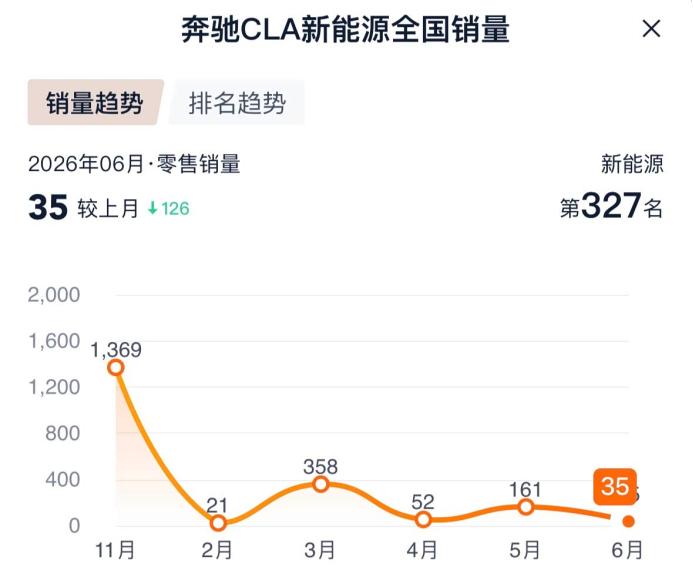
In truth, the all-new Mercedes-Benz electric CLA L's lackluster performance can be directly attributed to its pricing strategy. Many consumers feel that the car's price is excessively high and that its cost-effectiveness fails to resonate with the market. Some observers have noted that, amid the intense price wars currently raging in China's domestic new energy vehicle market, Mercedes-Benz's failure to adjust its pricing strategy has made it difficult to stimulate sales, even with the allure of a luxury brand. A deeper underlying issue lies in Mercedes-Benz's lagging efforts in electrification, which have hindered its ability to establish a strong presence in the new energy sector. As a luxury brand with a storied century-long history, Mercedes-Benz's technical prowess, amassed during the era of internal combustion engine vehicles, has not seamlessly translated into consumer trust in the new energy market. Previously launched models converted from gasoline to electric power have generally suffered from shortcomings such as inferior range performance compared to local competitors, suboptimal spatial layouts for pure electric platforms, and outdated intelligent configurations that lag a generation behind. These factors have made it challenging for Mercedes-Benz to gain recognition from domestic new energy consumers and to forge a distinct brand identity in the ongoing electrification race. 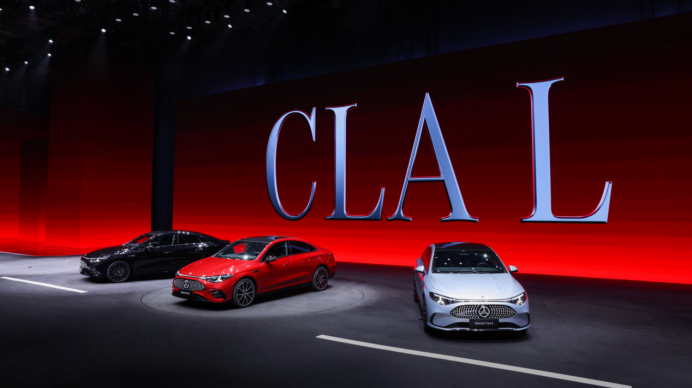
In stark contrast, local new energy brands such as NIO, Li Auto, and Seres have emerged as the dominant players in China's current new energy vehicle market, thanks to their differentiated product positioning, cutting-edge intelligent features, and pricing strategies that align with market expectations. NIO, in particular, has distinguished itself, with its monthly sales in May of this year surpassing the respective deliveries of Audi, BMW, and Mercedes-Benz in China. In June, NIO's average transaction price rose to 443,000 yuan, surpassing the respective brand averages of BBA in China. The ascent of both new and traditional automakers has placed Mercedes-Benz, a brand with deep roots in the Chinese market, under unprecedented competitive pressure. 
As the first truly "volume-driven" electric vehicle launched by Mercedes-Benz in the Chinese market, the all-new Mercedes-Benz electric CLA L's poor performance serves as a stark wake-up call for the brand's electrification transformation. With the competitive landscape in China's automotive market shifting from "brand premium" to "technological experience," consumers are no longer willing to pay a premium simply for a century-old brand name. Instead, they place greater emphasis on core technologies, intelligence levels, and overall product value. Foreign luxury brands that once relied on their storied brand legacies to maintain their market positions can no longer succeed based solely on past achievements. (Image sourced from the internet, removed if infringing)
-
![]()
Used Cars Step into the Limelight Alongside New Cars: What Does This Trend Indicate?
-
![]()
After 20 Million Vehicles, How Can Chery Conquer the 'Brand Value' Challenge?
-
![]()
Xiaomi Pengcheng Set to Unveil Two New Models at Launch Event!
-
![]()
Can Beijing Hyundai Make a Comeback?
-
![]()
Still Thrivings: Top Fuel-Powered Cars with Over 10,000 Sales in June
-
![]()
Surprise! 17 Fuel-Powered Vehicles Surpass 10,000 Units in Sales for June
-
![]()
Mercedes-Benz Halts Production of Electric CLA L in China Less Than a Year After Launch
-
![]()
China's Top 10 Provincial Economies: A Major Reshuffle Underway