Qualcomm: Can the Waning AI Boom Lift Phones Out of the Doldrums?
 08/03 2026
 513
513
On the morning of July 30, 2026, Beijing time, after the market closed, Qualcomm (QCOM.O) unveiled its financial results for the third quarter of FY2026 (which concluded in June 2026). Here are the key highlights:
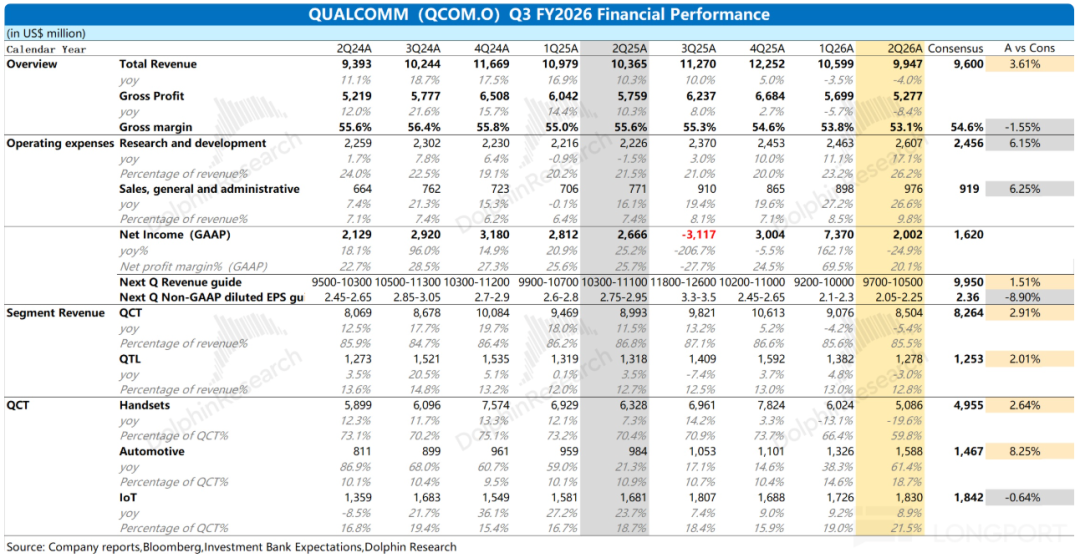
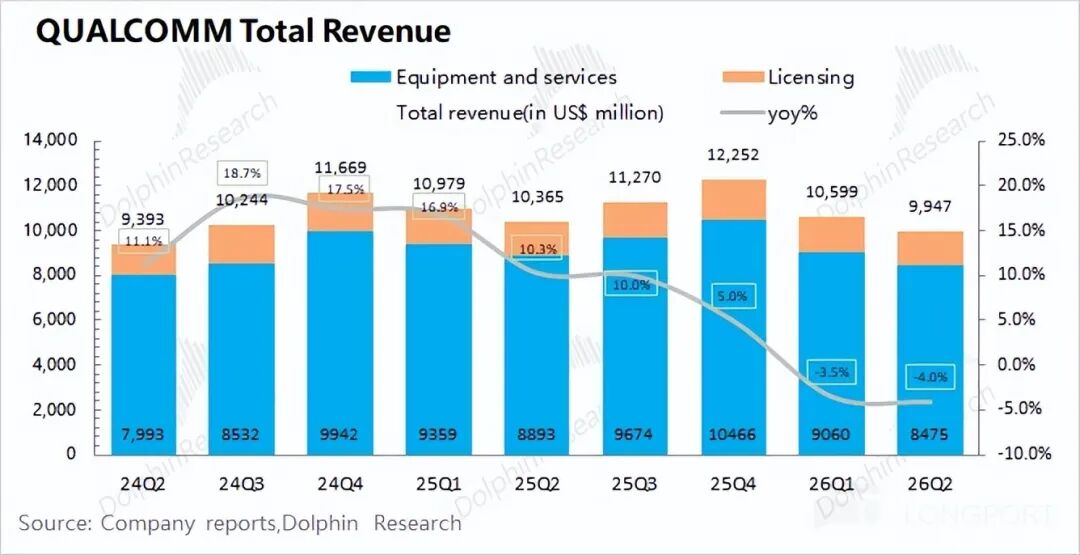
1. Core Data: Qualcomm reported quarterly revenue of $9.95 billion, a 4% year-over-year decrease but surpassing market expectations of $9.6 billion. Despite notable growth in the automotive sector, the decline in the phone business weighed on overall revenue.
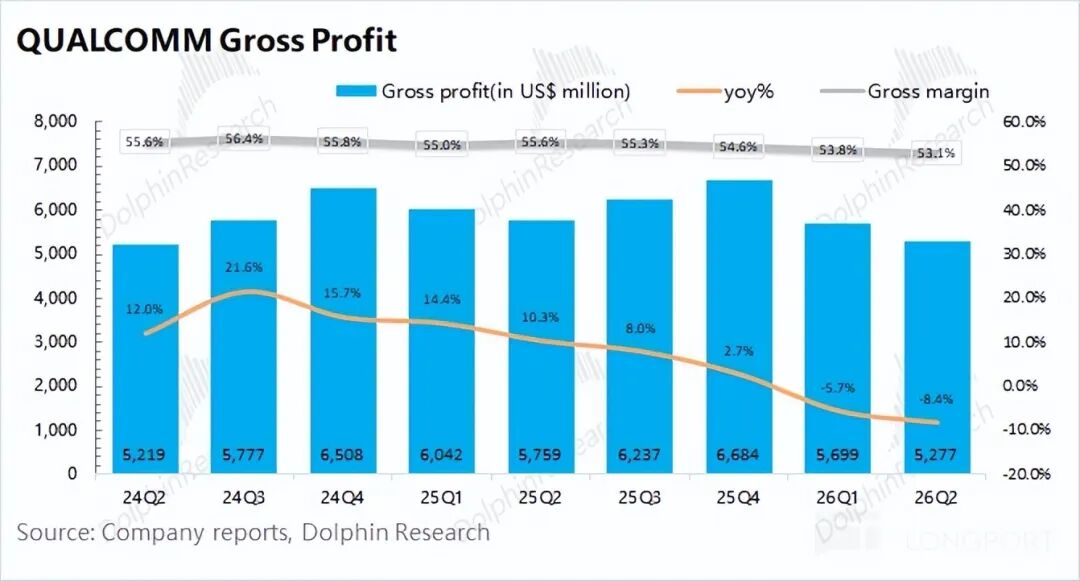
The company's gross margin for the quarter stood at 53.1%, a 2.5 percentage point drop year over year and below market expectations of 54.6%. Rising costs for wafer fabrication, packaging, testing, advanced packaging, memory, and other materials exerted significant pressure on the gross margin.
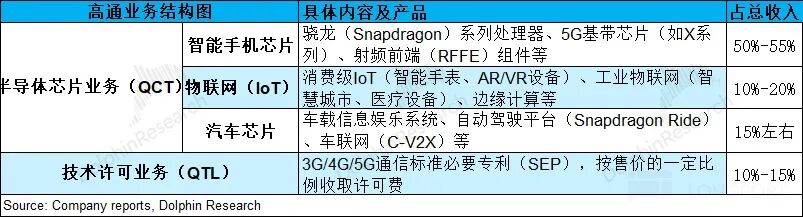
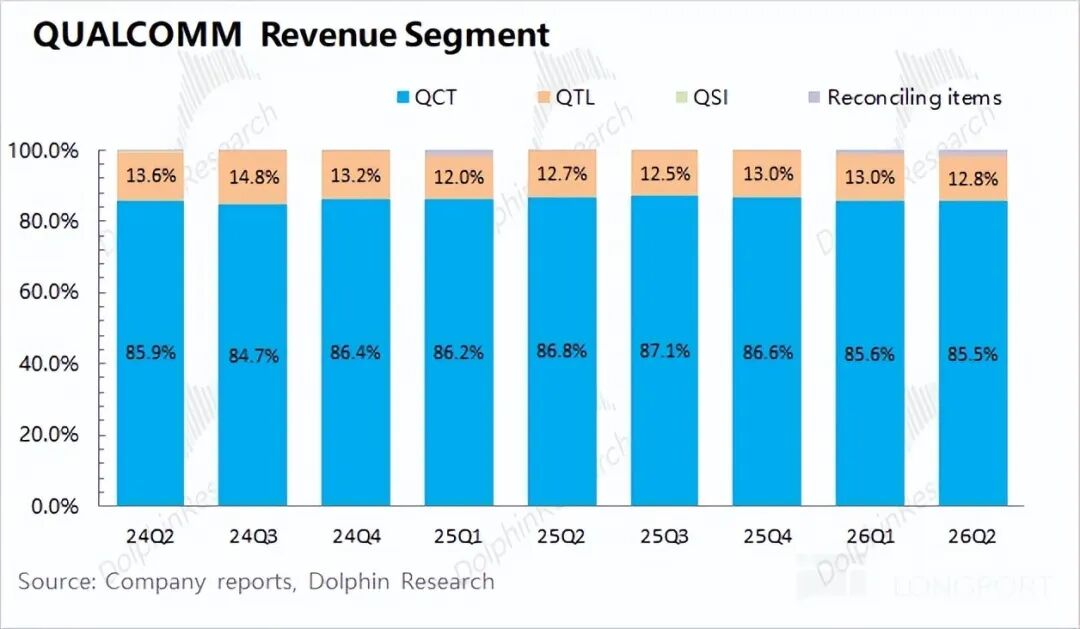
2. Specific Business Performance: Qualcomm's ($QCOM.US$) business is segmented into two main areas: the semiconductor chip business (QCT) and the technology licensing business (QTL), with the semiconductor chip business being the primary revenue driver, accounting for over 80%.
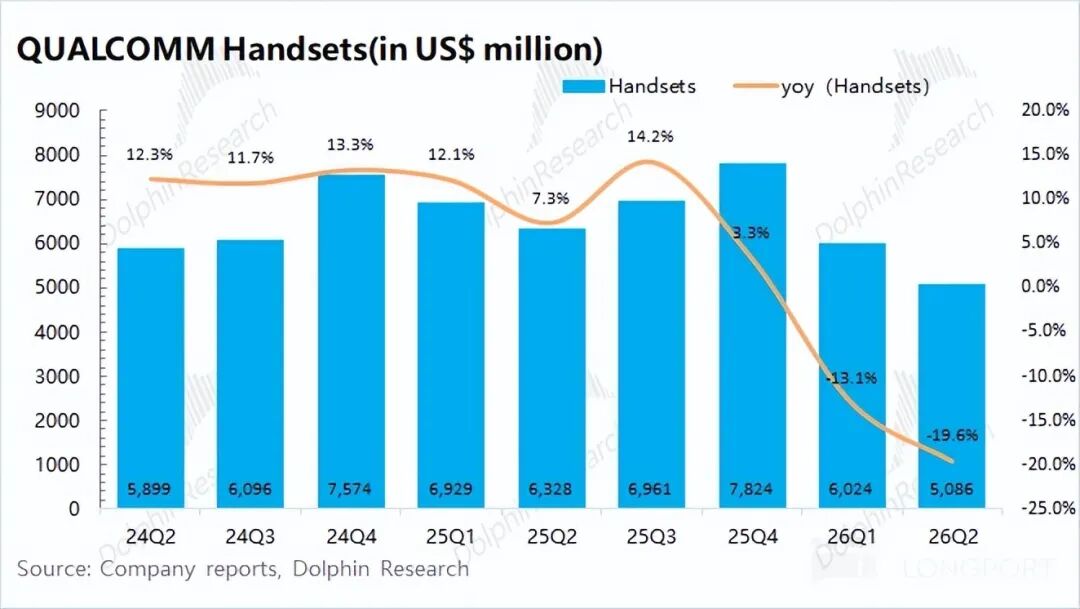
Within the semiconductor chip business: ① Phone business revenue reached $5.09 billion this quarter, a 19.6% year-over-year decrease. The downturn was influenced by two main factors: industry-wide, phone shipments (excluding Apple) fell by 11% this quarter; internally, the high-end model mix weakened, with manufacturers opting for previous-generation platforms to reduce costs.
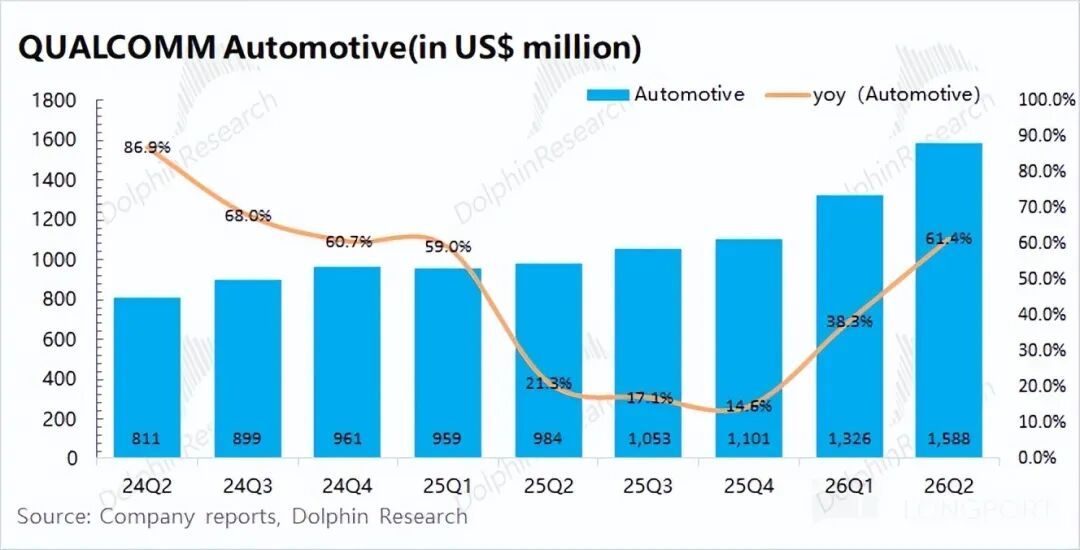
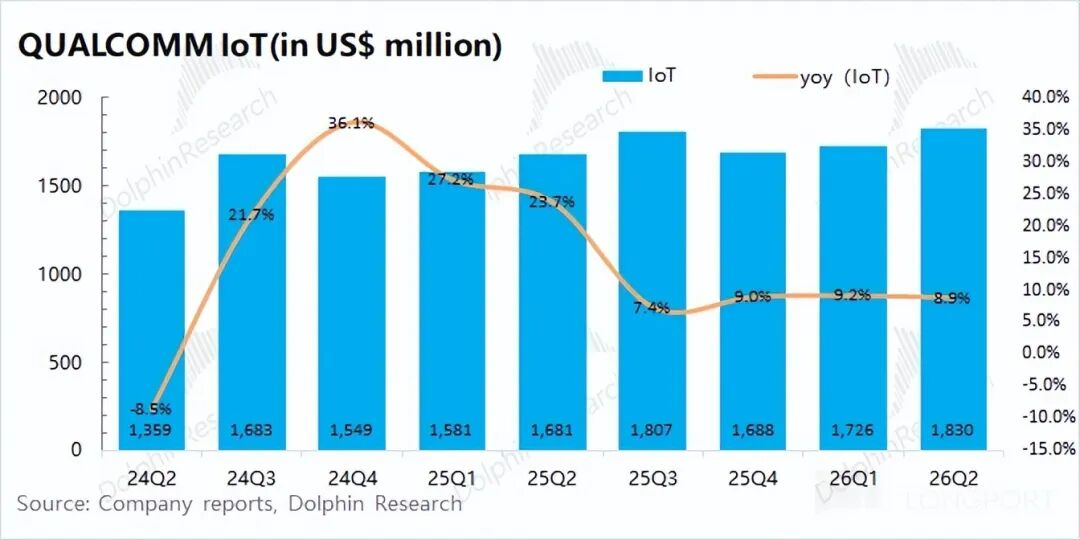
② Automotive business revenue soared to $1.59 billion, a 61% year-over-year increase, fueled by higher shipments of the fourth-generation Snapdragon Digital Cockpit. The company's fifth-generation Snapdragon Digital Chassis is set to ramp up in September, significantly boosting the value per vehicle. ③ IoT business revenue grew by 9% year over year to $1.83 billion, driven by demand for consumer and industrial-grade products.
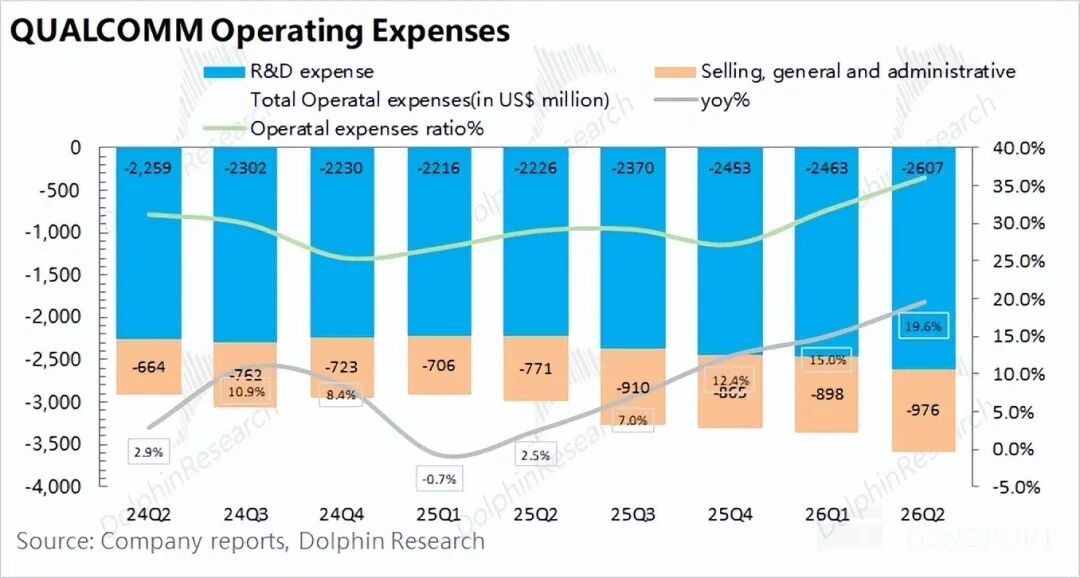
3. Operating Expenses: The company's core operating expenses rose to approximately $3.6 billion, with R&D expenses climbing to $2.6 billion this quarter and quarterly sales expenses reaching $980 million.
The company reported a net profit of $2 billion for the quarter, following the release of deferred tax asset valuation allowances (approximately $5.7 billion) in the previous quarter. From an operational standpoint, the core operating profit for the quarter was $1.63 billion, a 41% year-over-year decrease, primarily due to the decline in gross margin and increased expenses.
4. Next Quarter Guidance: Qualcomm anticipates revenue of $9.7-10.5 billion for the fourth quarter of FY2026, in line with market expectations of $9.95 billion. The company expects Non-GAAP earnings per share of $2.05-2.25 for the next quarter, below market expectations of $2.36.
Dolphin Research's Overall Perspective: Memory Prices Drag Down Phones, Data Center "Dream" Awaits Realization
Qualcomm's financial results this time around remain lackluster. Although revenue met market expectations, it still showed a decline. The gross margin continued to slide, primarily due to rising memory prices and weak demand, leading to increased costs.
Looking ahead to the next quarter, the company expects revenue of $9.7-10.5 billion, showing no clear signs of recovery. Earnings per share (non-GAAP) are projected to be $2.05-2.25, below market expectations of $2.36. Demand for end-market devices such as phones remains sluggish, while rising memory prices continue to pressure the company's costs.
Amid lackluster performance in traditional core markets, the company is striving to make breakthroughs in the data center sector. It will focus on four areas: custom chips, commercial CPUs, AI accelerators, and connectivity products. These initiatives once boosted the company's stock price to over $250. However, as market concerns about the sustainability of AI capital expenditures grow, the stock price has fallen back below $160, essentially erasing the gains from the data center business.
Beyond this financial report, the market is focusing on the following aspects of Qualcomm:
1) Traditional Areas: Core Markets Under Memory Pressure
The phone business is the largest segment of Qualcomm's operations, accounting for more than half. With the overall phone market performing poorly, it has significantly pressured the company's performance. Global phone shipments remained at 290 million units this quarter, a 6% year-over-year decrease.
The phone market is divided into two main camps: Apple and Android. This quarter, Apple's phone shipments increased by nearly 20% year over year. In contrast, shipments from the remaining Android camp declined by 11% year over year, directly impacting Qualcomm's phone business performance.
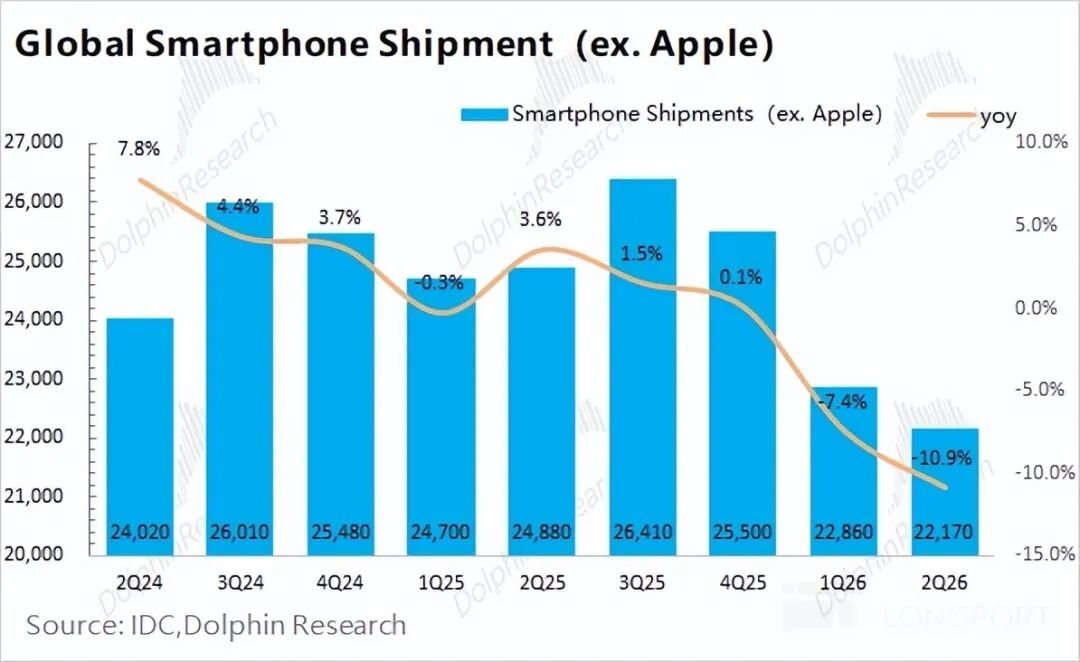
The company expects phone business revenue of around $5.2 billion next quarter, a roughly 25% year-over-year decrease, with sequential growth in Android partially offset by a decline in Apple product revenue (the second half is traditionally a peak season, with seasonal recovery expected).
Recently, the rate of memory price increases has begun to slow. Judging from the refusal of manufacturers like OPPO and VIVO to accept memory price hikes, the "surging memory prices" have already caused market dissatisfaction. If the memory cycle declines subsequently, it is expected to alleviate pressure on the company's traditional core markets.
2) AI Areas: Edge AI and Data Centers as Potential Growth Markets
Amid sluggish traditional markets, the company is also striving to make inroads in the AI sector, hoping to achieve new breakthroughs.
a) Edge AI: The company views edge AI as a core component of its Physical AI strategy, encompassing all end devices such as smartphones, PCs, automobiles, XR, robots, and industrial IoT, with a presence in each area.
The two main areas include: ① The potential replacement cycle driven by AI Phones will see AI Agents become the "new interface" for smartphones. ② The company has launched the Snapdragon C platform (for Windows laptops) in the AI PC sector, with core advantages including the Oryon CPU, low-power AI inference, and heterogeneous computing (CPU+GPU+NPU collaboration, supporting edge AI Agent operation).
b) AI Data Centers: Qualcomm ultimately could not resist entering the main AI arena, which is also the company's most high-profile strategic plan in the AI sector.
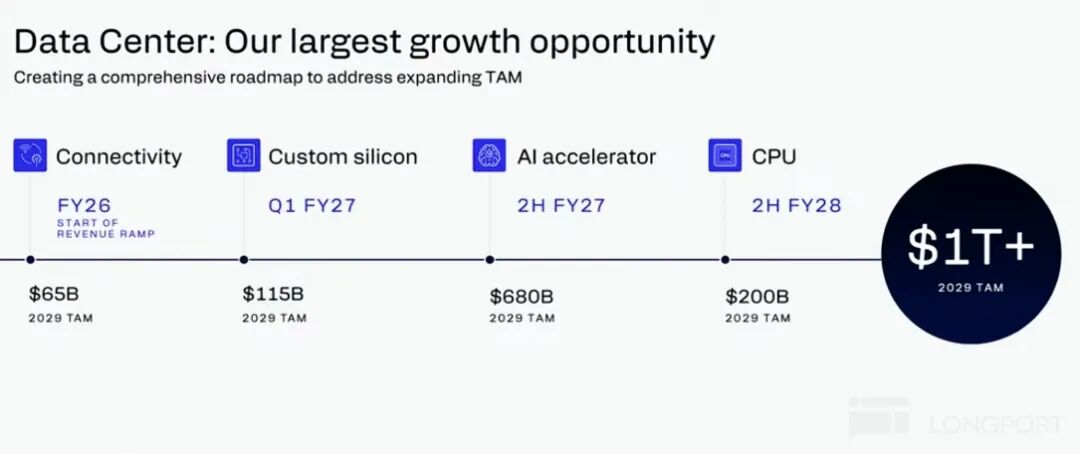
The company disclosed at its Investor Day on June 24, 2026, that Qualcomm's AI data center strategy will encompass four major product lines:
① AI Accelerator (HBC): Microsoft has confirmed multi-generation collaboration. Qualcomm's core differentiating technology achieves Processing Near Memory through LPDDR5X (vs. HBM), optimized for the "memory capacity-intensive" workloads of AI inference.
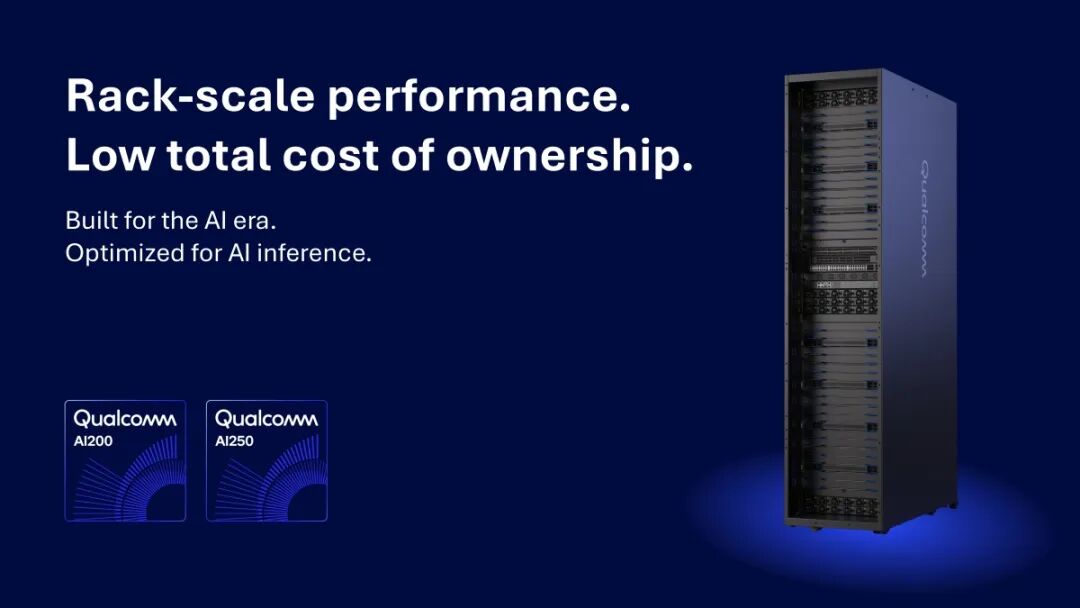
The AI200 has begun mass production ramp-up, with the next-generation AI250 expected to sample in 2027. The subsequent AI300 will be based on UALink and ESUN for Scale-up network interconnection, with effective bandwidth 54 times that of AI200.
② Commercial CPU (Dragonfly C1000): Meta has confirmed multi-generation collaboration. This is primarily based on Qualcomm's Oryon CPU architecture in the smartphone and PC sectors, which the company has extended to data centers. Positioned as an "Agentic CPU," it is specifically designed for CPU-intensive workloads such as agent orchestration, multi-step reasoning, and tool invocation.
③ Custom Silicon Business: Two hyperscale customers confirmed (each contributing over $1 billion in FY2027). This is based on the capabilities acquired through the acquisitions of Alphawave Semi (SerDes, Die-to-Die, PCIe/CXL, HBM PHY) and Ventana (Veyron V2 RISC-V CPU), primarily providing custom AI chip (XPU) design services for hyperscale customers.
④ Connectivity Business: First hyperscale customer secured. Based on Alphawave's IP, providing 800G/1.6T optical modules, AOC, AEC, and other products. The company is currently producing 800G LR2 modules, 800G optical modules/AOC/AEC, with 1.6T optical modules/AOC/AEC expected to launch in 2026-2027.
Previously buoyed by AI hype, the company's foray into the AI data center sector once pushed its stock price above $250. Now, amid concerns over AI capital expenditures, the stock price has fallen back to around $160, erasing the growth expectations for the data center business.
Although the company estimates the market size for the AI data center business at $1 trillion, the company's data center business has not yet contributed significant revenue. Returning to the company's traditional business, with sluggish end-market devices such as phones, the company's current PE remains relatively high.
Regarding the data center business, although company management has set a revenue target of $15 billion for FY2029, the focus should be on relatively near-term performance. Combined with the company's target of $5 billion in data center revenue for FY2027, this is expected to contribute $1.2 billion in operating profit (referencing the company's OPM).
In the current fragile market environment, it is more important to find a relatively safe bottom range for Qualcomm. From the perspective of traditional business, a further decline in the company's stock price would be more prudent. Of course, this would effectively treat the company's data center business as "an option."
If the company's FY2027 targets are achieved, it will inject valuation expectations for the data center segment into the company.
Below are relevant data charts from Dolphin Research regarding Qualcomm's financial results:
- END -
// Reprint Authorization
This article is an original piece from Dolphin Research. Reprinting is only allowed with authorization.
// Disclaimer and General Disclosure
This report is intended for general informational purposes only, providing comprehensive data for general reading and reference by users of Dolphin Research and its affiliated institutions. It does not consider the specific investment objectives, investment product preferences, risk tolerance, financial status, or special needs of any individual receiving this report. Investors must consult with independent professional advisors before making investment decisions based on this report. Any person making investment decisions using or referring to the content or information in this report does so at their own risk. Dolphin Research shall not be liable for any direct or indirect responsibilities or losses that may arise from the use of the data contained in this report. The information and data in this report are based on publicly available materials and are for reference purposes only. Dolphin Research strives to ensure but does not guarantee the reliability, accuracy, and completeness of the information and data.
The information mentioned or the opinions expressed in this report shall not be considered or deemed as an offer to sell securities or an invitation to buy or sell securities in any jurisdiction, nor shall they constitute advice, solicitation, or recommendation regarding relevant securities or related financial instruments. The information, tools, and materials contained in this report are not intended for distribution to, or use by, any person or resident in any jurisdiction where such distribution, publication, provision, or use would be contrary to applicable laws or regulations or would subject Dolphin Research and/or its subsidiaries or affiliated companies to any registration or licensing requirements in that jurisdiction.
This report only reflects the personal views, insights, and analytical methods of the relevant creators and does not represent the stance of Dolphin Research and/or its affiliated institutions.
This report is produced by Dolphin Research, and the copyright is solely owned by Dolphin Research. Without the prior written consent of Dolphin Research, no institution or individual shall (i) make, copy, reproduce, duplicate, forward, or create any form of copies or reproductions in any manner, and/or (ii) directly or indirectly redistribute or transfer them to other unauthorized persons. Dolphin Research reserves all related rights.
-
![]()
Analysis of Service Reputation Index in the First Half of 2026
-
![]()
After Leapmotor’s Monthly Sales Surpass 100,000 Units, Netizens Ponder: Who Will Be the Next Newcomer to Achieve Both Scale and Profitability?
-
Auto Market News: Tesla Refutes, Calls It 'False Information'!
-
1.5% Profit Margin for Complete Vehicles: Where is the Automotive Industry's Profit Shifting?
-
![]()
In-Depth Analysis | July Sales Performance of Emerging Auto Brands
-
![]()
July Sales of Emerging Automakers: Widespread Month-on-Month Declines, Leapmotor Leads with Over 100,000 Units Sold
-
![]()
Musk Clarifies: Tesla Has No Plans to Divest Chinese Operations
-
![]()
ByteDance, Capturing 40% of User Time, Seeks to Transform Its Revenue Model