HONOR Unveils Robot Phone, Yet AI-Driven Smartphones Still Await Market Breakthrough
 08/13 2026
 530
530
Author|Shen Ziyan
Editor|Lv Xinyi
Produced by|AI Revolution
"HONOR has breathed new life into smartphones."
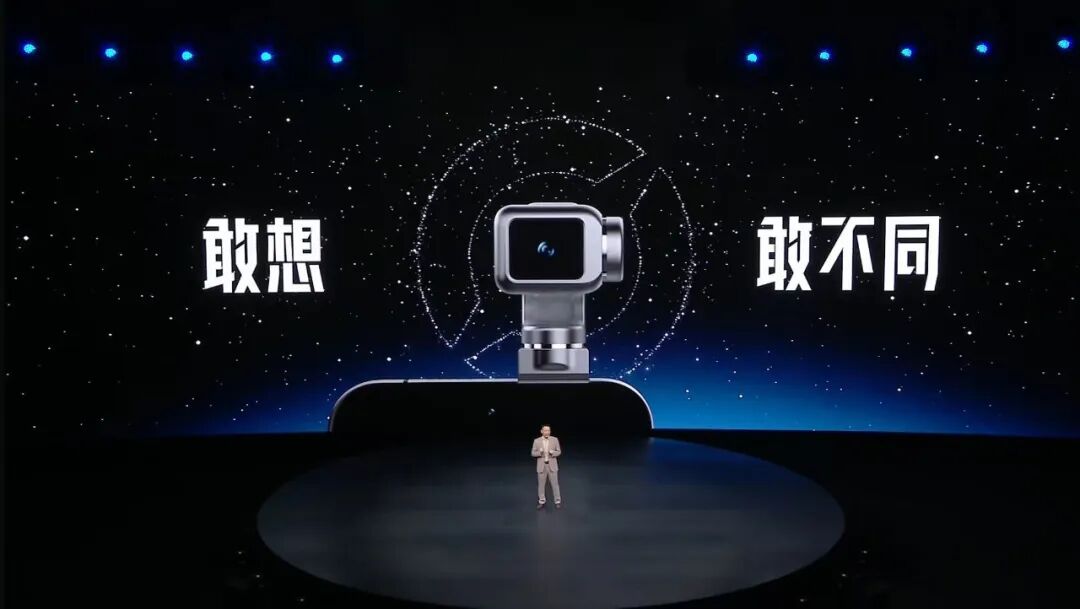
On August 12, Li Jian, CEO of HONOR, made a bold declaration at the global launch event for the Robot Phone.
The smartphone, yet to be officially released, had already garnered over 200,000 pre-orders. From July 18, when pre-orders commenced across all channels, to surpassing the 200,000 mark, the HONOR Robot Phone achieved this milestone in just ten days.
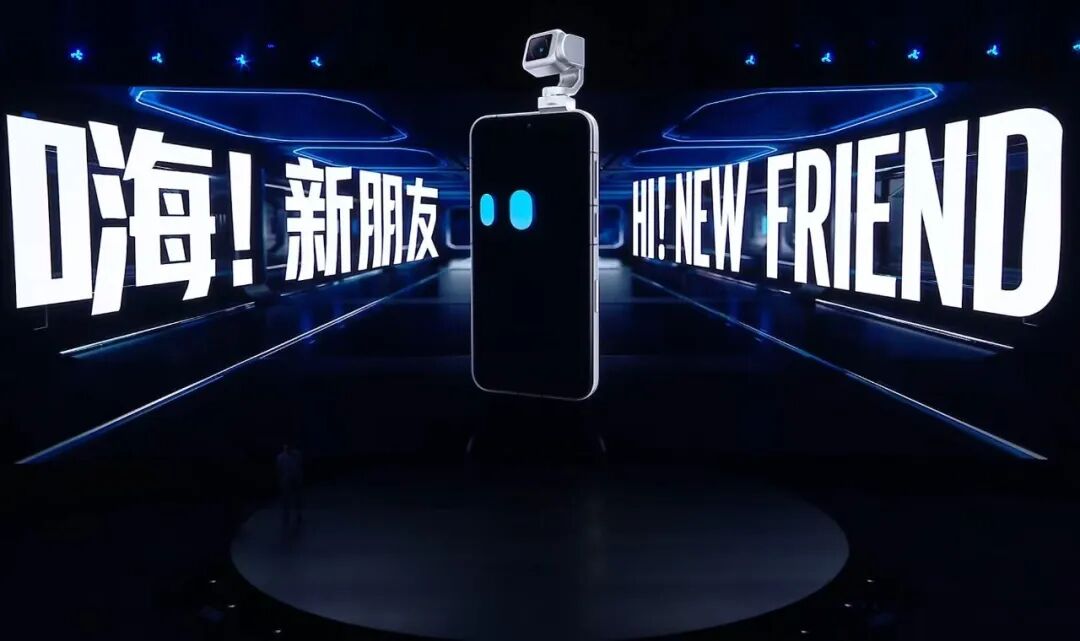
The true spotlight, however, fell on the phone's four-degree-of-freedom gimbal. This innovative lens could rotate, extend, actively track subjects, sway to music, and even recognize gestures.
For the first time, the camera—once a static component of the phone—came alive, lending the smartphone a touch of "human-like" presence.
Of course, pre-orders do not equate to actual sales. It remains uncertain how many of those 200,000 will ultimately make a purchase.
Nonetheless, the smartphone industry hasn't witnessed such fervent attention in quite some time.
Over the past decade, innovations such as full-screen displays, 5G connectivity, imaging advancements, and foldable screens have taken turns in driving industry narratives. With the advent of AI, manufacturers' expectations for the next smartphone upgrade cycle have arrived even sooner.
As early as 2023, Cristiano Amon, CEO of Qualcomm, told the Financial Times that the integration of generative AI into mobile devices had the potential to ignite a new wave of smartphone upgrades. Over the following two years, Samsung introduced Galaxy AI, Apple incorporated Apple Intelligence into its ecosystem, and domestic manufacturers progressed from on-device large models to long-term memory, smartphone agents, and personal AI assistants. In 2025, HONOR announced its commitment to invest over $10 billion over the next five years to transition from a smartphone manufacturer to an AI terminal ecosystem company.
Indeed, the integration of AI into smartphones has been rapid.
Counterpoint data reveals that by the third quarter of 2025, cumulative global shipments of generative AI smartphones had surpassed 500 million units. Such products are projected to account for 45% of global smartphone shipments by 2026.
Yet, in consumers' hands, time seems to move much more slowly.
The global average smartphone replacement cycle has stretched to nearly four years. In 2026, the industry will continue to grapple with growth pressures stemming from weak demand, rising costs, and a saturated market.
Despite the increasing prevalence of AI smartphones, users have not significantly accelerated their replacement cycles.
This raises the question: Are AI smartphones creating new consumer demand, or simply providing additional reasons to purchase a highly mature product?
Hello, and welcome to "AI Revolution."
We appear to be venturing into uncharted territory once again.

The integration of AI into smartphones predates the current large model craze by years.
From NPUs (Neural Processing Units), computational photography, facial recognition, and voice assistants to later AI-powered photo editing, translation, summarization, writing, and on-device large models, smartphone manufacturers have been exploring AI applications for quite some time.
Generative AI has expanded this list of capabilities but has not immediately revolutionized the smartphone market.
AI photo editing saves time, summaries reduce reading time, and call translation is more convenient than consulting a dictionary. The user experience has undoubtedly improved, but these enhancements are rarely compelling enough to prompt someone without a replacement plan to discard a still-functional device prematurely.
When consumers purchase a new smartphone, they ultimately confront a practical question:
Can it significantly transform my daily life?
The shift to full-screen displays was visually apparent, 5G brought clear connectivity upgrades, and foldable screens at least altered the device's form factor when unfolded.
Many current AI capabilities seem to streamline existing processes slightly.
Differences have emerged, but the gap is not yet substantial enough.
The software-based nature of AI further complicates the issue.
Samsung has rolled out some Galaxy AI capabilities to older devices via One UI updates. OPPO has gradually introduced early AI features and, this year, commenced internal testing of Xiao Bu Next across multiple models, continuously enhancing existing smartphones with new intelligent capabilities.
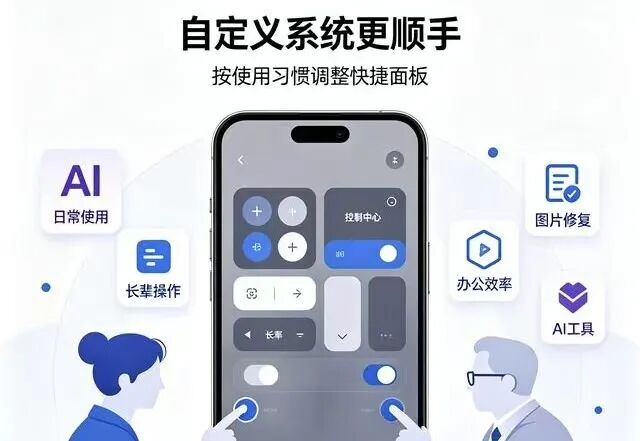
The easier a capability is to deliver via OTA (Over-The-Air) updates, the more challenging it becomes to make it an exclusive selling point for new hardware.
Smartphone manufacturers, therefore, face a delicate challenge: ensuring existing users continue to receive software upgrades while creating a sufficiently noticeable experience gap to entice the next generation of device buyers.
In some ways, AI might even extend the functional lifespan of older smartphones.
Consequently, the rising shipments of generative AI smartphones must be viewed with a critical eye.
Today, when you purchase a flagship smartphone, it is likely already an AI smartphone by default. This indicates that AI has become a standard feature but does not prove that users are specifically buying it for its AI capabilities.
A previous Counterpoint survey revealed a similar discrepancy: 59% of respondents were willing to consider upgrading to a generative AI smartphone, but only 19% were willing to pay a premium for AI.
Willingness to try and willingness to spend extra are two distinct concepts.
This scenario is somewhat reminiscent of the early days of smart speakers.
Voice assistants became increasingly intelligent and capable but never became the household computing centers initially envisioned. More functions do not necessarily mean users are willing to reorganize their lives around them.
Today's AI smartphones have not yet crossed this divide.
In the short term, AI seems more like a prerequisite for competing in the high-end smartphone market. Manufacturers cannot afford to be absent, as it would suggest technological backwardness. Having more features also increases the appeal of flagship models. However, whether AI can drive overall market growth still requires a different, more compelling form of demand.
AI smartphones have achieved success on the supply side but have not yet secured a victory on the demand side.

Why did many people's work methods change rapidly after the emergence of ChatGPT?
Because the value is easy to quantify.
Writing code half an hour faster, organizing materials two hours quicker, or automating repetitive tasks provides immediate feedback on AI's usefulness. For businesses, this translates into productivity gains, cost savings, and improved results.
Personal life, however, is not so orderly.
AI in smartphones deals with messages, photos, schedules, travel, shopping, social interactions, and health. It can help find a photo, organize a meeting, summarize a chat, and plan a trip.
Each task becomes slightly more convenient.
But a pile of "slightly" improvements rarely naturally adds up to a reason to replace a smartphone.
This is why, over the past year, smartphone manufacturers have increasingly shifted their focus from discussing models to emphasizing "personal AI."
OPPO highlights omnidirectional memory, all-time awareness, and multi-agent collaboration in Xiao Bu Next. Apple continuously advances personal context and system-level invocation capabilities. HONOR has evolved from AI agents to personal AI assistants.
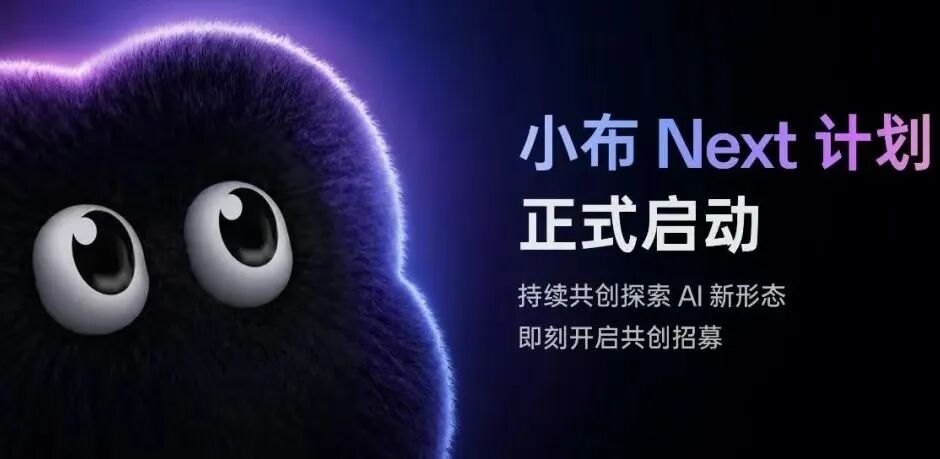
All are attempting to solve the same problem:
How can AI transform from a on-demand feature into something that truly understands the user?
A person's digital life is fragmented. Work files are stored on the computer, relationships are hidden in contacts and chat apps, shopping habits are recorded on payment and e-commerce platforms, while photos, locations, exercise, and health data are scattered across different devices.
Unfinished tasks today should not require re-explanation tomorrow. Frequently missed information should resurface at the right time. Determining which messages warrant immediate attention and which can wait requires learning over time.
These are not capabilities that automatically emerge from "a larger model."
The challenge of personal AI in smartphones lies precisely in the word "personal."
It deals not with a clearly defined workflow but with a person's life scattered across devices, apps, and relationships. Only when these fragments begin to be understood continuously can the scattered conveniences AI offers gradually transform into a stable service.
And as AI begins to truly intervene in life, another threshold arises.
If a summary is incorrect, it can be regenerated. But booking the wrong ticket or sending the wrong message means the error has already left the screen and entered reality.
The more proactive personal AI becomes, the lower users' tolerance for errors. It must not only know what to do but also understand what it should not do without authorization and when to pause for confirmation.
Thus, the challenge of AI in consumer electronics is never just about model capabilities.
It must understand a person well enough while continuously operating in an environment more fragmented, open, and error-intolerant than work software.

Traditional smartphones are essentially tables covered with apps.
Users know where to go, opening, switching, and closing apps themselves. AI has added smarter tools to this table, but the basic usage pattern remains largely unchanged.
If personal AI truly takes hold, it should at least alleviate some of these hassles.
Today, most AI smartphones still require users to remember AI, find AI, and tell AI what to do.
Real change will likely arrive when this sequence reverses.
AI begins to know when to appear and what to do once it does.
Only when AI reaches this point can it truly transform smartphones, rather than merely adding more features.
At least three developments are worth watching.
First, AI must gain execution rights.
Today, many AI functions remain stuck in a "question-answer" loop.
Open an entry point, input an instruction, receive a result—the user still completes subsequent steps.
This logic differs little from search, except the answers are smarter.
True personal AI must begin to take on goals.
Before a meeting starts, it pre-compiles relevant emails, files, and previous discussions. When preparing for travel, it arranges routes based on time, budget, and preferences, then proceeds with subsequent operations after authorization.
Users entrust their smartphones not with a series of steps but with a task they want completed.
This is why agents are more noteworthy than yet another AI button.
The future differentiator for smartphones may not be who integrates more models but who can handle more tasks for users from start to finish.
Second, memory must begin generating time value.
Most consumer electronics follow a downward value curve: the longer they are used, the more outdated the hardware becomes.
Personal AI might introduce a different curve to smartphones.
It remembers past tasks, choices, and habits, gaining a more complete understanding of the same user over time.
Models enable AI to understand a sentence. Memory helps it understand the same person.
What truly matters is that this understanding follows the user. Replacing an old smartphone should not mean retraining an AI.
At that point, users upgrade only the hardware, while their "personal AI" of several years continues to grow.
Third, find what cannot be downloaded.
No matter how intelligent AI becomes, a smartphone remains a hardware device.
If a new capability can be fully rolled out to devices from three years ago, it has value for users but may not help drive replacements.
True generational gaps must ultimately rely on what cannot be installed via OTA.
The Robot Phone provides an interesting example.
Ordinary smartphone cameras can only see where the user points them. The four-degree-of-freedom gimbal lets AI proactively adjust direction, follow targets, and change perspectives for the first time.
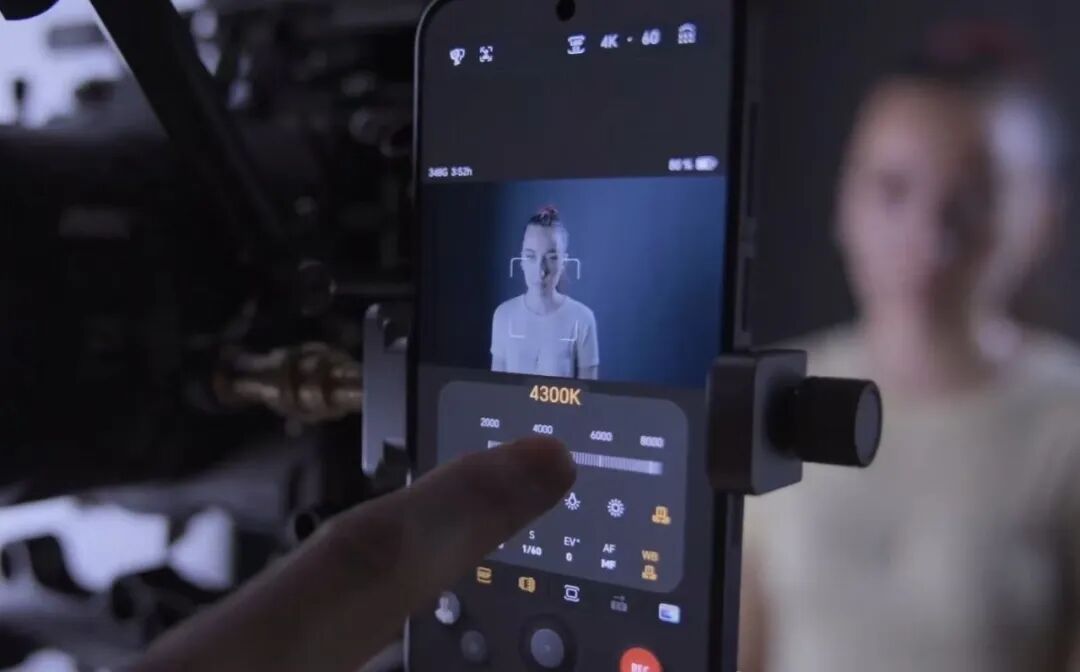
Imaging competition used to focus on "clarity."
With the Robot Phone, the more intriguing question is whether AI can decide "where to look."
If it ends up as just auto-tracking and some fun movements, it remains a more eye-catching imaging feature. If this structure truly becomes part of AI's environmental perception, it offers a capability older smartphones cannot replicate.
AI glasses, earbuds, and various new hardware are all searching for such differentiators.
Software can be updated.
These things require repurchasing.
Personal AI has already stirred up the smartphone industry.
Chips are reallocating computing power, systems are making room for agents, and manufacturers are rethinking what else a device can do beyond waiting for user clicks.
But these changes currently occur mostly within the supply chain and at product launches. The old smartphones in consumers' hands have not suddenly felt outdated as a result.
In 2026, generative AI smartphones are expected to account for nearly 45% of global shipments, yet the smartphone market itself still faces prolonged replacement cycles and demand pressures.
The 200,000 pre-orders for the HONOR Robot Phone at least show that people are still willing to pause for a new answer. Whether the rotating lenses ultimately provide that answer will become clear only after the phone leaves the launch event's big screen and enters ordinary, everyday use.
What truly drives a replacement wave is rarely an old device breaking down.
It's when something new makes the old one suddenly seem inadequate.
AI smartphones are still waiting for that moment.
-
Trend丨Space Brain Deployment Accelerates: Digital Space No.1 Validates ‘Intelligent Satellite Autonomy’
-
Hot Topic | SpaceX Partners with NVIDIA AI Architecture, Paving the Way for New Growth in Space Computing
-
Bilibili's Capital Narrative: Meeting Market Expectations but Losing Its Own Identity
-
![]()
China Mobile Reports 538 Billion Yuan in Revenue for First Half of the Year, with 5G Subscribers Surpassing 687 Million
-
![]()
Domestic Wi-Fi Chips Usher in Prime Era
-
![]()
HONOR Unveils Robot Phone, Yet AI-Driven Smartphones Still Await Market Breakthrough
-
![]()
Jiemei Technology Splurges 915 Million Yuan, Making a Bold Move into Optical Ultra-Precision Equipment
-
![]()
Intensifying Investment in Advanced Coating Equipment: Landun Optoelectronics Aims to Secure Majority Stake in Lanchuang Technology