Review | From 360° Imaging to 3DGS, Insta360 X6 is Changing Panoramic Cameras
 08/14 2026
 528
528
When Panoramic Cameras Go Beyond 360°
By / VR Gyro Wickey
Insta360 has once again launched a new product, marking another exploration in panoramic imaging.
At the previous media exchange event marking a decade of Insta360 panoramic technology, Liu Jingkang (JK), founder and chairman of Insta360, stated: “In the coming period, we will redefine panoramic cameras, as well as stealth cameras, action cameras, and more, with significant updates and redefinitions. Please stay tuned.”
On August 12, Insta360 unveiled the redefined “Decade Masterpiece” — the Insta360 X6. As the latest flagship in the X series, the X6 builds on Insta360's accumulated expertise in panoramic imaging, with further upgrades in image quality, shooting experience, and AI creative capabilities.
Notably, the Insta360 X6 introduces the 3DGS function, enabling the transformation of panoramic images into 3D spatial models through 2D panoramic content acquisition and cloud rendering. This adds new content value and application scenarios for panoramic cameras.
In terms of pricing, the standard domestic version of the Insta360 X6 is priced at 3,999 yuan, including the camera body, data cable, and protective case. The Pro version is priced at 4,699 yuan, including a 114cm extension pole, fast-charging hub, and an additional battery, suitable for travel, outdoor activities, and other long-duration creative scenarios.
(Note: Images and videos in the article may experience quality loss after compression on internet platforms. Actual effects should be judged based on real-device experience.)
01 More Compact Body, More Intuitive Controls: The X6’s Form Factor Upgrade
The most noticeable upgrade in the Insta360 X6 comes from its appearance.
The X6 features a redesigned body, adopting a more compact horizontal layout compared to the X5. Its vertical height is significantly reduced, while the horizontal width is increased, making it closer in size to an action camera. The overall impression is one of simplicity, with no redundant function buttons. The two function buttons originally located at the bottom of the X5 have been removed, leaving only a 2.32-inch OLED full-screen display on the front, with further improved screen brightness compared to the previous generation.
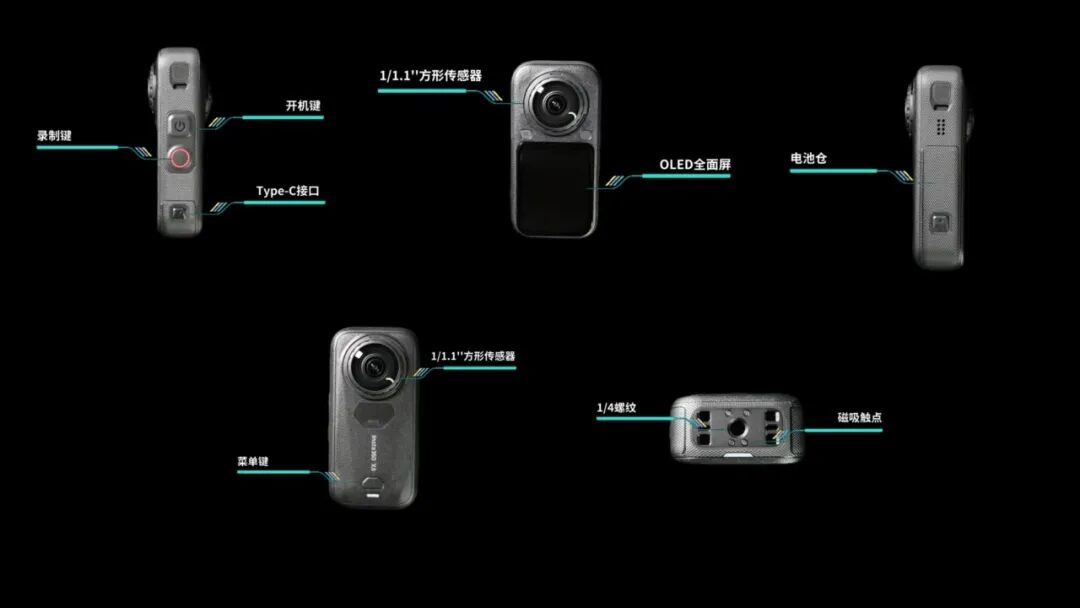
Image Source: VR Gyro
The battery compartment on the left side has abandoned the X5’s plug-and-pull design in favor of a traditional camera-style open-cover removal method. Unlike the X5, which required simultaneous operation of two latches and was somewhat cumbersome for single-handed use, the X6 features a press-button sliding cover mechanism, consistent with the right-side Type-C charging port, making battery replacement more convenient. Additionally, the power and record buttons are now unified on the same side, allowing for smoother operation regardless of whether the camera is held in the left or right hand, further enhancing everyday usability.
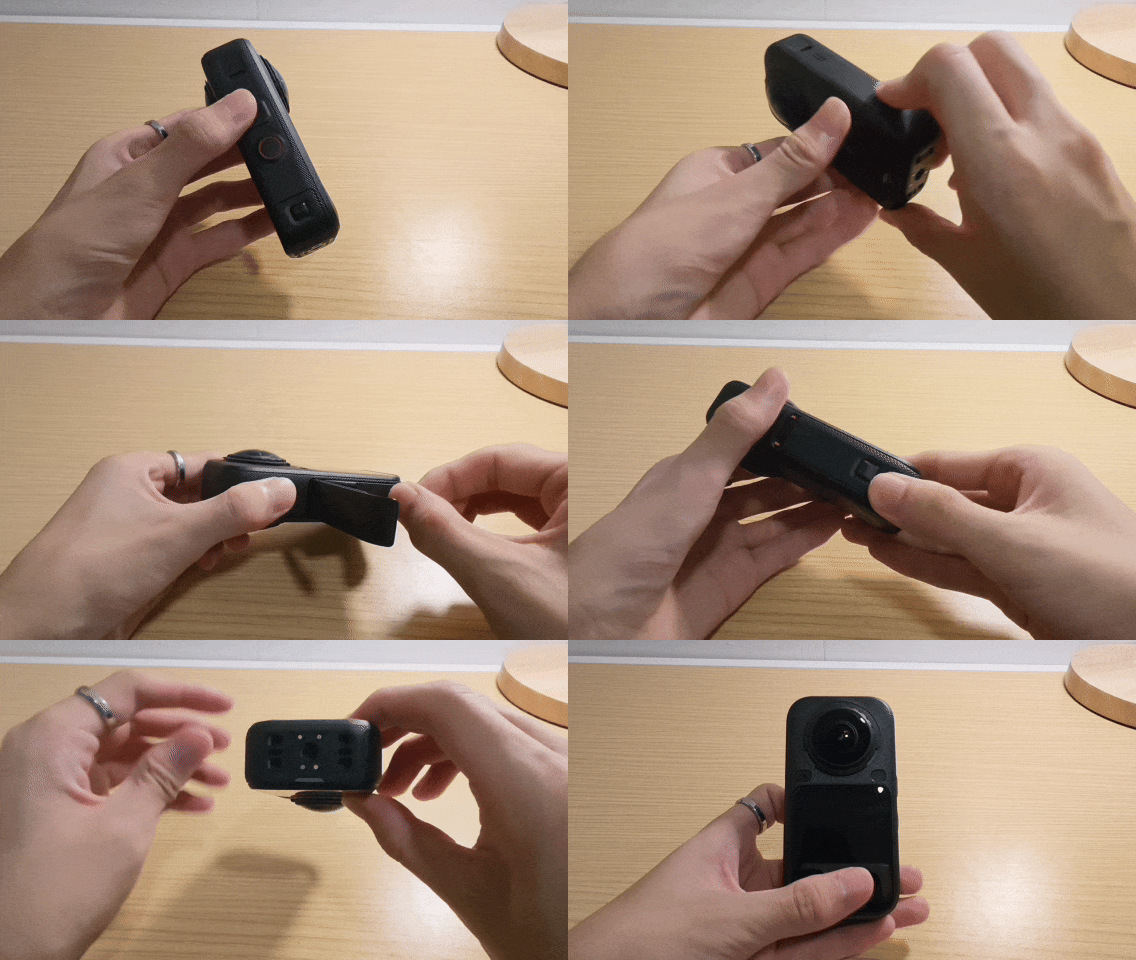
Image Source: VR Gyro
For front-facing camera interaction, the X6 retains frequently used functions as virtual buttons via an under-display pressure sensor. There is also a record button on the left side of the camera and a menu bar on the right. When pressed, the built-in linear motor provides vibration feedback similar to physical buttons, maintaining a unified body design while ensuring tactile feedback during blind operation.
For panoramic cameras, quick startup is also a crucial factor affecting the user experience. The X6 retains the X5’s interactive methods, such as “twist to shoot,” voice control, and gesture recognition, and further introduces a “full-screen press to shoot” function. With a high-sensitivity pressure sensor, shooting can be initiated quickly by pressing any part of the screen, even while wearing gloves, reducing the chance of missing Wonderful Moments (exciting moments) due to searching for buttons.
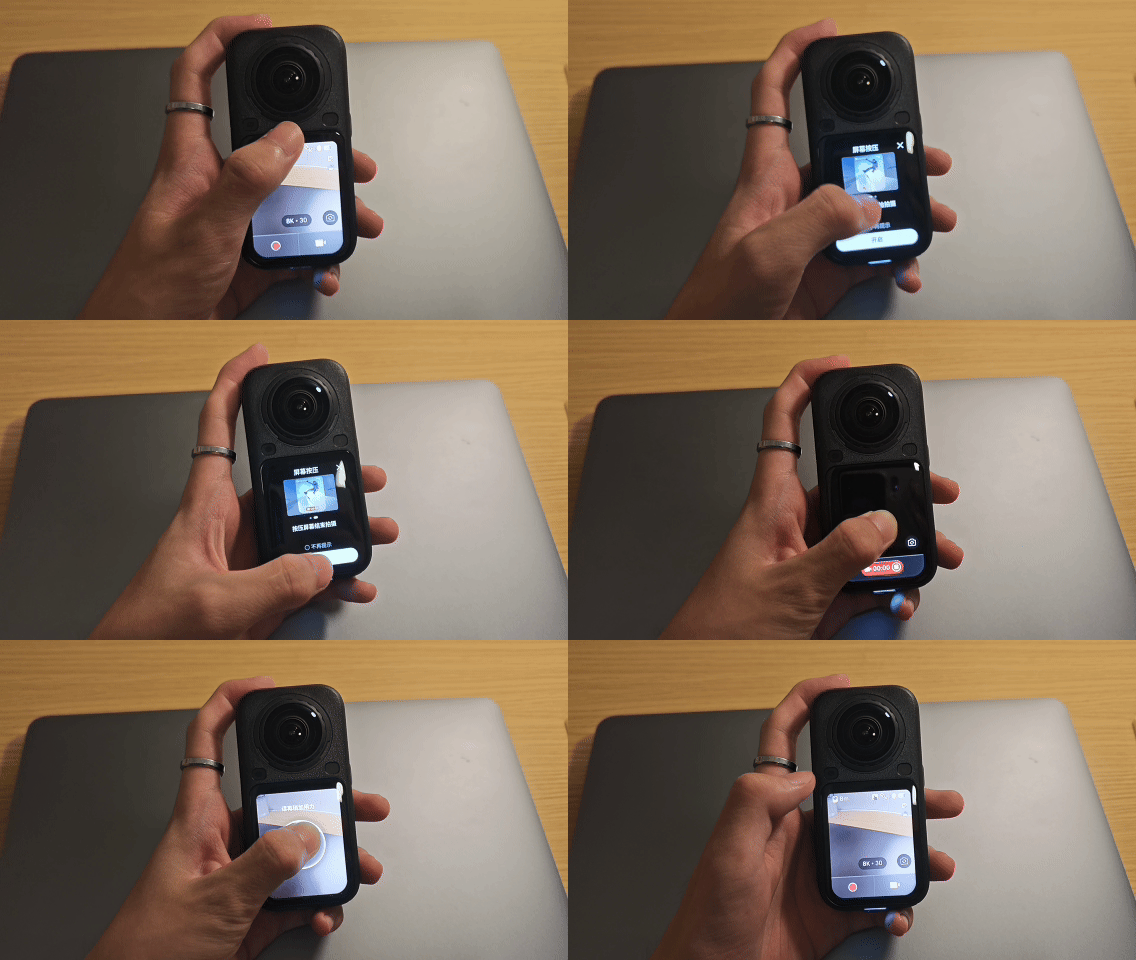
Image Source: VR Gyro
In addition to upgraded interaction methods, the X6 further expands its body interfaces. While retaining the traditional 1/4-inch thread and quick-release mount on the bottom, a magnetic contact point has been added. This not only reserves more space for future accessory ecosystems but also introduces the first matching products (supporting product) — the charging remote selfie stick. Through the magnetic contact point, the selfie stick can connect to the X6 instantly and continuously power the camera during shooting, enhancing battery life for long-duration Creation (creation).
In terms of battery life, the X6 is equipped with a 2600mAh battery. In real-world testing at room temperature, continuous recording of 8K 30fps panoramic video on a full charge consumed approximately 20% battery in 30 minutes, translating to about 0.66% per minute, with a total continuous recording time of approximately 143 minutes, largely consistent with the official claim of 140 minutes. When used with the charging remote selfie stick, which supports charging during recording, the X6 can further extend its continuous Creation (creation) time, meeting the needs of travel, outdoor sports, and long-duration recording scenarios.
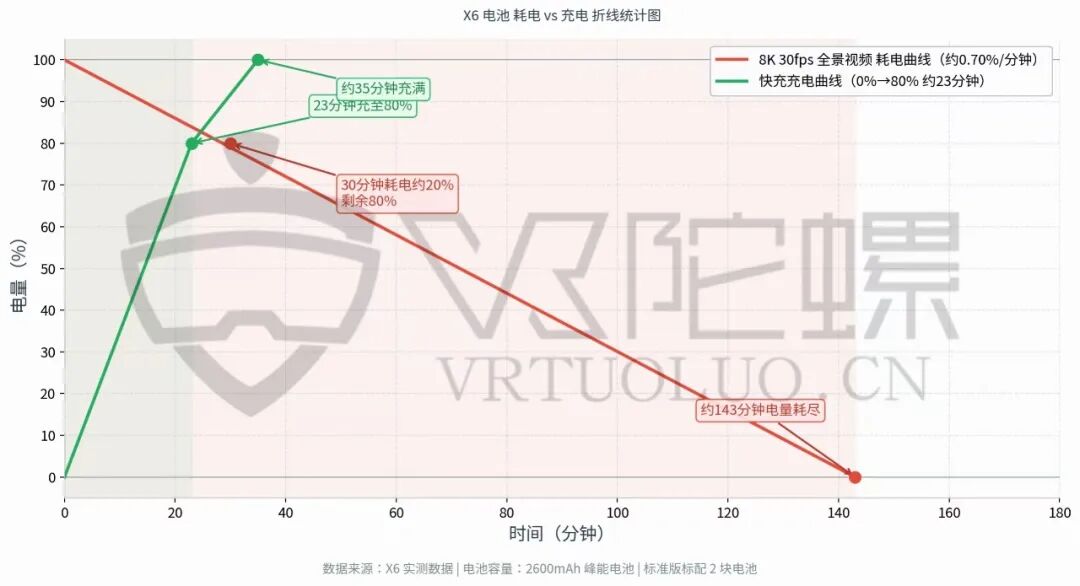
Image Source: VR Gyro (Testing conducted at room temperature. Actual battery performance may vary due to environmental factors such as temperature.)
If battery life remains a concern, the X6 Pro version includes an additional 2600mAh battery, further ensuring prolonged shooting sessions. In actual testing, the X6 supports fast charging, reaching 80% battery in approximately 23 minutes and a full 100% in about 35 minutes. Meanwhile, the included fast-charging hub has been redesigned, upgrading from the previous generation’s plug-in structure to an open-cover plug-and-pull design, making battery replacement more convenient. Additionally, the charging hub features a built-in Type-C data cable and Type-C charging port, allowing it to charge not only the battery but also serve as a power bank for the X6 body, further enhancing flexibility for outdoor use.
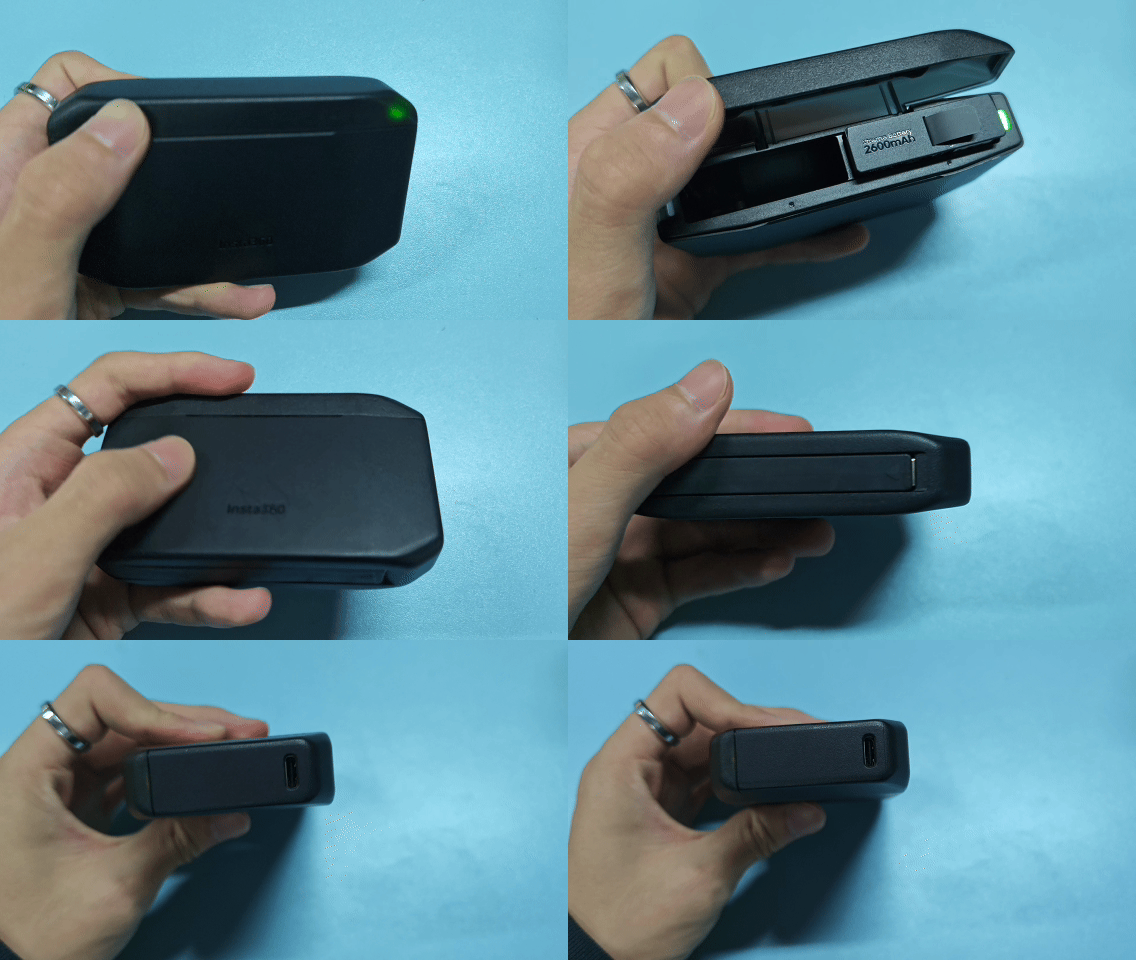
Image Source: VR Gyro
However, the new fast-charging hub no longer includes a MicroSD card storage slot, which may be a slight regret (disappointment) for users accustomed to carrying storage cards with them. Fortunately, the X6 body includes 47GB of built-in storage, allowing for a certain duration of shooting even if a MicroSD card is temporarily forgotten, reducing the risk of being unable to record due to a missing storage card.
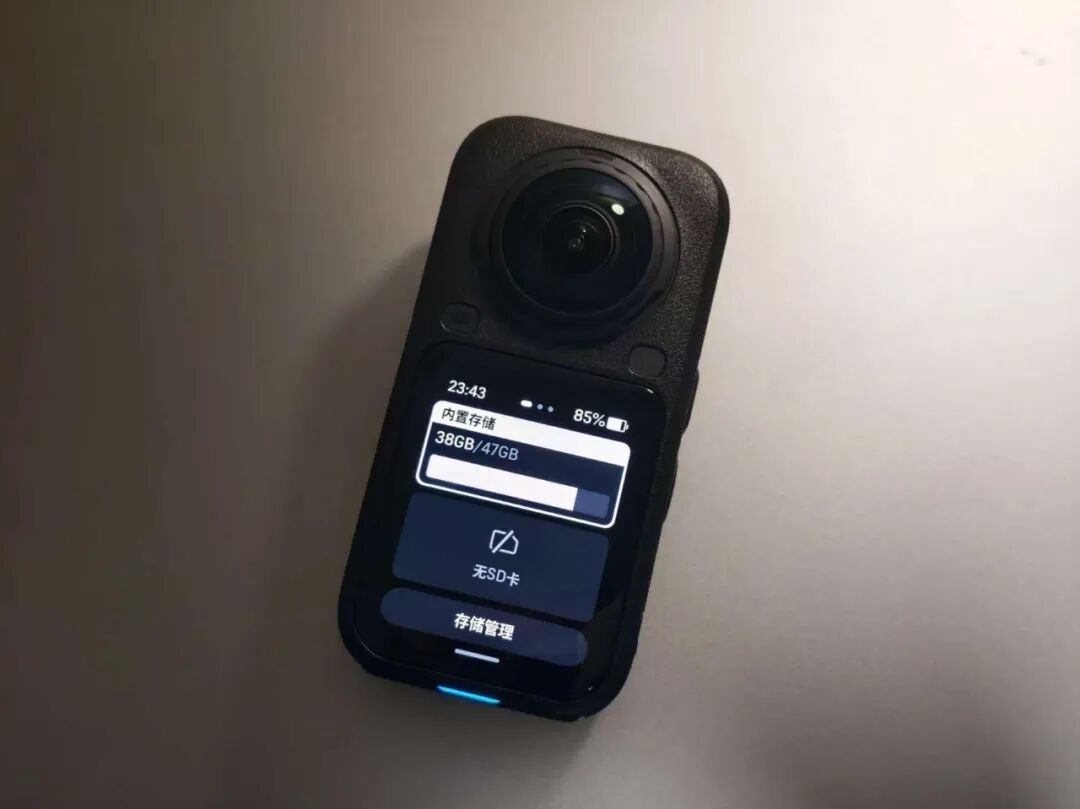
Image Source: VR Gyro
From its initial role as a smartphone accessory to its expansion into outdoor scenarios like skiing by users, panoramic cameras have gradually broken through the usage boundaries of traditional shooting devices with their unique perspectives and full-scenario recording capabilities. This places higher demands on the X6. In response to complex and variable outdoor environments, the X6 provides IP68-rated protection and enhances its naked-machine waterproof capability to 20 meters, achieving 60-meter waterproofing when paired with a diving case, further expanding underwater shooting scenarios.
To address concerns about drops and lens wear during outdoor use, the X5 pioneered a detachable lens design, offering users a more flexible maintenance solution. The X6 further upgrades this with a removable and replaceable lens scheme, continuously optimizing durability and usability. According to official lab test data, the new lens’s scratch resistance has improved by 300% compared to the previous generation, withstanding 2,500 cycles of steel wool friction. Additionally, lens replacement has been upgraded from a rotational to a snap-fit mechanism, requiring only 1.5 minutes for single-sided operation, a 20% improvement over the X5. Meanwhile, the new lens is priced approximately 60% lower than the X5, and its packaging adopts a more lightweight travel design.
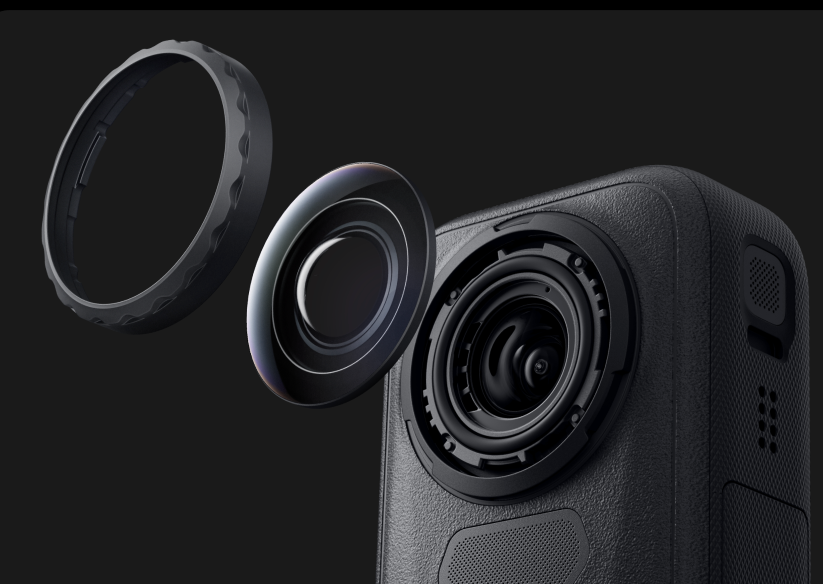
Image Source: Insta360
02 Three Shooting Logics in One Device: Panoramic, Gimbal, and Wide-Angle Fusion
In terms of shooting capabilities, the X6 further expands its versatility, integrating panoramic, gimbal, and wide-angle shooting modes. Spec-wise, the X6 supports 8K 50fps panoramic video recording, 120-megapixel panoramic photo shooting, Gimbal Mode 2.0 for unlimited framing and 4K 30fps planar video output, and a planar mode supporting 5K 60fps and 4K 120fps ultra-wide-angle video, covering a wide range of shooting scenarios such as travel and sports.
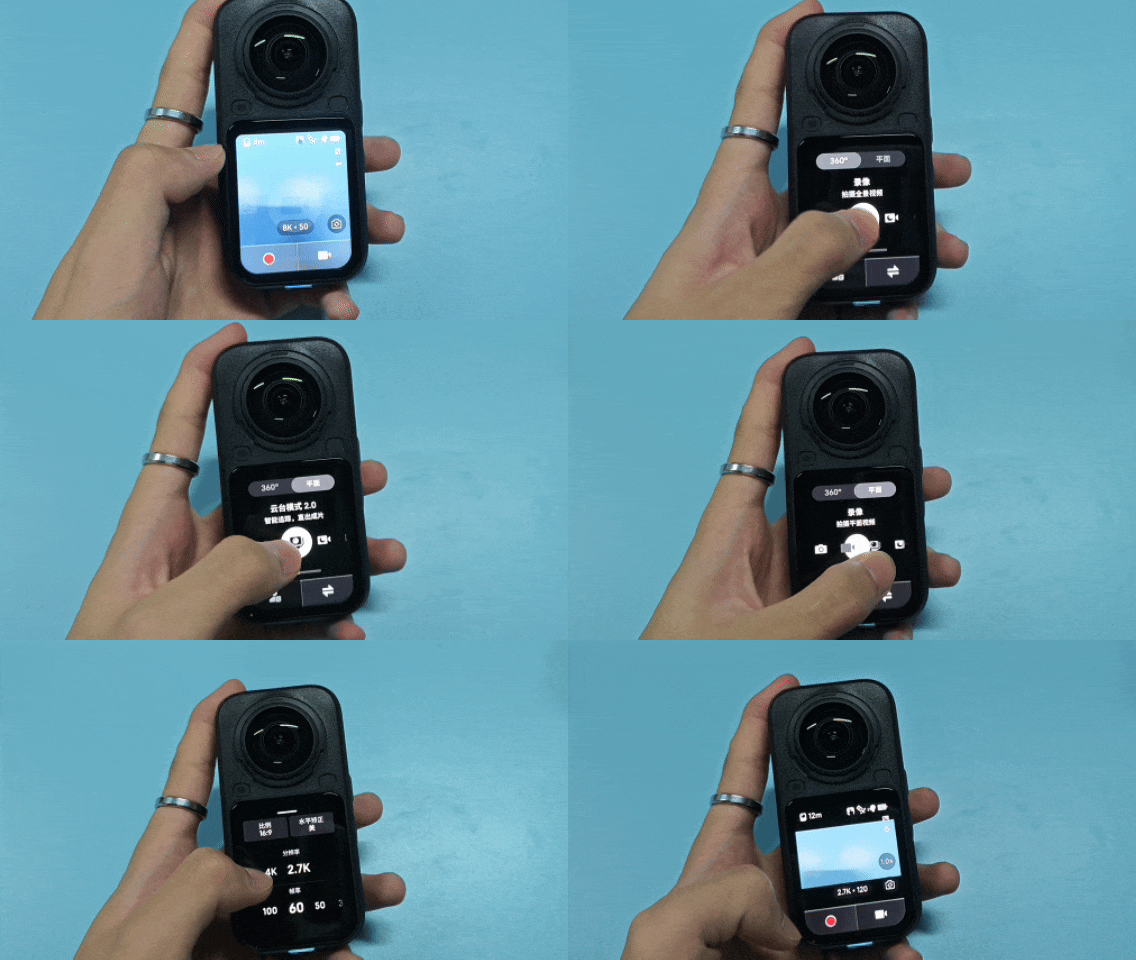
Image Source: VR Gyro
The 8K 50fps panoramic video on the X6 captures more detail, providing greater flexibility for post-production. After cropping, enlarging, or reframing the image, the cropped sections still maintain 4K or even higher clarity. In extreme sports scenarios like skiing, racing, or surfing, where moments pass quickly, playing 50fps footage on a 25fps timeline achieves 2x smooth slow-motion, effectively capturing details in fast-paced movements.
Video Source: VR Gyro
In terms of imaging, the X6’s 120-megapixel resolution offers stronger Analytical power (resolving power) and post-production freedom. Combined with the characteristics of panoramic cameras, it also significantly lowers the operational threshold for users, eliminating the need to worry about perfect composition during shooting, as cropping can later highlight the subject and optimize the frame. The X6 also features built-in AI composition for panoramic photos, allowing users to view AI-composed images in the in-camera gallery or quickly access and export them via the Insta360 mobile app.

Image Source: VR Gyro (AI Composition)
Since the introduction of the X5’s “Virtual Gimbal,” Insta360 has opened up a new direction for panoramic imaging by simulating gimbal stabilization through algorithms. The X6 further upgrades Gimbal Mode 2.0, allowing users to double-tap the screen to intelligently track people, pets, or objects. In actual use, tracking is rapid and object recognition is accurate, even resuming tracking if the object exits and re-enters the frame.

Image Source: VR Gyro
The video demonstrates smooth tracking and camera movement in Gimbal Mode 2.0, thanks to the 360° panoramic imaging, which ensures the subject remains tracked regardless of its position. Gimbal Mode 2.0 supports ultra-wide-angle to natural wide-angle to linear zoom, with distortion correction. Paired with the pocket folding selfie stick (Gimbal Edition), the X6’s remote allows for camera movement, zooming, and tracking, directly outputting 4K 30fps planar video. This function enables the panoramic camera to serve as an unlimited gimbal camera while retaining the panoramic video for post-production.
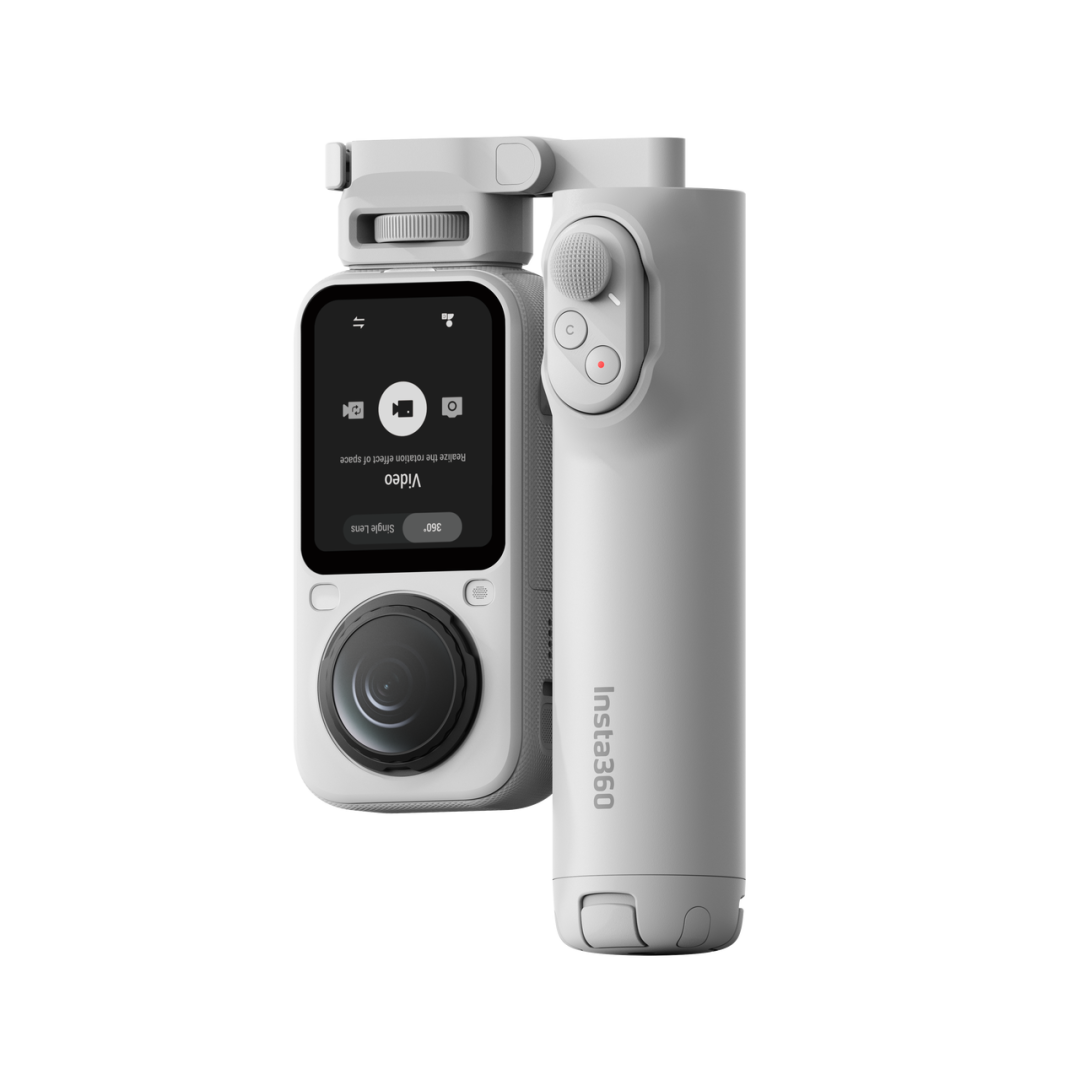
Image Source: Insta360
In the accessories menu, Gyro Tab also discovered that the X6 supports a first-person head-tracking module, originally compatible only with the Insta360 Luna Ultra gimbal camera. On the X6, this module will also support Gimbal Mode 2.0, potentially freeing up hands for activities like cycling, hiking, or walking pets, enabling “look-and-shoot” functionality.
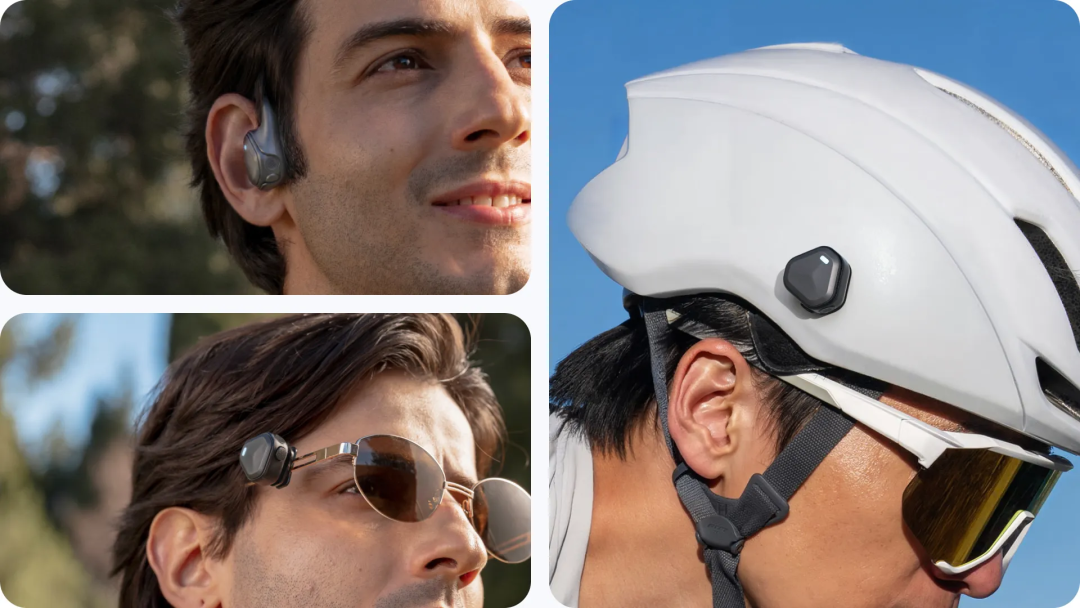
Image Source: Insta360
In planar video mode, the X6 can record single-lens 5K 60fps video or 4K 120fps slow-motion video. Paired with a 170° ultra-wide-angle view, the X6 further expands its applicability for daily sports shooting. As shown in the sample images below, the 0.7x perspective provides wider coverage, retaining more surrounding environmental information when recording sports processes.
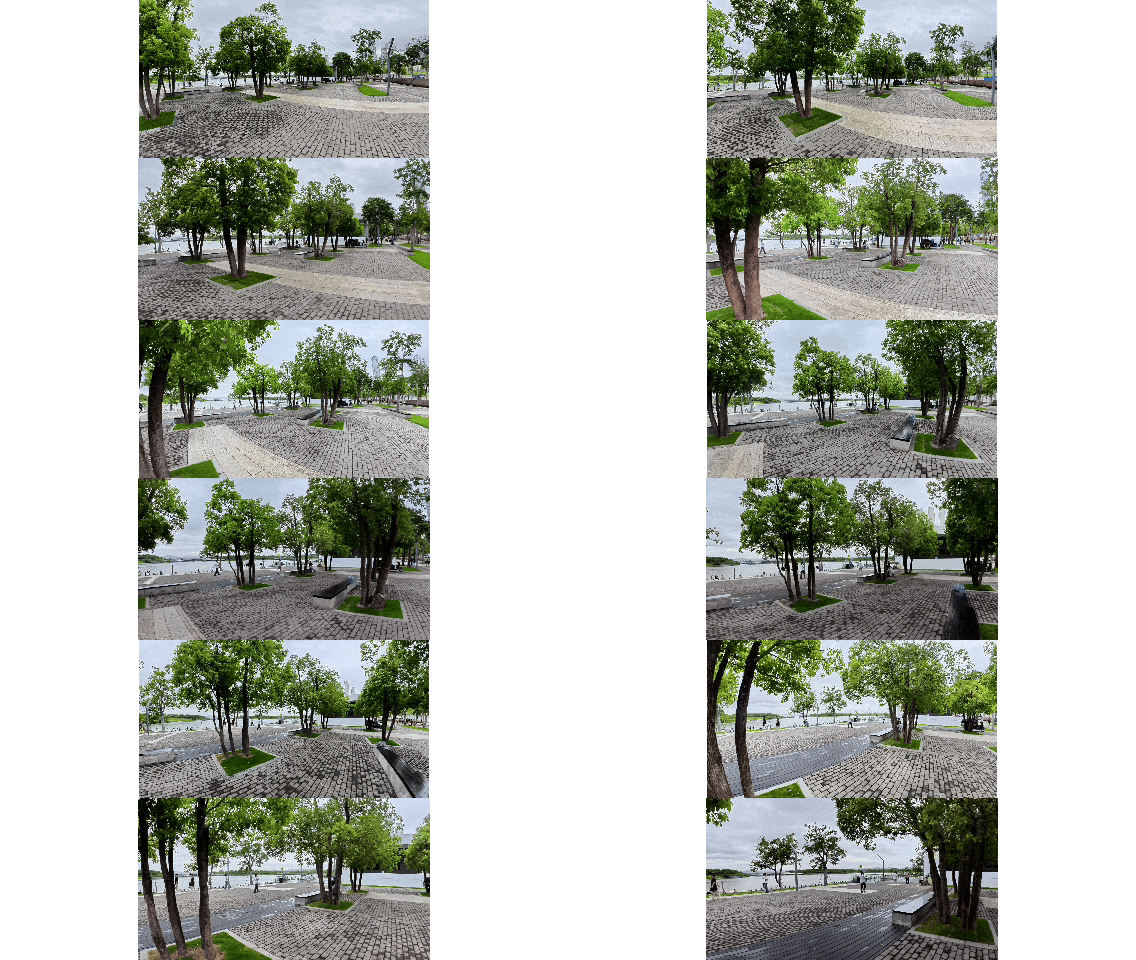
Image Source: VR Gyro (Top: Planar Mode 0.7x; Bottom: Planar Mode 1x)
03 Dual 1/1.1-Inch Square Sensors Enhance the X6’s Panoramic Imaging Quality Ceiling
To enhance imaging performance in complex scenarios, the X6 has undergone a comprehensive upgrade in terms of its sensor, chip architecture, and image processing capabilities.
According to reports, the Insta360 X6 is equipped with an exclusive triple-chip architecture, including a Qualcomm 4nm SoC and two professional imaging chips (ISP chips). The Qualcomm 4nm chip delivers a 500% increase in computing power compared to the X5, reduces power consumption by 35%, and boosts the chip's main frequency by 106%. After the sensor captures image information, the two ISP chips work in tandem to handle noise reduction and color calibration, while the 4nm chip performs comprehensive image processing, stitching, and stabilization. The collaboration of these three chips results in a superior image quality experience.

Image Source: Insta360
At the same time, Insta360 has collaborated exclusively with Sony to create dual 1/1.1-inch square sensors designed specifically for panoramic cameras, achieving equivalent 1-inch-class panoramic imaging. Compared to traditional rectangular sensors, square sensors are better suited to the imaging characteristics of panoramic cameras. Since the effective imaging area produced by dual fisheye lenses is nearly circular, traditional sensors tend to waste corner sensing areas, while square sensors make fuller use of the sensing area, improving sensor utilization within the same dimensions while reducing power consumption, heat generation, and design constraints on the camera body.
Building on sensor upgrades, the X6 further enhances imaging performance in low-light and complex environments. In 8K mode, its pixel size reaches 2.44μm, a 100% increase over the previous generation. The 1/1.1-inch sensor it carries provides a 300% increase in light intake per pixel compared to the X5's 1/1.28-inch sensor. Meanwhile, its 14.5-stop dynamic range offers greater exposure tolerance for panoramic images, better preserving highlight and shadow details in complex scenes such as high-contrast lighting, nightscapes, and interplays of light and dark.
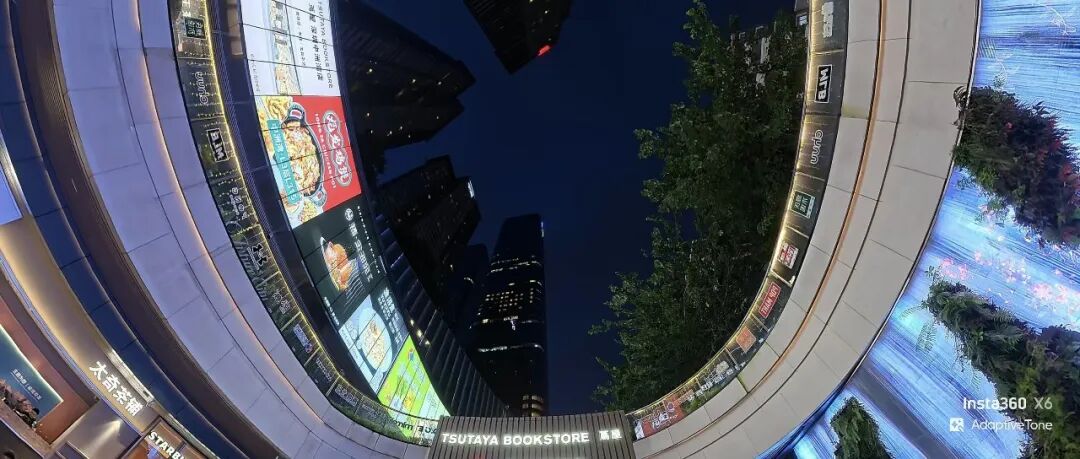
Image Source: VR Gyroscope (excerpted from panoramic video)
In real-world testing, the X6 demonstrates strong exposure control in nighttime urban environments. When faced with scenes combining bright light sources like illuminated signs and LED screens with dark buildings, the image transitions smoothly between light and dark areas, preserving details in both highlights and shadows. Nighttime image purity remains stable, with complete capture of details such as lighting and building outlines.
In terms of color performance, Insta360 continues its collaboration with Dolby Vision. Following the release of the Insta360 Luna Ultra gimbal camera in June, which became the world's first gimbal camera to support 8K 30fps Dolby Vision video recording, the X6 further introduces this capability to the panoramic field, becoming the industry's first panoramic camera to support native in-camera Dolby Vision. At the same time, the X6 supports 10-bit color depth across all settings and incorporates I-Log flat color profile mode and ACES color management workflows to further expand post-production grading possibilities and meet professional imaging creation needs. Its higher color sampling capability delivers richer color gradations and smoother transitions, effectively reducing color banding and detail loss in scenes with complex lighting and color variations, such as dusk or blue hour, resulting in more natural and realistic visual presentation.
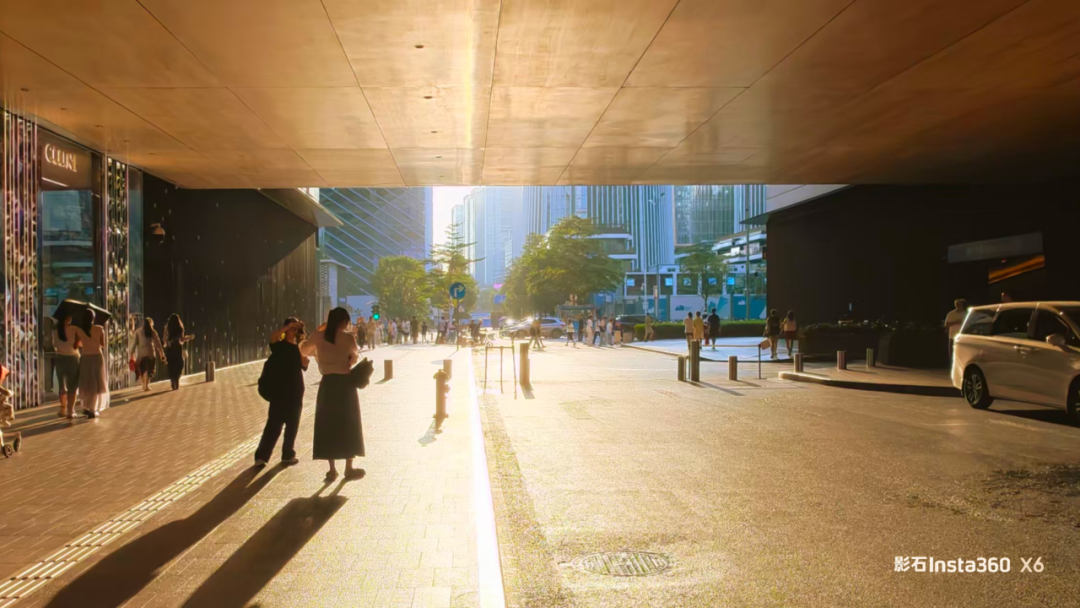
Image Source: VR Gyroscope (excerpted from panoramic video)
From actual shooting results, the X6 further improves its ability to handle complex lighting environments. In this urban dusk sample, strong backlighting, building shadows, and human silhouettes appear simultaneously in the same frame while maintaining good exposure balance. The highlight areas show no significant overexposure, and shadow details are preserved. For panoramic cameras, such scenes have always been challenging tests of dynamic range and color algorithms, but the X6, through its 10-bit color depth and Dolby Vision technology, more completely restores light transitions, color gradations, and spatial details.
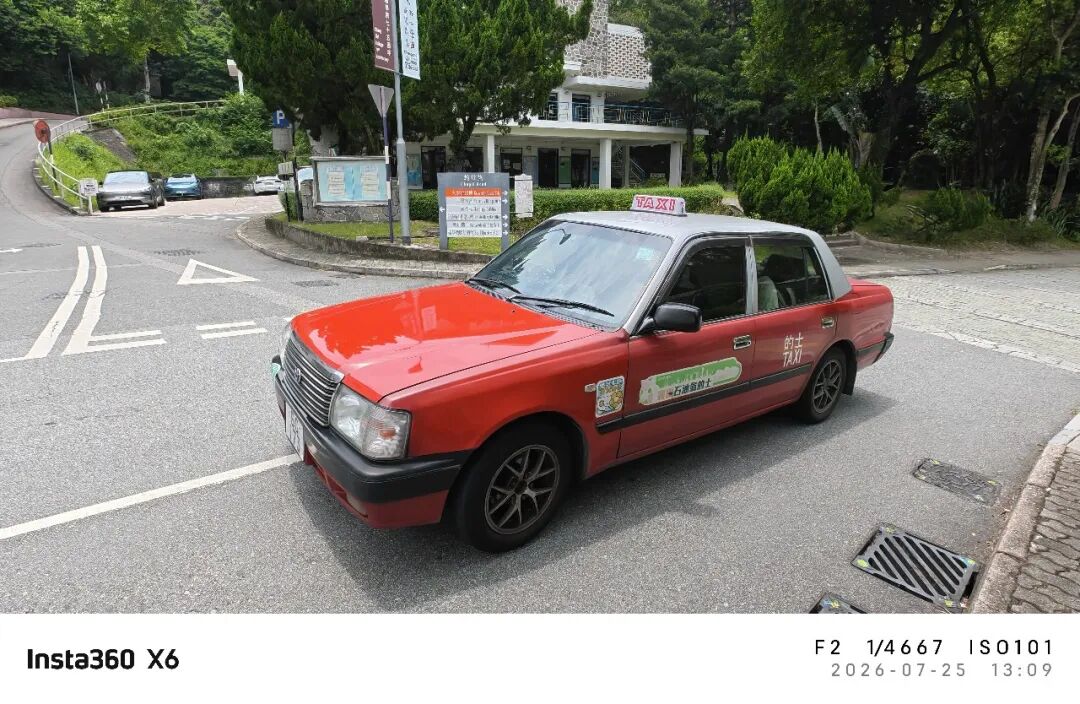
Image Source: VR Gyroscope
In everyday outdoor scenes, the X6 accurately reproduces colors in natural environments. In the sample, different color elements such as the red car body, green vegetation, and gray road surface maintain good layering without noticeable color shifts or oversaturation. When faced with complex lighting environments combining shaded and sunny areas, the image maintains stable exposure control, preserving details in dark forest areas while preventing overexposure in the car's highlight regions.
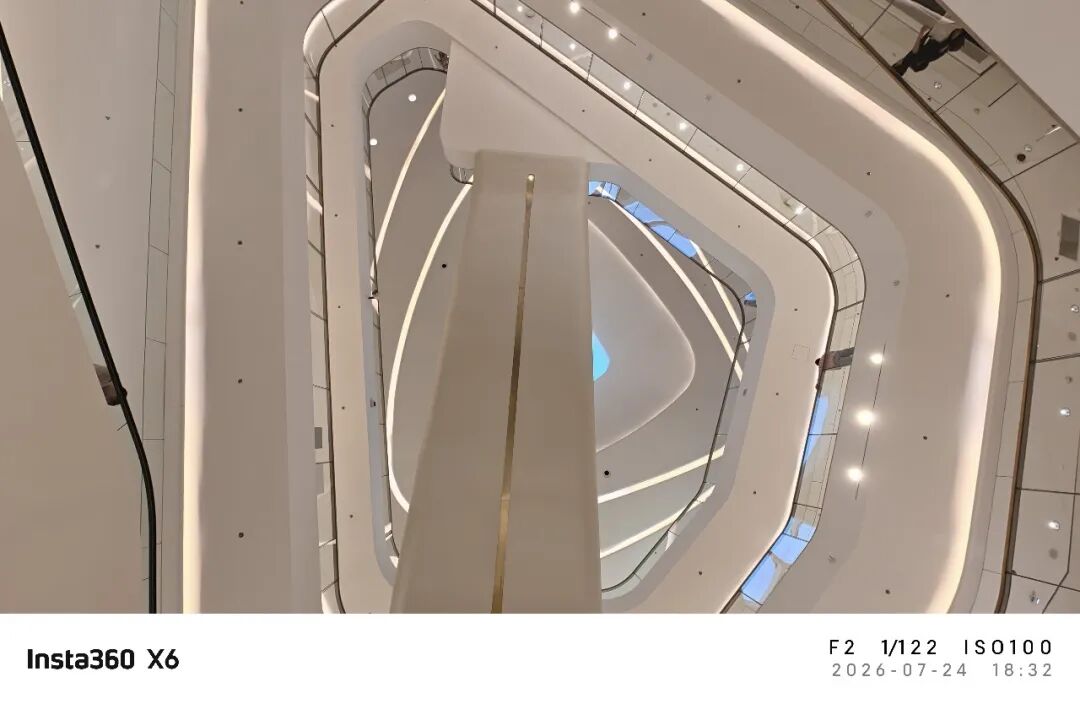
Image Source: VR Gyroscope
In indoor low-light scenes, the X6 demonstrates strong exposure control. When faced with high-contrast environments formed by light strips, spotlights, and large areas of white walls, the image maintains a balanced light-dark relationship, preserving details in highlight areas while keeping shadow noise stable. Meanwhile, color reproduction in indoor white spaces appears natural, with complete presentation of architectural structures and line details, demonstrating the optimization effects of large-sensor and high-dynamic-range technologies in complex lighting environments.
04 PanoMind and 3D Time Capsule: Insta360 Explores New Directions in Panoramic Imaging
Compared to traditional cameras, panoramic cameras typically rely on professional software for editing due to their special INSP/INSV panoramic video formats, which to some extent raises the barrier for content creation. Addressing this pain point, Insta360 further explores AI applications in panoramic imaging.
Insta360 has trained its proprietary AI panoramic multimodal model, PanoMind, using specialized material from over 30 high-frequency usage scenarios such as skiing, cycling, diving, travel, and daily recording. This model provides intelligent support in virtual camera trajectory generation, video editing value judgment, highlight moment recognition, and other aspects, further lowering the barrier for panoramic content creation and improving user shooting and post-production efficiency.
Image Source: Insta360
With PanoMind, the AI Director allows the X6 to automatically analyze shot footage, select highlight moments, and automatically match background music and camera movements to complete editing while idle and charging. After enabling this feature, the AI Director will screen and analyze footage from a natural day from start to finish, offering two analysis modes: battery priority and timeliness priority.
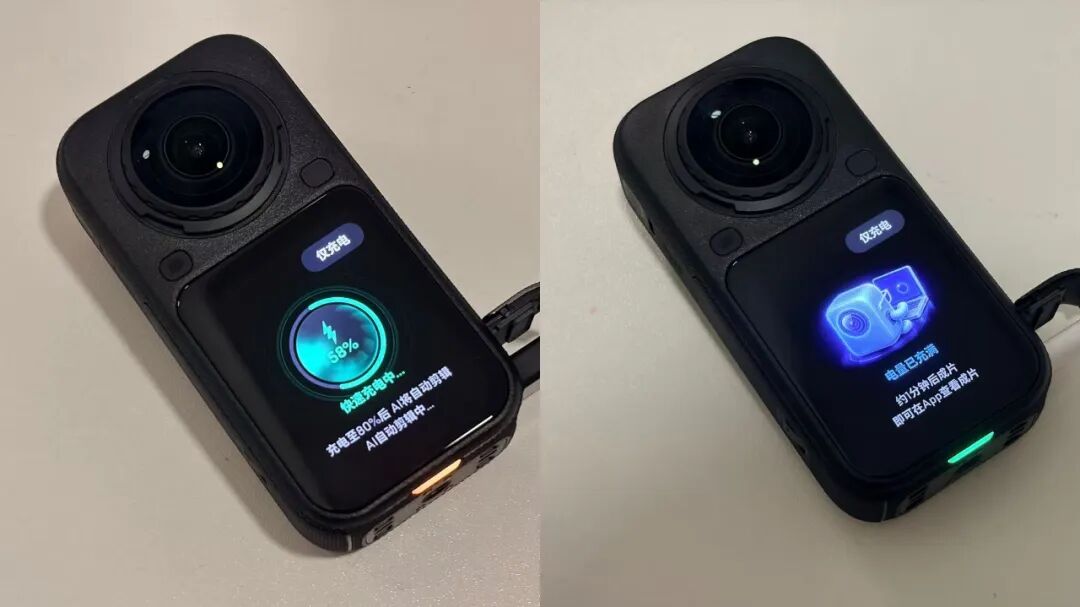
Image Source: VR Gyroscope
In battery priority mode, highlight analysis occurs during shutdown charging. The AI Director can only analyze footage when the battery level is above 80%. After charging to 80%, the AI identifies wonderful moments (highlights) before continuing to charge. The edited video will be pushed at 12:00 PM or 8:00 PM the next day or can be viewed in the "Memories" section. Regarding safety and privacy, all recognition and analysis run locally on the device, with no videos or photos uploaded to the cloud.
Meanwhile, Insta360's software has upgraded its One-Tap Editing to version 2.0, allowing users to create polished videos by simply selecting several clips. VR Gyroscope's tests show that uploading 10 clips allows AI to generate a 40-second finished video through algorithms. The output quality remains consistently shareable on social networks, and the software allows quick adjustments such as replacing music, footage, or AI-selected compositions for more convenient video generation.
For panoramic imaging, storage has always been an important issue affecting user experience. For example, shooting 30 seconds of 8K 30fps video requires approximately 500MB of storage space, and prolonged recording quickly increases storage pressure. Against the backdrop of rising storage costs, cloud storage has become an important solution to this pain point. With the release of the X6, Insta360's cloud service, "Moment PRO," has also been upgraded, further reducing user burdens in footage preservation and management through cloud storage and intelligent management capabilities.
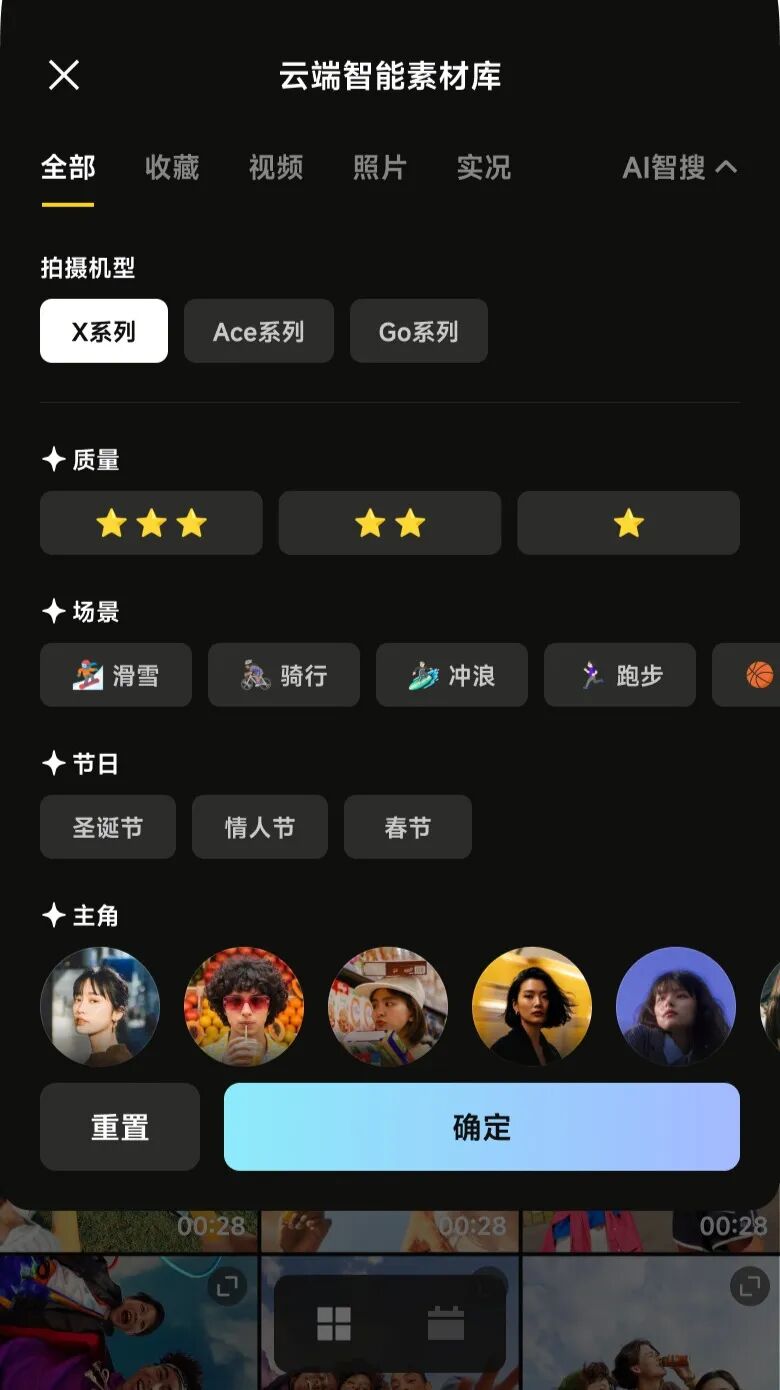
After footage is uploaded to the cloud, "Moment PRO" can intelligently organize it by content type and quickly filter needed videos through tags. Users can also utilize cloud-based AI editing to generate finished videos. For X6 users, Insta360 offers a cloud service promotion: purchasing the X6 from now until September 30 grants one year of 500GB Moment PRO usage.
Additionally, Insta360 has introduced the "3D Time Capsule" feature, which natively supports Gaussian splatting model rendering based on 8K panoramic images within the Insta360 App. After users upload qualifying panoramic footage, a spatial model can be generated in the cloud and browsed immersively using remote sensing or gyroscope controls, while also supporting export of the spatial roam (walkthrough) process as a video or sharing link.
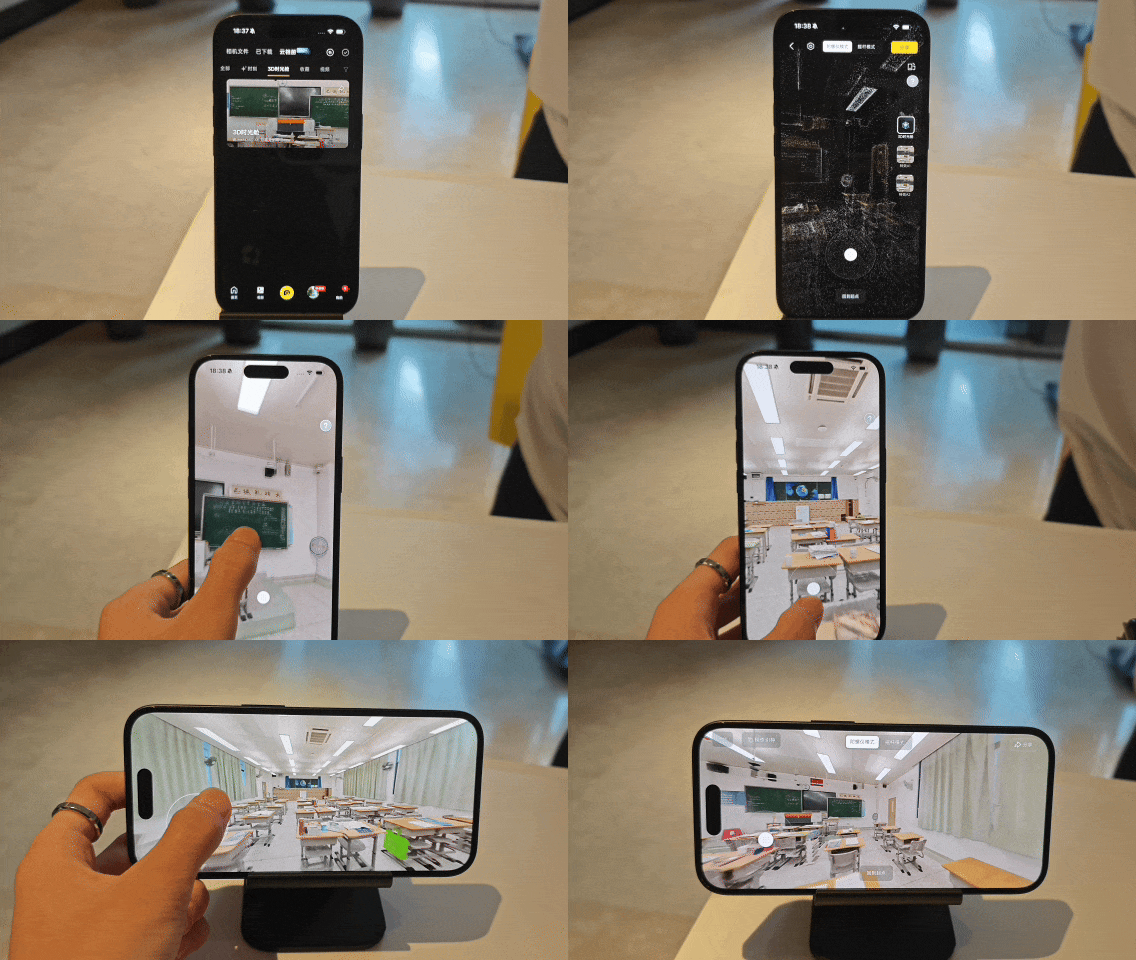
Image Source: VR Gyroscope
This feature has certain requirements for shooting environments and operation methods. Indoor enclosed scenes are more conducive to spatial information collection than open spaces. It is recommended to shoot using 8K 30fps panoramic video and maintain uniform movement within the space, following an "S-shaped" route to cover more perspectives and improve subsequent model rendering effects.
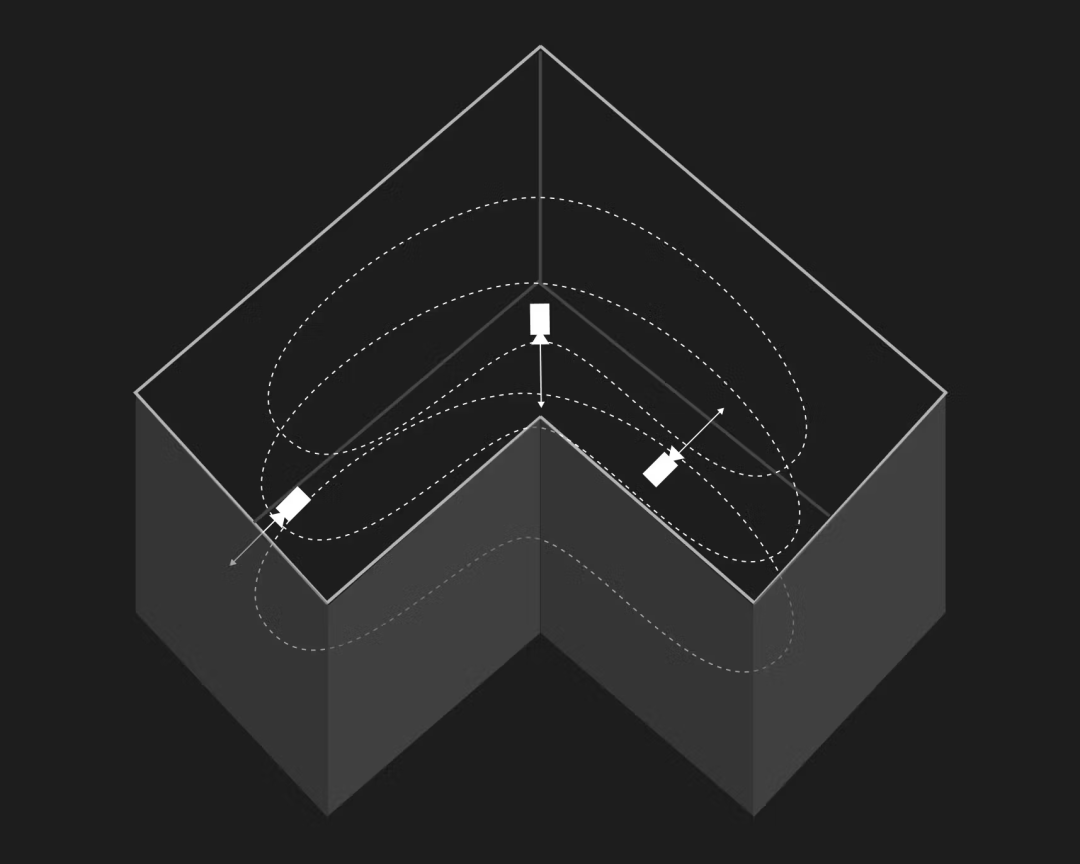
Currently, the 3D Time Capsule feature is compatible with multiple panoramic camera models including the X6, X5, and X4 Air, covering Insta360 panoramic cameras that support 6K 30fps or higher shooting specifications and are connected to cloud services. The feature provides two free rendering sessions per month, refreshing on the first day of each month. Insta360 reportedly plans to enable local model rendering capabilities in the future.
For Insta360, the value of the 3D Time Capsule extends beyond simply recording a video—it explores a new way of preserving spatial memories. During the exchange event, JK stated that future panoramic cameras hope to enable users to record "unforgettable scenery, alleys, and distinctive spaces," preserving memories in a more native and three-dimensional way and helping users revisit past spaces like "time capsules."
As an exploration of converting panoramic imaging into 3D models, the 3D Time Capsule is still in its early stages but demonstrates the potential for panoramic cameras to evolve from two-dimensional recording to three-dimensional spatial preservation. In the future, as VR/MR device compatibility and spatial interaction capabilities improve, panoramic cameras may become a new entry point for recording spatial memories.
05 Conclusion
Currently, the types of imaging recording devices are becoming increasingly diverse, including traditional cameras, gimbal cameras, thumb cameras, smartphones, and recently emerging AI glasses. The barrier to recording continues to lower, and users have more choices. Why, then, should one still use a panoramic camera for shooting?
In JK's view, the core value of panoramic imaging lies not simply in providing a wider perspective but in meeting users' needs for spatial recording. Unlike traditional imaging devices that can only capture partial frames, panoramic cameras preserve complete spatial information during shooting, providing a foundation for future spatial reconstruction and immersive experiences.
The X6 exemplifies this approach—it not only captures clearly but also captures "more," with overall playability that is even richer.
-
Stay Alert! Avoid Over-Reliance on AI Chats—It Can’t Address Core Issues
-
![]()
Chevrolet Stops Sales in China, Buick Ramps Up: SAIC-GM's Bold Survival Strategy Unveils Tough Realities
-
![]()
Chery and VOYAH in Heated Debate: A Flood of New Car Models Hits the Auto Industry—3.6 Launches Per Day. Are Some Brands Cutting Corners on "Rushed Vehicles"?
-
![]()
Longcheer Technology's 1.12 Billion Yuan Foray into Computing Infrastructure Across Borders
-
![]()
Soaring Storage Prices Leave Legacy Issues! China's Smartphone Market Sales Decline Intensifies Post-618, Huawei Maintains Top Position
-
![]()
Yu Chengdong’s ‘Powerhouse’ Showcase: Can AITO’s MAEXTRO Outperform Toyota Alphard?
-
![]()
SanDisk is More Profitable Than NVIDIA
-
![]()
Is Western Digital No Longer Attractive?