Why Pocket 4 is in Short Supply and OV is Making a Strong Entry: Why Pocket Gimbal Cameras Have Suddenly Become a New Battleground
 05/15 2026
 368
368
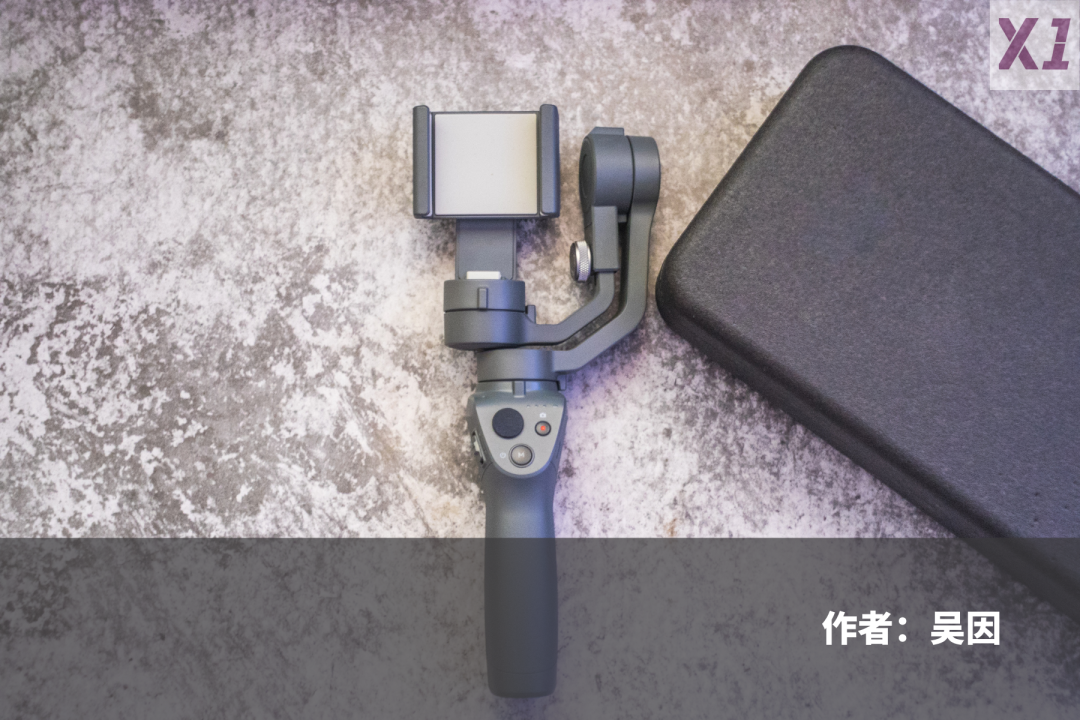
【Abstract】DJI Pocket 3 has sold over 10 million units since its launch, and the ongoing shortage of the updated DJI Pocket 4 has once again brought pocket gimbal cameras into the mainstream consumer electronics spotlight.
Online sellouts, offline order backlogs, and price hikes on secondhand platforms—phenomena more commonly associated with popular flagship smartphones—are now concentrated around a single pocket camera.
Beyond DJI, new entrants like OPPO's "Fuyao" and vivo's standalone Vlog camera are also flooding in, rapidly heating up this once-niche market segment. The popularity of Pocket 4 is not an isolated event but reflects a broader rethinking of mobile imaging by smartphone manufacturers.
As smartphone imaging nears the limits of hardware stacking, a new device category—positioned between smartphones and traditional cameras, more focused, lightweight, and suitable for sustained content creation—is regaining growth momentum.
The entry of OPPO and vivo also means competition for Pocket-style products is shifting from hardware specifications alone to a battle over content ecosystems and mobile creation systems.
The following is the main text:

From Niche Device to Blockbuster Hit: What Did Pocket 4 Tap Into?
The strong sales of Pocket 4 represent a concentrated release of changes in mobile imaging consumption patterns.
Over the past few years, smartphone imaging has undergone an intense upgrade cycle. Features like 1-inch CMOS sensors, multi-camera fusion, periscope telephoto lenses, AI computational photography, and 4K HDR video have become standard across high-end flagship models.
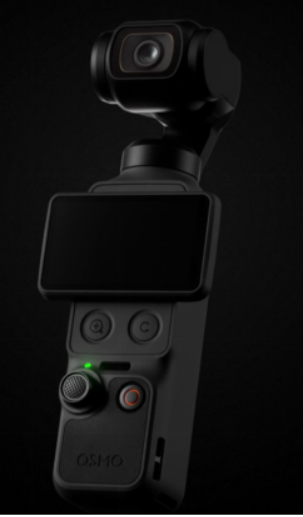
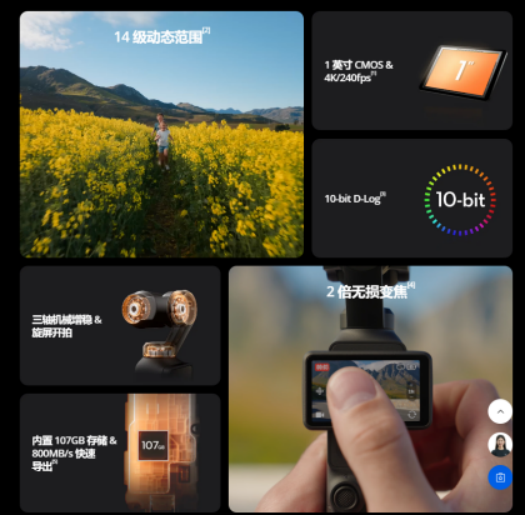
Image Source: DJI Official Website (Pocket 4)
According to a report by CounterPoint Research, starting in late September 2025, China's smartphone market saw a wave of annual flagship launches. Major brands are shifting from pure hardware specification competition to "full-scenario ecosystem construction," with a common strategic focus on upgrading imaging capabilities.
However, another issue has become increasingly apparent: smartphones are becoming "all-in-one devices" but struggling to deliver a consistent experience across all functions.
Larger imaging modules encroach on internal space, higher-spec video recording increases heat dissipation demands, and stability, battery life, and ergonomics during prolonged handheld shooting are becoming critical experience factors.
Especially as short-form video content becomes more routine, many users don't need more complex professional photography capabilities—they prefer a lower-barrier, more stable video device suitable for sustained creation.
Pocket-style products precisely meet this demand by "simplifying the complex" of traditional shooting workflows, focusing entirely on "everyday video creation for ordinary people."
Three-axis mechanical gimbals solve handheld stability issues, compact sizes reduce carrying burdens, and features like auto-tracking, portrait/landscape switching, and quick audio capture further lower the barrier to video creation to the point of "shoot-on-the-go."
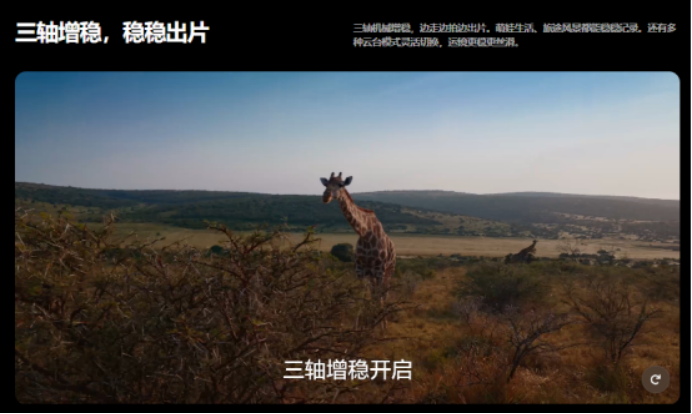
Image Source: DJI Official Website
While traditional cameras emphasize interchangeable lenses and action cameras rely on extreme scenarios, Pocket chooses a third path: designed for everyday documentation.
This is why Pocket 4, despite modest design changes, could still rapidly ignite the market.
According to Cailian Press, Pocket 4 sold out online within 15 minutes of its debut, with offline stores facing backlogs exceeding one month. Secondhand platforms like Xianyu and Dewu saw significant price markups, with a ¥2,999 device reselling for hundreds more.
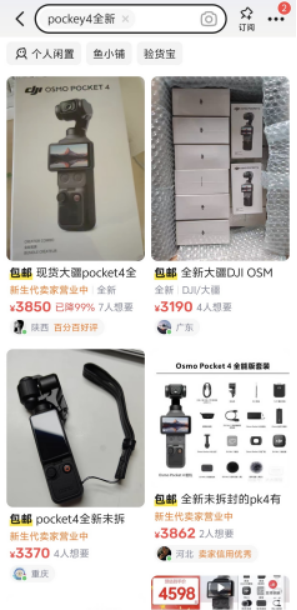
Image Source: Xianyu Screenshot
Notably, DJI's pricing strategy this time carries defensive industry implications. While Pocket 3 debuted at ¥3,499, Pocket 4—with upgraded built-in storage, operating system, and imaging specs—launched at a reduced price of ¥2,999.
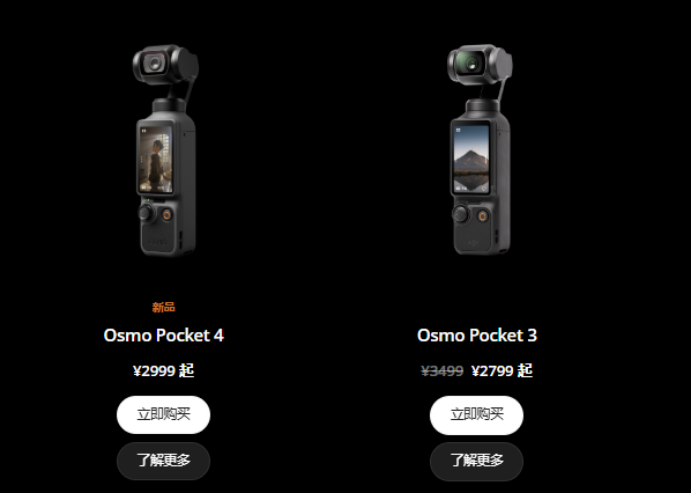
Image Source: DJI Official Website
The magnitude and pace of these upgrades and price cuts suggest DJI anticipates massive competition in the Pocket segment.
This competition primarily stems from four sources, with varying pressures closing in on DJI:
1. Professional Imaging Vendors (e.g., Insta360)
Competition arises within the same product category. Insta360 has gradually expanded from 360-degree cameras to GoPro-like devices and AI imaging, increasingly overlapping with DJI's product boundaries. In April 2026, Insta360's teased Luna series directly targeted DJI Pocket 4.
2. Traditional Action Camera Vendors (e.g., GoPro)
While GoPro's consumer market growth has slowed in recent years, it remains influential in extreme sports, outdoor creation, and overseas content ecosystems. The validated success of Pocket-style gimbal cameras makes traditional action camera vendors likely followers.
3. Crossover Entry by Smartphone Vendors (OPPO, vivo)
These entrants may alter Pocket products' competitive logic. With more mature supply chains, stronger collaborative system (collaborative systems), and vast dealer networks—OPPO has over 8,500 stores nationwide, far exceeding top imaging brands' channel coverage—they could reshape traditional imaging product distribution.
4. Deeper-Level Patent, Ecosystem, and Business Model Competition
In July 2025, Insta360 launched "Yingling" to challenge DJI's core business, while DJI countered with its first 360-degree camera, Osmo360, directly confronting Insta360's strengths. Tensions escalated in March 2026 when DJI sued Insta360 in Shenzhen Intermediate People's Court over six core patents related to flight control, structure, and imaging processing. On March 23, Insta360 CEO Liu Jingkang responded, "Competition among tech companies is common."
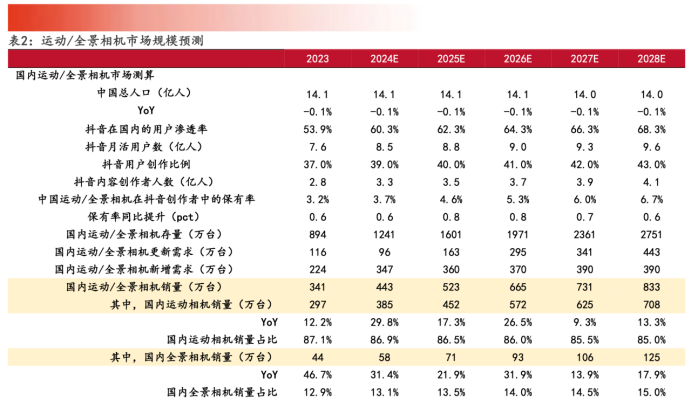
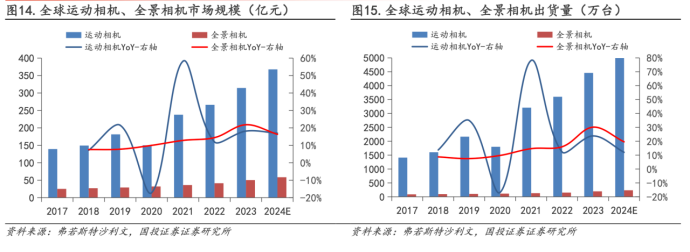
These product clashes and patent disputes reflect escalating competition. Naturally, the goal is market share: Guotou Securities projects domestic action camera sales CAGR will reach 16% (2024–2028), with overseas CAGR at 14%; domestic 360-degree camera sales CAGR will hit 21%, overseas at 20%. The industry could exceed ¥80 billion by 2028.
This growth potential has attracted OPPO and vivo.

OPPO and vivo's Pocket Ambitions Go Beyond Camera Sales
Three years ago, few expected smartphone companies like OPPO and vivo to enter the Pocket category. For years, the consumer electronics industry operated under the logic that all high-frequency functions would eventually be integrated into smartphones.
Today, however, the marginal utility of smartphone imaging hardware iterations is diminishing.
According to IDC, China's smartphone shipments reached ~284 million units in 2025, down 0.6% YoY. While high-end models continue to stack imaging specs—larger CMOS sensors, more complex lens structures, higher-spec video capabilities—these upgrades yield diminishing returns for average users' daily experiences.
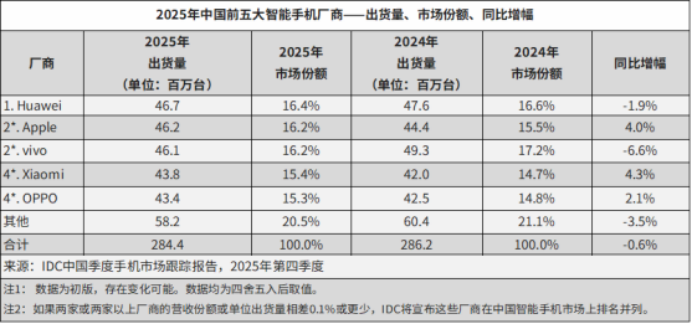
Image Source: Securities Times
Meanwhile, demand for short-form video consumption and creation keeps growing. QuestMobile data shows China's mobile internet MAU reached 1.276 billion in 2025, with users spending 7.96 hours daily on average—short-form video driving most of this growth.
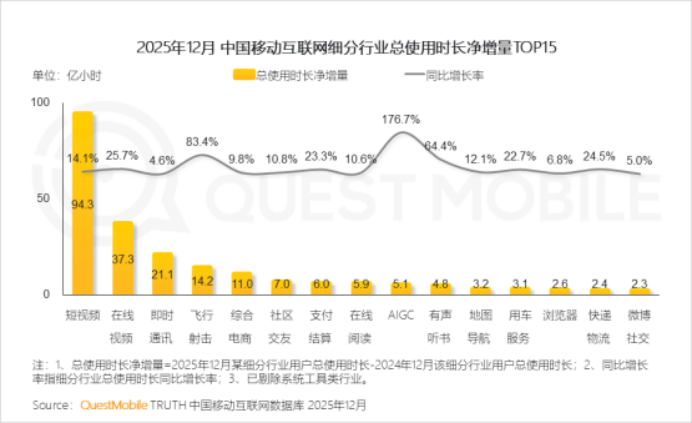
Image Source: QuestMobile Official Website
As user-generated short-form video content dominates, the mobile imaging industry's growth pain point has shifted from "shooting clearer" to "shooting easier"—a sweet spot for OPPO and vivo.
Over the past few years, Chinese smartphone vendors have invested heavily in mobile imaging R&D.
In April 2025, OPPO launched its standalone imaging brand LUMO, debuting on the Find X8 series to consolidate imaging capabilities previously scattered across Find models.
A year later, OPPO released the Find X9 Ultra, featuring the world's first Hasselblad 10x optical zoom "Sky Eye" telephoto lens, dual 200MP camera setup, O-Log2 professional video workflow, and ACES color management—pushing video capabilities toward pro-grade.
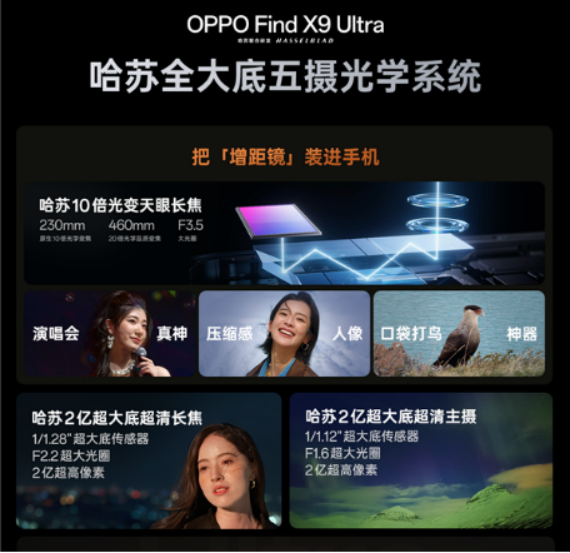
Image Source: Sina Tech
Similarly, vivo launched the X300 series in October 2025 as the "Zeiss 200MP Imaging Dual Flagship," with the X300 Pro featuring Zeiss APO 200MP super telephoto and a self-developed Blueprint Imaging Chip V3+ forming a "dual-chip" architecture.
In March 2026, vivo released the X300 Ultra with a "3+2" Zeiss Master Lens array, enabling full-frame 4K 120fps 10-bit Log video recording and introducing Blueprint True-Color cameras for pixel-level spectral detection—pushing color management from accuracy to personalized creation.
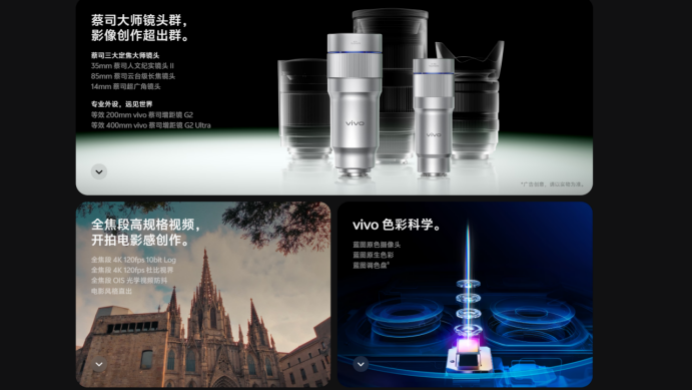
Image Source: vivo Official Website
Both vendors are accelerating: previously annual iterations (e.g., Find to next-gen Find, X200 to X300) now see major updates every six months, with imaging upgrades consistently redefining flagship standards.
These accumulated capabilities—computational photography, AI noise reduction, portrait algorithms, Log video workflows—are directly transferable to Pocket-style products.
In April 2026, multiple media outlets including Tencent News revealed OPPO had initiated a gimbal camera project (codename "Fuyao") directly competing with DJI's Pocket series, targeting a Q4 2026 launch.
Based on leaks, "Fuyao" won't follow traditional action cameras but will focus on daily Vlog and mobile creation scenarios, aligning closely with smartphone imaging capabilities.
In February, vivo also confirmed that it had initiated an independent Vlog camera product, with a form factor also targeting Pocket-style pocket gimbal devices, though the official name has not yet been determined. Compared to traditional camera manufacturers, which emphasize hardware specifications, vivo's internal focus is more on imaging algorithms, AI creation, and smartphone synergy.

The next frontier in mobile imaging may have already begun to spill beyond smartphones.
The core competitiveness of the competing parties differs significantly.
DJI's strength lies in its hardware engineering system. Its long-accumulated expertise in gimbal control, mechanical structure design, and stabilization algorithms remains the industry's strongest. Therefore, DJI will continue to reinforce the Pocket's identity as an 'independent video device.'
On April 16, 2026, DJI announced the Osmo Pocket 4 standard edition while simultaneously teasing the dual-camera Pocket 4 Pro. This marked the first introduction of a primary + telephoto dual-camera system in the Pocket series, supporting 2–4x optical zoom and addressing the product line's longstanding reliance on digital cropping, which compromised distant image quality.
The upgrade direction is clear: the Pocket is evolving into a more complete and independent video creation tool.
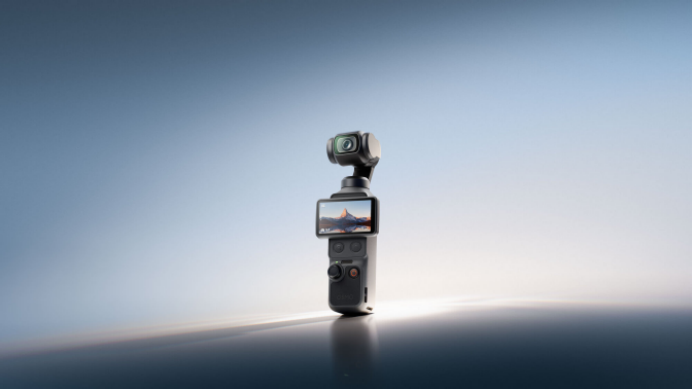
Image source: DJI official website
OPPO and vivo are more likely to pursue a different path. Their true strength lies in system synergy and content ecosystem capabilities.
For smartphone companies, Pocket-style products are naturally better suited as extensions of smartphone imaging systems rather than entirely independent new devices. Therefore, OPPO and vivo will not simply replicate DJI's approach but are more likely to redefine Pocket products around 'smartphone synergy.'
From a product design perspective, smartphone manufacturers like OPPO and vivo can integrate capabilities such as AI editing, one-click adaptation to short video platform aspect ratios, direct streaming via smartphone using Pocket lenses, and multi-device collaborative creation into the product's foundational logic from the outset. Hardware companies, on the other hand, often need to address these features later through app updates.
The traditional video creation workflow is fragmented—cameras handle shooting, computers handle editing, and smartphones handle distribution.
With the advent of the short video era, the entire content production process has been increasingly compressed. Shooting, AI color grading, automatic editing, subtitle generation, and platform publishing are gradually merging. Rapid iterations in AI video tools have further lowered the barrier to content creation for ordinary users.
Therefore, the future competition for Pocket-style products will hinge on 'who better understands ordinary creators' and 'who can control the entire workflow from shooting to distribution.' Hardware specifications are merely an entry ticket; content production efficiency will determine the winner.
Once Pocket products integrate with AI Agents, they can automatically recognize scenes, generate Vlogs, complete editing and soundtracking, and further form a collaborative creation ecosystem with smartphones, earphones, watches, and other devices. This capability transcends the traditional framework of 'camera competition.'
At this point, the two distinct paths in the Pocket market have become clear.
Hardware-focused manufacturers like DJI and Insta360 are betting on the devices themselves—whoever more precisely defines the product, offers stabler gimbals, and achieves more efficient manufacturing is more likely to win user favor.
Ecosystem-focused manufacturers like OPPO and vivo are betting on system synergy—the Pocket is merely an entry point, connected to photo albums, editing tools, cloud services, and a full-scene device matrix.
These two logics differ sharply in product design requirements, cost structure arrangements, and profit model expectations.

Epilogue
The scarcity of the Pocket 4 sends a signal to the entire consumer electronics industry: the mobile imaging market has not stopped growing; it has merely entered a new phase.
Over the past decade, smartphones have largely replaced traditional cameras. However, as smartphones shoulder increasingly heavy responsibilities—communication, payments, socializing, entertainment, work—they struggle to instantly transform into pure, focused, and uninterrupted creative tools for every spontaneous shooting opportunity. Notification pop-ups, battery anxiety, and storage space competition constantly disrupt the continuity of daily shooting. Thus, a clear trend has emerged: new imaging devices outside smartphones are reappearing. This time, they are not targeting the everyday casual shooting that smartphones already excel at but rather the independent creative scenarios that smartphones increasingly struggle to fully cover—scenarios requiring focused immersion.
OPPO and vivo's entry into the Pocket market underscores that smartphone manufacturers are reevaluating the boundaries of 'mobile creation.' They have realized that the next battleground for content production extends far beyond the physical lens of a smartphone camera—it lies in whether the entire workflow, from lens to screen, shooting to distribution, and solo operation to multi-device collaboration, can be reconnected.
This contest has only just begun.
- XINLIU -
-
![]()
From Dominance to Just One Slot: Fuel Vehicles Fully 'Marginalized'
-
![]()
Doubao Goes Premium, Wukong Goes for Volume: The Divergence of AI Assistants
-
![]()
Yu Hao: The Ubiquitous Force
-
![]()
The Honda that Did Everything Itself is Gone for Good
-
![]()
Why Pocket 4 is in Short Supply and OV is Making a Strong Entry: Why Pocket Gimbal Cameras Have Suddenly Become a New Battleground
-
![]()
Doubao Embraces Premium Tier, Wukong Expands: The Divergence Paths of AI Assistants
-
![]()
China Holds the Key to Success or Failure, BMW's New CEO Faces a Do-or-Die Battle
-
![]()
Holding Similar AI “Passes,” Alibaba and Tencent Have Transformed Beyond Recognition