Starship's 13th Flight: A Crucial Juncture for SpaceX's Trillion-Dollar Valuation
 07/23 2026
 362
362
On July 21, SpaceX finally arrested its seven-day consecutive decline in trading.
On that day, SpaceX's stock price soared by up to 8.4% during intraday trading, eventually closing at $123.54, a 3.08% increase. Prior to this, the stock price had plummeted from $225.64 in mid-June to $119.85, with its market capitalization dwindling from nearly $3 trillion to around $1.57 trillion.
After seven days of successive declines, Macquarie maintained its "Outperform" rating on SpaceX, expressing the belief that the market underestimates SpaceX's long-term potential in artificial intelligence and infrastructure. The impending release of its first quarterly results, along with valuation adjustments, short covering, and market anticipation for the new round of Starship test flights, collectively paved the way for this rebound.
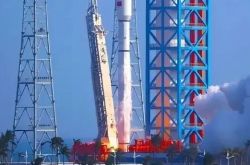
On July 24 (Beijing Time), SpaceX is set to attempt the 13th flight test of its Starship once more. Previously, on July 16, the 33 Raptor engines at the base of the Super Heavy booster initiated their ignition sequence, but some engines failed to start normally, prompting the onboard system to automatically abort and shut down all engines before the rocket left the launch pad.
What would typically be a routine launch abort during the development of a large rocket occurred at a sensitive juncture—just one month after SpaceX's public listing and amid a period of successive stock price corrections. Of course, attributing a market capitalization drop exceeding $1 trillion to a single launch abort is overly simplistic. Rapid initial gains post-listing, coupled with the impending release of the first earnings report and the expiration of share lockup, also prompted investors to reassess SpaceX's revenue, profits, and cash flow.
However, the shift in market sentiment is already evident.
Before the listing, investors were willing to pay a premium for SpaceX's future prospects; after the listing, they began demanding that the company demonstrate with concrete engineering progress how long they would have to wait for the future of Starlink V3, lunar landings, and space-based computing power.
01
The 13th flight is far from a mere "retry."
The 12th flight test, conducted on May 22 this year, marked the inaugural flight of the Starship V3 configuration. During ascent, one engine on the Super Heavy booster ceased prematurely; after stage separation, the Starship spacecraft also lost one engine but continued its primary mission with the remaining engines. Subsequently, during the return burn, five Raptor engines on the booster failed to restart as planned, ending the return burn prematurely, and the booster ultimately fell into the sea at a relatively high speed.
The U.S. Federal Aviation Administration (FAA) subsequently launched an accident investigation. The final report suggested that the booster's return failure was most likely due to two factors: the thermal environment during ascent affected the propulsion system components, and there were issues with the engine alarm system's parameter settings. The FAA accepted SpaceX's four proposed corrective measures and closed the investigation on July 13, allowing the 13th flight to proceed.
Therefore, the primary objective of the 13th flight is to verify whether the issues exposed during the 12th flight have been truly resolved, including whether the impact on propulsion system components can be mitigated, whether engine alarm parameters can accurately identify anomalies, and whether the return burn can be completed as planned.
The launch abort on July 16 added further complexity to this test. After completing the previous round of corrections, a new Super Heavy booster once again experienced engine issues during ground ignition. Musk subsequently stated that SpaceX would replace two Raptor engines and delay the next attempt to July 23 (local time).
For a rocket still in the experimental phase, encountering issues is not unexpected; the key lies in whether similar problems recur and whether each flight can achieve verifiable progress based on data from the previous round. The true significance of the 13th flight lies in whether SpaceX can translate the data obtained from the previous test flight into real and effective engineering improvements in the next round.
02
If the 12th flight primarily verified whether the V3 configuration could complete a basic flight, the 13th flight faces a more advanced question: When can Starship become a true transportation system?
This test flight must overcome three major challenges.
The first challenge remains the propulsion system, extending beyond the few seconds when all 33 engines ignite simultaneously. The Super Heavy booster must undergo liftoff, stage separation, flipping, and return burn, while the Starship spacecraft must complete ascent, engine restart in space, re-entry, and terminal attitude control. The propellant states, thermal environments, and flight attitudes vary significantly across different stages, requiring continuous coordination between the engines, propellant supply, vehicle structure, thermal control, and flight control systems.
Multi-engine parallelization provides high thrust and a degree of fault redundancy but also increases the difficulty of ignition sequencing, thrust consistency, vibration transmission, and fault isolation. Meeting individual engine performance standards is just the foundation; whether multiple engines can coordinate throughout the entire mission cycle determines whether a rocket can achieve high-frequency reuse.
This challenge is not unique to SpaceX. Any liquid rocket entering the stage of high capacity, multi-engine parallelization, and reusability—whether using 33 or 9 engines in parallel—will face similar systems engineering problems. The more engines and the longer the mission chain, the more complex the relationship between individual components and the entire system becomes, and the more limited the coverage of ground testing.
The second challenge is the deployment test of 20 Starlink V3 satellites, marking the most significant commercial change in the 13th flight.
Unlike previous test flights that primarily carried simulated payloads, these satellites, once released, will test solar panel deployment, antenna deployment, and laser communication with the existing Starlink network. Although they will not enter long-term operational orbits and are expected to re-enter the atmosphere about 20 minutes after release, Starship will thereby begin verifying its real payload transportation and satellite deployment capabilities.
Starlink is currently SpaceX's most important revenue generator, and the V3 satellites are crucial for the next phase of network capacity expansion. Due to payload capacity and fairing space limitations, the Falcon 9 struggles to deploy V3 satellites at scale. Until Starship becomes operational, the large-scale deployment of Starlink V3 must wait; once operational, SpaceX can transport more satellites in a single mission, significantly improving constellation expansion efficiency and opening up space for Starlink's next round of growth.
The third challenge is re-entry and thermal protection. If Starship can deploy payloads but cannot return stably, it remains an expensive expendable rocket. SpaceX's envisioned cost advantage is based on full vehicle reusability, and thermal protection durability, attitude control precision, and structural load-bearing capacity must all be verified through consecutive flights.
Among the 20 V3 satellites carried by the 13th flight, six are equipped with cameras to observe the spacecraft's thermal protection system from the outside. SpaceX has also placed white markers on some thermal tiles and tested different installation methods, indicating that re-entry thermal protection remains one of the primary challenges for Starship's stable reuse.
Among these three challenges, the propulsion system determines whether Starship can complete a full flight, payload deployment relates to when it can create commercial value, and re-entry and return determine whether low-cost reuse is feasible. The 13th flight thus becomes a critical validation for Starship's transition into an actual transportation system.
03
Starship can no longer be viewed solely as a technical project; its position within SpaceX's business portfolio ensures that each test flight enters the capital market's radar.
Success in the 13th flight does not guarantee a rise in SpaceX's stock price; anomalies will not immediately worsen SpaceX's fundamentals. SpaceX's current commercial launches primarily rely on the Falcon 9, and the existing Starlink network continues to expand.
However, SpaceX's trillion-dollar valuation clearly encompasses more than just today's Falcon 9 and Starlink.
For investors, what they purchase is not just commercial launch orders and satellite internet subscription revenue but also long-term expectations for Starlink V3, fully reusable transportation, crewed lunar landings, deep space exploration, and orbital AI computing power. Nearly all these businesses share a common prerequisite: Starship must become operational.
SpaceX explicitly states in its prospectus that if Starship fails to complete development and large-scale deployment as expected or cannot achieve sufficient launch frequency, reusability, and payload capacity, V3 satellite deployment, next-generation direct-to-phone services, and orbital AI computing infrastructure may all be affected.
The Falcon 9 supports SpaceX's current launch system, and Starlink forms its commercial foundation, while Starship carries the most expensive part of the future in its valuation. Once Starship achieves high-frequency, low-cost launches, the Starlink network, lunar transportation, and orbital computing power will all gain new expansion space; however, if Starship's progress continues to delay, the realization of these businesses will also be postponed.
After entering the public market, launch aborts, regulatory investigations, test flight delays, and correction progress will all become information influencing investor judgments. Starship's progress rate will also determine how the market assesses SpaceX's future growth potential.
04
For the 13th flight, what the capital market truly cares about is not just whether the mission will ultimately be deemed a "success" or "partial success" but whether the exposed issues have been resolved and whether Starship is gradually approaching actual use after each round of test flights.
If the rocket successfully completes V3 satellite release, spacecraft engine restart, re-entry, and controlled splashdown, SpaceX will gain a nearly complete validation of the V3 configuration. If the ascent flight and satellite release are completed smoothly but the return phase encounters setbacks, the mission still holds clear value, at least demonstrating that Starship is beginning to possess real payload deployment capabilities.
A relatively unfavorable outcome would be if engine startup issues recur on the launch pad or if propulsion system anomalies from the 12th flight repeat during flight. That could imply that the problems are not limited to individual engines, and SpaceX would need to re-examine the propellant system, thermal environment, alarm logic, or hardware consistency, potentially slowing down the pace of subsequent test flights.
SpaceX has already established the world's highest-frequency commercial launch system with the Falcon 9 and developed Starlink into a satellite internet network with tens of millions of users. Whether it can open up new growth space going forward largely depends on when Starship matures and can undertake V3 satellite deployment, lunar transportation, and orbital computing infrastructure construction.
Therefore, the test flight on July 24 (Beijing Time) will not determine SpaceX's fate or the stock price's rise or fall the next day, but it will influence how the market judges how long it will take for this company, with a market capitalization of approximately $1.6 trillion, to reach the future it envisions.
The market is still willing to pay a premium for dreams, but from now on, it will also factor in the time required for those dreams to materialize.
-
![]()
Profits Plunge by 57%: China’s Auto Price War Takes a Toll on Tesla
-
![]()
Google: Is AI Going to Collapse? A Savior Has Arrived
-
![]()
The Proxy War Between Uber and Meituan
-
![]()
30 Acres! Another Aerospace Unicorn Secures Land in Yizhuang to Establish a 'Satellite Factory'
-
![]()
A Rocket Soars from the East China Sea: Orient Space Embarks on Dual Solid-Liquid Long-Haul Journey
-
![]()
Baidu Becomes "Younger"
-
![]()
Baidu Becomes 'Younger'
-
![]()
Chinese Automakers Going Global: Electrification as the Key Enabler, AI-Driven Intelligence as the Decisive Factor