Gemini Falls Out of Global Top 10: Where Is Google's AI Empire Headed?
 07/23 2026
 368
368
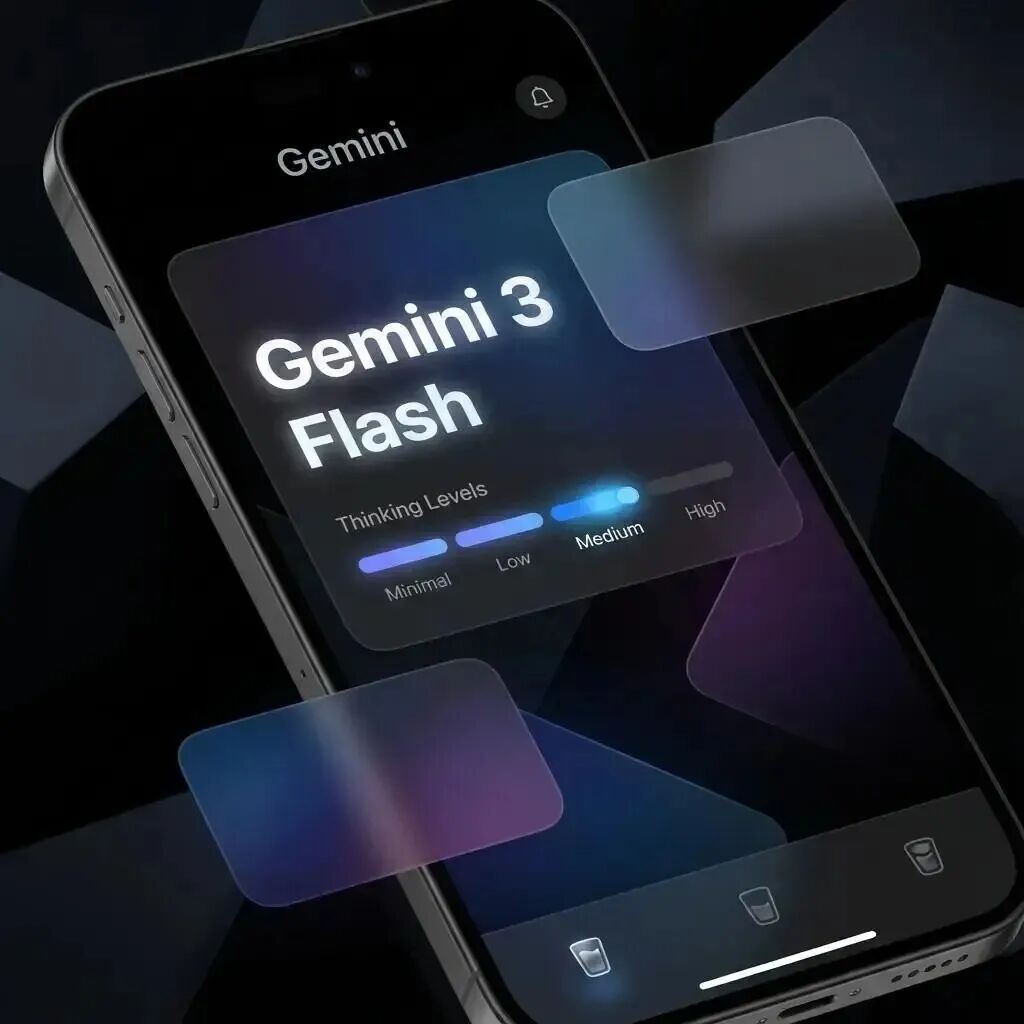
▲ All images in this article are from the internet. Please contact us for deletion if there is any infringement.
More Predicaments for AI Giants

This article was first published in Shadow Memo by Mo Yingsheng.
If you asked any tech industry observer at the end of 2022 who would be the strongest contender in the era of generative AI, Google would surely be at the forefront of the answers.
That year, Google held two top AI labs, DeepMind and Google Brain, possessed nearly inexhaustible computing resources and the world's largest data pool. The core paper of the Transformer architecture was authored by its researchers, and the eight authors of 'Attention Is All You Need' remain legendary symbols in the AI circle.
Everyone assumed that when the wave of generative AI truly arrived, Google would be the one standing at the forefront.
But the business world never follows the script.
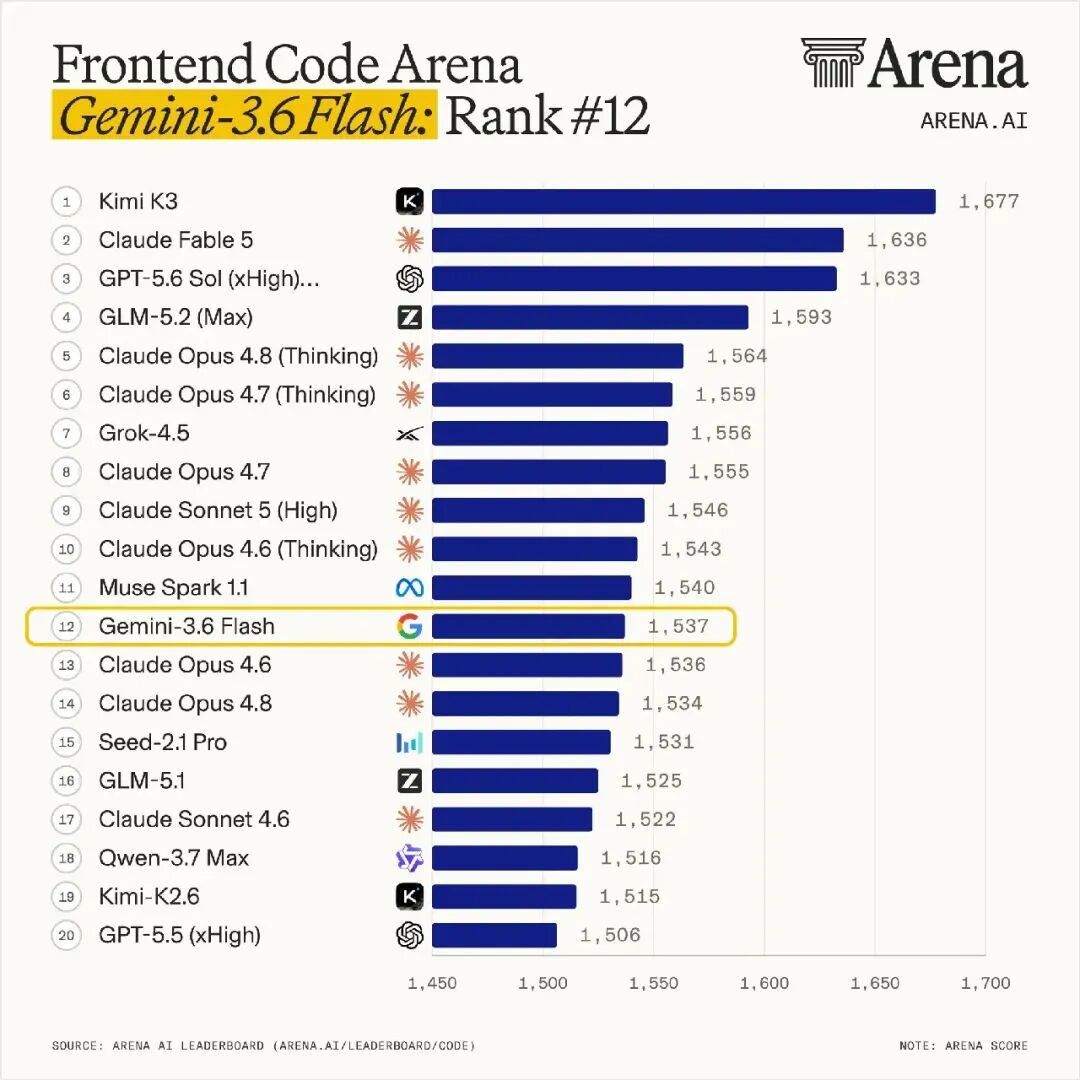
In July 2026, multiple authoritative evaluation agencies updated the global comprehensive ranking of large models, showing that Gemini, Google's most important AI product, had fallen out of the global top 10.
Once seen as Google's strongest weapon against OpenAI, Gemini slipped from being a highly anticipated 'GPT-4 killer' at launch to a position barely holding onto the second tier in just a year and a half.
Viewed over a longer timeline, this is not Google's first time falling behind in the AI race but the culmination of a series of strategic swings, organizational internal friction, and innovation delays.
More intriguingly, among the top 10 in this ranking are familiar faces like OpenAI's GPT-5, Anthropic's Claude 4, and Meta's Llama 4, as well as new flagship models from xAI's Grok-3 and Mistral, and even products from several Chinese companies and European newcomers.
But Google is absent, almost silently.
This is not just a simple ranking change; it is a mirror reflecting Google's deepest structural predicaments in the AI era.

A Giant Trapped by Itself
To understand Google's current predicament, we must return to a historical starting point that has been repeatedly mentioned yet easily underestimated.
In 2017, Google's research team published the paper 'Attention Is All You Need,' proposing the Transformer architecture. This paper not only became the technical foundation for all subsequent large language models but also established Google's undisputed pioneering status in AI basic research.
Without Transformer, there would be no ChatGPT, Claude, or Grok today, nor would there be this round of industrial explosion in generative AI.
However, being a pioneer does not equal being a harvester. What did Google do after Transformer?
It did launch BERT, which set new records in multiple benchmark tests for natural language understanding and was even deeply integrated into the search engine at one point.
But Google's attitude toward generative AI has always been hesitant, conservative, and tinged with a certain arrogance unique to big companies.
Internally, a conversational AI prototype similar to ChatGPT already existed around 2020, but management delayed its market release due to concerns about impacting search advertising revenue, the accuracy of generated content, and responsibility attribution.
This is a classic 'Innovator's Dilemma.' When your core business contributes over $200 billion in annual advertising revenue, any new technology that might disrupt this model will be scrutinized and filtered repeatedly internally until strangled in the cradle by self-censorship mechanisms.
Google is not lacking in technology or talent but is held hostage by its overly successful business model. As long as the search advertising money-printing machine keeps roaring, any risk that slows it down will be infinitely amplified.
By November 2022, when OpenAI launched ChatGPT and gained over 100 million users within two months, the industry's balance instantly tilted.
Google woke up abruptly and hastily launched Bard in response, only to see factual errors during its first public demo, wiping out $100 billion in market value overnight.
This was a ferocious (fierce) brand accident, but more damaging than the market value was the loss of external confidence in Google's AI capabilities.
A company holding the core technology stumbled so badly in the most critical productization stage—this cannot be explained by a Accidental mistake (occasional mistake) alone.
Bard was later renamed Gemini, and Google attempted to regroup with a unified large model brand.
Gemini 1.0, released at the end of 2023, did show potential in multimodal capabilities, especially its understanding of videos and images, which was eye-catching. But the problem lay in the huge gap between release rhythm and actual experience.
That sensational demo video was later exposed to have been edited and prompt-optimized, not real-time interaction, further damaging Google's credibility in the AI field.
An emotion began to circulate among users and developers: Take Google's AI releases with a grain of salt; don't take them too seriously.

Why Gemini Was Pushed Out of the Top 10
Today, Gemini's fall from the global top 10 is not a sudden mutation but the result of long-term triple structural fractures.
The first fracture is that the model's capability iteration speed cannot keep up with competitors.
The evaluation dimensions of global large model rankings typically cover dozens of sub-indicators, including reasoning ability, mathematics and code, multilingual understanding, long-context processing, and multimodal interaction.
Over the past year, OpenAI has cross (leaped) from GPT-4 to GPT-5, Anthropic's Claude series has continuously improved in deep reasoning and safety, Meta's Llama open-source ecosystem has spread like wildfire, spawning numerous derivative models optimized based on its architecture that often outperform the original version in specific tasks.
Even xAI, founded less than three years ago, has surpassed Gemini in multiple indicators through aggressive computing power investment and efficient technical routes.
Competition is no longer a linear race but an exponential arms race.
While all rivals are iterating rapidly every few months, Gemini's update rhythm appears sluggish and hesitant. Gemini 2.0's release was several months later than expected, and soon after its launch, the developer community pointed out that its performance in some key reasoning tasks was even inferior to the latest versions of certain open-source competitors.
This embarrassment of 'releasing and falling behind' is fatal for a flagship model aiming for the first tier.
The second fracture is the continuous loss of developer ecosystem and reputation.
The competition among large models is never just about the models themselves but also about the ecosystem.
OpenAI has ChatGPT as a super app entrance and a global developer and enterprise client base; Meta has penetrated every corner from startups to large enterprises with its open-source strategy for Llama; Anthropic has built a reliable and responsible brand image in the high-end enterprise market with Claude.
In contrast, Gemini's ecological niche has always been unclear. It wants to win enterprise clients through Google Cloud, reach consumers via Android and Google's suite of apps, and directly challenge ChatGPT Plus with the Gemini Advanced subscription service. The result of multiple attacks is that no side has formed an overwhelming advantage.
The developer community's attitude speaks volumes. On GitHub, Hugging Face, and major tech forums, the number of posts discussing Gemini integration is far lower than topics related to OpenAI and Llama.
When choosing underlying models, Gemini is often not the first or even second choice for many AI startups. This ecological weakness is self-reinforcing: The fewer users, the less feedback, the slower improvements, leading to even fewer users.
Google's once-proud developer relations network has unexpectedly failed in the AI battle.
The third fracture is the repetition and internal friction in Google's AI strategy.
Looking at Google's AI organizational changes over the past five years is like a textbook on how large enterprises self-consume.
Initially, Google Brain and DeepMind ran in parallel, one focusing on research-product integration and the other on frontier exploration. In 2023, Google merged them into Google DeepMind, hoping to consolidate forces for Gemini.
This logic itself was fine, but the cultural conflicts, personnel turmoil, and directional debates from the merger consumed a vast amount of energy that should have been used for technical breakthroughs.
DeepMind has long been known for its academic freedom and long-term research orientation, while the Google Brain team is more accustomed to close collaboration with product departments for rapid implementation.
The forced integration of these two cultures led to the departure of some key researchers. Over the past two years, a long list of AI scientists who left Google to start businesses or join competitors includes co-authors of the Transformer paper.
These individuals, carrying dissatisfaction with Google's strategy and technological idealism, have become the sharpest weapons for other companies.
When a company's top talents are solving internal alignment issues rather than technical problems, its slide in external rankings is just a matter of time.

The Hidden Trumps of a Vast Empire
But concluding that Google is already out of the AI era would be equally misguided.
Google's current situation is not a complete defeat but a shift from absolute leadership to difficult catching-up—a fundamental difference.
Stepping back, Google's AI layout (layout) thickness still makes it nearly unmatched by most competitors.
At the computing infrastructure level, Google's self-developed TPU chips have iterated to the fifth generation, forming an effective complement and partial substitute (replacement) for NVIDIA GPUs.
Amid global AI computing shortages and soaring high-end GPU prices, having autonomous chip capabilities means not being strangled by supply chains.
Google Cloud's globally deployed TPU clusters are massive, providing the material foundation for Gemini's subsequent large-scale training and inference. In terms of computing power reserves alone, Google remains among the global top three.
At the data level, Google Search indexes billions of pages across the internet, YouTube is the world's largest video platform, and the daily data volume generated by Gmail, Google Maps, and the Android system is staggering.
After desensitization and screening under compliance, this data can provide nearly unlimited fuel for multimodal model training. Data quality determines a model's upper limit, and Google's advantage in this dimension has not been fully unleashed.
At the application scenario level, Google has over 1.5 billion Gmail users, more than 2 billion Android devices, and YouTube with over 2 billion monthly active users.
This means that once Gemini's capabilities truly mature, it can instantly reach the world's largest user base. Imagine a sufficiently intelligent AI assistant seamlessly embedded in every interaction of Gmail, Google Docs, Google Maps, and the Android system—an end-to-end integrated experience unmatched by any single AI application.
Google's real challenge has never been 'lacking cards' but 'how to play them.' The problem over the past two years is that it had too many and too mixed cards, wanting to play each one but not decisively enough with any.
Judging from recent developments, Google seems to finally be focusing. Since the second half of 2025, the restructuring pains at Google DeepMind have gradually subsided, and the research and development rhythm for the new generation of Gemini models has accelerated.
Google has begun deeply embedding AI capabilities into Search, launching products like AI Overviews. Although initial accuracy question (doubts) have been vocal, the iteration speed is improving.
On the cloud side, the Vertex AI platform is striving to narrow the gap with Azure OpenAI Service. On the open-source front, Google has launched the Gemma series of lightweight models, attempting to regain some discourse power (voice) in the developer community.
These moves indicate that Google recognizes the issues and is trying to solve them in its most be good at (proficient) way: using engineering capabilities to turn technical problems into product problems, then resolving product problems with scale advantages.

Opportunity Windows Remain
But Time Is Running Out
The global competition for large AI models is far from over. The current market landscape resembles the first half of a marathon, where leading runners have changed several times, and no one dares claim victory yet. Google still has several structural opportunity windows.
The first opportunity is the comprehensive outbreak of multimodality. Competition in text-based large models has reached a fever pitch, but true multimodal understanding and generation capabilities—enabling AI to simultaneously process text, images, videos, audio, and even sensor data from the physical world—are still in their early stages.
Google has accumulated years of expertise in fields such as visual recognition, video analysis, and robotic control. YouTube's data assets may unlock even greater value in the multimodal era than its search engine.
If Google can take the lead in this direction and create a generational difference that users clearly perceive, it could redefine the playing field, much like how the iPhone redefined smartphones.
The second opportunity is the large-scale implementation of AI Agents. Future AI competition will extend beyond chat-based interactions to who can truly help users complete complex tasks: booking travel, managing schedules, performing cross-platform operations, and even controlling smart homes and vehicles.
Google possesses a complete infrastructure for personal digital life, including Gmail, Calendar, Maps, and payment systems. Once these tools are seamlessly integrated by a powerful Agent, their value will far exceed that of an isolated conversational AI.
This vision has been discussed for a long time, but the key lies in execution. Google needs to prove that it is not just a company that draws blueprints.
The third opportunity arises from changes in the regulatory landscape. Major economies like the EU and the U.S. are tightening regulations on AI, particularly in areas such as privacy, security, and content accountability.
As a seasoned giant that has weathered countless antitrust and privacy investigations, Google has more experience in compliance and government relations than emerging AI companies. When regulatory barriers rise, smaller competitors may be eliminated, while Google could stabilize its position by leveraging its compliance advantages.
Of course, this is a double-edged sword. Google itself is under significant antitrust pressure, and whether it can turn regulation into a moat remains uncertain.
However, realizing all these opportunities hinges on one prerequisite: Google must make fundamental changes in organizational efficiency and strategic focus.
The external world will not wait for it. OpenAI is advancing toward more complex reasoning and Agent capabilities, Anthropic is making steady progress in the enterprise market, Meta's open-source army is capturing the minds of small and medium-sized developers, and Apple, with its device ecosystem, is poised to redefine interaction entry points with on-device AI at any moment.
This is a six-way contest, and there will be no second chance for those who sit out.
Gemini's fall out of the global top ten is a signal, but not a verdict.
In the tech industry, the shelf life of technological first-mover advantages is much shorter than imagined, while the costs of organizational inertia and strategic indecision are far higher.
Google has transformed from a search startup into a digital advertising empire and successfully pivoted during the mobile internet crisis. It has the DNA for self-reinvention.
However, this time, its opponents are no longer Yahoo or Microsoft but a new breed of competitors without historical baggage, with AI as their sole mission. In the face of such competition, any hesitation or arrogance could be an irreversible mistake.
Google's AI journey is indeed challenging, but it is far from time to write its obituary.
The real question is not whether it can return to the top ten but whether it is willing to admit that past glories count for nothing under the new rules of the game and then fight like a challenger.
-
Annual Revenue Surpasses 3 Billion: An Automotive Trim 'Little Giant' Makes Its Debut on the Beijing Stock Exchange
-
![]()
The Space Force Wants to Spend $30 Billion on Rocket Launches: Is Trump Doubling Down, and Is SpaceX the Big Winner?
-
![]()
Going Crazy! One out of Every Three Plug-in Hybrids Sold in Europe is a Chinese Vehicle
-
![]()
Gemini Falls Out of Global Top 10: Where Is Google's AI Empire Headed?
-
![]()
Jiefeng Power Secures IPO Registration: A Critical Turning Point for an Exhaust System Supplier’s Evolution
-
![]()
Gemini Slips From Global Top 10: What Lies Ahead for Google's AI Dominion?
-
![]()
Exclusive | Interview with Wu Yongjian, Vice President of Tencent Cloud: The Intelligent Agent Market Has Yet to Enter a Bubble Phase, Though Some Sectors Are Becoming Saturated
-
![]()
Profits Plunge by 57%: China’s Auto Price War Takes a Toll on Tesla