Challenges Ahead for Raysharp Semiconductor's IPO Amidst Controlling Shareholder's Limited Dominance
 08/06 2026
 332
332
Projected profitability by 2028.
Zhang Wei, Investor Network
Recently, RF chip manufacturer Raysharp Semiconductor (Chongqing) Co., Ltd. (hereinafter referred to as "Raysharp Semiconductor" or "the company") has revealed its responses to the review inquiries concerning its IPO application on the SSE STAR Market.
Documents indicate that the SSE STAR Market has raised 15 concerns regarding Raysharp Semiconductor, encompassing control rights, equity changes, sustainable operation capabilities, clients, sales models, corporate governance, internal control standards, and fundraising projects.
Raysharp Semiconductor stands out as one of the few RF front-end module manufacturers in China capable of producing RF filters. In 2024, the company's high-performance filter wafer manufacturing base commenced operations, marking Raysharp Semiconductor's successful transition from a Fabless (fabrication-less) design firm to a Fab-lite (light fabrication) platform enterprise.
Through this IPO, Raysharp Semiconductor aims to raise RMB 809 million to enhance production capacity, establish a research and development center, and bolster working capital. Whether the company will ultimately list on the SSE STAR Market remains uncertain.
Controlling Shareholder Holds Less Than 30% Voting Rights
Raysharp Semiconductor is a formidable player in the domestic RF front-end sector. However, the low voting rights percentage of its controlling shareholder has sparked concerns regarding the stability of the company's control.
Established in March 2017 by Ni Jianxing and Pingtan Raysharp (an employee stock ownership platform), Raysharp Semiconductor initially had a shareholding structure of 55% and 45%, respectively. Public records reveal that Ni Jianxing holds a bachelor's degree from the University of Electronic Science and Technology of China and a master's degree from Iowa State University in the United States. He previously served as an RF engineer at Motorola.
Given the founder's background, Raysharp Semiconductor's financing pace has outstripped that of its peers. Just two months after its inception, the company secured angel investments from Huaqin Technology (603296.SH) and Zhengxuan Fund. In September 2018, Raysharp Semiconductor received Pre-A round financing from InnoFund and Fortune Capital.
In May 2019, Raysharp Semiconductor completed its Series A financing, with investors including Guangfa Qianhe, Shenzhen Capital Group, Linxin Investment, Hubble Investment (affiliated with Huawei), and Qianhai Pengde. From 2021 to 2022, Raysharp Semiconductor completed at least six rounds of financing, involving participants such as Wuhan Shunwei (affiliated with Xiaomi), OPPO, Jiangbeizui Fund, Yuecai Fund, and Futian Industrial Investment.
By the time it completed its shareholding reform in December 2021, the direct shareholding percentages of Ni Jianxing and Pingtan Raysharp had decreased to 17.27% and 12.37%, respectively. OPPO, Hubble Investment, and Wuhan Shunwei emerged as the top five shareholders. In March 2025, Raysharp Semiconductor relocated its headquarters from Shenzhen to Chongqing and submitted its prospectus in December of the same year in a bid to list.
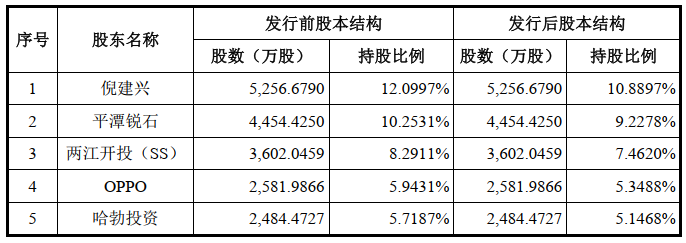
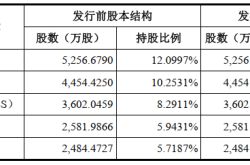
(Figure 1: Major Shareholders of the Company. Source: Prospectus)
Prior to this IPO, the direct shareholding percentages of Ni Jianxing and Pingtan Raysharp stood at 12.10% and 10.25%, respectively. Other shareholders with stakes exceeding 5% include Liangjiang Development and Investment, OPPO, and Hubble Investment. Shareholding details reveal that Raysharp Semiconductor currently boasts 61 shareholders, including two state-owned enterprises (Liangjiang Development and Investment, Futian Industrial Investment) and 37 private equity funds.
According to the prospectus, in addition to his direct shareholding of 12.10%, Ni Jianxing exercises control over 25.68% of Raysharp Semiconductor's voting rights through Pingtan Raysharp and Pingtan Ruishi. Given the dispersed shareholding and relatively low voting rights, the SSE STAR Market has requested that Raysharp Semiconductor clarify whether "Ni Jianxing can effectively control the company."
Raysharp Semiconductor stated that among other shareholders, Liangjiang Development and Investment (exercising control over 13.34% of voting rights), Zhengxuan Fund (7.92%), OPPO (5.94%), Hubble Investment (5.72%), and Wuhan Shunwei (5.40%) have significantly lower voting rights percentages compared to Ni Jianxing, posing no substantial threat to the stability of the company's control.
Cumulative Losses Approach RMB 1 Billion Over Three Years
Raysharp Semiconductor specializes in the research, design, manufacturing, and sales of RF front-end chips and modules, as well as RF discrete devices. Its products find applications in smartphones, the Internet of Things, satellite communications, drones, smart wearables, and other fields. The company initially relied on the Fabless chip design model and entered the smartphone supply chain with its RF filters.
With the introduction of investors such as OPPO, Hubble Investment, and Shunwei Capital, coupled with the relocation of its headquarters to Chongqing, Raysharp Semiconductor commenced the establishment of MEMS filter production lines. The company transitioned from a Fabless design firm to a Fab-lite manufacturing model.
Currently, in the mobile terminal sector, Raysharp Semiconductor's products have been mass-produced for smartphone brands such as OPPO, Xiaomi, Samsung, Honor, vivo, ZTE, and Transsion. The company has also penetrated the supply chains of ODM manufacturers including Huaqin Technology, Longcheer Technology (603341.SH), Luxshare Precision (002475.SZ), Zhongnuo Communication, and Tianlong Mobile.
On the flip side, the RF front-end industry is capital-intensive and characterized by rapid technological advancements. Continuous R&D investment has resulted in periodic losses for relevant enterprises. The SSE STAR Market permits listings of companies that have not yet achieved profitability, providing financing avenues for industry players. However, concerns regarding the scale of Raysharp Semiconductor's losses and cash flow pressures have raised regulatory doubts about its sustainable operation capabilities.
Financial reports indicate that from 2023 to 2025 (hereinafter referred to as the "reporting period"), Raysharp Semiconductor's revenues were RMB 649 million, RMB 669 million, and RMB 859 million, respectively. Its net profits attributable to shareholders were -RMB 328 million, -RMB 353 million, and -RMB 295 million, respectively, with cumulative losses of RMB 976 million over three years.
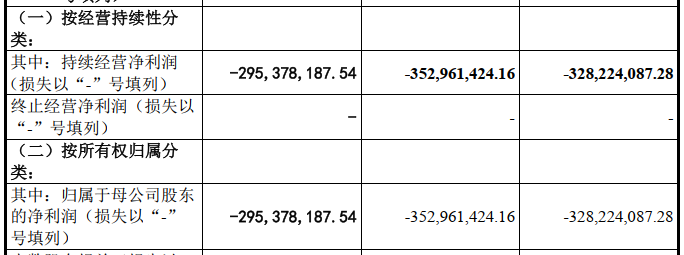
(Figure 2: Continuous Losses of the Company. Source: Prospectus)
As of the end of 2025, the company's unrecovered losses exceeded RMB 1.8 billion. Raysharp Semiconductor attributed its continuous losses during the reporting period to relatively low product gross profit margins, high period expenses (especially R&D expenses), high share-based compensation expenses, and significant asset impairment losses.
Financial reports reveal that during the reporting period, Raysharp Semiconductor's share-based compensation expenses were RMB 111 million, RMB 15.51 million, and RMB 26.05 million, respectively. Its R&D expenses were RMB 189 million, RMB 203 million, and RMB 194 million, respectively, with R&D expense ratios (excluding share-based compensation) exceeding 20% in each period. Raysharp Semiconductor stated that it has not yet achieved economies of scale, and sales gross profits are insufficient to cover R&D and other expenses, resulting in continuous losses. The company anticipates achieving profitability by 2028.
Doubts Arise Over the Rationality of Fundraising Projects
In this IPO, Raysharp Semiconductor aims to raise RMB 809 million, including RMB 369 million for the Phase II construction project of the MEMS device production base, RMB 330 million for the R&D center construction project, and RMB 110 million to supplement working capital.
Notably, 90.43% of the funds raised for the production base Phase II project will be allocated to equipment procurement, while 88.61% of the funds for the R&D center construction project will be earmarked for engineering construction. In response, the SSE STAR Market has requested that Raysharp Semiconductor explain the "rationality and necessity of the scale of this fundraising, the rationality of allocating the majority of funds for the R&D center construction project to engineering construction, and whether the funds are primarily directed toward technological innovation."
As previously mentioned, Raysharp Semiconductor has already established an MEMS device production base project for filter production lines in Chongqing. Construction commenced in December 2020, with the factory building transferred to fixed assets in June 2023. Partial production lines began transferring to fixed assets and commenced operations in May 2024.
The SSE STAR Market has requested that Raysharp Semiconductor clarify the "changes in capacity utilization and straight-through rates since the filter production lines commenced operations, and whether there are any instances of slow-moving inventory." It is evident that regulators harbor doubts about Raysharp Semiconductor's decision to raise RMB 369 million for the Phase II production base project despite already having operational filter production lines, especially since over 90% of the project's funds are designated for equipment procurement.
According to the response documents, as of the first quarter of this year, the capacity utilization rate of the MEMS filter production lines was 32.19%, with a straight-through rate of 93.44%. The production lines are still in the early stages of capacity ramp-up. Whether regulators will approve the company's continued fundraising for the Phase II production base project remains to be seen.
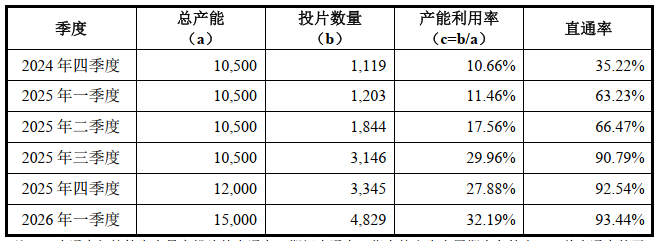
(Figure 3: The Operational Production Project is in the Capacity Ramp-Up Phase. Source: Response Documents)
Regarding the absorption of the new capacity from the Phase II production base project, Raysharp Semiconductor stated that relevant products have been sold or are undergoing import verification and sample verification with OPPO, Huaqin Technology, ZTE, Xiaomi, and others. Sales are expected to commence or increase significantly from 2026 onwards. The shipment volume of highly integrated modules is anticipated to rise rapidly, further driving demand for filters. Therefore, the risk of overcapacity for the new capacity is deemed low.
Regarding the rationality of allocating the majority of funds for the R&D center construction project to engineering construction, Raysharp Semiconductor explained that the project primarily involves procuring advanced R&D equipment, recruiting high-end talent, and investing in relevant materials for technological research. It aims to systematically enhance the company's R&D capabilities, aligning with its strategy of sustained high R&D investment, the trend of rapid technological iteration in the industry, and its future development plans, thus demonstrating rationality.
In reality, compared to the first two projects, the need to "supplement working capital" through this IPO may be more pressing. During the reporting period, Raysharp Semiconductor's net cash flows from operating activities were -RMB 222 million, -RMB 262 million, and -RMB 282 million, respectively. Its net cash flows from financing activities were RMB 88 million, RMB 201 million, and RMB 376 million, respectively. Given its continuous losses and reliance on external financing for operations, the company's ability to list in a timely manner appears crucial. (Produced by Thinker Finance)
Source: Investor Network
-
![]()
China's L3/L4 Mandatory Standards Have Arrived: A Practitioner's Straightforward Interpretation
-
![]()
Commercial Space Launch Pads: Why Are They Always in Short Supply?
-
![]()
Unveiling the "Three Secrets" Behind SAIC-GM's Contract Renewal!
-
![]()
An AI Unicorn is Born in the US Logistics Industry! HappyRobot Secures $150M in Series C Funding, Valuation Reaches $1.2B
-
Xingyu Shares, the 'Headlight King,' Makes Another Attempt at Listing on the Hong Kong Stock Exchange: Dividends with One Hand, Fundraising with the Other
-
Reviewing July's Plunge: Three Fates of AI Assets
-
![]()
Tencent, Alibaba, and ByteDance Make Significant Investments in AI-Driven Office Solutions, Revolutionizing the Industry
-
![]()
Challenges Ahead for Raysharp Semiconductor's IPO Amidst Controlling Shareholder's Limited Dominance