Walmart: Steady Performance Marred by Overvaluation Concerns
 08/24 2026
 413
413
On August 20, 2026, Beijing time, prior to the opening of the U.S. stock market, Walmart (WMT) unveiled its financial results for the second quarter of fiscal year 2027 (spanning May 1 to July 31, 2026). While the report contained some positive surprises, the majority of the better-than-expected figures were attributable to one-time tariff rebates. Moreover, the underlying weakness in operational data has raised market apprehensions.
Key highlights are as follows:
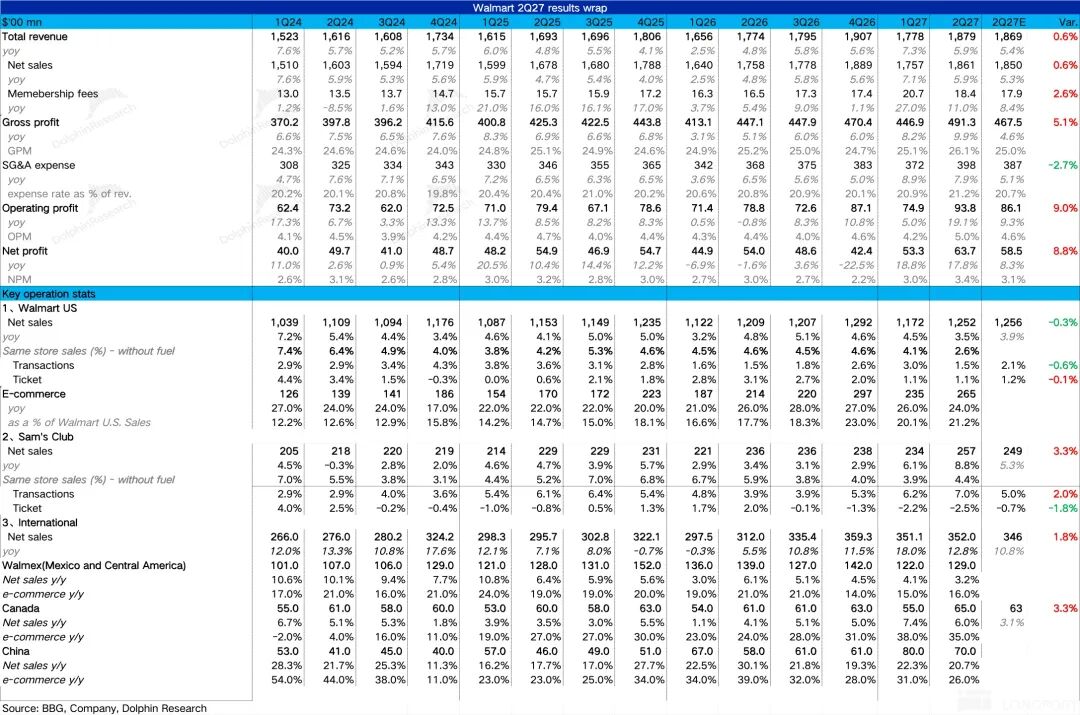
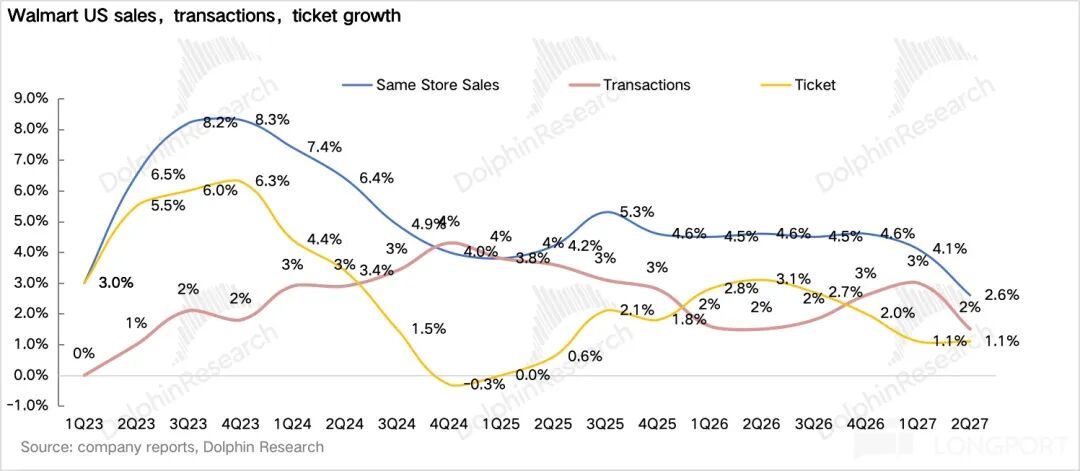
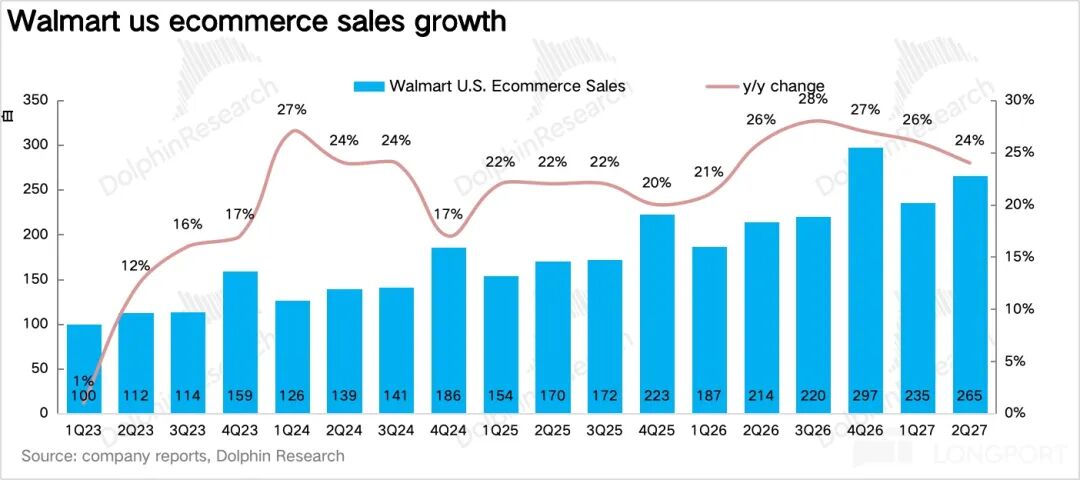
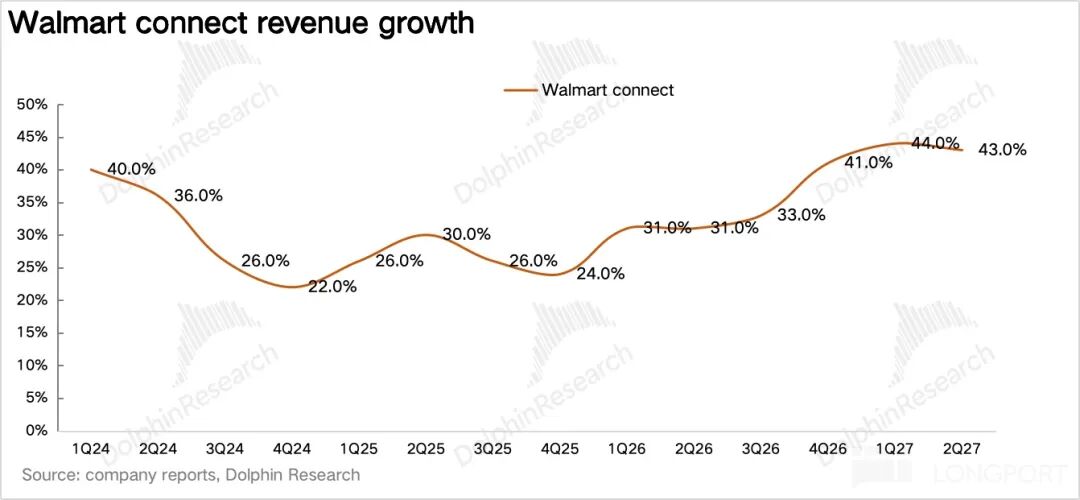
1. Walmart U.S.: Declining foot traffic weighed on same-store sales. Analyzing the core operational metrics, same-store revenue in North America, Walmart's primary market, increased by +2.6%, representing a significant deceleration from the previous quarter. The primary drag came from transaction growth, which slowed to +1.5% (Q1: +3.0%), while the average transaction size increased by +1.1% (on par with Q1). E-commerce remained the standout segment, growing by +24% and contributing approximately 510 basis points to same-store sales. Store fulfillment delivery surged by +43%, advertising by +38% (Walmart Connect excluding VIZIO: +43%), and Marketplace by +52% (Q1: 50%, continuing to accelerate).
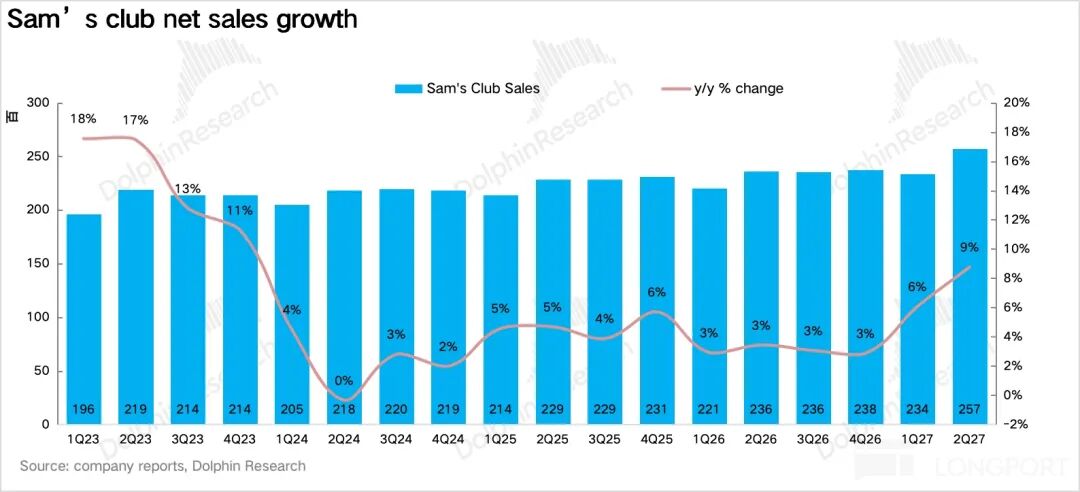
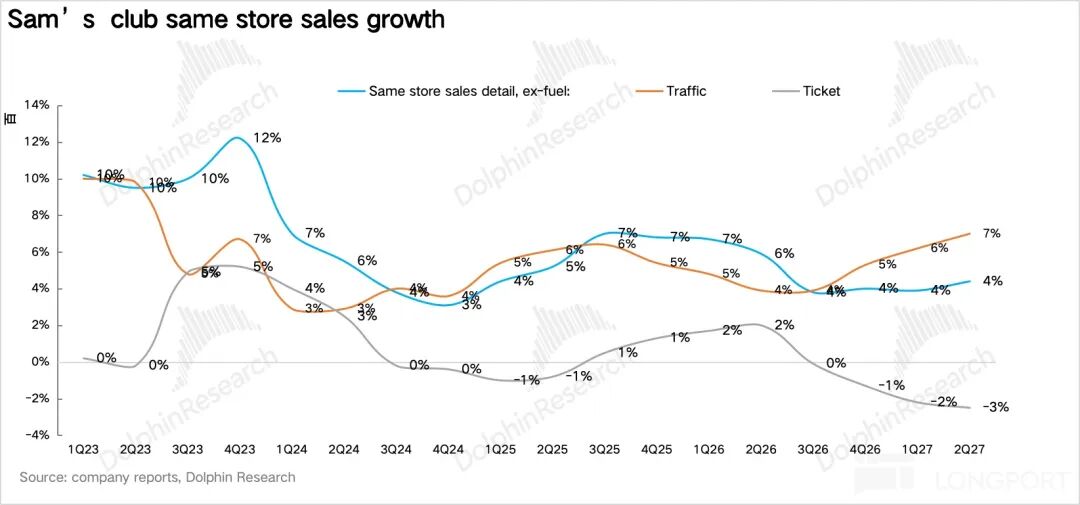
2. Sam's Club (U.S.): Exceptional performance with accelerated transaction growth. Excluding fuel, same-store sales at Sam's Club increased by +4.4% (Q1: 3.9%), making it the only segment among the three divisions to experience an acceleration in same-store sales. Transaction growth reached +7.0%, accelerating on a quarter-over-quarter basis. The primary driver was elevated fuel prices, which spurred increased traffic to Sam's Club. Management revealed that fuel sales at Sam's Club surged by +12% year-over-year in May, contrasting with a 5% decline in the industry. Furthermore, fuel members spent 1.6 times more than non-fuel members in other categories. The average transaction size decreased by -2.5%, primarily due to a higher proportion of low-value, high-frequency items such as groceries and Member's Mark private-label products replacing some higher-priced branded goods.
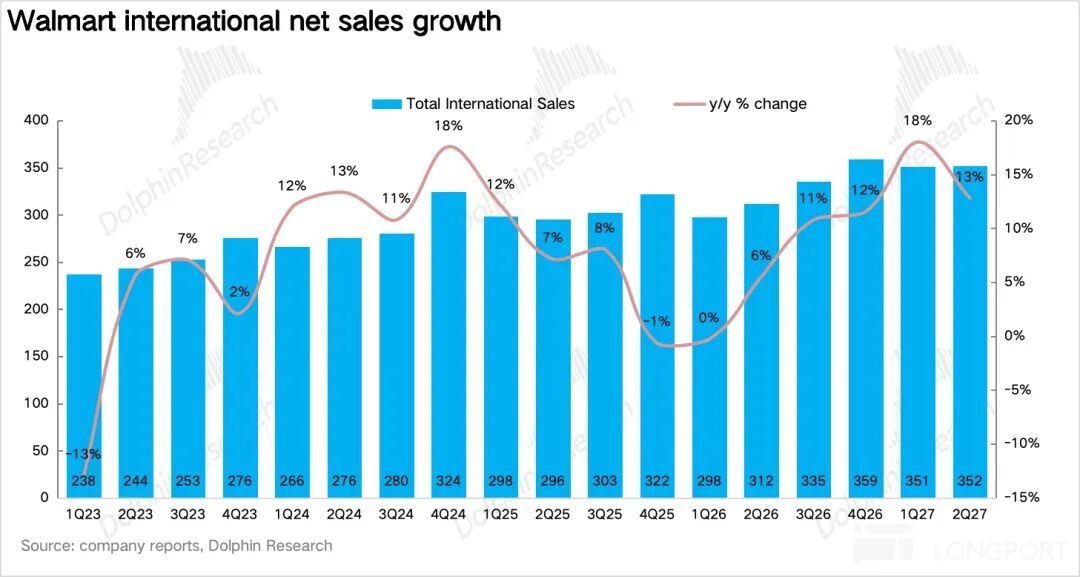
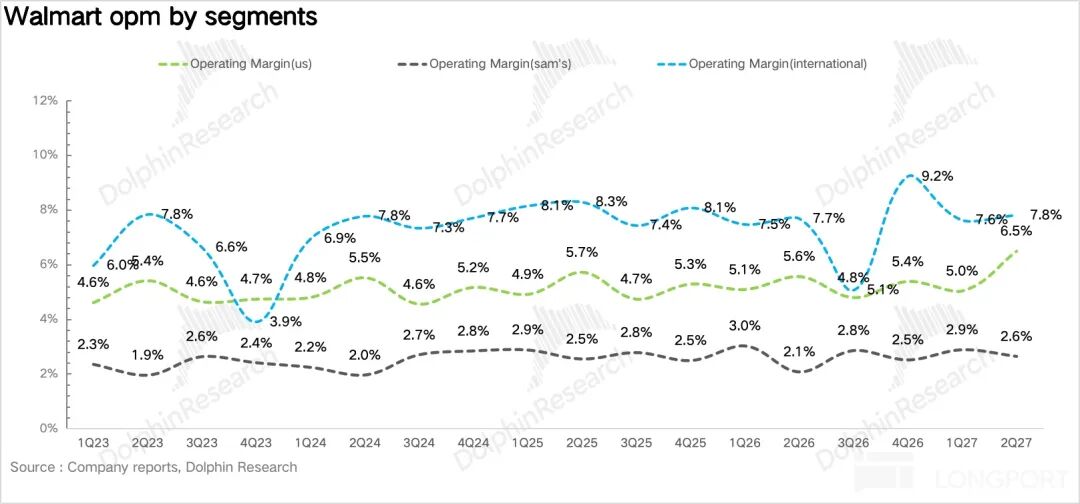
3. Walmart International: China emerges as the sole growth driver. Walmart International's revenue for the second quarter reached $35.2 billion, up +12.8% year-over-year. However, growth in key regions—China, Mexico, and Canada—slowed from the first quarter. On the profit front, operating profits declined in all regions except China, due to wage hikes for local employees and increased e-commerce investments.
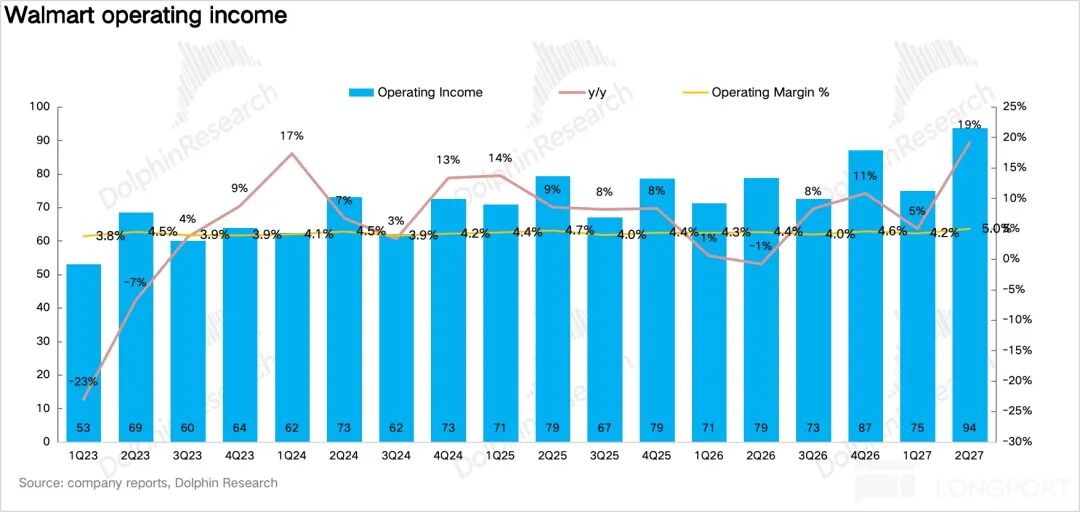
4. High-margin, asset-light third-party (3P) business fuels overall profitability. Operating expenses rose by 0.4 percentage points year-over-year to 21.2%, driven by higher self-insurance claims, depreciation from capital expenditures, and employee healthcare costs. Nevertheless, due to the increased contribution from the high-margin "3P + advertising + membership fees" business mix, operating profit grew by +9.9% year-over-year, excluding one-time tax rebates ($2.9 billion, equivalent to ~0.5% of U.S. annual sales), outpacing revenue growth.
5. Guidance revised upward slightly but falls short of expectations. The company raised its full-year constant-currency net sales growth forecast from 3.5%-4.5% to 4.0%-5.0% and adjusted operating profit from 6.0%-8.0% to 7.0%-8.5%. Given that most rebates were allocated to pricing at the end of the second quarter, the full cost impact will be felt in the third quarter. Additionally, the timing mismatch of Flipkart's promotional events created over 100 basis points of sales headwinds, leading management's full-year guidance revision to fall short of market expectations.
6. A snapshot of key financial data:
Dolphin Research's Overall Assessment:
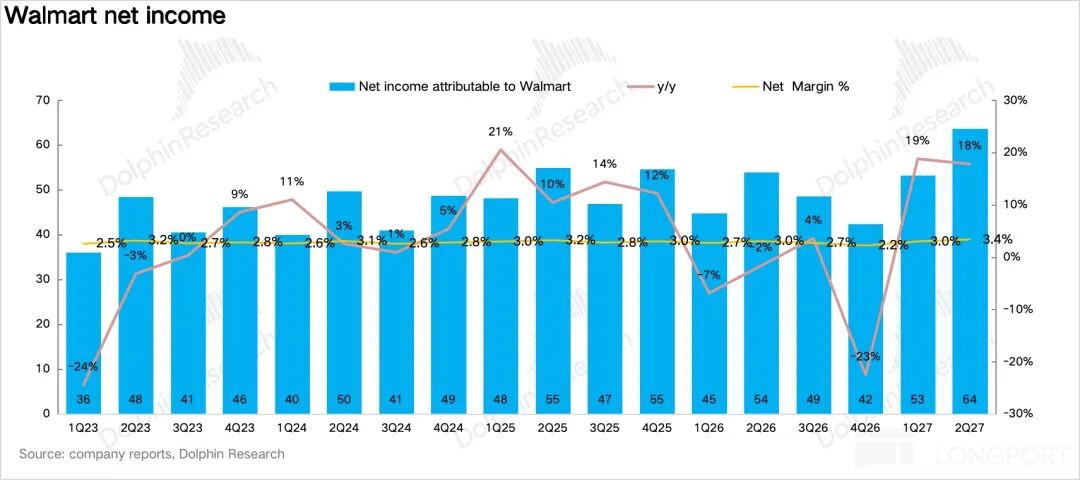
Overall, Walmart delivered a solid performance in the second quarter. However, the market's primary concern centers on the company's weaker guidance for the second half of the year, with the key point of contention being the one-time $2.9 billion tax rebate received in the second quarter.
In such scenarios, companies typically have two options: either recognize it on the income statement to boost earnings per share (EPS) or allocate it to other initiatives. Walmart opted for the latter—starting July 6, it implemented one-time price cuts on over 250 items, with reductions of up to 25%.
Dolphin Research believes Walmart's approach is prudent. By utilizing off-balance-sheet one-time funds, Walmart can engage in a price war without impacting current profits, while traditional grocers lack corresponding funding sources. Surveys indicate that they explicitly stated they would not participate in this round of temporary price cuts. This creates a brief window where Walmart can widen its price gap while competitors are unable to respond.
Considering Walmart already commands a 24% share of the U.S. grocery market (Kroger: 10%, Costco: 9%, Albertsons: 6%, Publix: 5%), capturing market share during this window is highly cost-effective for Walmart.
Therefore, despite the company's third-quarter operating profit guidance of only 2.0%-4.0%, Dolphin Research believes that as long as Walmart witnesses significant improvements in foot traffic and further gains in its core grocery market share in the coming quarters, its strategy is sound. After all, as previously analyzed, Walmart is currently in a critical phase of accelerating its "harvesting" of market share from middle-to-high-income groups.
Detailed Financial Report Analysis
1. Investment Logic Framework
According to Walmart's disclosures, revenue growth can be dissected into three business segments: Walmart U.S., Walmart International, and Sam's Club U.S. Each segment's revenue growth can be further broken down into same-store sales growth (volume × price), the impact of new store openings/closures, and e-commerce contributions.
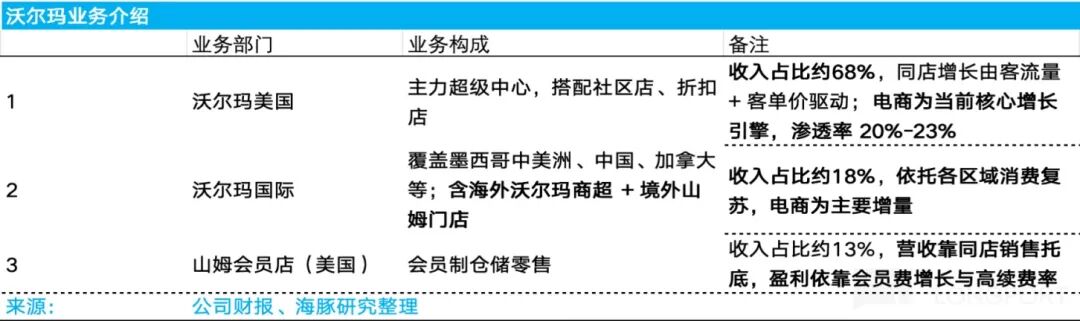
(1) Walmart U.S. is the company's core segment, with fiscal year 2026 revenue of approximately $483 billion, accounting for ~68% of total revenue. Dominated by Supercenters, it also includes Neighborhood Markets and Discount Stores. Same-store growth in this segment can be further dissected into foot traffic (transactions) and average transaction size (average ticket) as key drivers.
E-commerce is currently the most significant growth engine for this segment, accounting for ~20-23% of segment revenue. Internally, e-commerce comprises four sub-modules: first-party (1P) direct sales, third-party (3P) Marketplace (a platform for third-party sellers), Walmart Connect (retail advertising), and Walmart+ (paid membership). Advertising and membership businesses are the core profit growth engines for e-commerce.
(2) Walmart International operates in markets such as Mexico & Central America (Walmex), China, and Canada, encompassing both overseas Walmart supermarkets and Sam's Clubs. Fiscal year 2026 revenue was approximately $130 billion, accounting for ~18% of total revenue.
E-commerce development stages vary significantly across markets: China accounts for over 50% of e-commerce sales (primarily through Sam's Club online). India's Flipkart, a majority-owned e-commerce platform, operates independently and remains unprofitable but continues to narrow losses. Mexico's Walmex has an e-commerce penetration rate of ~8-9% and is replicating the U.S. advertising + Marketplace model in its early rapid expansion phase.
(3) Sam's Club U.S. is a membership-based warehouse retailer, with fiscal year 2026 revenue of approximately $93 billion, accounting for ~13% of total revenue. Revenue growth relies on steady same-store sales growth, while profitability depends on membership fee expansion and high renewal rates. Digital experiences like Scan & Go and Club Pickup continue to boost e-commerce penetration. Compared to Costco, Sam's Club adopts more aggressive pricing strategies but still lags in product curation and in-store membership service experiences.
2. Walmart U.S.: Slowing Foot Traffic Growth
2.1 Weak volume and price trends; pressure on low-income groups
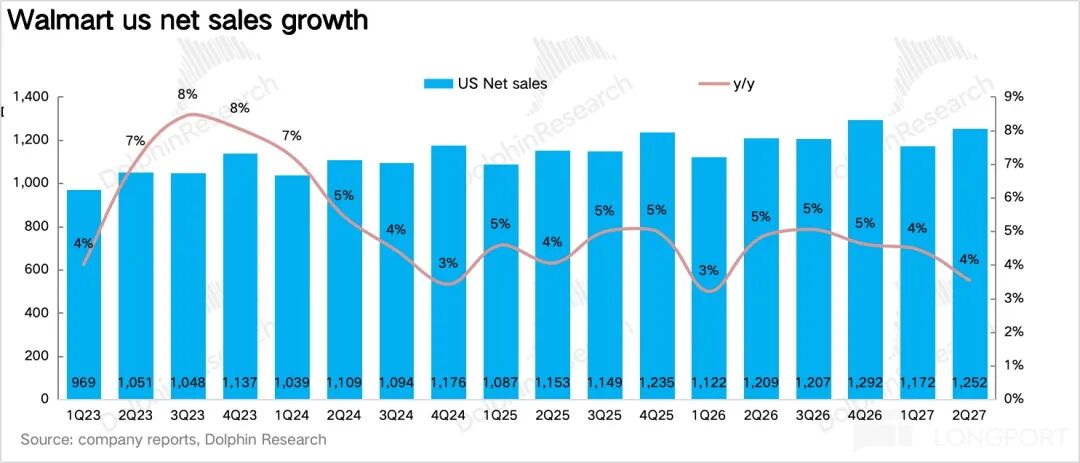
Walmart U.S. reported second-quarter revenue of $125.2 billion, up +3.5% year-over-year, with same-store sales (excluding fuel) growing by +2.6%, a sharp slowdown from the first quarter's +4.1% and below consensus expectations (+3.8%).
Breaking down volume and price, transaction growth slowed to +1.5% (Q1: +3.0%), likely due to persistent high prices, rising fuel costs, and elevated interest rates in North America, leading middle-to-low-income groups to reduce store visits. While higher-income customers (annual income >$100,000) continue to shift to Walmart, it has not fully offset the decline in low-income customer visits. The average transaction size grew by +1.1% (on par with Q1).
By category, groceries saw mid-single-digit growth, with egg price deflation contributing ~60 basis points of negative impact. Growth was driven by food storage, fresh produce, and "healthier" new products. Household consumables were led by personal care, beauty, and pet products. General merchandise saw low-single-digit growth, driven by toys and apparel, with private-label sales increasing by 130 basis points.
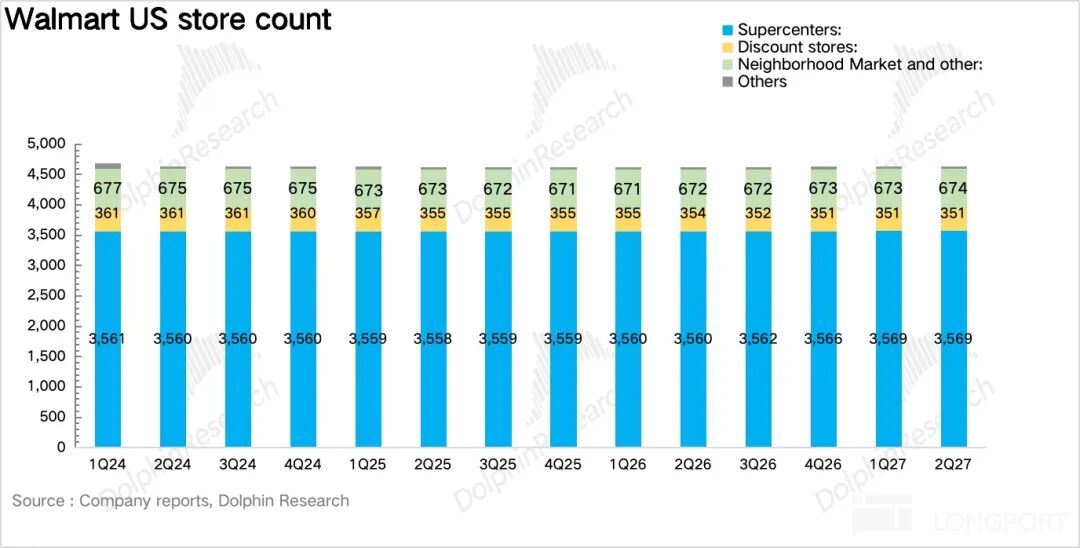
Store updates: One Neighborhood Market opened this quarter, with ~220 stores renovated. Year-to-date, three Supercenters and one Neighborhood Market opened, with ~280 stores renovated.
2.2 E-commerce and high-margin businesses maintain rapid growth
E-commerce remained Walmart U.S.'s strongest segment, growing by +24% (Q1: +26%) and contributing ~510 basis points to same-store sales. Structurally, store fulfillment delivery grew by ~43%, with ultra-fast delivery (under 3 hours) accounting for ~37% of store fulfillment orders.
Dolphin Research believes speed has evolved from a "fulfillment metric" to a "customer acquisition tool"—the company explicitly states that customers using fast delivery shop more frequently, engage deeper, and are more likely to become Walmart+ members. Walmart is also expanding its serviceable scenarios from groceries and general merchandise to meal solutions (e.g., announcing a prepared food partnership with Subway this quarter).
Third-party Marketplace was the most surprising performer this quarter, growing by +52% and accelerating from the first quarter's +50% (already the fastest in nearly 10 quarters).
Dolphin Research views Marketplace's strategic value not in revenue itself but as a tool to shift the product mix toward high-margin general merchandise—which has significantly higher margins than groceries. While Walmart's self-operated (1P) general merchandise carries inventory risks, 3P eliminates this, aligning with management's repeated references to this as a core driver of multi-year margin improvement.
Advertising: Walmart U.S. advertising grew by +38%, with Walmart Connect (excluding VIZIO) up +43% and global advertising up +38%. A key strategic move this quarter: On June 23, Walmart announced the ~$1.4 billion acquisition of Vibe.co, its largest M&A deal in nearly two years.
Vibe.co is a self-serve connected TV (CTV) advertising platform targeting small and medium-sized enterprises (SMEs) and mid-sized brands. Dolphin Research believes this deal addresses Walmart Connect's biggest weakness relative to Amazon—its lack of long-tail SME advertisers, as most of its revenue currently comes from large enterprises.
By integrating Vibe.co with Walmart's existing VIZIO smart TV assets and recent partnerships with Magnite, Yahoo DSP, and Google DV360, Walmart is completing the "self-serve placement + CTV inventory + closed-loop attribution" link (chain). If SMB self-serve advertising proves successful, it could systematically raise the ceiling for Walmart's advertising business—the only path where Walmart can structurally approach Amazon's advertising model.
Membership: Walmart U.S.'s "membership and other revenue" grew by +15.6%, with Walmart+ membership fees achieving double-digit growth and second-quarter net new members hitting a historical high for the period.
AI: The number of customers using Sparky grew by +70% year-over-year, with Sparky users spending +40% more per order than non-users. Currently, membership and advertising combined contribute ~one-third of operating profits and feature subscription-based, recurring revenue—the underlying reason Walmart can maintain profit resilience amid high fuel prices and weakening consumption.
III. Sam's Club: Attractiveness Increases Significantly Amid High Fuel Prices
Sam's Club (U.S.) reported net sales of $25.7 billion this quarter, up 8.8% year-over-year, or 4.5% excluding fuel.
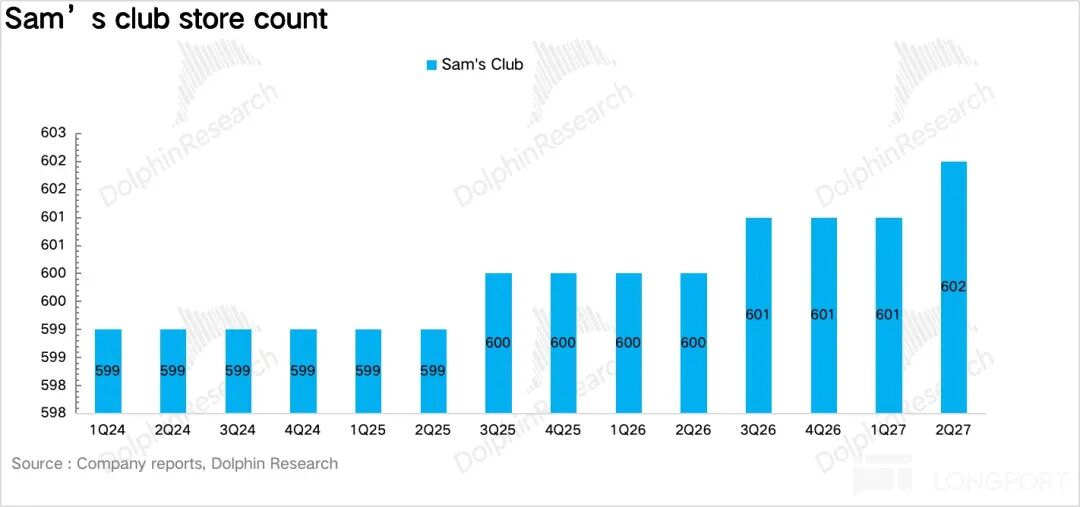
Transaction Volume: Increased by 7.0%, accelerating from 6.2% in the first quarter, marking the highest growth among all divisions within the Walmart system. Dolphin Research believes the main reasons are: firstly, gas stations have become a strong traffic driver in the high fuel price environment; secondly, the continuous enhancement of instant fulfillment capabilities, with membership store fulfillment and delivery achieving triple-digit growth after launching one-hour delivery in April. Currently, it can cover 65% of U.S. households with three-hour delivery and over 25% of rapid delivery orders arriving within one hour.
Average Transaction Value: Declined by 2.5% (Q1: -2.2%). Dolphin Research maintains its previous judgment: negative average transaction value is not a detrimental factor in a membership-based business model. It reflects that 'members are buying more with less money.' The essence of the membership business model is to earn money through membership fees rather than product markups. Strengthened value perception is actually beneficial for renewal rates.
IV. International Business
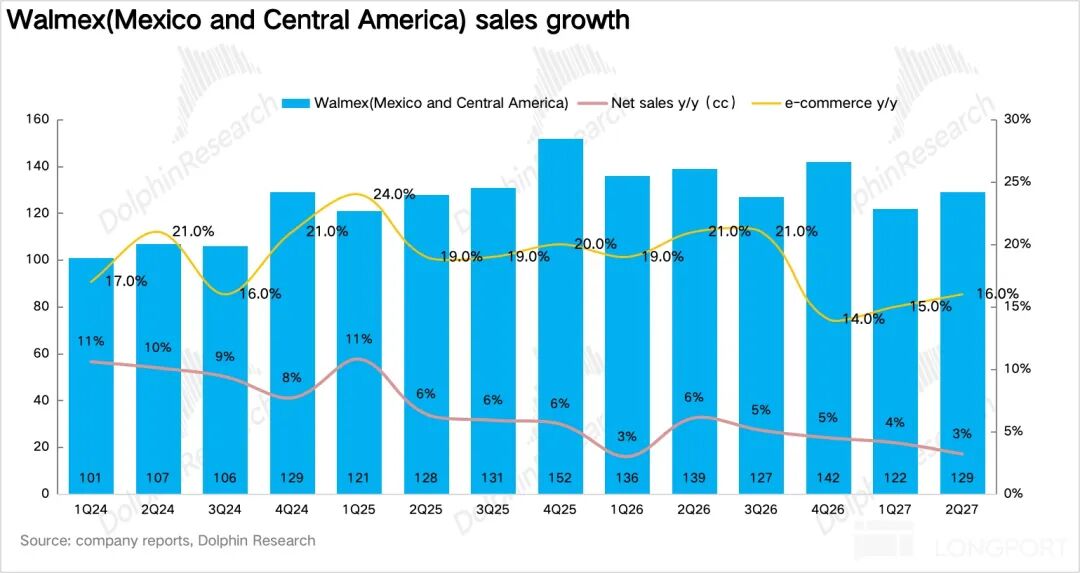
Walmex (Mexico and Central America): Investments in pricing strategies fall short of driving growth. Given that Walmex is listed independently and has already released its data, the Q2 figures are publicly available: revenue saw a 1.9% year-over-year increase (3.2% at constant exchange rates), with same-store sales in Mexico growing by 1.8%. This growth can be dissected into a 2.9% rise in the average transaction value, offset by a 1.1% decline in foot traffic. In Central America, same-store sales experienced a 2.4% uptick. During Q2, Walmex opened 23 new stores (21 in Mexico, 1 in Costa Rica, and 1 in Guatemala). More significantly, Walmex revised its full-year sales growth forecast at constant exchange rates down to 3.5%-4.5%, attributing this adjustment to a slower-than-anticipated recovery in consumer spending.
Dolphin Research identifies two key takeaways from these developments. Firstly, the continued decline in foot traffic in Mexico, from -0.9% in Q1 to -1.1%, coupled with a drop in same-store sales from 3.1% to 1.8%, suggests that the strategy of using price reductions to boost customer visits has not yet yielded results in Mexico. Dolphin Research posits that the underlying cause is a contraction in Mexico's overall purchasing power, whereas in the U.S., low-income pressures are being mitigated by a downgrade in consumption among middle- and high-income groups.
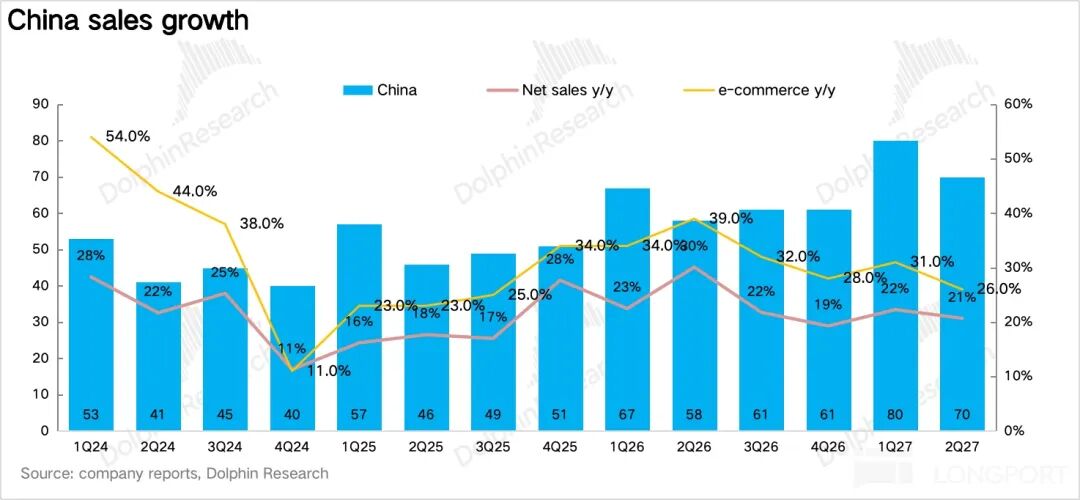
China: Sam's Club maintains strong performance. China's net sales, calculated at constant exchange rates, reached $7 billion, marking a 20.7% year-over-year increase, with same-store sales growing by 9.7% (albeit at a gradually slowing pace), making it the fastest-growing market within the international segment. E-commerce sales surged by 26%, with digital sales contributing 55% to the total, indicating that the business model has proven effective. Elements such as dark stores, instant delivery, APP-based ordering, and membership systems have been seamlessly integrated into the business. Future growth is expected to stem more from store expansions and steady same-store sales growth rather than a sudden spike in market penetration.
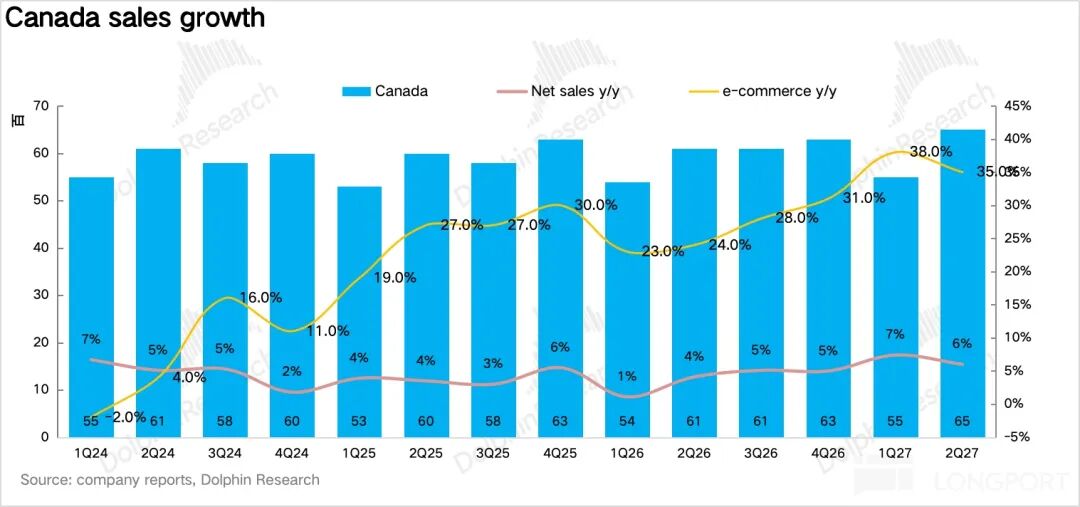
Canada: E-commerce remains in the investment phase, leading to a decline in profits. Canada's net sales, at constant exchange rates, amounted to $6.5 billion, up 6.0%, with same-store sales growing by 4.0%. However, operating profit decreased due to strategic wage hikes. Dolphin Research believes that Canada is currently in a phase of 'sacrificing short-term profits for long-term market penetration': Walmart+ has just been launched, and e-commerce is growing at a rate of 35%, both of which require substantial upfront investments. Thus, the short-term profit pressure is understandable.
V. A Rising Proportion of High-Margin Businesses Continues to Enhance Profit Margins
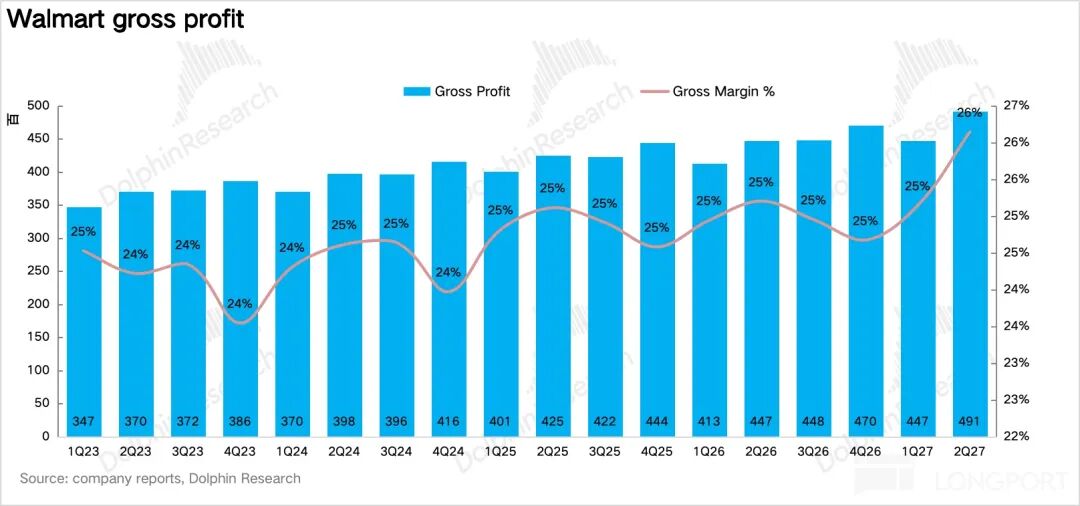
Walmart's gross margin improved by 0.9 percentage points year-over-year, reaching 26.1% in Q2, primarily due to the benefits of tariff refunds and an improved business mix (mainly driven by growth in digital advertising).
On the expense front, selling, general, and administrative (SG&A) expenses increased by 0.4 percentage points year-over-year to 21.2%, attributed to simultaneous rises in self-insurance claims, depreciation from capital expenditures, and employee healthcare costs. Additionally, due to the increased contribution of high-margin businesses such as 'third-party seller services + advertising + membership fees,' operating profit grew by 9.9% year-over-year after excluding one-time tax refunds ($2.9 billion, approximately 0.5% of U.S. annual sales), outpacing revenue growth.
- END -
// Reprint Authorization
This article is an original work by Dolphin Research. Any reprinting requires prior authorization.
// Disclaimer and General Disclosure
This report is intended solely for general informational and data reference purposes, catering to the reading and reference needs of users of Dolphin Research and its affiliated institutions. It does not take into account the specific investment objectives, preferences for investment products, risk tolerance, financial situation, or unique needs of any individual recipient. Investors are advised to consult with independent professional advisors before making investment decisions based on this report. Any investment decisions made using or referencing the content or information in this report are undertaken at the investor's own risk. Dolphin Research shall not be held liable for any direct or indirect responsibilities or losses that may arise from the use of the data contained in this report. The information and data in this report are sourced from publicly available materials and are provided for reference only. Dolphin Research strives to ensure, but does not guarantee, the reliability, accuracy, or completeness of the information and data.
The information or opinions mentioned in this report shall not, under any jurisdiction, be construed as or deemed to constitute an offer to sell securities, an invitation to buy or sell securities, nor shall they be considered as recommendations, solicitations, or endorsements of relevant securities or related financial instruments. The information, tools, and data in this report are not intended for, nor proposed for, distribution in jurisdictions where such distribution, publication, provision, or use would contravene applicable laws or regulations, or where Dolphin Research and/or its subsidiaries or affiliated companies are required to comply with any registration or licensing requirements, or to citizens or residents of such jurisdictions.
This report solely reflects the personal views, insights, and analytical methods of the relevant authors and does not represent the official stance of Dolphin Research and/or its affiliated institutions.
This report is produced by Dolphin Research, with copyright exclusively owned by Dolphin Research. No institution or individual may, without prior written consent from Dolphin Research, (i) make, copy, reproduce, duplicate, forward, or distribute in any form any copies or reproductions, and/or (ii) directly or indirectly redistribute or transfer to other unauthorized persons. Dolphin Research reserves all relevant rights.
-
AI's Moment of Truth: When 'Burning Cash' Starts to 'Pay Back'
-
![]()
Harmony Intelligent Mobility Alliance Advances Further in the Automotive Realm
-
Lianbo Shares: Core Product Quantities Up, Prices Down; Capacity Utilization Dips Yearly, R&D Investment Lags Behind Peers
-
![]()
The Vala Pro, Based on the Pure Electric Ruisheng Ace M7 and Priced at 268,000 Yuan—Is It a Worthwhile Purchase?
-
![]()
Which Brands Will Be the First to Skip the Next Chengdu Motor Show?
-
![]()
Walmart: Steady Performance Marred by Overvaluation Concerns
-
![]()
Can Domestic Autos Still Hold Their Own Against Joint Venture Brands?
-
![]()
Domestic Cars Priced Above 300,000 Yuan Are Gaining Ground in Chengdu