Domestic Cars Priced Above 300,000 Yuan Are Gaining Ground in Chengdu
 08/24 2026
 502
502
Lead
Introduction
In the future, the high-end car market in China, for vehicles priced above 300,000 yuan, will no longer be the exclusive domain of joint ventures and luxury brands; it will also be a space for innovative and continuously improving Chinese cars.
It is widely recognized in the automotive industry that Chengdu residents have a strong preference for BBA (Benz, BMW, Audi) vehicles.
Chengdu consistently ranks among the top cities in China in terms of vehicle ownership, with many families owning a second or even a third car. Traditionally, if Chengdu residents, who enjoy a comfortable lifestyle, had a budget exceeding 300,000 yuan, BBA was almost the default choice for purchasing a high-end car. This resulted in a high visibility of BBA vehicles on the streets. Around 2021, BBA frequently ranked among the top five brands in terms of sales volume in Chengdu, while domestic brands held only about one-third of the market share at that time.
However, the situation has shifted significantly five years later.
Firstly, there is a growing preference for new energy vehicles (NEVs). In the first half of 2026, the number of NEVs registered in Chengdu, priced above 300,000 yuan, increased by nearly 40% year-on-year. The penetration rate of NEVs in the high-end segment exceeded 45%, higher than the national average, with a significant portion of the market share being captured by domestic NEV brands.
Secondly, there is a noticeable decline in the preference for BBA. In July 2026, among the models registered in the 300,000-500,000 yuan price range in Chengdu, the Xiaomi SU7 ranked first, the NIO ES8 third, the Seres M9 fourth, the Xiaomi YU7 fifth, and the NIO ES9 eighth. Several domestic models outperformed the Mercedes-Benz GLC and Mercedes-Benz E-Class.
Of course, this does not mean that Chengdu residents have completely lost interest in BBA; rather, it indicates that while enthusiasm for BBA remains high, there is also a growing preference for high-end flagship domestic cars, which have even taken away a significant portion of BBA's market share.
This phenomenon of domestic flagship cars competing with BBA is also evident at this year's auto show.
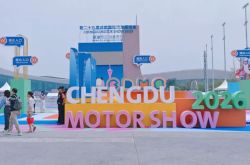
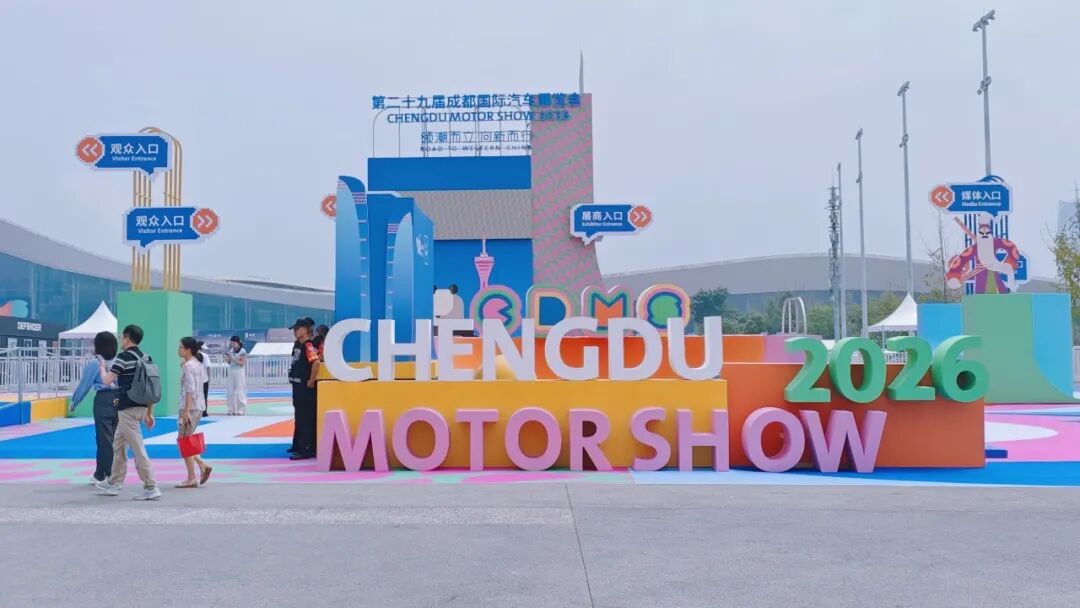
As one of the largest and most influential A-class exhibitions in the domestic auto market in the second half of the year, the 2026 Chengdu Motor Show serves as a crucial platform for automakers to make a final push for the “Golden September and Silver October” market. It is also a core window for observing the high-end transformation process of China's automotive industry.
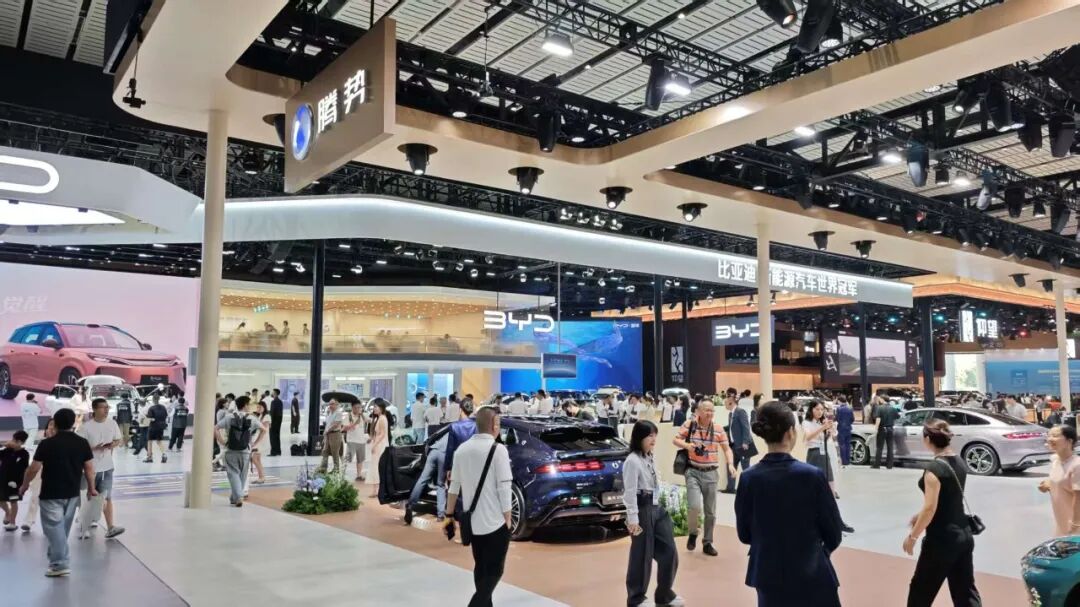
Against the backdrop of record-breaking popularity and significance at this year's auto show, sustained high visitor traffic, and a series of new car launches, technological showcases, and policy interpretations, the competition in the auto market and the transformation of domestic brands are on full display. Even in the past, when joint ventures and luxury brands dominated the high-end traffic at auto shows, domestic brands are now making a comprehensive effort.
Among them, BYD continues to showcase its strength by occupying an entire pavilion and presenting a full range of high-end models. Emerging brands such as Xiaomi, Harmony Intelligent Mobility, Li Auto, and Zeekr have concentrated premieres of their flagship models, with several new flagship and facelifted heavyweight models making their debut, covering all high-end market segments.
This not only represents a tangible manifestation of the product upgrades by domestic brands but also serves as a crucial signal of local automakers' proactive efforts to break through and ascend, formally launching a frontal assault on the established high-end markets of joint ventures and traditional luxury brands, and propelling the domestic high-end auto market into a new stage of competition.
01 From Low-End Followers to High-End Leaders
Looking back at the era of fuel-powered vehicles, the high-end auto market in China, for vehicles priced above 300,000 yuan, was long dominated by joint venture brands and BBA luxury brands.
At that time, domestic brands primarily focused on the affordable home market in the 100,000-200,000 yuan range, with few high-end models available. They faced numerous shortcomings, including weak technological accumulation, inadequate chassis tuning, lagging intelligence, and low brand recognition.
Therefore, when consumers chose high-end models, they almost always preferred joint ventures and luxury brands. Domestic high-end models remained on the fringes of the market, struggling to break through established circles and severely lacking influence in the high-end market. This was particularly true in the Chengdu market, where luxury cars like BBA were consistently featured on people's car purchase lists, while domestic brands were relegated to the back of these lists.
Today, after more than a decade of technological deep cultivation, supply chain refinement, and market polishing, domestic brands have undergone a transformation. They have achieved breakthroughs in core areas such as new energy, intelligent driving, chassis architecture, and battery technology, breaking the monopoly in the high-end market.
According to terminal sales data for the first seven months of 2026, domestic high-end models have fully captured market share in the high-end segment, achieving breakthroughs in both sales volume and reputation. Among the top ten best-selling models priced above 400,000 yuan, domestic brands occupy seven spots, with models from Zeekr, Seres, Li Auto, and NIO leading the sales charts. NIO's average transaction price in July exceeded 430,000 yuan, officially surpassing the mainstream average prices of Mercedes-Benz, BMW, and Audi, marking the successful establishment of domestic high-end brands in the luxury price band.
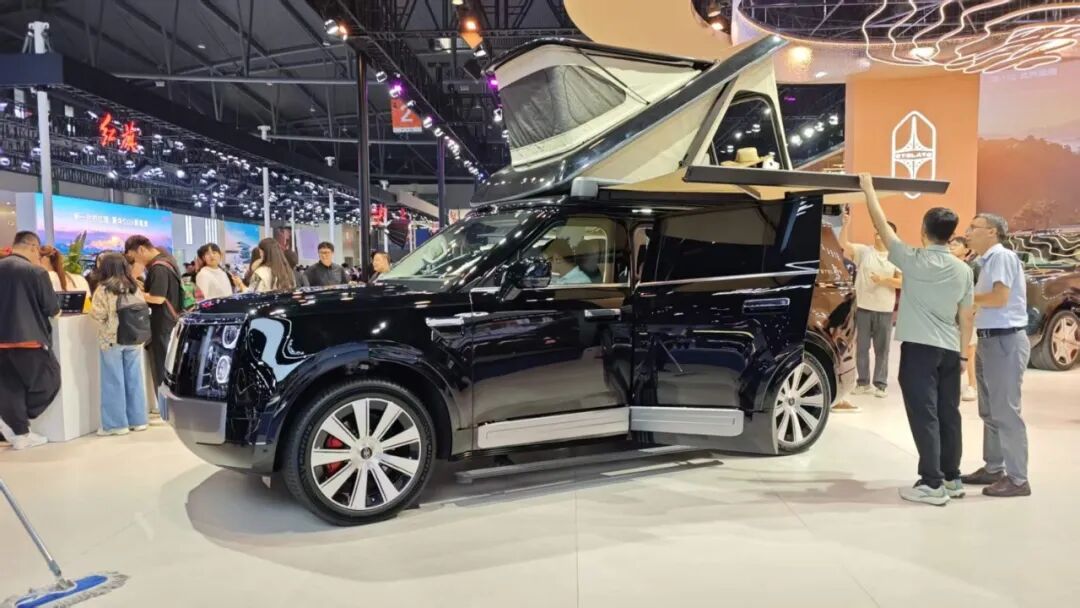
Meanwhile, in the 300,000-yuan-plus segment, BBA (primarily fuel-powered) registered fewer than 20,000 new vehicles in Chengdu in the first seven months, while the total number of new vehicles registered in this price range exceeded 40,000. In other words, BBA's market share in the 300,000-yuan-plus segment was less than 50%, with the remaining share captured by Tesla and domestic high-end brands like Xiaomi, NIO, Seres, Li Auto, and Denza.
At this year's Chengdu Motor Show, domestic brands also showcased their high-end breakthrough achievements, with a 300,000-yuan flagship lineup covering core market segments.
BYD Group presented a luxurious lineup, with models such as the Denza Z9S, Denza Z9GT, and Fangchengbao S/S-GT offering new choices in high-end sedans and hunting cars. The million-yuan-level off-road flagship Yangwang U8 continued to showcase its core cutting-edge technologies. The Harmony Intelligent Mobility matrix made a strong impact, with the newly launched off-road SUV Aito G9, the monthly sales champion MPV Seres V9, and the top-tier luxury MPVs ZEEKR V800/V680 making their debut on the same stage.
In addition, heavyweight flagships such as the Xiaomi Pengcheng, high-spec Voyah Dreamer, IM LS7 Max, Zeekr 009, facelifted Hongqi H9, and Avatr 11/12 also participated in the exhibition.
These models precisely target four major market segments: large MPVs, off-road vehicles, D-segment luxury sedans, and large five/six-seater high-end pure electric SUVs, catering to a full range of high-end needs for business, family, off-road, and light luxury applications.
A comprehensive product layout, robust technological capabilities, and competitive pricing advantages have enabled domestic flagship vehicles to form a strong competitive edge, continuously challenging the market foundations of traditional joint venture flagships and BBA luxury models. They bring a high-caliber feast of high-end models to car enthusiasts in Southwest China and consumers nationwide.
Behind this feast lies a battlefield.
02 The Inevitability of Domestic Brands' High-End Breakthrough
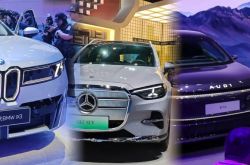
In the face of the high-end rise of domestic brands, traditional luxury brands such as Mercedes-Benz, BMW, Audi, and Volvo, as well as joint venture brands like Volkswagen, Toyota, and Honda, still brought several flagship models priced above 300,000 yuan to the 2026 Chengdu Motor Show.
Classic high-end models such as the Mercedes-Benz S-Class, BMW 7 Series, BMW X5, and Mercedes-Benz GLE were all on display, with their booths remaining popular and attracting many visitors for experiences and comparisons. However, behind the lively booths lies the continuous erosion of market influence for traditional high-end models, with their former monopoly advantages long gone.
The Toyota Alphard, once the dominant player in the high-end business and home market, could command tens of thousands of yuan in price hikes due to its scarcity and brand premium during its peak, remaining at the top of the high-end MPV sales charts. However, today, with the comprehensive rise of domestic high-end MPVs such as the Voyah Dreamer, Zeekr 009, and Seres V9, the Alphard can no longer advance further.
Similarly, the BMW X5, as a benchmark in the mid-to-large luxury SUV segment, sold 34,000 units in the first seven months of 2026. Although it remains at the forefront of the industry, its sales growth has significantly slowed compared to domestic models in the same class, such as Zeekr and Seres. Terminal discounts continue to increase, and brand premiums are gradually shrinking.
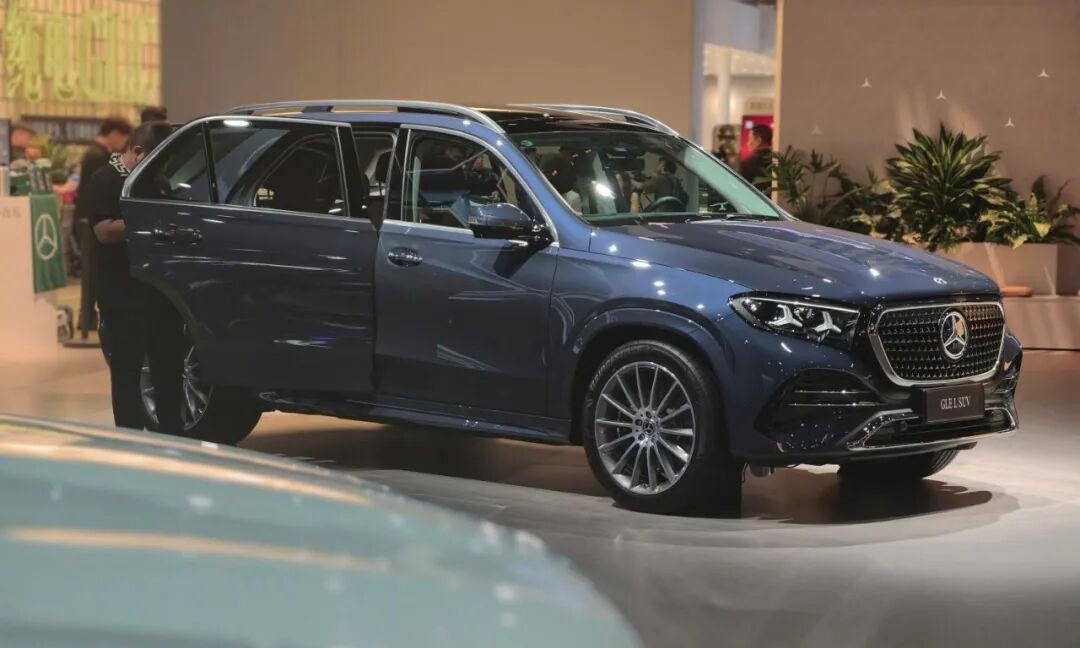
It can be said that many former joint venture flagship models have now become “mascots” in the eyes of car enthusiasts, attracting many onlookers but few buyers. High pricing, outdated product capabilities, and weak after-sales service have caused their market share to be continuously diverted to domestic high-end cars.
Interestingly, at this year's auto show, a distinct industry phenomenon emerged: many consumers who stopped at luxury and joint venture booths no longer blindly favored foreign brands but actively compared the exhibition vehicles with domestic flagship models in the same price range. Voices such as “this joint venture model is like a rough draft compared to that domestic flagship in the same price range” were heard frequently.
Consumers are clearly aware of the progress made by domestic cars. From intelligent driving, infotainment systems, power performance, and range capabilities to interior materials, space configurations, and cost-effectiveness, consumers' comparison dimensions when buying or even just looking at cars have become increasingly comprehensive and rational. This confirms that domestic flagship models have blazed a trail, with their product capabilities, technological sophistication, and cost-effectiveness widely recognized by mainstream consumers, becoming important references in the high-end car purchase market.
Overall, the high-end breakthrough of domestic brands is no accident but the inevitable result of years of technological accumulation, product iteration, and user engagement. In the past, the high-end auto market was defined and dominated by foreign brands. Today, domestic automakers dare to break through technological barriers, redefine product standards, and deeply understand user needs, shattering industry monopolies with comprehensive product advantages.
At the same time, it is clear that the breakthrough path for domestic high-end models has fully opened and is irreversible. In the future, the high-end auto market in China, for vehicles priced above 300,000 yuan, will not be exclusive to joint ventures and luxury brands; it will also belong to innovative and continuously improving Chinese cars.
Editor-in-Chief: Cao Jiadong Editor: Wang Yue

THE END
-
![]()
Can Domestic Autos Still Hold Their Own Against Joint Venture Brands?
-
![]()
Domestic Cars Priced Above 300,000 Yuan Are Gaining Ground in Chengdu
-
![]()
BBA Takes a Leap of Faith: No Sales, No Tomorrow
-
![]()
Chengdu Unfaded: BYD and Geely Vie for Championship While the Weak Exit
-
![]()
3X Salary Poaching, 40 Executives Depart: Autonomous Driving Talent is Batch-Producing Embodied AI Leaders
-
![]()
Apple’s Foldable iPhone and Huawei’s Straightened Pura X: Two Paths, One Vision
-
![]()
Dong Yuhui Departs with Traffic, Yet East Buy Crafts a Profit-Generating Engine
-
![]()
Did Alibaba Say AI Investments Would Pay Off in Three Years, Then Turn Around and Ask Shareholders for HK$80 Billion to 'Tide Over'?