Or a Glimpse into Geely's Thunder AI Electric Hybrid System: Hyundai Motor's Foray into Chinese Tech Solutions
 12/26 2025
 644
644
Reports indicate that Hyundai Motor Group (clarification: not "Hyundai China" nor Beijing Hyundai) has commenced preliminary discussions with Geely Automobile. The objective is to explore the feasibility of integrating Geely's Thunder AI Electric Hybrid 2.0 system into upcoming locally produced vehicles tailored for the Chinese market.
At first glance, this might seem like another routine instance of international automakers collaborating with Chinese brands. However, Hyundai Motor is no stranger to technological prowess; it boasts a sophisticated TMED hybrid system, a globally recognized hydrogen energy strategy, and an expanding pure electric vehicle platform. Yet, these technologies have often fallen short of meeting the fast-paced and cost-sensitive demands of the Chinese market.
It's crucial to note that Geely's Thunder AI Electric Hybrid 2.0 is not merely a hardware package. It encompasses a bespoke engine, a multi-integrated electric drive system, advanced battery management, and AI-driven energy management. This approach transcends mere component sourcing, leaning more towards technology licensing.
Herein lies the intriguing aspect. Should this collaboration materialize, Hyundai Motor won't just be procuring technology; it will essentially be entrusting a significant portion of its vehicle's "soul" to a Chinese entity.
In essence, Hyundai Motor is making a bold bet on the Chinese market. This move also highlights a broader trend: international brands are increasingly shedding the pretense of "in-house developed technology" and openly embracing the reality of leveraging Chinese technological advancements within China.
This strategic shift is a pragmatic response driven by market dynamics.
The Allure of Chinese Automakers
Previously, Hyundai Motor had concentrated its strategic efforts on hydrogen energy and the high-end E-GMP pure electric platform, achieving notable success in North America and Europe. However, it has struggled to keep pace in China's burgeoning new energy vehicle sector. Its TMED hybrid system, initially reliant on a P2 single-motor configuration (supplemented by P0 belt-driven starter-generators in select models), has long lacked architectural innovation. The next-gen TMED-II hybrid system is slated for mass production starting January 2025.
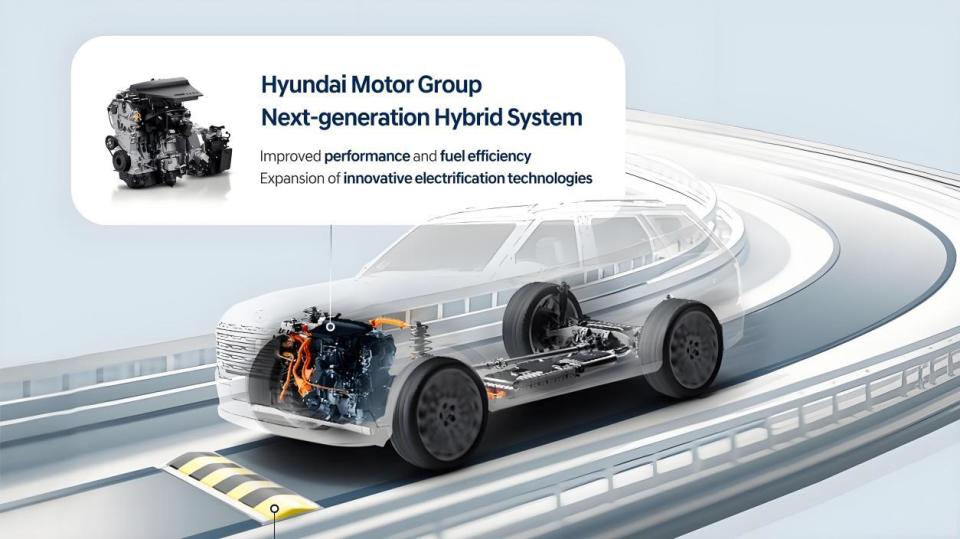
Nevertheless, this upgrade pace pales in comparison to Chinese counterparts. BYD has already advanced to its fifth-generation DM-i system, boasting a WLTC fuel consumption rate as low as 2.9L/100km under depleted battery conditions. Geely's Thunder EM-i system claims an engine thermal efficiency of 46.5%. This technological chasm has left Hyundai largely absent from China's mainstream hybrid market competition between 2020 and 2025, missing a crucial window of opportunity.
Confronted with such market pressures, Hyundai Motor has commenced a reevaluation of its powertrain strategy. From this vantage point, reports of Hyundai engaging with multiple Chinese automakers, including Geely, hold merit. It's essential to clarify that this move transcends mere "technology catch-up"; it's part of Hyundai's broader "China First" strategic pivot. Chinese peers' technologies have already undergone market validation, enabling immediate adoption and cost savings.
Indeed, deep-seated collaborations between international automakers and Chinese tech firms are gaining traction. For instance, Volkswagen and XPENG have jointly developed the China Electronic Architecture (CEA) for the Chinese market since 2024 and announced in August 2025 its expansion to fuel and plug-in hybrid models. Notably, XPENG's role has evolved beyond that of a traditional Tier 1 supplier.
This trend underscores a new reality: Chinese automakers are wielding greater technological influence in the core domains of intelligence and electrification.
The Pros and Cons of External Technology Adoption
Hyundai Motor is indeed contemplating the integration of Geely's hybrid system. On the surface, this aims to swiftly introduce a fuel-efficient and competitively priced model in the Chinese market to counter local giants like BYD and Changan.

Globally, Hyundai's IONIQ 5 and IONIQ 6 models have garnered acclaim and accolades in Europe and the United States. The company aspires to position itself as a "premium electric mobility brand." As a pure electric brand, IONIQ inherently excludes hybrid technology from its product portfolio. Hence, Hyundai has opted for a distinct approach in China: leveraging off-the-shelf hybrid systems from Chinese peers to rapidly develop competitive new vehicles exclusively for the Chinese market, while continuing to promote pure electric and hydrogen energy solutions in other global markets without interference.
This strategy is not unprecedented. When Volkswagen initially launched its ID. series in the Chinese market, the intelligent driving experience fell short of expectations, and sales lagged behind projections. Subsequently, the company swiftly adjusted its approach by integrating the MEB platform with intelligent driving systems developed in collaboration with China's Horizon Robotics and DJI. This approach preserved the global architecture while addressing local deficiencies.
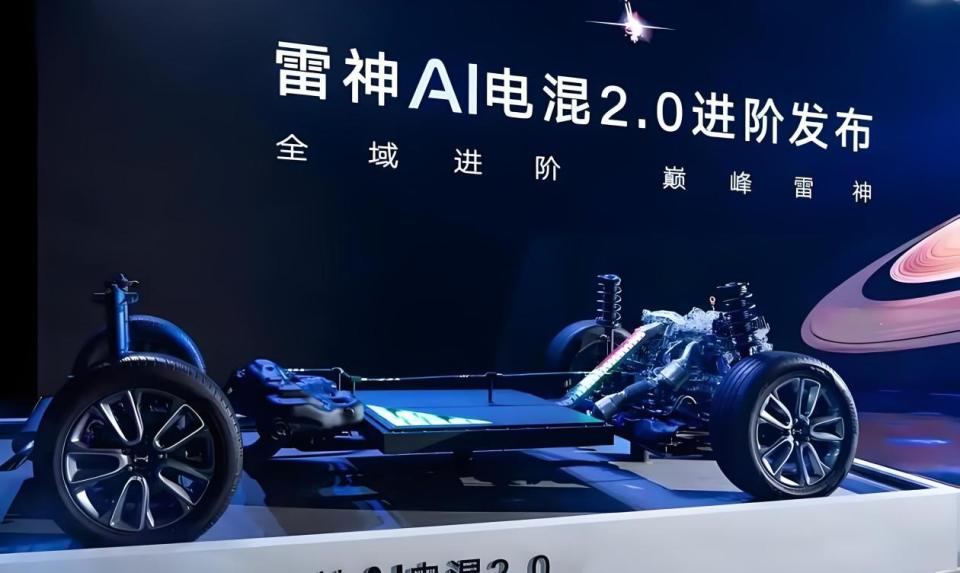
However, challenges persist. In the short term, adopting external technologies can indeed provide a quick fix and aid Hyundai Motor in capturing market share. Yet, prolonged reliance on external solutions may gradually diminish the motivation of its in-house powertrain team to innovate and iterate. More critically, Geely's Thunder AI Electric Hybrid 2.0 technology is underpinned by intelligent algorithms trained on extensive user data, enabling dynamic adjustment of energy distribution strategies based on real-world driving conditions and habits. This system becomes increasingly intelligent with use, and its underlying architecture remains proprietary to Geely.
Even if Hyundai secures licensing, it is likely to receive only a "packaged solution" that dictates installation and parameter tuning but offers limited scope for optimizing the underlying logic, let alone transferring these insights to its global platforms.
Drawing from Volkswagen's experience, Hyundai Motor must demonstrate greater sincerity in future collaborations with any automaker, irrespective of the partner. Only then can it avoid being shackled by external dependencies.
Public Sentiment
Regarding cooperation with Chinese automakers, if Hyundai Motor confines itself to supply chain procurement, it would be akin to a short-term fix with long-term repercussions. The essence of Volkswagen's collaboration with XPENG lies in the joint development mechanism established around the CEA architecture. True "China First" should transcend mere product exclusivity and be reflected in the depth of technological collaboration.
Only through such profound engagement can Hyundai Motor sustain its competitiveness in both the Chinese and global markets.
-
![]()
It's Hard to Build Cars, Even Harder to Build Humans, and XPENG is Doing Both
-
![]()
Valuation Soars by $57 Billion: Three Entrepreneurs Born in the 1980s Forge an AI Unicorn Now Suddenly on the Market
-
![]()
How Can We Achieve the Goal of 100,000 Hydrogen Vehicles by 2030?
-
![]()
July Online Market for Consumer-Grade Sports Cameras: Robust Double-Digit Growth in Sales Volume and Value, Mid-Range Products Fuel Market Expansion
-
![]()
A Hundred Billion Dollar Market! When Will the 'Golden Age' of Agentic AI Arrive?
-
![]()
Changzhou’s Wealthiest Woman Faces Unexpected Setback
-
![]()
FAW Seeks Efficiency Gains, Leapmotor Accelerates Expansion
-
![]()
Dual Leaders in Robot Vacuum Industry Look Overseas for Growth