Efficiency Transformation and Humanistic Care: Reshaping the Labor Landscape Amidst the Wave of Driverless Vehicles! An In-Depth Analysis of the 'Precise Elimination of Low-Value Labor' by Driverless
 12/30 2025
 578
578
Introduction
Recently, the notion that driverless cars will 'precisely eliminate low-value labor' has starkly illuminated a harsh yet inevitable facet of technological advancement.
This perspective compels us to look beyond the safety and efficiency of technology itself and to directly confront its profound impact on the social employment structure.
However, framing this transformation solely as 'elimination' oversimplifies its complex and multifaceted nature.
In essence, the rise of driverless cars is more akin to a 'labor redistribution driven by efficiency,' a process that not only ruthlessly eliminates certain positions but also propels the migration of occupational value to higher realms, while simultaneously fostering new collaboration models.
The 'Driverless Cars Are Coming' (WeChat Official Account: Driverless Cars Are Coming) platform invites you to join the discussion on this topic!
(For further reading, please click: 'Hunan's Capital Makes a Big Move! 'Changsha Autonomous Vehicle Development Regulations' Announced. Will We Be Able to Ride Driverless Cars in 2026?')

I. Technological Essence: An Inevitable Choice Under the Logic of Efficiency First
The core logic highlighted by the aforementioned viewpoint—that driverless cars prioritize the replacement of standardized and highly repetitive tasks—is an intrinsic principle in the evolution of industrial civilization.
From steam engines to assembly lines, from ATMs to self-checkout systems, technological progress has consistently been accompanied by the substitution of simple manual labor.
The rapid integration of driverless cars in closed parks and fixed-route shuttle areas is a continuation of this trend.
The driving force behind this is not the 'exclusion' of humans but the relentless pursuit of cost reduction, efficiency enhancement, and reliability improvement by capital and industry.
Particularly in high-risk (such as chemical engineering), high-load (such as 24-hour logistics), or extremely monotonous scenarios, machines inherently possess advantages in stability and endurance.
(For further reading, please click: 'Yingjieda: Launches the Third-Generation Industrial Explosion-Proof Driverless Car (G9), the 'Game-Changer' in Industrial Driverless Cars from Ningxia to Shenzhen to the Nation')
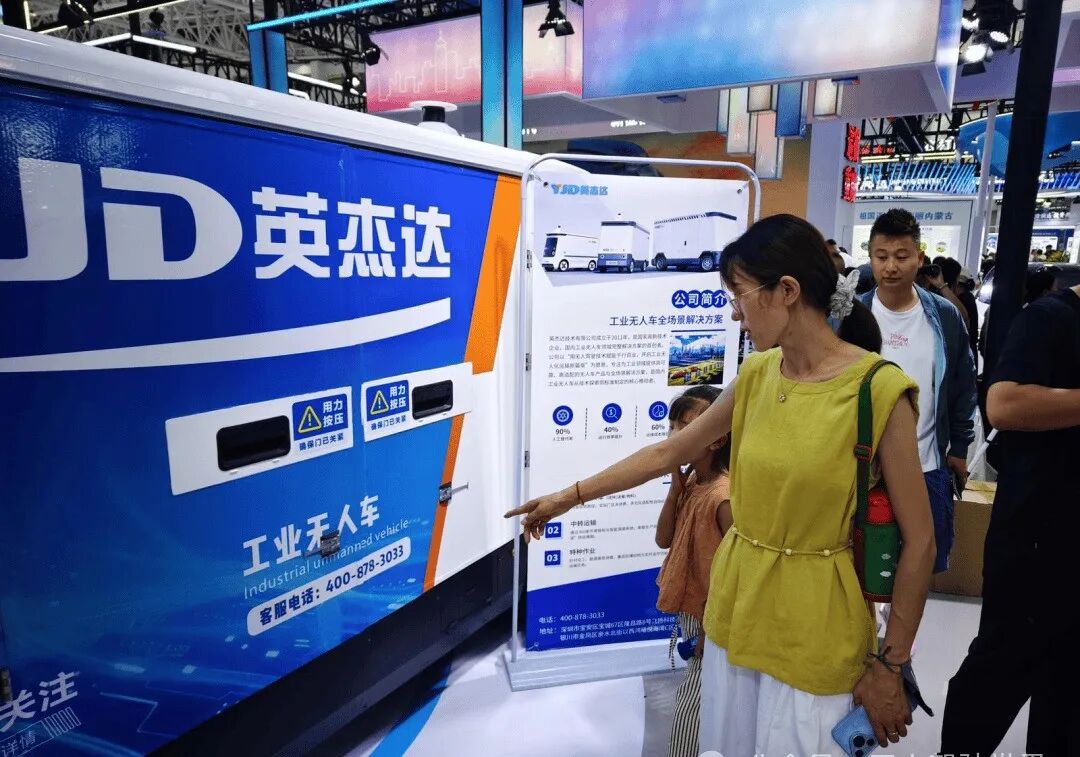
Thus, this 'elimination' is primarily the outcome of economic rationality, a market-driven reconfiguration of labor factors.
II. Occupational Restructuring: Value Migration from 'Physical Execution' to 'Scheduling and Management'
Focusing solely on 'job disappearance' presents a pessimistic view. A more profound transformation lies in the restructuring of occupational connotations.
The aforementioned viewpoint suggests that couriers may transition from 'porters' to 'commanders' managing driverless fleets or 'service experts' responsible for complex final deliveries.
This implies a shift in the measurement standard for labor from 'physical and time expenditure' to 'problem-solving ability, equipment management capability, and interpersonal communication skills.'
(For further reading, please click: 'Driverless Driving: Nurturing a Series of Emerging Occupations Such as Intelligent Connected Vehicle Safety Officers, Data Labelers, Data Engineers, and System Operation and Maintenance Engineers. Autonomous Driving Becomes a New Highland for Employment!')
While the total number of positions may decrease, the intellectual content and value-added requirements of the remaining positions are on the rise.
This is essentially a harsh yet direct occupational upgrade mandate:
Adapting to human-machine collaboration, mastering intelligent tools, and delving into flexible services that machines find difficult to replicate (such as emotional interaction, emergency handling, and personalized communication) will become the new 'competitive edge' for workers.
Driverless cars have not eliminated jobs but redefined them.
III. Social Response: Systematic Governance Beyond Technological Optimism and Employment Pessimism
Faced with this irreversible trend, the core issue for society should not be limited to praise or condemnation but should shift to how to systematically manage and alleviate the pain it brings.
1. The education and training system requires forward-looking reform:
Vocational education and on-the-job training must respond swiftly, strengthening the cultivation of skills in artificial intelligence operation and maintenance, fleet scheduling, human-machine interaction interface management, and high-end customer service to help workers bridge the skills gap.
2. The social security network needs enhanced resilience:
During the transition period, stronger social security measures (such as unemployment relief and retraining subsidies) are necessary to provide a safety net and offer legal and welfare recognition and protection for new forms of employment such as flexible work and human-machine collaboration.
3. Industrial policies need to guide balanced development:
While encouraging technological innovation, the differential impacts on employment in different industries and regions should be assessed. Policy tools (such as taxes and subsidies) should be employed to guide the pace and mode of technological application for a smoother transition.
(For further reading, please click: 'Shenzhen: Launches the Nation's First Demonstration Store for Agricultural Product Quality Grading. Yujia Innovation's Driverless Car Delivers Fresh Produce to Citizens Safely and On Time')
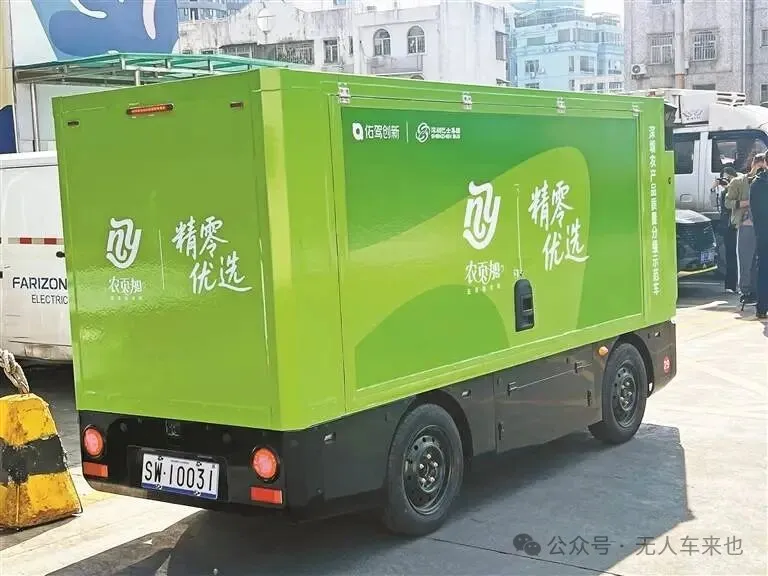
It is undeniable that the widespread popularization of driverless cars is a fact.
However, faced with the wave of driverless driving, we should transcend technological optimism and employment pessimism, stand at the forefront of the times and the height of human social development, conduct comprehensive research and judgment, and actively respond to enhance human well-being.
Technology is not frightening; what is frightening is the inability to positively confront technological challenges.
IV. Future Vision: Human-Machine Collaboration Rather Than Simple Replacement
In the long run, the most likely scenario is not the complete withdrawal of humans but the formation of a deep collaborative landscape where 'machines dominate standardized processes, and humans dominate innovation and complex decision-making.'
As previously reported, Ningxia Yingjieda Company's industrial explosion-proof driverless cars are not aimed at driving out all workers but at liberating them from dangerous and harsh environments to engage in higher-value work such as equipment monitoring, remote intervention, and process optimization.
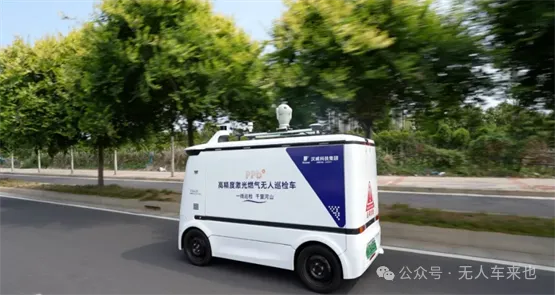
Hanwei Technology has also introduced a PPb-level high-precision laser gas unmanned inspection vehicle that integrates multiple innovative technologies.
It adopts mid-infrared laser gas absorption spectroscopy technology, possessing PPb-level (one in a billion) trace gas leakage detection capability, enabling early warning of gas pipeline leaks and effectively avoiding the risk of 'small leaks causing big disasters.'
(For further reading, please click: 'Hanwei Technology, with Nearly 30 Years of Experience in the Sensor Industry: PPb-level (One in a Billion) Laser Gas Unmanned Inspection Vehicle, Conducting 7×24-Hour Uninterrupted, Blind-Spot-Free Inspections')
In urban logistics, Jiushi Intelligence and Neolix are expanding at a rapid pace, with both companies reaching a scale of 15,000 units.
(For further reading, please click: 'The Three Giants of Unmanned Logistics Vehicles: Neolix, Jiushi Intelligence, and Bai Xiniu Gather in Zhengzhou, Launching the First '2025 China Unmanned Logistics Vehicle Ecosystem Conference' on December 28th')
Future couriers may become operators of small intelligent logistics units, simultaneously managing multiple driverless cars and drones, responsible for regional scheduling, exception handling, and core customer maintenance.
This is a reshaping of the labor landscape and a deepening of humanistic care!
Conclusion
The 'Driverless Cars Are Coming' (WeChat Official Account: Driverless Cars Are Coming) platform believes:
The wave of driverless cars is less of a 'cleansing' of low-value labor and more of a mirror reflecting economic laws and social responsibilities.
It ruthlessly reveals the market law of efficiency first and urgently calls for the wisdom of human-centered social governance.
Technological progress cannot and should not be halted, but its dividends should be more widely shared, and its pain should be more effectively alleviated.
Ultimately, what we pursue should not be a world without humans but a world where humans are more dignified and creative because of machines.
While you're still worried about 'being replaced,' why not learn to 'command machines' first? After all, in the world of driverless cars, the remote control is the real key to success.
What do you think, dear readers?
#DriverlessCarsAreComing #DriverlessDriving #AutonomousDriving #DriverlessCars
-
![]()
Enflame Tech's IPO Journey: Navigating Over 5.9 Billion Yuan in Losses and Soaring Debt in Q1 This Year
-
![]()
Trillion-Yuan Giant Li Shufu 'Streamlines': Could Levc Be the Casualty?
-
![]()
AI Competes for Electricity and Generates Power in the Gobi Desert
-
![]()
The First Batch of Victims of the AI Bubble: Programmers
-
![]()
ByteDance, DJI, and Xiaohongshu Secure Top Three Positions Among China’s Fastest-Growing Unicorns
-
Tesla's in-car voice system in China is finally learning to 'understand human language'
-
![]()
Foreigners Are Amazed: Chinese Electric Vehicle Drive Systems Unveil Innovative 'Poses'
-
![]()
700,000 Brothers and the Future of Robots: Behind JD.com's 'Nirvana Plan'