Are New Forces Starting to Weave AI Narratives?
 12/31 2025
 487
487
Introduction | Lead
By 2025, China's new energy vehicle (NEV) market is gradually entering a phase marked by the convergence of electrification technologies, price wars, and diversified user demands. To carve out new niches, industry players like NIO, XPENG, Li Auto, XIAOMI, and LIXIANG have pivoted towards AI this year. Li Auto has introduced AI glasses, XPENG Motors has repositioned itself as "an explorer of travel in the physical AI world," and XIAOMI SU7 leverages "the full ecosystem of people, vehicles, and homes" as its core selling point. 2026 is poised to be the watershed year when automotive AI becomes a tangible reality, with clearer L3 autonomous driving solutions, the proliferation of on-device large AI models, and the gradual standardization of integrated cabin and driving systems. Through AI, these new forces aim not only to differentiate their products but also to redefine the very essence of automobiles.
This article is produced by | Heyan Yueche Studio
Written by | Cai Yan
Edited by | He Zi
Full text: 1,819 characters
Reading time: 4 minutes
As domestic NEVs surpass the critical point of electrification popularization, AI has emerged as a pivotal variable for breaking through the red ocean of competition and venturing into the blue ocean of innovation. However, amidst this wave of "intelligence," there exists both a genuine evolution from "software-defined" to "AI-defined" vehicles and a capital narrative that may overhype the future. Are we witnessing the dawn of a new era of travel, or are we stepping into a meticulously crafted "technological myth?"

△ Smart vehicles are transitioning from "software-defined" to "AI-defined."
From the Red Ocean of Electrification to the Blue Ocean of Intelligence
Currently, China's automotive market is undergoing a profound structural shift. NEVs have become the dominant force, with their retail penetration rate exceeding 50% from January to November 2025. The previous focus on engine performance has given way to a triad of "three-electric" performance (battery, motor, and electric control), intelligence level, and ecological services. As hardware technologies such as batteries and motors rapidly converge, intelligence, particularly AI, has become the core of the blue ocean due to its ability to deeply intervene in the entire chain of research and development, production, and user experience.
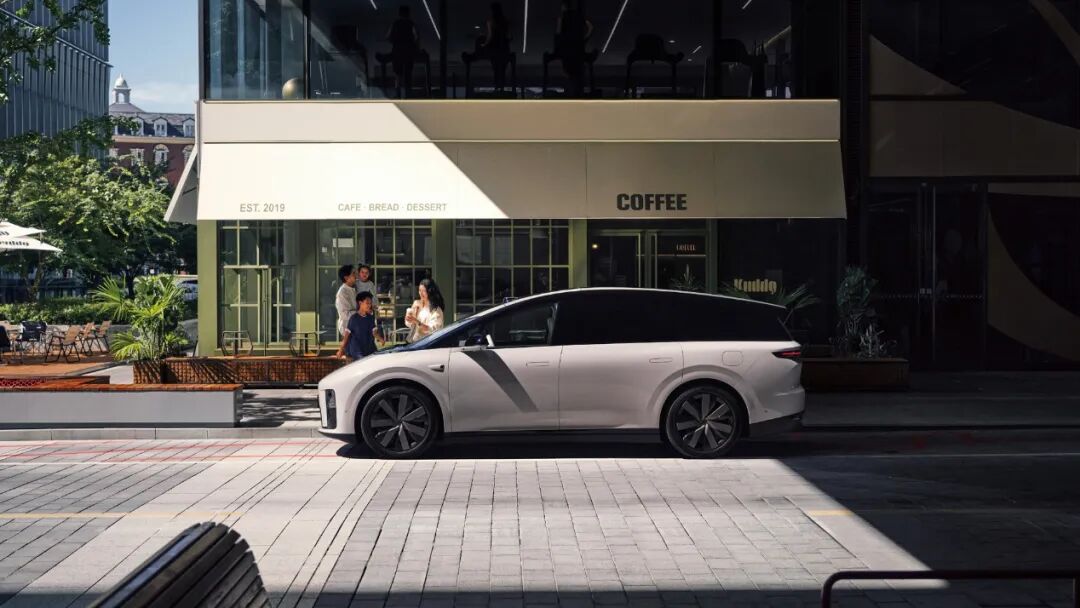
△ The retail penetration rate of NEVs exceeded 50% from January to November 2025.
Major automakers have already embarked on the AI journey. Li Auto has launched the VLA (Vision-Language-Action) driver large model, a core breakthrough that enables vehicles to "understand human language." Users can now interact with their vehicles using natural language commands like "pull over" or "take this left road." More notably, Li Auto has released its AI glasses, Livis. Priced starting at 1,999 yuan, these glasses eschew the "vehicle accessory" label and aim to create an independent intelligent hardware product with universal value. Their core selling point lies in their deep integration with the vehicle's infotainment system: after wearing them, owners can control windows and air conditioning through voice commands, experiencing a speed nearly 10 times faster than smartphone operations. Li Auto is clearly extending the intelligent experience beyond the vehicle's interior.
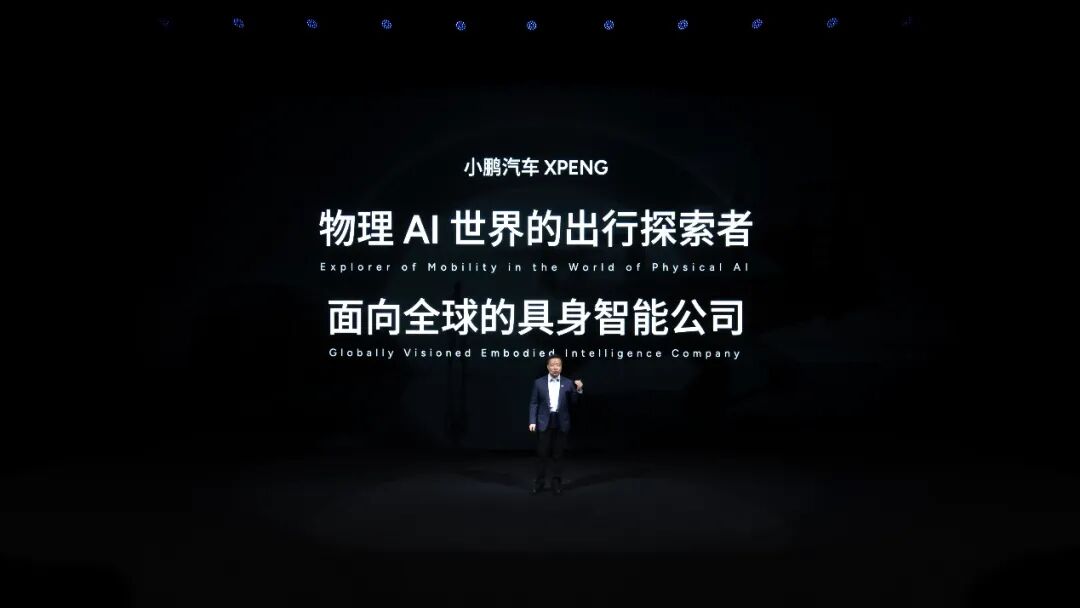
XPENG Motors has redefined its corporate positioning as "an explorer of travel in the physical AI world and a global embodied intelligence company," showcasing its determination to reconstruct the travel landscape with AI. At the core technology level, XPENG has introduced the "Xiaolu NGP" function, which can intelligently recognize traffic police gestures and predict traffic lights, demonstrating AI's potential in complex scenarios. More ambitiously, XPENG plans to build an AI empire, with the Robotaxi model set to launch in 2026, a new generation of humanoid robot IRON with 82 degrees of freedom, and the hybrid-electric flying car "A868" entering the flight verification stage—all powerful tools built on AI technology.
Beyond automakers, suppliers like Horizon Robotics are committed to driving down the cost per vehicle of high-level intelligent driving systems to within 7,000 yuan and plan to equip urban assisted driving solutions on national cars priced as low as 70,000 yuan. This means that AI-powered intelligent driving, once exclusive to high-end models, is now becoming accessible to ordinary households in the name of "technological equality."
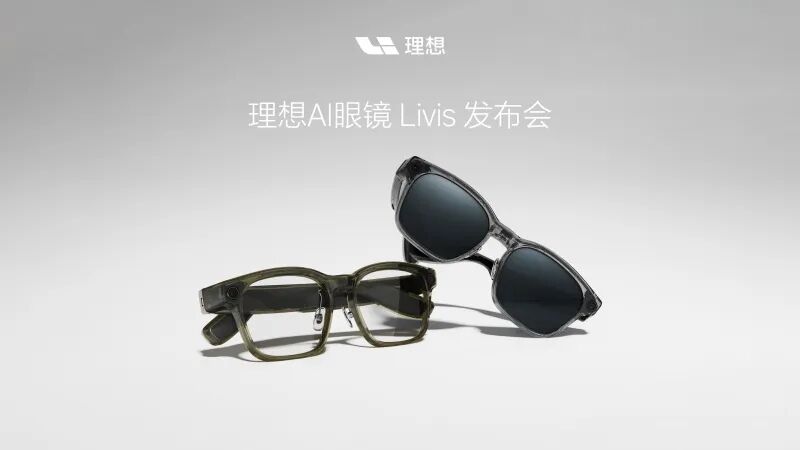
△ Li Auto unveils AI glasses, Livis.
Is AI a Story or a Magic Tool?
Is the current AI wave in the automotive industry a disruptive force reshaping the industry or a carefully crafted capital narrative? On one hand, the positive impact of AI is already evident in real-world scenarios. From tests at the Guangzhou Auto Show, new cars equipped with AI large models can understand colloquial composite instructions and execute them smoothly, marking a transition in human-vehicle interaction from mechanical "command execution" to proactive "demand understanding." On a deeper level, the industry consensus is shifting from "software-defined vehicles" to "AI-defined vehicles." The core difference lies in the fact that the former achieves digital upgrades of functions, while the latter pursues cognitive intelligence, enabling vehicles to learn and make decisions autonomously.
However, while AI technology is leading the technological frontier, solutions to user pain points remain unclear. As some automakers compete to showcase long-term blueprints for "embodied intelligence" like humanoid robots, do ordinary users' more pressing concerns—such as intelligent driving experience in complex urban road conditions and battery safety—receive equal research and development priority? Meanwhile, the "black box" nature of AI technology can easily give rise to new marketing rhetoric barriers. Terms like "end-to-end models" and "billions of parameters" make it difficult for consumers to discern actual experience gaps. Additionally, the risk of ecological closure is intensifying, as each company's self-built technological barriers may form "data silos," contradicting the original intention of intelligent interconnection.
Looking ahead, the key to a healthy vision of AI empowering the automotive market lies in returning to the essence of "technology serving people" and finding a dynamic balance between exploring the frontier and consolidating the foundation. First, development efforts must be anchored in real and high-frequency user demands. Instead of pursuing cool but distant concepts, resources should be concentrated on improving the safety redundancy and human-like experience of intelligent driving systems, optimizing the energy efficiency of the "three-electric" systems through AI, and enabling natural interactions. Second, the industry needs to establish more transparent and unified experience evaluation standards to penetrate the marketing fog and allow consumers to clearly perceive the value. Finally, open collaboration rather than closed-door development will be the key to building a benign ecosystem. Just as the industry's promotion of vehicle-road-cloud integration pilots has revealed, future competition will be a contest of ecological systems.
△ AI empowers the automotive market.
Commentary
The application of AI technology in the automotive industry has transcended mere concepts and become a key force in shaping the automotive ecosystem. AI has effectively enhanced vehicle interaction, driving control, and production efficiency. In the future, the ultimate criterion for the success of AI and automobile integration will not be the technological coolness but whether it translates into safer, more convenient, and more inclusive user value.
(This article is original to "Heyan Yueche" and may not be reproduced without authorization.)
-
![]()
Enflame Tech's IPO Journey: Navigating Over 5.9 Billion Yuan in Losses and Soaring Debt in Q1 This Year
-
![]()
Trillion-Yuan Giant Li Shufu 'Streamlines': Could Levc Be the Casualty?
-
![]()
AI Competes for Electricity and Generates Power in the Gobi Desert
-
![]()
The First Batch of Victims of the AI Bubble: Programmers
-
![]()
ByteDance, DJI, and Xiaohongshu Secure Top Three Positions Among China’s Fastest-Growing Unicorns
-
Tesla's in-car voice system in China is finally learning to 'understand human language'
-
![]()
Foreigners Are Amazed: Chinese Electric Vehicle Drive Systems Unveil Innovative 'Poses'
-
![]()
700,000 Brothers and the Future of Robots: Behind JD.com's 'Nirvana Plan'