ZhiXingZhe's RMB 400 Million Funding Milestone: A New Era in Autonomous Driving! Why Are State-Owned Enterprises Investing in Special-Purpose Unmanned Driving?
 01/06 2026
 503
503
Introduction
In early 2026, amidst the fierce competition of autonomous taxis on London's streets, a Chinese special-purpose unmanned driving company, ZhiXingZhe, quietly secured a RMB 400 million funding round.
Behind this seemingly understated capital move lies a significant strategic transformation within China's autonomous driving sector.
Led by the Huangshi State-Owned Capital Investment Group, the funding underscores the capital markets' focus on a different avenue within autonomous driving: special-purpose unmanned driving scenarios.
Let's delve into this topic with everyone on Unmanned Vehicle Coming (WeChat Official Account: Unmanned Vehicle Coming)!
(For more information, please click: 'China's Premier Provider of Special-Purpose Unmanned Driving Solutions: ZhiXingZhe's Unmanned Sightseeing Vehicle Makes Waves in Guangxi! Its Unmanned Grassland Fire Extinguishing Vehicle and Unmanned Cleaning Vehicle Have Sold Nearly 10,000 Units Worldwide')
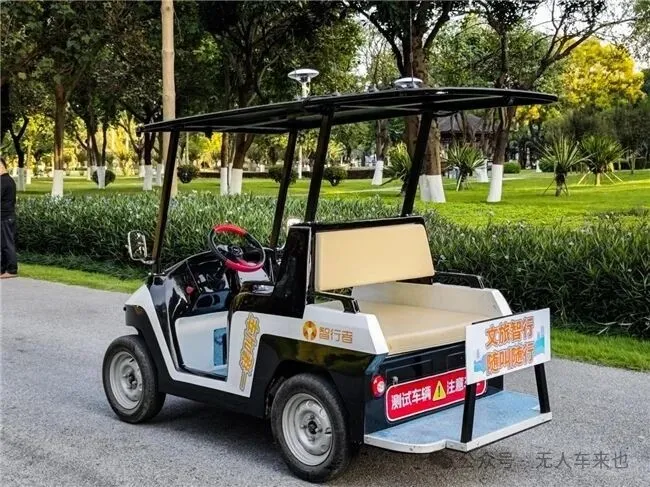
I. Funding Logic: From 'Dreaming Big' to 'Staying Grounded'
Against the backdrop of RMB 60 billion in funding for the autonomous driving industry in 2025, ZhiXingZhe's RMB 400 million may not seem like the most attention-grabbing figure.
However, the investor's identity—a local state-owned industrial fund—signals a profound shift in market preferences.
Unlike venture capital, which seeks disruptive narratives, state-owned capital places greater emphasis on the certainty of technological applications and their impact on the industrial chain.
The involvement of the Huangshi Industrial Development Fund indicates that ZhiXingZhe's technology and business model have successfully passed the rigorous tests of 'economic feasibility' and 'safety'.
This shift reflects a broader industry trend: in 2025, L4-level niche segments (such as ports, mining, and sanitation) emerged as the most funded areas, as capital transitioned from 'chasing the future' to 'investing in the present'.
While Robotaxi continues to grapple with the 'last mile' of full autonomy, special-purpose unmanned driving has already achieved stable, all-weather operations in specific regions, as demonstrated by ZhiXingZhe's 130 million kilometers of commercial operation.
II. Technological Barriers: Tsinghua DNA and Full-Stack Self-Research Create a Competitive Edge
ZhiXingZhe's technological advantage stems from its academic heritage at Tsinghua University and its long-term commitment to full-stack technological research and development.
With over 1,200 patents (over 60% of which are invention patents) and involvement in formulating multiple national industry standards, the company showcases deep expertise in core areas such as unmanned system architecture and multi-sensor fusion perception.
Unlike autonomous driving in general scenarios, special-purpose unmanned driving encounters extreme, variable, and unstructured operational environments.
For instance, in emergency rescue scenarios, vehicles must make autonomous decisions in irregular terrain and low-visibility conditions;
in mining transportation, they must navigate challenges such as continuous heavy loads and dust interference.
ZhiXingZhe's technological prowess lies in its adaptability to these 'non-standardized' scenarios.
Its multi-sensor fusion solution and highly robust control algorithm enable its solutions to swiftly adapt to the needs of various special-purpose scenarios, forming the core of its 'technology platform + scenario-based product' dual-wheel drive model.
III. Business Model: Achieving Commercial Viability in Special-Purpose Scenarios
The success of ZhiXingZhe's business model lies in striking a balance between technical feasibility and commercial sustainability.
Unlike autonomous taxis (Robotaxi), which require extensive data training over hundreds of billions of kilometers, special-purpose scenarios typically feature clear boundaries, well-defined rules, and rigid demands, facilitating easier commercial realization.

In the fields of sanitation and cleaning, autonomous sweeping vehicles can operate at night, enhancing efficiency while reducing labor costs;
in mining transportation, unmanned mining trucks can operate around the clock, freeing drivers from hazardous environments.
The advantages of this model include clear customer willingness to pay (replacing high-cost or high-risk labor), relatively low deployment complexity (confined areas), and predictable investment return cycles.
This is precisely why state-owned capital is optimistic and willing to invest—visible application prospects and predictable economic returns.
IV. Industrial Significance: China's Differentiated Approach to Autonomous Driving
In the global race for autonomous driving, China and the United States have adopted distinct technological paths and business models.
While U.S. companies focus on open-road Robotaxi, Chinese enterprises are establishing global leadership in special-purpose scenarios and confined-area autonomous driving applications.
ZhiXingZhe's successful funding and large-scale operations exemplify China's pragmatic approach to the autonomous driving industry: prioritizing the creation of real value in achievable scenarios over the pursuit of technological perfection.
This 'rural surround urban' strategy not only provides valuable data and funds for technological iteration but also lays the groundwork for future expansion into more complex scenarios.
From special-purpose scenarios to semi-open roads and eventually to fully open roads, Chinese autonomous driving enterprises are forging a distinct evolutionary path compared to their U.S. counterparts.
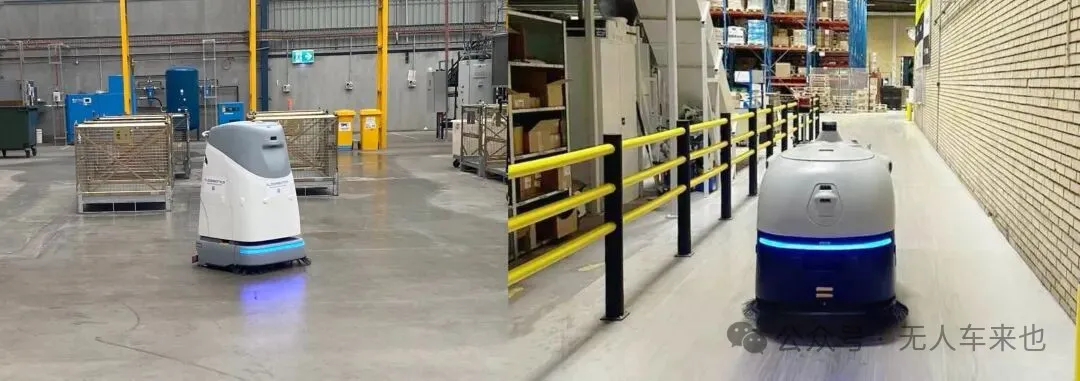
More importantly, the application of special-purpose unmanned driving directly contributes to industrial upgrading and public service optimization, aligning closely with China's smart manufacturing and smart city strategies. This is also the inherent driving force behind local governments' active promotion of related industries.
When special-purpose unmanned driving vehicles perform cleaning operations on late-night streets or execute transportation tasks in dangerous mining areas, these scenarios may not garner as much public attention as Robotaxi, but they are rapidly transforming our production and lifestyle.
In conclusion, Unmanned Vehicle Coming (WeChat Official Account: Unmanned Vehicle Coming) believes:
The flow of capital has always been a reliable indicator of industry trends.
ZhiXingZhe's RMB 400 million funding may seem like a minor ripple in the vast ocean of autonomous driving, but it reflects a strategic shift within the entire industry from 'dreaming big' to 'staying grounded'.
On the path to fully autonomous driving, the experience and data accumulated in these special-purpose tracks may hold the key to future success.
What are your thoughts, dear readers?
#UnmannedVehicleComing #UnmannedDriving #AutonomousDriving #UnmannedVehicle
-
![]()
Enflame Tech's IPO Journey: Navigating Over 5.9 Billion Yuan in Losses and Soaring Debt in Q1 This Year
-
![]()
Trillion-Yuan Giant Li Shufu 'Streamlines': Could Levc Be the Casualty?
-
![]()
AI Competes for Electricity and Generates Power in the Gobi Desert
-
![]()
The First Batch of Victims of the AI Bubble: Programmers
-
![]()
ByteDance, DJI, and Xiaohongshu Secure Top Three Positions Among China’s Fastest-Growing Unicorns
-
Tesla's in-car voice system in China is finally learning to 'understand human language'
-
![]()
Foreigners Are Amazed: Chinese Electric Vehicle Drive Systems Unveil Innovative 'Poses'
-
![]()
700,000 Brothers and the Future of Robots: Behind JD.com's 'Nirvana Plan'