Automotive Industry Blueprints in Regional 15th Five-Year Plans
 01/30 2026
 508
508
From the ambition to "establish an intelligent connected new energy vehicle hub" to "refining policies for passenger car quantity management and regional traffic restrictions," the automotive sector has emerged as a pivotal element in the 15th Five-Year Plans of various regions.
Since the release of the "Suggestions of the Central Committee of the Communist Party of China on Formulating the 15th Five-Year Plan for National Economic and Social Development," over 20 provinces and municipalities across the nation have unveiled their planning outlines for the next five years within just two months. A clear and shared emphasis has surfaced in the regional strategies for the 15th Five-Year period: the automotive industry, particularly its shift towards electrification and intelligence, is becoming a cornerstone of numerous local development plans.
From the ambition to "create a globally influential intelligent connected new energy vehicle hub" to the forward-thinking vision of "cultivating a low-altitude economy," and the pragmatic considerations of "refining policies for passenger car quantity management and regional traffic restrictions," these local planning documents reflect a profound and subtle transformation within China's automotive sector. The once-ubiquitous and homogeneous competition in the new energy vehicle boom is gradually giving way to "distinctive breakthroughs" based on regional resources, technological advancements, and market dynamics. This not only signifies an evolution in local development strategies but also underscores that China's automotive industry has transitioned from a pursuit of scale expansion to a focus on quality enhancement, entering a new phase of development. It is evident that a systematic upgrade, bearing the mission of "building a strong automotive nation," has quietly commenced in the blueprints of regional plans.
The "Top Three" Regions Pursue Comprehensive and In-Depth Development
Based on recently released automotive production data from various provinces and municipalities, Anhui, Guangdong, and Chongqing are poised to rank among the top three nationwide. From constructing new energy intelligent connected vehicle industry clusters for both complete vehicles and components to enhancing the consumption and usage environment, including energy replenishment networks, and to stockpiling forward-looking technologies related to artificial intelligence and the low-altitude economy, the automotive industry content in the 15th Five-Year Plans of these three major provinces and cities reveals their commitment to in-depth strategic deployment based on existing strengths (e.g., Anhui's innovation hub, Guangdong's open ecosystem, and Chongqing's manufacturing cluster). Industrial competition has entered a new stage of quality enhancement based on regional endowments.
From January to November 2025, Anhui Province led with a total automotive production of 3.3354 million vehicles, nearly securing its position as the "top automotive industry province" in 2025. Currently, Anhui has attracted seven complete vehicle enterprises, including Chery Automobile, NIO, Volkswagen Anhui, BYD Hefei, JAC Group, Changan Hefei, and Hanma Technology, forming a new dynamic of "seven horses galloping." Additionally, there are over 3,000 large-scale enterprises covering the entire chain of new energy vehicle "three electric systems" and other components, creating a relatively complete automotive industry ecosystem. In its 15th Five-Year Plan, Anhui Province outlined its intention to focus on building emerging pillar industries, deeply implementing emerging industry cluster development projects, and concentrating on strategic emerging industries such as intelligent connected new energy vehicles, next-generation information technology, artificial intelligence, high-end equipment manufacturing, new energy and green low-carbon, new materials, low-altitude economy and commercial space, and robotics. It aims to advance the construction of innovation facilities, technological research and development, and product iteration and upgrading in a coordinated manner, accelerating the clustered and large-scale development of emerging industries.
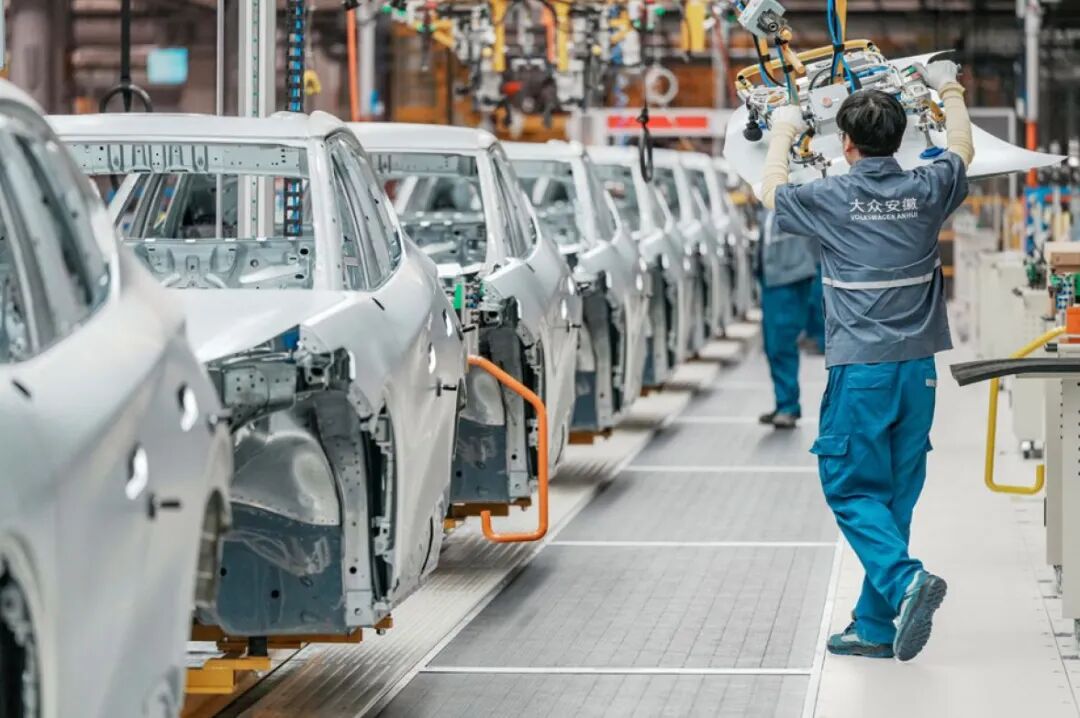
Meanwhile, Anhui also proposes to promote the open innovation of the entire industrial chain of intelligent connected vehicles in the China (Anhui) Pilot Free Trade Zone, expand outward-oriented industrial clusters, cultivate and establish outward-oriented industrial agglomeration zones, and advance the high-quality development of the sports industry. It aims to strengthen and expand a group of competitive sports enterprises and independent brands, cultivate emerging consumption formats such as esports, low-altitude sports, and new energy racing, and innovatively host a batch of original brand event IPs with the "Anhui" label.
Guangdong Province is poised to secure the second place in annual automotive production nationwide. From January to November last year, Guangdong's total automotive production was 2.7196 million vehicles, and its above-scale industrial added value increased by 3.2% year-on-year, with the automotive manufacturing industry's added value increasing by 9.9% year-on-year, clearly becoming the core driving force for economic growth. In its 15th Five-Year Plan, Guangdong Province not only proposes to promote the quality improvement and upgrading of industries such as steel, petrochemicals, automotive, and shipbuilding, climbing towards high-tech fields and high-value-added links, but also focuses on building emerging pillar industries, implementing industrial innovation projects, advancing the construction of innovation facilities, technological research and development, and product iteration and upgrading in a coordinated manner, accelerating the clustered development of strategic emerging industries such as new energy, new materials, commercial space, and low-altitude economy, and strengthening advantageous industries such as new energy vehicles and vessels, integrated circuits, new energy storage, pharmaceuticals and medical devices, and drones and unmanned ships.
It is worth mentioning that Guangdong Province particularly emphasizes the need to coordinate the promotion of high-quality introduction and high-level internationalization, orderly carry out foreign investment cooperation, and reasonably plan overseas industrial chains with a focus on advantageous fields such as electronic information, intelligent home appliances, and new energy vehicles.
Among the top three, Chongqing is the only city that explicitly proposes to "build an intelligent connected new energy vehicle hub with global influence," with an automotive production of 2.4981 million vehicles from January to November 2025. In its 15th Five-Year Plan, Chongqing proposes a series of specific measures, including strengthening leadership, digital and intelligent driving, brand building, and ecological empowerment, comprehensively promoting the reshaping and upgrading of complete vehicles, components, and aftermarket, and constructing a world-class intelligent connected new energy vehicle industry cluster. It focuses on strengthening leading chain enterprises, comprehensively enhancing the dominance and control of the automotive industry chain, building a national automotive chip industry base, expanding integrated application scenarios for "vehicle-road-cloud-network-map," establishing an advanced quality management system with a high-end positioning, constructing an international marketing and service network, cultivating world-class high-end automotive brands, supporting leading enterprises to take the lead in forming an "artificial intelligence + automotive" ecological alliance, planning facility networks such as ultra-fast charging stations, battery swap stations, and hydrogen refueling stations, and accelerating the construction of a convenient ultra-fast charging city.
First-Tier Cities and Traditional Automotive Powerhouses Balance Consumption and Transformation
According to the latest data released by the China Association of Automobile Manufacturers, China's automotive production and sales reached 34.531 million and 34.4 million vehicles in 2025, respectively, representing year-on-year increases of 10.4% and 9.4%. These figures mark new historical highs, with China maintaining its global leadership for the 17th consecutive year. The steady growth of the automotive market provides crucial support for national economic development and social stability.
Against the current economic backdrop, boosting automotive consumption is not only a potent short-term measure for stabilizing growth and promoting employment but also drives high-quality economic development and the early realization of "dual carbon" goals by supporting green and intelligent consumption such as new energy vehicles. Based on this, first-tier cities and traditional automotive powerhouses have emphasized optimizing the automotive consumption environment in their respective 15th Five-Year Plans, aiming to unleash the potential of this core domestic demand and thereby stabilize the economic landscape. They have also proposed comprehensive plans and specific measures for industrial transformation and upgrading, contributing to China's advancement towards becoming a "strong automotive nation."
As the capital, Beijing stated in its 15th Five-Year Plan its intention to accelerate the development of strategic emerging industries such as integrated circuits, robotics and intelligent manufacturing, intelligent connected vehicles, and aerospace technology. It also aims to increase the supply of parking facilities, promote shared parking resources during off-peak hours, regulate parking order, and specifically mentions improving traffic demand management, actively creating conditions to optimize policies for passenger car quantity management and regional traffic restrictions, and building a green transportation system by steadily increasing the proportion of new energy vehicles and improving supporting facilities for new energy vehicle replenishment.
The automotive industry has long been the "cornerstone" of Shanghai's industry and economy, playing a crucial role in economic growth, employment, exports, and industrial upgrading. During the 14th Five-Year Plan period, Shanghai had five advanced manufacturing clusters selected for the "national team," with new energy vehicles being one of the three first-batch clusters. In its 15th Five-Year Plan, Shanghai continues to emphasize the need to focus on building six emerging pillar industry clusters, driving the renewal and upgrading of next-generation electronic information through intelligent terminal innovation, and accelerating the development of intelligent connected new energy vehicles through software-hardware collaboration and digital and intelligent driving. It also mentions promoting consumption and industrial transformation, including driving consumption quality improvement and expansion, adhering to a close combination of benefiting people's livelihoods and promoting consumption, investing in objects and investing in people, strengthening the central node role of the domestic large cycle and the strategic link role of the domestic and international dual cycles, and focusing on cultivating and developing new quality productivity by increasing the efficient conversion and application of major scientific and technological achievements and advancing the intelligent, green, and integrated development of industries.
Jilin Province is the birthplace of China's automotive industry and holds strong advantages in the traditional automotive sector. Facing the new wave of electrification, intelligence, and connectivity development, Jilin Province, based on its existing strengths, proposes in its 15th Five-Year Plan to optimize and upgrade traditional industries, promoting the transformation of the traditional automotive industry towards new energy intelligent connected vehicles, the petrochemical industry towards "reducing oil and increasing chemicals and improving quality," and the metallurgical and building materials industry towards green and high-end transformation. It also emphasizes in "promoting consumption expansion and upgrading" the need to optimize consumption supply and boost the consumption of bulk commodities such as automobiles and home appliances.
As an established automotive industry base in China, Hubei Province's 15th Five-Year Plan also addresses "promoting the optimization and upgrading of traditional industries" and "driving the cultivation and growth of emerging industries," including "implementing traditional industry renewal projects, promoting equipment updates, process upgrades, and digital and intelligent empowerment in key industries such as automotive and steel" and "developing and strengthening the intelligent economy, accelerating the development of intelligent terminal industries such as intelligent connected vehicles, smartphones, intelligent home appliances, and intelligent wearables." Notably, when proposing to "accelerate consumption expansion and capacity building," Hubei Province, in response to the new trend of automotive consumption upgrading in China, also states its intention to "promote the expansion and upgrading of commodity consumption, strengthen brand leadership, standard upgrades, and new technology applications, and drive the renewal and upgrading of consumption such as automobiles and housing."
Differentiated Competition to Build Local Characteristics
Facing the new era of the 15th Five-Year Plan, other provinces and cities have also undergone profound transformations in their planning approaches towards the automotive industry: moving away from the previously convergent layouts on the same track, they are now leveraging local conditions and industrial accumulations to either focus on the core direction of intelligent connectivity or delve into specific emerging fields, striving to shape a new industrial development pattern with local characteristics and core competitiveness.
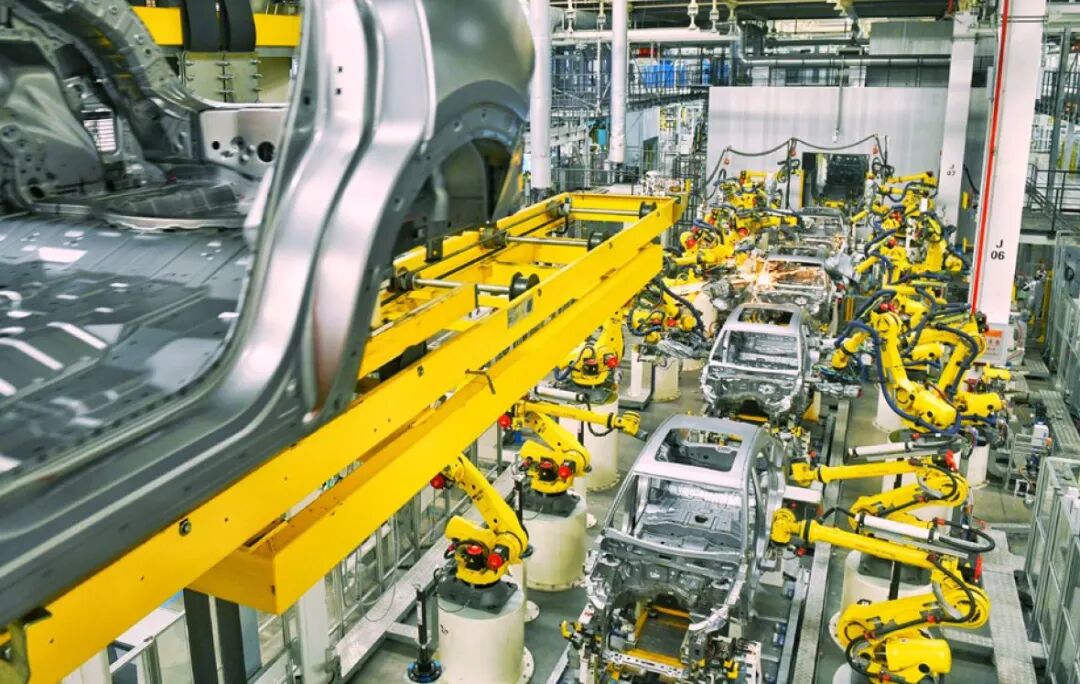
For instance, Inner Mongolia is capitalizing on its abundant green electricity resources and mining scenarios. It is concentrating on expediting the large-scale deployment of new energy heavy trucks and unmanned electric mining trucks. Additionally, it is fostering the development of innovative products in sectors like construction machinery, heavy-duty vehicles, specialized equipment, and rail transit equipment, with the aim of boosting market share and nurturing modern equipment manufacturing clusters. Jiangxi, on the other hand, is proposing a scientific approach to planning new industrial sectors such as solid-state batteries. It is also systematically constructing digital and intelligent infrastructure, including IoT perception networks, low-altitude intelligent networks, and vehicle networks, thereby establishing an integrated data circulation and utilization infrastructure in Jiangxi that connects to the national level and spans the entire region.
Drawing on its local resource advantages, Shanxi has outlined in its 15th Five-Year Plan its intention to leverage its energy and raw material resource endowments and industrial foundations. It plans to enhance technological innovation and digital and intelligent empowerment, coordinate efforts to ensure stable coal production and supply, utilize coal power as a base for peak regulation, promote large-scale and high-quality development and utilization of new energy and clean energy, and engage in forward-looking planning for future energy. The goal is to fortify and expand advanced equipment manufacturing industries such as rail transit, construction machinery, new energy heavy trucks, low-altitude equipment, and robots.
In recent years, Zhejiang has proactively planned new sectors in automotive intelligence and electrification, establishing a comprehensive industrial chain from complete vehicle manufacturing to component production. Leveraging its strong foundation in the internet and digital economy, Zhejiang's 15th Five-Year Plan emphasizes the construction of a "full-stack ecosystem for intelligent driving." This ecosystem aims to create a seamless closed loop from core technologies to market services, encompassing underlying chips, large model algorithms, intelligent terminals, and scenario applications. Through a "software-hardware integration, from chip to cloud" planning, Zhejiang seeks to develop systemic competitiveness that is not easily replicable, thereby securing a dominant position in data and ecology during the era of intelligent vehicles. Furthermore, Zhejiang proposes to expedite the construction of a green, intelligent, and efficient modern logistics system. This includes vigorously promoting the application of new energy vessels, accelerating the large-scale deployment of new energy heavy trucks, advancing the electrification substitution of urban public service vehicles, expediting the elimination and renewal of old vehicles and vessels, and enhancing the green and intelligent levels of transportation infrastructure.
Zhu Yifang, the Minister of the New Energy Vehicle Research Department at the China Automotive Strategy and Policy Research Center, stated in a media interview that the adjustment of local automotive industry layouts stems from the integration of multiple factors, including policy guidance, industrial development, and local practices. He emphasized that both "differentiated competition" and "regional collaboration" are essential and complementary in local automotive industries. Differentiated competition serves as the foundation for local automotive industries, with its core value lying in the precise positioning of each region based on its industrial foundation and resource endowments, thereby fundamentally avoiding issues such as redundant construction and resource waste. Regional collaboration, on the other hand, is the pathway for local automotive industries. Through regional collaboration, each region assumes distinct roles in the automotive industry's supply chain, innovation chain, and value chain, forming a larger-scale industrial ecosystem and jointly enhancing the overall competitiveness of China's automotive industry.
It is worth noting that although some provinces and cities have not overly emphasized "automobiles" in their 15th Five-Year Plans, they have still mentioned related content to varying extents. For example, Hunan Province's 15th Five-Year Plan mentions "promoting the intelligent, green, and integrated development of manufacturing." Jiangsu Province, in its 15th Five-Year Plan, proposes to deeply advance the construction of Digital Jiangsu, deepen the development and utilization of data resources, and cultivate a group of leading digital enterprises and industrial clusters. Shandong Province's 15th Five-Year Plan emphasizes taking intelligence, greenness, and integration as directions, deeply implementing industrial energy level enhancement projects, developing new quality productivity based on local conditions, and accelerating the construction of advanced manufacturing, aerospace, and quality powerhouses.
As the 15th Five-Year automotive industry canvas unfolds, the logic of industrial development has clearly shifted. From past competitions based solely on quantity to current contests of entire industrial ecosystems and long-term innovation capabilities, and from the previous pursuit of "comprehensive coverage" in production capacity to the current "characteristic breakthroughs" based on regional endowments, it is foreseeable that in the new era of the 15th Five-Year Plan, a new pattern of China's automotive industry, characterized by "each region excelling in its own strengths, complementary advantages, and coordinated progress," is taking shape. This provides a vivid illustration of how internal differentiated competition can contribute to the overall advancement of China's industrial power.
-
![]()
Enflame Tech's IPO Journey: Navigating Over 5.9 Billion Yuan in Losses and Soaring Debt in Q1 This Year
-
![]()
Trillion-Yuan Giant Li Shufu 'Streamlines': Could Levc Be the Casualty?
-
![]()
AI Competes for Electricity and Generates Power in the Gobi Desert
-
![]()
The First Batch of Victims of the AI Bubble: Programmers
-
![]()
ByteDance, DJI, and Xiaohongshu Secure Top Three Positions Among China’s Fastest-Growing Unicorns
-
Tesla's in-car voice system in China is finally learning to 'understand human language'
-
![]()
Foreigners Are Amazed: Chinese Electric Vehicle Drive Systems Unveil Innovative 'Poses'
-
![]()
700,000 Brothers and the Future of Robots: Behind JD.com's 'Nirvana Plan'