Germany Secures Second Place in Global Electric Vehicle Production, Hitting an All-Time High of 1.67 Million Units in 2025
 02/09 2026
 548
548
Author / Zhang Xin
Produced by / Insight Auto
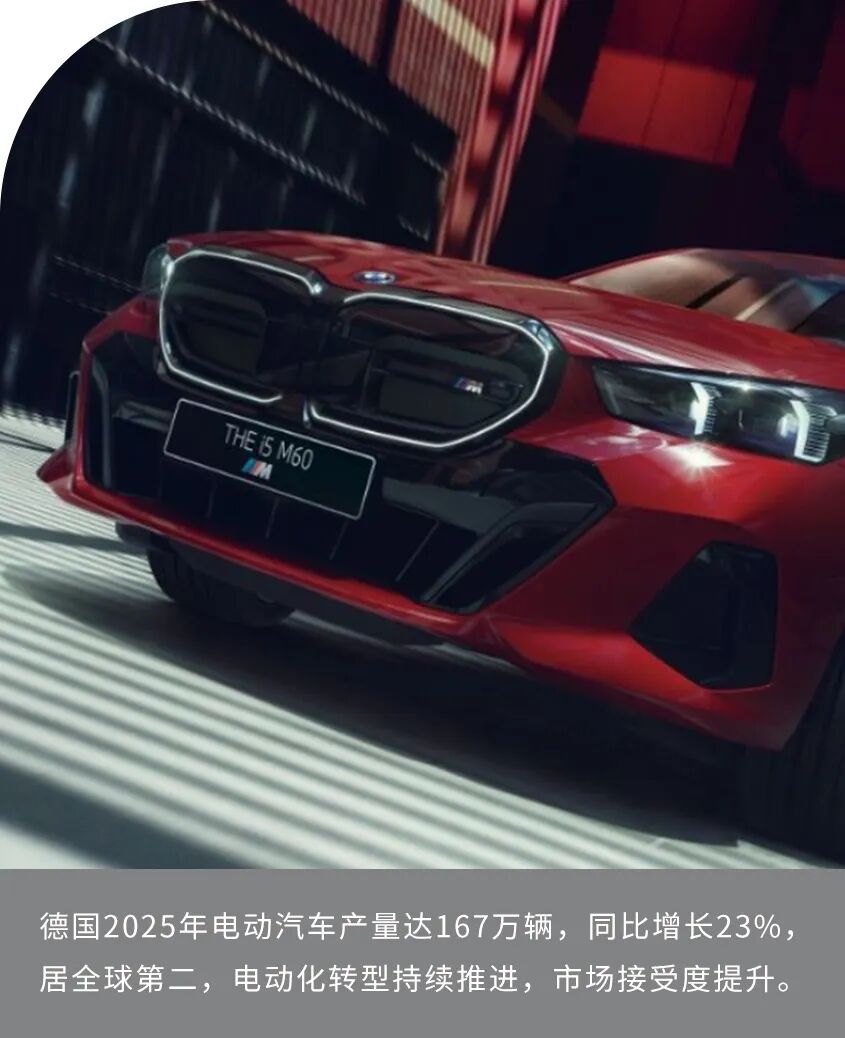
On February 4 (local time), the German Association of the Automotive Industry (VDA) unveiled a report highlighting significant milestones in Germany's electric vehicle (EV) sector for 2025. The nation produced a total of 1.67 million EVs domestically, marking a 23% year-on-year increase and setting a new record. This achievement solidifies Germany's position as the world's second-largest EV producer, trailing only China.
Delving into the specifics, the production of Battery Electric Vehicles (BEVs) reached 1.22 million units in 2025, representing a 15% year-on-year rise. Meanwhile, Plug-in Hybrid Electric Vehicle (PHEV) production soared to 450,000 units, a substantial 54% increase. This synchronized growth across various EV categories underscores Germany's ongoing efforts to optimize its EV product portfolio and cater to a diverse range of market needs.
Despite the accelerated pace of electrification, Germany's overall automotive output in 2025 stood at 4.15 million units, remaining at a relatively low level since 2019. This indicates that the traditional internal combustion engine vehicle market is still undergoing adjustments.
VDA President Hildegard Müller remarked that EVs constituted nearly 40% of Germany's total automotive production in 2025, a clear testament to the nation's unwavering commitment to electrification. The association also projects that EV production will climb further to 1.76 million units in 2026, reflecting a positive outlook on future market prospects.
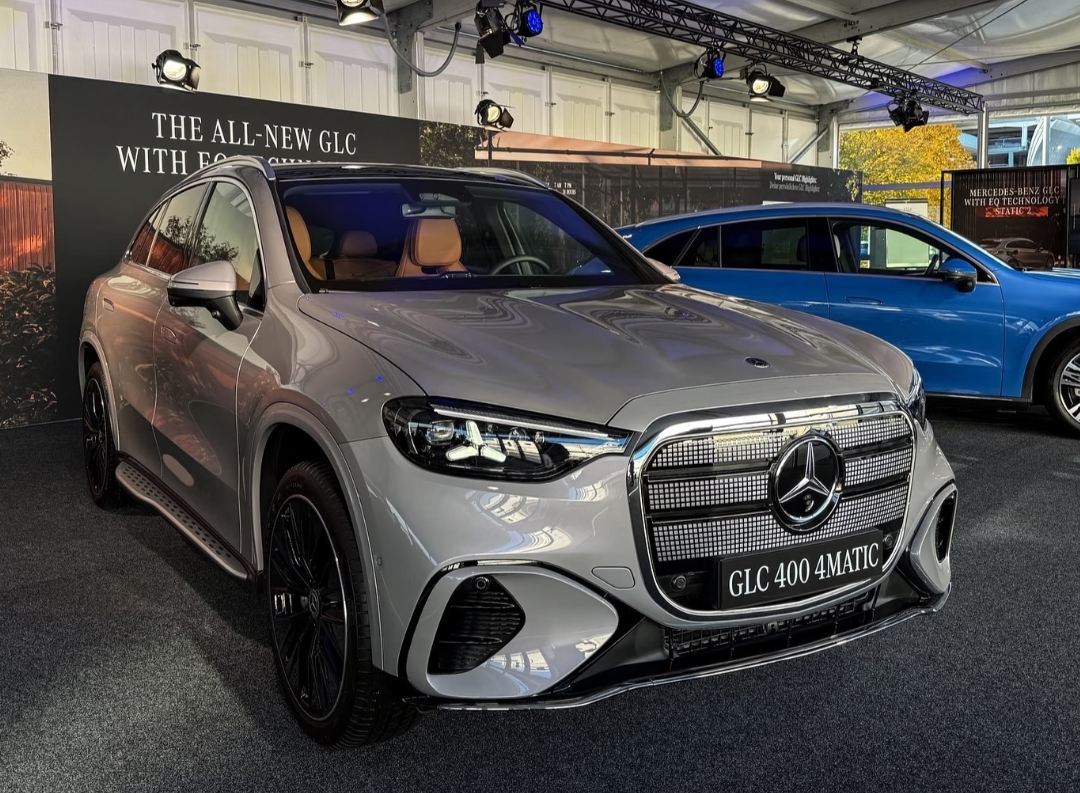
The German government has been instrumental in propelling the growth of the EV industry. In January, it introduced subsidies of up to $7,000 (approximately RMB 48,000) for low- and middle-income households. The reinstatement of EV purchase incentives has bolstered confidence in Germany's automotive sector, with production anticipated to expand by an additional 6% by 2026.
Numerous international media outlets have closely monitored the development of Germany's EV industry. MENAFN, a Middle Eastern financial news website, observed that Germany has reached a significant milestone in electrification. The growth in EV production underscores Germany's proactive stance in response to the global automotive industry's transformation, although overall manufacturing performance still lags behind pre-2019 levels.
Consumer acceptance of EVs has closely paralleled the surge in production. Data from Germany's Federal Motor Transport Authority (KBA) reveals that EVs accounted for 30% of new car registrations in 2025, a nearly 50% year-on-year increase, indicating a growing recognition among German consumers.
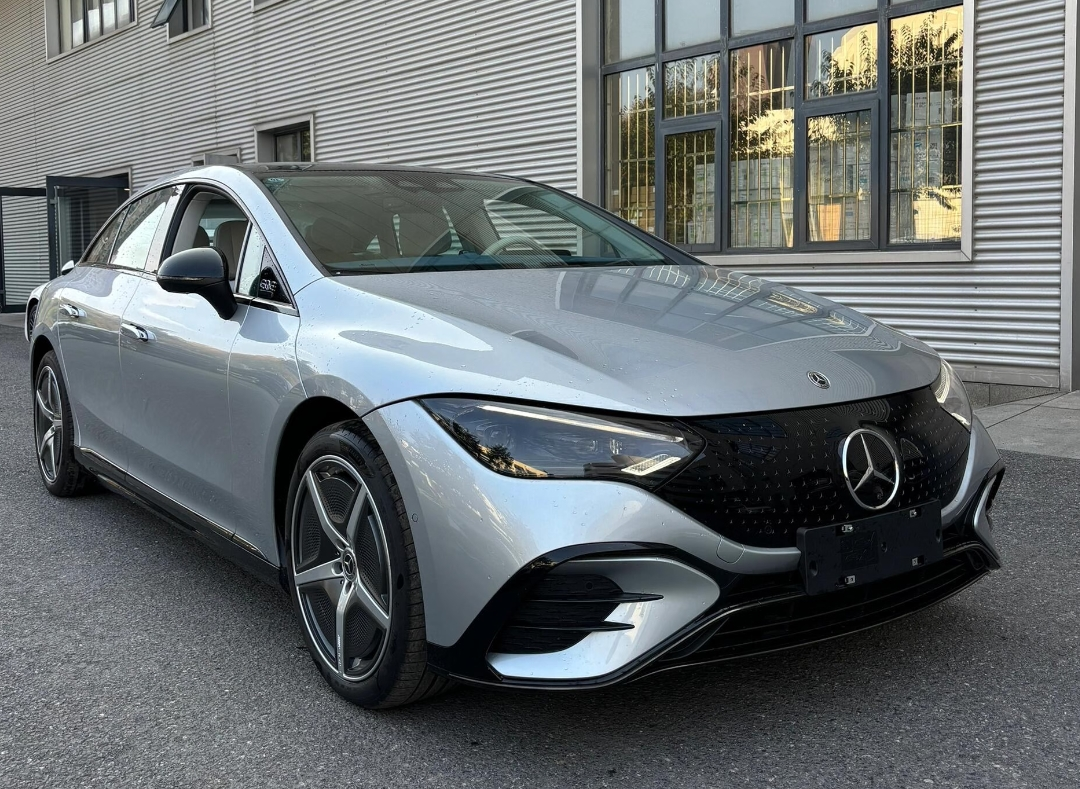
Notably, Chinese automakers have made a significant impact in Germany's EV market, emerging as the primary catalysts for growth. Compared to 2024, registrations for Leapmotor, Lynk & Co, and BYD skyrocketed by approximately 3,990%, 934%, and 706%, respectively, making them the three fastest-growing brands in Germany's EV sector.
However, Germany faces several challenges in the development of its EV industry. Müller stressed that critical infrastructure gaps persist, with inadequate deployment of charging stations, delayed grid modernization, and high charging costs impeding further progress in electrification. She urged for accelerated infrastructure construction and reduced charging costs to foster sustainable growth in the EV industry.
END
-
'Computing Power Leather' Surges 77% in 9 Days, NIO Supplier Also Chases the 'Light'
-
![]()
Storage and Computing Power Becoming Scarcer: Google Initiates Exploration of Using Old Smartphones to Build AI Servers
-
![]()
Storage Computing Power Grows Scarcer: Google Explores Using Old Smartphones for AI Servers
-
![]()
Huawei Imposes a $0.5 Patent Fee Per Device: Is It Time for Huawei to Reap Global Patent Royalties?
-
![]()
Geely Invests 1.8 Billion Yuan Post-Acquisition: The Launch of Flyme Auto 3.0 Sparks Questions on Meizu’s Enduring Influence
-
![]()
MBBF 2026 on the Bund in Shanghai: Deciphering Mobile AI's Future Trajectory
-
![]()
Commercialization of ASIC: The Turning Point Has Arrived
-
![]()
Doubao Charges Fees: Zhang Yiming Helps Zhang Xiaolong Explore the Path