New Energy Vehicle Goes Global 2.0: From 'Selling Cars' to 'Building an Ecosystem'
 02/23 2026
 470
470
Author | Mangzhong
Disclaimer | The featured image is sourced from the internet. This original article by Jingzhe Research Institute requires permission for reprinting.
In 2007, the Chinese girl group S.H.E’s song 'Chinese Language' sparked a trend with the line 'The whole world is speaking Chinese.' Nearly two decades later, Chinese automakers are driving another global wave with new energy vehicles (NEVs)—making the world drive Chinese cars.
According to the National Bureau of Statistics, China’s NEV exports surged to 3.43 million units in 2025, up 70% year-on-year, nearly doubling in three years and far outpacing the global NEV market’s average growth rate.
From 'learning to speak' to 'learning to drive,' how have Chinese automakers convinced global consumers? What has this silent mobility revolution done right?
Policy-Driven Acceleration for Automakers
On January 30, 2026, at Shenzhen Xiaomo Port, right-hand-drive BYD NEVs rolled off the production line at the Shenshan BYD factory and reached the port via a dedicated corridor in just five minutes, achieving 'factory-to-port' and 'off-line-to-ship' efficiency. Within half a month, the port completed two NEV exports to Europe, powered by policy-driven acceleration.
Before 2020, China’s NEV global expansion was in its 'trial phase,' focusing on whole-vehicle trade in emerging markets like Southeast Asia and South America, with mid-to-low-end models competing primarily on price—a 'bulk export, low-price competition' 1.0 model. In recent years, supportive policies from the Ministry of Commerce, Ministry of Industry and Information Technology, and other departments have driven high-quality NEV global expansion.
In February 2024, nine ministries, including the Ministry of Commerce, jointly issued the 'Opinions on Supporting the Healthy Development of New Energy Vehicle Trade Cooperation.' This document provided systematic guidance for NEV companies going global, adhering to WTO rules. In September 2025, the Ministry of Commerce, Ministry of Industry and Information Technology, General Administration of Customs, and State Administration for Market Regulation implemented export license management for battery electric passenger vehicles, ensuring product quality and after-sales service from the source.
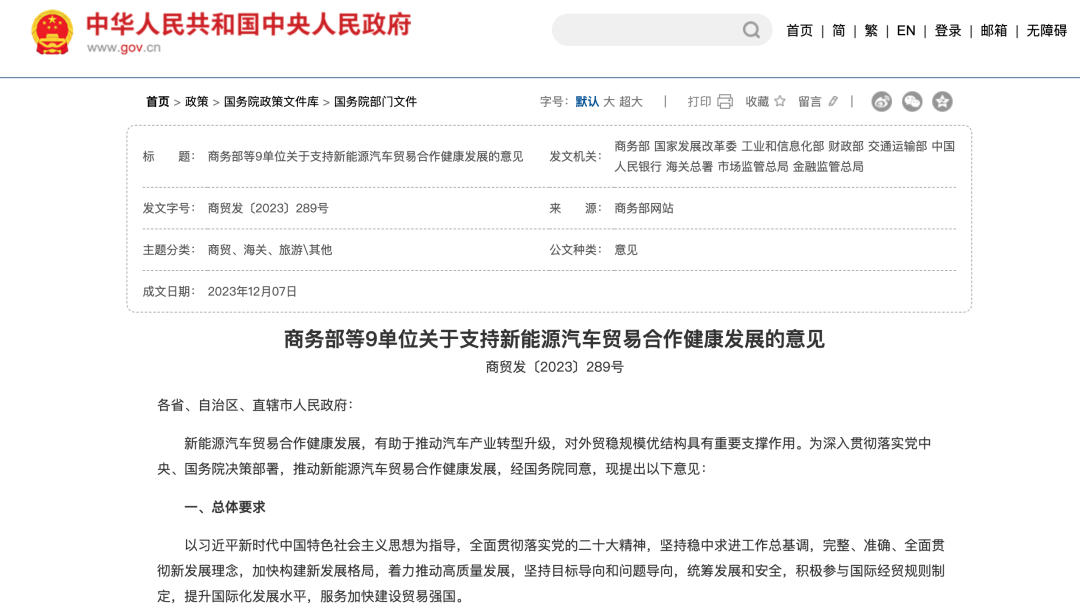
These policy supports feature two key traits: First, systematization—the 'Opinions' offer full-chain support from R&D and overseas operations to logistics and finance. Second, standardization—the license management policy shifts focus from scale expansion to quality and order, guiding sustainable NEV industry development. Policies have significantly accelerated Chinese automakers’ global pace in recent years.
Since 2023, when it began building an NEV production base in Szeged, Hungary, BYD has accelerated its European localization strategy. In 2025, BYD further expanded overseas production, with its Brazil factory launching its first vehicle, Thailand factory surpassing 90,000 deliveries, and European headquarters settling in Hungary, marking a deepened European market presence.
Regionally, BYD pursues a 'dual-track strategy' in developed and emerging markets. Models like the Tang, Han, and ATTO3 have won European consumers with high performance and cost-effectiveness. In emerging markets like Thailand, Brazil, and India, BYD leads in market share, becoming a mainstream NEV brand.
Beyond BYD, traditional automakers like Chery and SAIC have also accelerated global expansion, driving China’s NEV overseas growth. According to Time Weekly, SAIC focused on Europe and Southeast Asia, selling 350,000 NEVs overseas in 2025, with MG brand sales in Europe exceeding 200,000 units, making it one of the fastest-growing NEV brands in Europe.
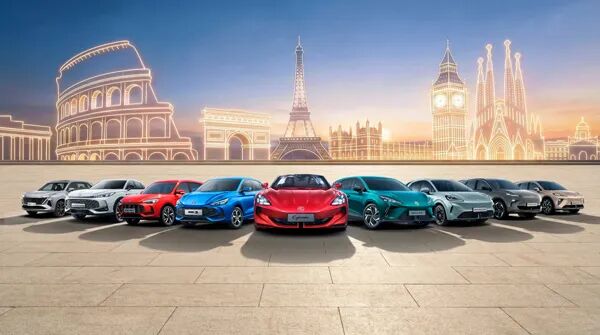
*Image source: SAIC Motor official website
Chery prioritized Southeast Asia and South America, selling 280,000 NEVs overseas in 2025, up 62% year-on-year, leading Chinese brands in markets like Brazil and Chile. These traditional automakers leverage mature production systems, supply chain management, and overseas channels to quickly adapt to regional demands and deepen localization.
Meanwhile, new-force automakers like NIO, XPeng, and Leapmotor have ramped up global efforts, becoming 'new forces' in China’s NEV globalization.
As an early global player, NIO entered Norway, Sweden, and Denmark in 2021 and expanded to Portugal, Greece, Cyprus, and Bulgaria in June 2025. In January 2026, NIO opened its first national general agency store in Budapest, Hungary, marking a key step in the Hungarian market. NIO also advances its overseas battery swap network, planning 1,000 swap stations by 2025 to build a comprehensive charging service ecosystem.
Leapmotor, a 'dark horse' in global expansion, partnered with shareholder Stellantis in May 2024 to establish Leapmotor International, rapidly entering 35 overseas markets with 800 channel outlets. Leveraging Stellantis’ factory in Tychy, Poland, Leapmotor T03 achieved localized production, reducing export costs and boosting competitiveness, leading new-force brands with over 67,000 sales in 2025.
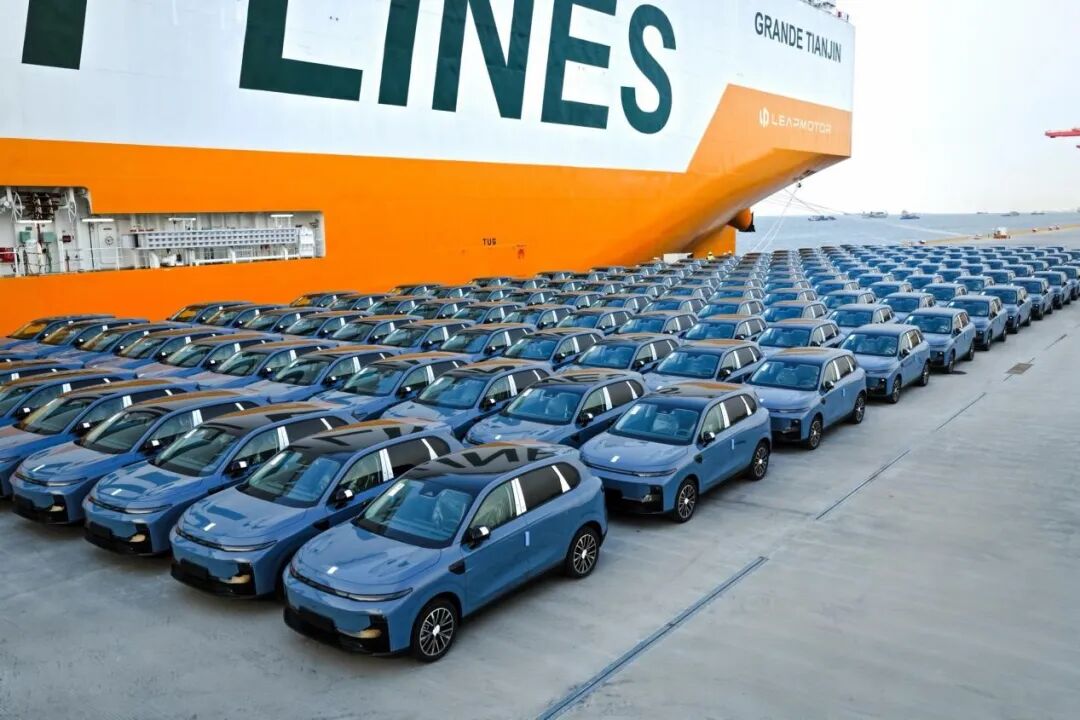
*Image source: Leapmotor official website
XPeng’s global expansion progressed steadily, with overseas sales reaching 45,000 units in 2025, up 96% year-on-year. By late 2025, XPeng had entered 60 markets with 380 stores, with Europe contributing nearly half of sales and rapid growth in Asia-Pacific. XPeng also plans to build a Middle East-North Africa hub centered on Egypt to create new growth.
Li Auto shifted from a conservative strategy, defining 2025 as the 'first year' of its globalization strategy, opening its first overseas retail center in Tashkent, Uzbekistan, in October, officially launching global expansion.
Model Upgrade: From 'Product Export' to 'Ecosystem Export'
The core feature of China’s NEV globalization 2.0 is a comprehensive model upgrade—shifting from simple whole-vehicle trade to synchronized output of 'localized production, supply chain collaboration, and service ecosystems.' This transition enables Chinese automakers to move from 'selling products' to 'building ecosystems,' from 'passive adaptation' to 'active leadership,' gradually gaining dominance in the global NEV supply chain and standard-setting, achieving a profound leap from 'product export' to 'ecosystem co-construction.'
From whole-vehicle exports to local production with localized parts and services, China’s auto industry now exports 'products, technology, talent, and management' across the entire supply chain. Collaborative supply chain expansion overseas has become a new trend.
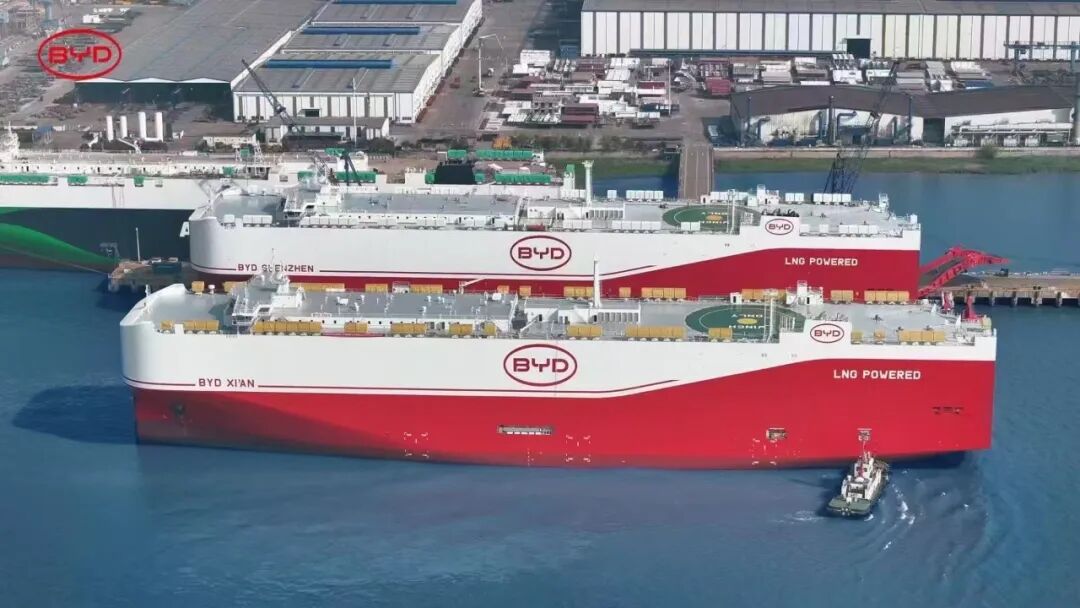
*Image source: BYD official website
Localized production reduces export costs, boosts local employment and economies, and enables rapid responses to regional demands with tailored products. For example, BYD’s ATTO3 in Thailand, optimized for local aesthetics and habits, gained wide recognition. XPeng in Europe enhanced range and smart driving features to meet strict emissions and intelligence demands, gradually gaining market share.
Collaborative supply chain expansion creates 'cluster effects' for Chinese automakers overseas, building a global NEV supply chain system and enhancing overall competitiveness. Battery companies like CATL and Sunwoda established 16 production bases in Europe, the Americas, and Southeast Asia, entering supply chains of international brands like BMW and Volkswagen. In midstream manufacturing, China’s auto parts exports reached $89.2 billion. Tech firms like Huawei and Momenta provide smart driving solutions to 12 global brands. China now boasts a complete industrial system covering materials, parts, vehicles, and manufacturing equipment, with 70% of global battery materials and 60% of power batteries originating from China.
Service ecosystem export is another key feature of globalization 2.0, distinguishing it from earlier models. Chinese automakers build a full ecosystem around user lifecycle needs, integrating 'sales, after-sales, charging, and smart services' to enhance experience, boost loyalty, and enable long-term growth. For example, NIO’s battery swap model is a core competitiveness in Europe, with 60 swap stations deployed.
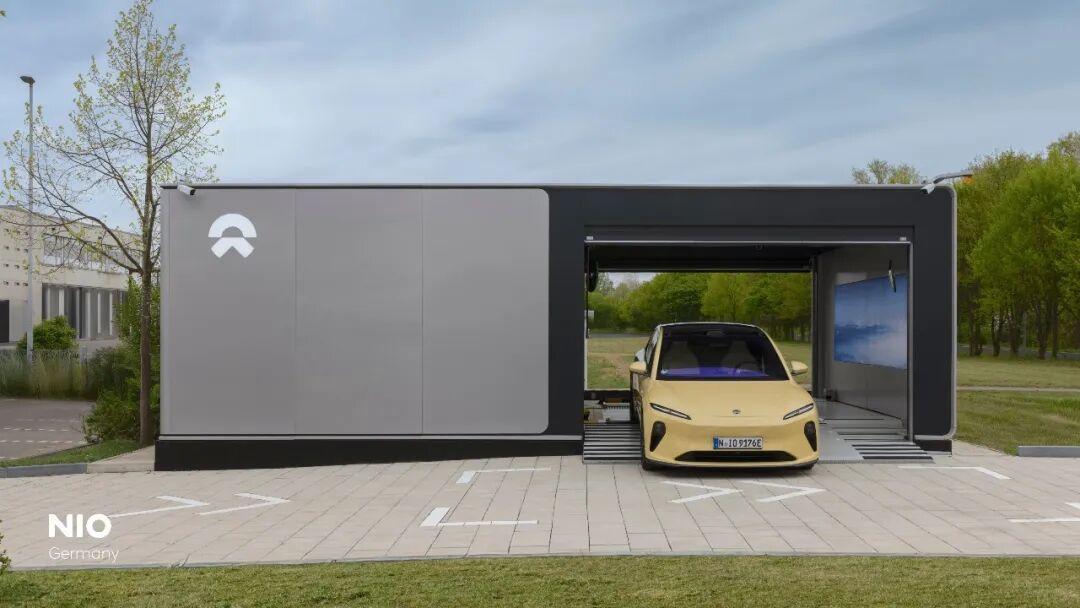
*Image source: NIO official website
Chinese automakers also advance localized after-sales systems, building service centers overseas with professional repair teams and parts reserves for rapid responses. BYD established a comprehensive service network in Thailand and Brazil, providing timely after-sales support.
Smart service ecosystems are another strength of Chinese NEVs. Automakers introduce domestically mature smart driving, smart cockpits, and telematics services overseas to enhance user experience. NIO’s 'subscription model' in Europe offers flexible services including maintenance, battery swaps, and upgrades.
Overcoming Globalization Barriers
Despite significant achievements in China’s NEV globalization 2.0, challenges remain, such as escalating geopolitical risks, difficulties in after-sales and charging infrastructure expansion, tariff barriers and local protectionism, consumer habits favoring traditional fuel vehicles, and counterattacks from local automakers. These non-product factors restrain China’s NEV overseas growth, becoming critical hurdles to overcome in the next phase. However, solutions are emerging.
For political and trade risks like EU anti-subsidy investigations and tariffs, deepening localized production is the most effective path. Many Chinese automakers are increasing overseas factory investments to raise localization rates, achieving 'local R&D, production, and sales' to reduce reliance on whole-vehicle exports and bypass trade barriers. For example, BYD can accelerate European production base construction, gradually replacing exports with local production to mitigate anti-subsidy tax impacts. Latest news indicates BYD will start trial production at its first European passenger vehicle factory in Szeged, Hungary, in Q1 2026, with mass production beginning in Q2.
For after-sales and charging infrastructure challenges, collaboration with domestic parts companies, local energy firms, and partners can provide solutions.
In after-sales, Collaborative sea going with parts companies to build local production bases and warehousing centers, improving supply chain efficiency. Strengthening cooperation with local vocational schools to train NEV maintenance talent addresses skill shortages. Leveraging local resources, a phased approach supports after-sales with 'service exports' while building 'localized' capabilities.
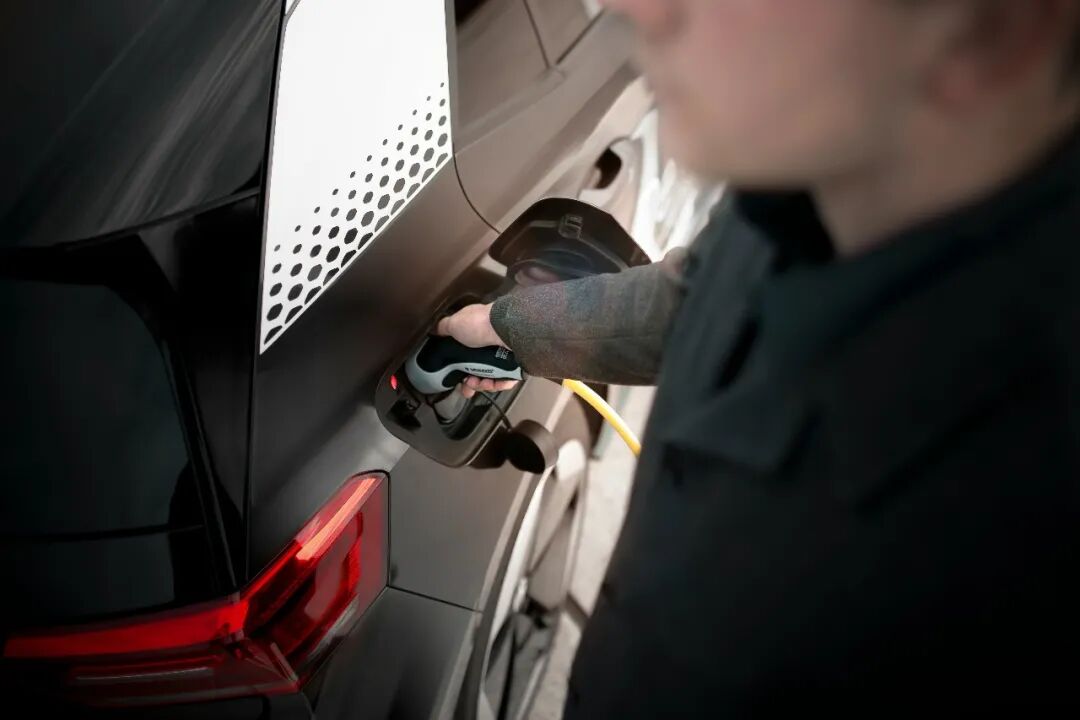
For charging infrastructure, beyond improving physical facilities, aligning standards with international markets is crucial. This requires NEV manufacturers—especially head brands that entered Europe early—to actively collaborate with local governments and energy firms for policy and resource support, promoting alignment between Chinese and international standards, participating in global standard-setting, and reducing deployment costs.
To address consumer habits favoring traditional fuel vehicles, Chinese automakers, experienced in domestic market shifts, guide change of mindset through localized marketing and product adaptation. For example, XPeng launched extended-range EVs in areas with unstable power supplies, while BYD introduced cost-effective mid-to-low-end models in Southeast Asia, using 'transitional products' to penetrate target markets and drive the evolution from traditional fuel to NEV markets.
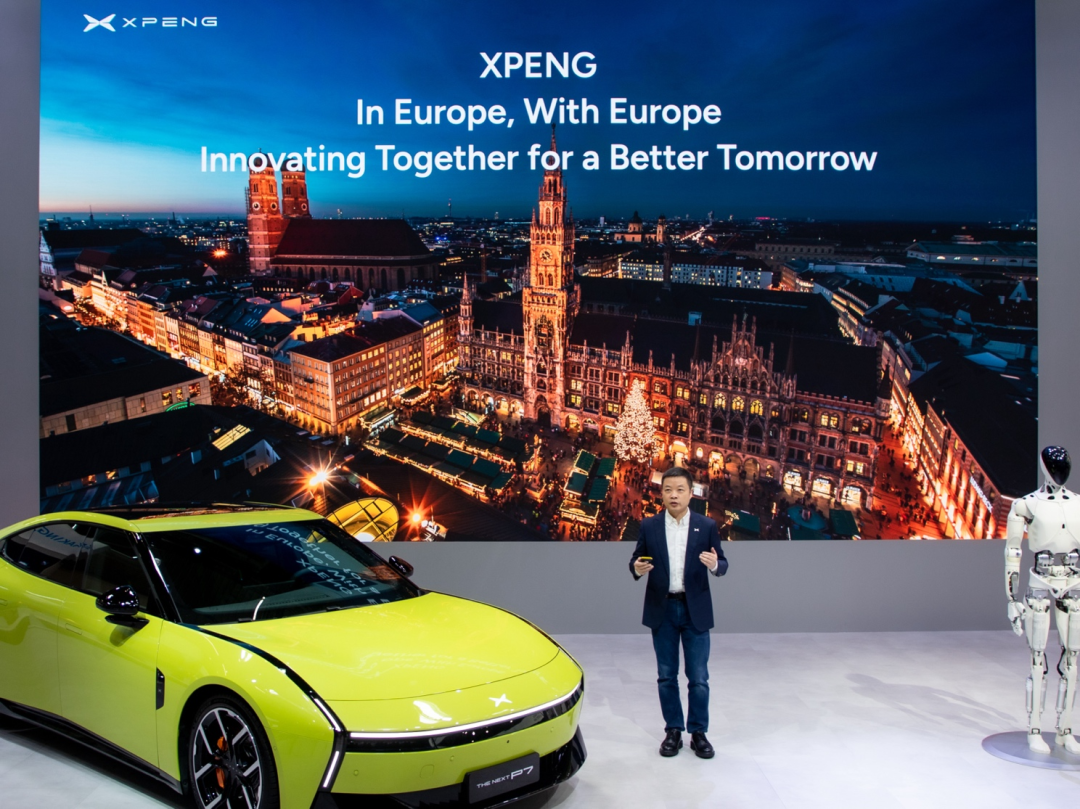
*Image source: XPeng official website
For Chinese automakers, standard barriers and market access restrictions cannot be resolved alone. However, with growing international recognition and active participation in global standard-setting, Chinese firms can drive mutual recognition of Chinese and foreign standards, enhancing their voice.
Additionally, strengthening R&D to ensure products meet national standards and breaking access barriers through technical exchanges and collaborative R&D with local automakers can help overcome standard barriers and market access hurdles in globalization.
Transforming Western Machinery with Eastern Wisdom
In 1901, Viceroy Yuan Shikai spent 10,000 taels of silver to purchase a second-generation Benz automobile as a birthday gift for Empress Dowager Cixi, astonishing people with this 'Western machinery.' That same year, Hungarian immigrant Lea Zsido brought two American Oldsmobile cars to Shanghai, marking China’s earliest automobile imports. By 1930, China had about 38,000 vehicles, all imported, with none domestically produced.
Over ninety years later, green and intelligent 'Eastern wisdom' is reshaping the global auto industry through diversified globalization paths, leading a New energy transformation revolution from 'Western machinery' to 'Eastern wisdom.'
From a market perception perspective, China's new energy vehicles have shed the label of being 'low-cost and low-end.' Leveraging their advantages in high performance, cost-effectiveness, and high intelligence, they have become the mainstream choice in the global market. This reflects the continuously improve (continuously rising) recognition of Chinese new energy vehicles among overseas consumers and the expanding influence of Chinese automakers' brands.
From an industrial landscape perspective, the 'going global 2.0' model of China's new energy vehicles is reshaping the global automotive industry ecosystem. Through localized production, industrial chain collaboration, service ecosystem export, and standard-setting leadership, Chinese automakers are gradually gaining dominance over the industrial chain and influence over standards, accelerating the global automotive industry's transition from the fossil fuel era to the electric era.
Despite the ongoing challenges—such as the aftermath of the EU's anti-subsidy investigations, difficulties in advancing charging infrastructure, constraints from local protectionism, differences in consumer habits, and defensive countermeasures from local automakers—all these factors are testing the global operational capabilities of Chinese automakers.
However, these obstacles are only temporary. The global trend towards automotive electrification is irreversible, and the demand for high-quality new energy vehicles in overseas markets continues to grow. With a complete industrial chain, leading technology, a mature ecosystem, and flexible strategies, Chinese new energy vehicles possess the confidence and capability to overcome these challenges.
In the future, as the 'going global 2.0' model continues to deepen, Chinese new energy vehicles will leverage Eastern wisdom to solve problems, achieve win-win outcomes through ecosystem collaboration, secure a more important position in the global market, and reshape the new industrial landscape.
The vision of 'enabling the world to drive Chinese new energy vehicles' is gradually becoming a reality.
-
![]()
Luna Ultra Entangled in 'National Subsidy Fraud' Controversy, Insta360 Pushed to the Brink by DJI
-
![]()
People have long suffered from splash ads. Will the 'temporarily disappeared' traffic behemoth make a comeback?
-
![]()
GPT 5.6 Reclaims the Throne, Only to Face Strict Controls Again! Has AI Truly Reached a Turning Point?
-
![]()
When the Traffic Bubble Fades, AI Giants Start to Compete on 'Real Skills'
-
![]()
Wenxin Once Integrated Multiple Web Portals, but Its Impact Has Diminished
-
![]()
A 1.388 Million Yuan Answer Sheet: Insights into Huawei's Ultra-Luxury Car Strategy and Potential Concerns from the Debut of Zunjie S800 Grand Design and V800
-
![]()
Luna Ultra Mired in 'National Subsidy Fraud' Controversy, Insta360 Cornered by DJI
-
![]()
Legal Disputes, Share Unlock, and Pricing Controversies Converge: Insta360 Reaches a Pivotal Juncture