Zhongshan Electronics Changes Hands, BYD Stealthily Launches New Journey in Energy and Two-Wheeled Mobility
 03/27 2026
 542
542
Author / Wu Rui
Produced by / Insight Auto
BYD is quietly leveraging Zhongshan BYD Electronics as a fulcrum to tap into two new sectors: energy and two-wheeled mobility, marking a comprehensive strategic shift towards business diversification and financial refinement.
Recently, Zhongshan BYD Electronics Co., Ltd. (hereinafter referred to as "Zhongshan BYD Electronics"), a core subsidiary under BYD Precision Manufacturing, has completed key industrial and commercial changes, significantly broadening its business scope and undergoing a change in financial leadership.
What appears to be a routine corporate adjustment is, in fact, a crucial prelude to BYD's move beyond a single sector and towards constructing a comprehensive new energy ecosystem, with underlying considerations of hedging against industry fluctuations and seizing new growth opportunities.
Founded in September 2017, Zhongshan BYD Electronics has long focused on the field of precision structural components for intelligent terminals such as mobile phones, computers, and smart wearables, providing full-chain services from R&D to after-sales. It serves as an important capacity support for BYD Electronics' (00285.HK) consumer electronics business.
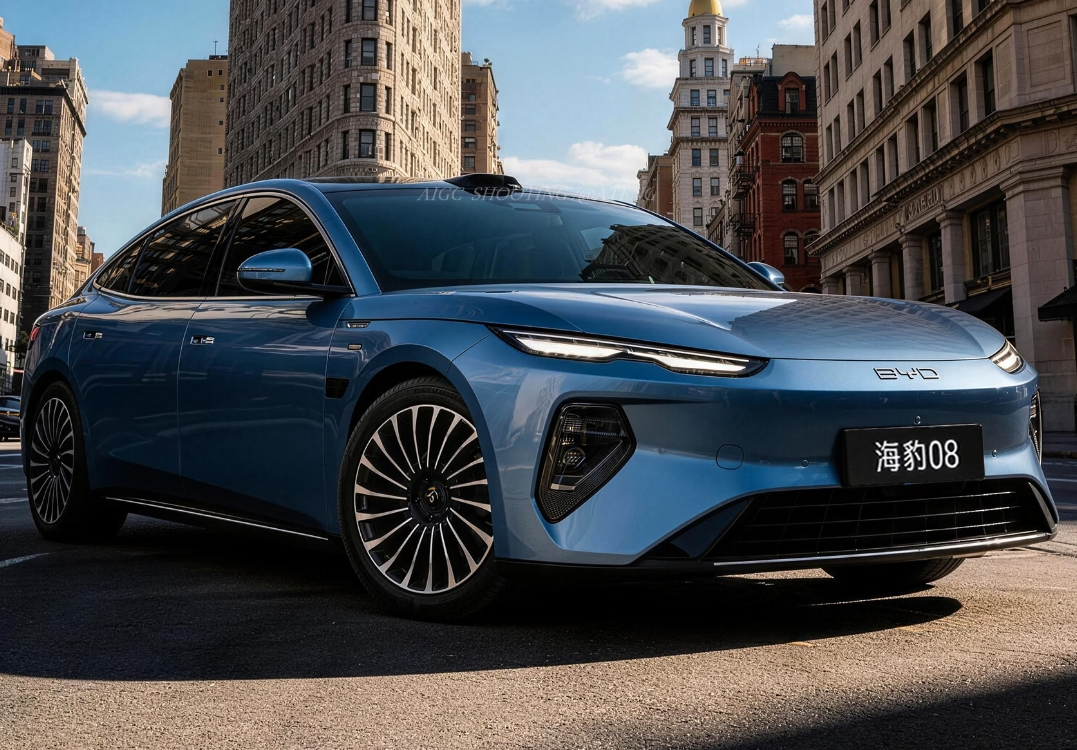
According to BYD Electronics' Q3 2025 financial report, its revenue for the period reached RMB 123.285 billion, with steady growth in component business driven by capacity expansion. The capacity contribution from Zhongshan BYD Electronics has been indispensable.
The expansion of the business scope in this industrial and commercial change is the most impactful move in the industry. Zhongshan BYD Electronics has added manufacturing and sales of power transmission and distribution as well as control equipment, and manufacturing and sales of electric-assisted vehicles and related parts, completely breaking free from its long-standing business boundaries limited to precision structural components for consumer electronics.
Public data shows that BYD's total revenue reached RMB 762.350 billion in 2024, with a net profit of RMB 41.588 billion. Its energy storage business has formed a comprehensive product matrix covering source-grid-side, industrial and commercial, and residential applications, with a cumulative project scale exceeding 135 GWh and operations in 110 countries and regions.
The newly added power transmission and distribution-related businesses by Zhongshan BYD Electronics represent an important extension of BYD's energy storage industrial chain, synergizing with existing energy storage systems to further refine the energy closed loop (closed loop), enhance grid adaptability and energy scheduling efficiency, and hedge against the risk of gross profit margin fluctuations in the consumer electronics business—BYD Electronics' overall sales gross profit margin had declined to 6.94% in 2024, making the addition of high-potential businesses crucial for breaking the deadlock.
The addition of electric-assisted vehicle-related businesses reflects BYD's precise positioning in the two-wheeled mobility sector. Previously, there were market rumors that BYD would launch its own two-wheeled vehicles, which were actually misinterpretations. Its core positioning is as a supplier of key components for two-wheeled vehicles, having already reached collaborations with leading OEM brands such as Tailg and Lima to supply its self-developed lithium iron phosphate blade batteries.
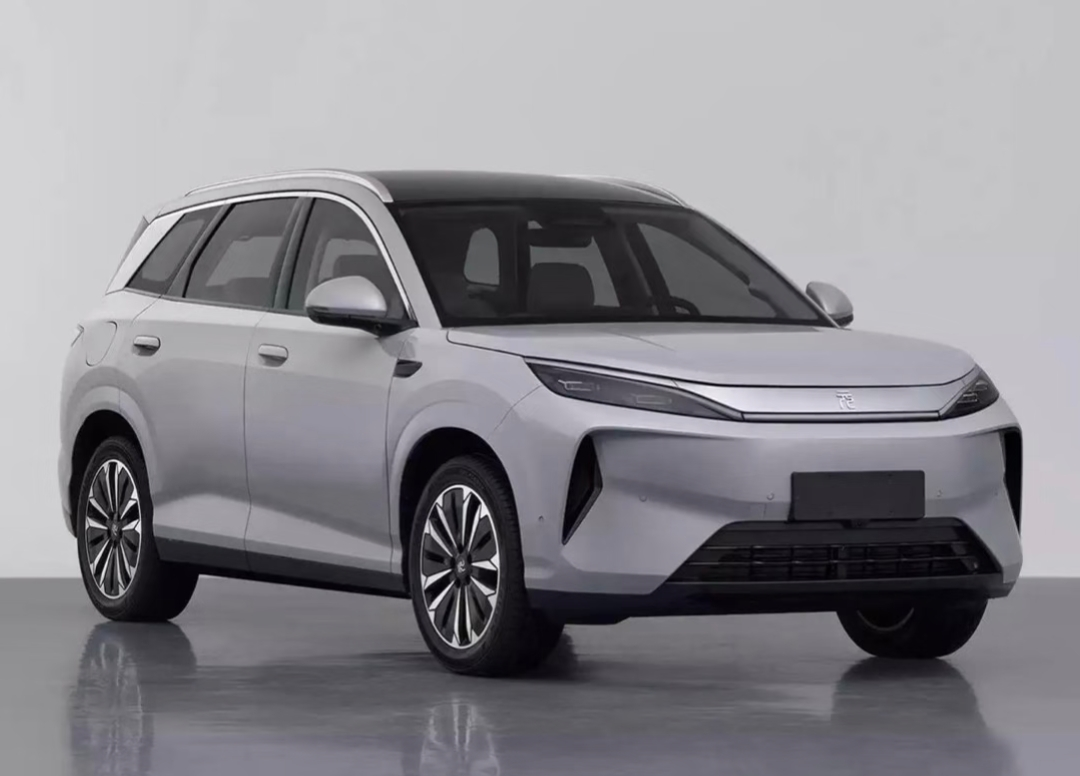
Zhongshan BYD Electronics' addition of electric-assisted vehicle manufacturing and parts sales does not mean entering vehicle manufacturing but rather focusing on supplying key components. Leveraging BYD's mature battery technology and scaling (scaled) cost advantages, it aims to seize the RMB 100 billion-level battery replacement market behind China's 400 million two-wheeled vehicle parc, while also absorbing battery capacity and diluting R&D costs.
The concurrent change in financial leadership alongside business expansion further underscores BYD's demand for refined control over new businesses. Veteran financial professional Zhong Aihua has replaced Liu Zhihua as the financial leader of Zhongshan BYD Electronics.
According to her public resume, Zhong Aihua has deep roots in BYD's financial system, having served as Financial Director of Shenzhen BYD Auto Industry and Deputy General Manager of the Group's Finance Department. She currently also serves as Financial Director of BYD Semiconductor in Jinan and Xi'an, possessing financial control experience in both the automotive and semiconductor sectors. Her appointment is likely to meet the financial accounting needs of the newly added businesses, strengthen cost control and capital scheduling, and safeguard the scaled implementation of new businesses.
The outgoing Liu Zhihua is equally seasoned, having served as Financial Director of BYD Company's South China Region and currently overseeing financial affairs at several subsidiaries, including Huizhou BYD Industrial and Guangdong BYD Energy-Saving Technology. This adjustment appears to be an optimization of BYD's internal financial talent allocation, ensuring professionalism and synergy in financial control across business segments.
With slowing growth in the new energy vehicle market and sluggish recovery in the consumer electronics industry, BYD urgently needs to open up new growth avenues. The business expansion of Zhongshan BYD Electronics not only fills its capacity gap in the power transmission and distribution sector but also deepens its layout in the two-wheeled mobility sector, forming a diversified landscape.
Notably, Zhongshan BYD Electronics had previously initiated capacity expansion and renovation, investing over RMB 160 million to add capacity for intelligent suspension systems and automotive components. This business expansion and personnel adjustment will further unlock its capacity potential.
For BYD, this adjustment represents not only a business upgrade for its subsidiary but also a crucial step in its transformation from an equipment manufacturer to an energy ecosystem builder. As new businesses take root, its diversified revenue structure will become more solid, and its voice in the global new energy sector will further rise.
END
-
![]()
The Unstoppable Rise of 'Optical Progress and Copper Decline': Sunny Optical’s Strategic Vision for the Next Decade
-
![]()
AI + Going Global in the Second Half: No Intermission for Robot Vacuum Cleaners
-
![]()
The Suffering Endured in E-commerce, Walmart Doesn't Want to Repeat in AI
-
![]()
What Does the Doubling of New Energy Vehicle Exports Mean?
-
![]()
Ghosn: 'Only I Can Save Nissan'
-
![]()
Volkswagen Lays Off 100,000 Employees, The Elephant Sits Down
-
![]()
Expanding Production Capacity! Yutong Optics Acquires Approximately 1.5 Hectares of Industrial Land in Chang'an, Dongguan
-
![]()
Why Is Nokia Making a Comeback in the AI Era?