Who’s Encircling and Attacking OpenAI? A New Tech Giant War Has Begun
 05/13 2026
 548
548
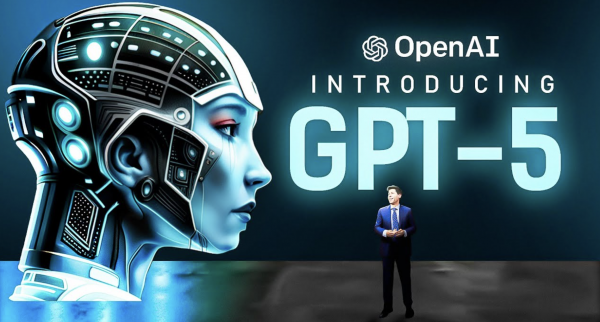
Do you sense it? Lately, when scrolling through Twitter or browsing online forums, the AI buzz remains as loud as ever, but the focal point of the conversation has quietly shifted.
A year ago, ChatGPT dominated discussions, and OpenAI was practically synonymous with AI innovation. But now, the winds of change are blowing. Google’s Gemini is starting to appear frequently on various evaluation lists, Anthropic’s Claude is being enthusiastically promoted by engineers, and even Elon Musk’s xAI is joining the competitive fray. And the data confirms this shift isn’t just your imagination.
OpenAI’s share of global generative AI traffic has plummeted from nearly 90% at its peak to just 65%. Meanwhile, Google Gemini has quietly captured 20% of the market. With 65% versus 20%, OpenAI still leads, but that rate of decline is, frankly, a bit alarming.
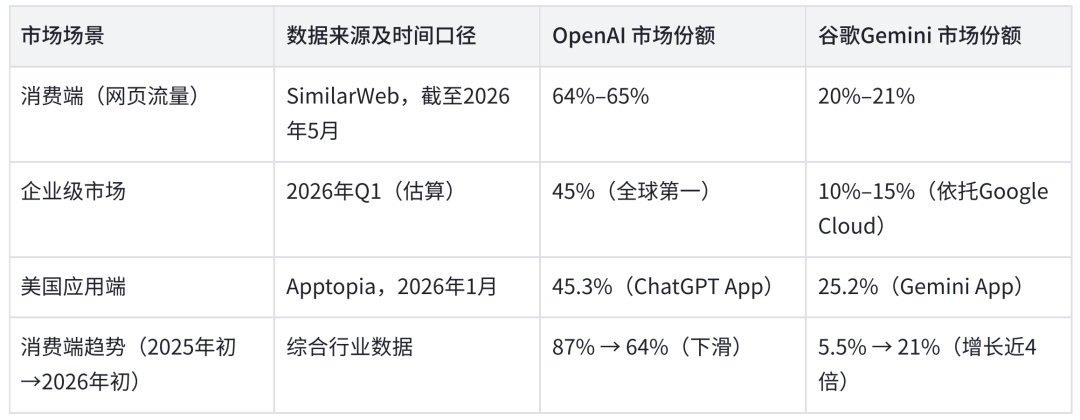
What’s happening behind the scenes? And who’s quietly undermining OpenAI’s dominance? Today, let’s delve into the power struggles unfolding within the AI landscape.

Policies Intensify as National Teams Enter the Arena
AI is no longer just a technological curiosity.
Recently, three government departments jointly issued the "Implementation Opinions on the Standardized Application and Innovative Development of Intelligent Agents." The title may sound mundane, but a closer look reveals it clarifies AI agents’ development trajectory and proposes 19 typical application scenarios.
Nineteen. This isn’t mere tinkering—it’s about transforming AI from a "toy" into a "tool." More critically, four departments, including the National Energy Administration, released an "AI+Energy" action plan. In plain terms, it’s about securing reliable electricity for AI computing centers.

You might not realize this, but a large AI data center consumes as much electricity as a medium-sized city. Traditional power grids simply can’t keep up. This plan encourages clean energy sources like nuclear power and hydrogen for power supply. This is laying the groundwork for future AI development.
What does the entry of national teams signify? It means AI is no longer just a niche plaything for Silicon Valley enthusiasts—it’s being integrated into top-level infrastructure design.

Tech Giants Close In: OpenAI’s Challenges Mount
Let’s talk numbers. From 90% to 65%. OpenAI has lost 25 percentage points of market share in a year. Behind this decline lies Google’s determined counterattack.
Google’s Gemini has evolved from being ridiculed last year for "not even identifying Black people correctly" to now supporting 2 million token contexts—able to process "War and Peace" and beyond in one sitting. The progress is undeniable.
And what’s Google’s secret weapon? Its ecosystem. Android, Chrome, Gmail, Google Docs—a matrix of products with billions of users. Integrating Gemini means users don’t even need to "learn" how to use AI—it’s seamlessly woven into their daily workflow.
Who else is in the mix? OpenAI’s growth is slowing—that’s no secret. How are they responding? By pivoting to the enterprise market. They’ve partnered with 19 institutions to launch enterprise-grade AI services. Nineteen—this isn’t a minor collaboration; it’s an attempt to build an "OpenAI ecosystem" in the corporate sector.
Why the urgency? Because while consumer users are abundant, their willingness to pay and customer lifetime value are unpredictable. Enterprise users, however, promise multi-million-dollar contracts with high renewal rates.

Companies Are Voting with Their Feet
AI isn’t just for tech companies anymore. General Motors—yes, the automaker—recently laid off about 600 IT employees. What did they do next? They went on a hiring spree for AI-native development talent.
What’s the message here? Traditional companies are "changing their blood." Employees with outdated IT mindsets are being replaced by those who understand and can build AI-driven systems.

Another telling example: GitLab. This code-hosting platform company—by all accounts, a digital-native enterprise—has also launched an AI-driven restructuring plan. If even tech companies are "operating" for AI, the impact on traditional industries will only be more profound.
In short: Those who can’t leverage AI are being replaced by those who can; companies that can’t empower their businesses with AI are being surpassed by those who can. This isn’t fearmongering—it’s happening right now.

AMD’s "End Run"
At this point, you might assume the entire AI ecosystem still revolves around NVIDIA. And yes, NVIDIA’s GPUs remain the gold standard, with H100 cards in short supply. But beneath the surface, changes are brewing.
AMD recently made an interesting move: It launched an optimized inference plugin specifically for the domestic large model DeepSeek-R1. The result? Inference performance improved by over 30%. Note the key phrase: "optimized for domestic large models." This isn’t just a technical upgrade—it sends several strategic messages.
First, AMD aims to break NVIDIA’s dominance. NVIDIA has the CUDA ecosystem barrier, so AMD can’t compete head-on. Instead, it’s attacking from the side, serving markets NVIDIA has "overlooked."
Second, domestic large models now have more hardware options. Previously, many domestic models could only run efficiently on NVIDIA cards. Now, AMD is actively "adapting"—a boon for the entire domestic AI ecosystem.
Third, hardware diversification is becoming a trend. The market doesn’t want to be held hostage by a single supplier. Whether it’s cloud providers or model makers, everyone’s seeking a Plan B beyond NVIDIA.
AMD’s strategy is quite clever.

The AI Arms Race Is Just Beginning
Looking back at this year’s AI battlefield, what do we see? Not the story of a single dominant player, but a complex game of chess among many contenders.
OpenAI remains the frontrunner, but the footsteps of the pursuers are growing louder. Google is leveraging its ecosystem to close the gap, AMD is opening a second front in hardware, and at the policy level, the entry of national teams means this game is no longer just about commercial competition.
AI is evolving from a "technical issue" into a "systemic issue." Who has the best model? Who has the most complete ecosystem? Who has the most stable computing power supply? Who can actually get enterprises to adopt it? The answers aren’t unique, and they’re changing dynamically.
For ordinary users, this might be the best era in history—because competition always drives innovation, making products better and more affordable.
As for who the final winner will be? Don’t jump to conclusions. This drama has just reached its second act.
-
![]()
Why Does Jensen Huang So Openly Praise China’s AI?
-
![]()
"Wudang" Unveiled: Arm China's Next-Gen AI VPU Redefines Video Encoding
-
![]()
From Energy Conservation and Carbon Reduction to AI Decision-Making: GECON East Intelligence and Chery Group Explore a New Green and Smart Paradigm for Automobile Manufacturing
-
![]()
WAIC 2026 Observation | AI Accelerates Towards the Core of Industries, Industrial AI Enters a Critical Phase
-
![]()
Volkswagen China Fires the First Shot in Foreign-Funded 'White Box Delivery'!
-
![]()
AI Agent Smartphones: The Next Competitive Edge Transcends Large Models
-
![]()
Over 880 Million Yuan Worth of Orders Unveiled, Bidding Launched for Shenzhen Eastern Public Transport
-
![]()
Tesla's Robotaxi Hits the Road: A Monumental Gamble with an Uncertain Future