Skoda to Exit Chinese Market This Year
 03/27 2026
 542
542

Source: Zhiche Technology, Red Star Capital Bureau
The century-old Czech automotive brand Skoda, under Volkswagen Group, ultimately failed to escape the culling in China's fiercely competitive auto market.
On March 25, 2026, Skoda, a brand under Volkswagen Group, announced that due to difficulties in keeping pace with the rapid electrification transformation in China's auto market, it would exit the Chinese market by mid-2026. The following day, Volkswagen China confirmed the news to multiple media outlets, including The Paper and Red Star Capital Bureau, stating that Skoda's sales in China would continue until mid-2026, after which comprehensive warranty and after-sales service support would still be provided to existing vehicle owners. Skoda Auto has adjusted its global strategy to focus on high-growth markets such as India and ASEAN.

From 'King of Cost-Effectiveness' to 'Cliff-Like Decline'
In 2005, Skoda officially entered the Chinese market by signing a cooperation agreement with SAIC Volkswagen. Leveraging its differentiated positioning of 'Volkswagen technology at a lower price,' it quickly established itself as the 'King of Cost-Effectiveness' among Chinese consumers. After the launch of its first model, Octavia, in 2007, sales continued to climb, with models like Octavia, Superb, and Kodiaq once becoming popular choices in the market.
At its peak, Skoda was undoubtedly a mainstream joint venture brand in the Chinese market. Public data shows that from 2016 to 2018, Skoda's sales in China exceeded 300,000 units for three consecutive years, reaching a historic high of 341,000 units in 2018. At that time, Skoda had a dealer network of over 500 outlets in China, and China had been its largest single market globally for several consecutive years.
However, this multi-year growth mythology (miracle) took a sharp downturn starting in 2019.
As China's auto market entered a rapid transformation towards electrification and intelligence, Skoda's product iteration speed lagged significantly, and its layout (layout) in the new energy sector was severely delayed. In 2020, although Skoda launched its first new energy SUV model, the market response was lackluster, failing to reverse the brand's decline.
Meanwhile, FAW-Volkswagen's sub-brand Jetta became independent in 2019, no longer allowing Skoda to exclusively claim the 'affordable Volkswagen' label, directly diverting Skoda's core market segment. Against the backdrop of the rapid rise of domestic brands and new energy vehicle startups leveraging electrified and intelligent products, Skoda's shortcomings in intelligent cockpits and autonomous driving were further exposed.
From 282,000 units in 2019 to 71,200 units in 2021, then dropping to 23,000 units in 2023, and further falling to 17,500 units in 2024. According to foreign media reports, in 2025, its annual sales in China will be only around 15,000 units, a plunge of over 95% from its peak, with a market share of less than 0.1%. Third-party platform data shows that in December 2021, Skoda's main model, Superb, experienced a dismal monthly sales figure of just 25 units.
By the end of 2025, Skoda will have only 78 dealers remaining in China, most of which have been incorporated into SAIC Volkswagen showrooms as 'stores within stores,' essentially losing their ability to operate independently. Media investigations found that Skoda's sole 4S store in Hangzhou, Zhejiang Xuntong, had also ceased operations, with after-sales services taken over by SAIC Volkswagen 4S stores such as Zhejiang Shenzhe and Zhejiang Yuanze.

Business Focus Shifts to India and ASEAN
In response to this exit decision, Volkswagen China stated in its reply that Skoda Auto has adjusted its global strategy to focus on high-growth markets such as India and ASEAN.
This strategic shift is not surprising. As early as 2022, Skoda CEO Klaus Zellmer publicly stated that 'the competition in China is currently too fierce' and revealed that discussions with joint venture partners about the future were underway. In 2023, Skoda announced that the new Kodiaq would not be sold in China, further signaling its exit.
Financially, the Chinese market had long become a 'supporting role' in Skoda's global portfolio. Despite its dismal performance in China, Skoda delivered impressive results globally: in 2024, global sales reached 926,600 units, up 6.9% year-on-year; in 2025, sales exceeded 1 million units, with Western Europe accounting for more than half, and Germany becoming its largest single market globally.
More notably, in 2025, Skoda achieved an operating profit of €2.5 billion, with an operating return on sales of 8.3%, surpassing Audi and Porsche to become one of the most profitable sub-brands within the Volkswagen Group. In the Indian market, Skoda's sales grew by over 100% in 2025, with its Indian plant producing 73,800 complete vehicles, led by the localized new model Kylaq SUV.

Farewell to Skoda, Accelerating the 'Pivot'
Although Skoda's exit marks a contraction of Volkswagen Group's multi-brand strategy in China, Volkswagen China repeatedly emphasized in its response that 'China remains at the core of Volkswagen Group's global strategy.'
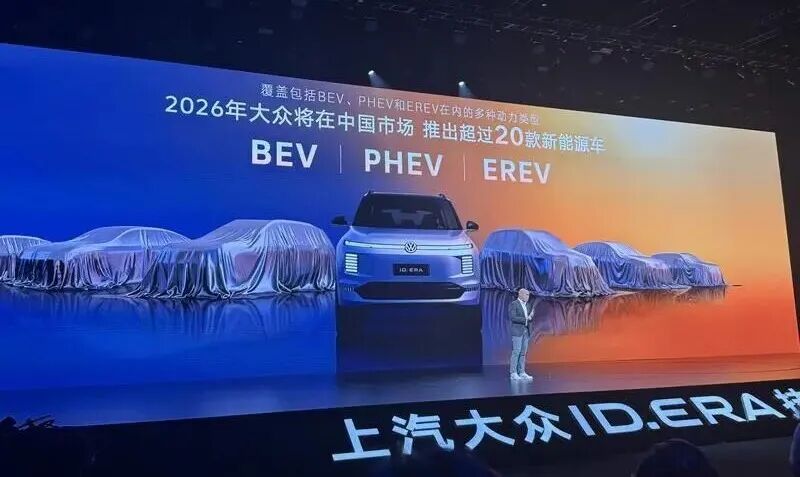
Volkswagen China disclosed that the group operates nearly 40 factories in China, serves over 50 million customers, and has established its largest R&D center outside Germany—Volkswagen Technology (China) Co., Ltd.—to continuously advance the development of intelligent connected vehicle technologies. In 2026, the group will launch over 20 new energy vehicle models in China.
In fact, behind Skoda's exit, Volkswagen Group's strategy in China is undergoing a profound 'pivot.'
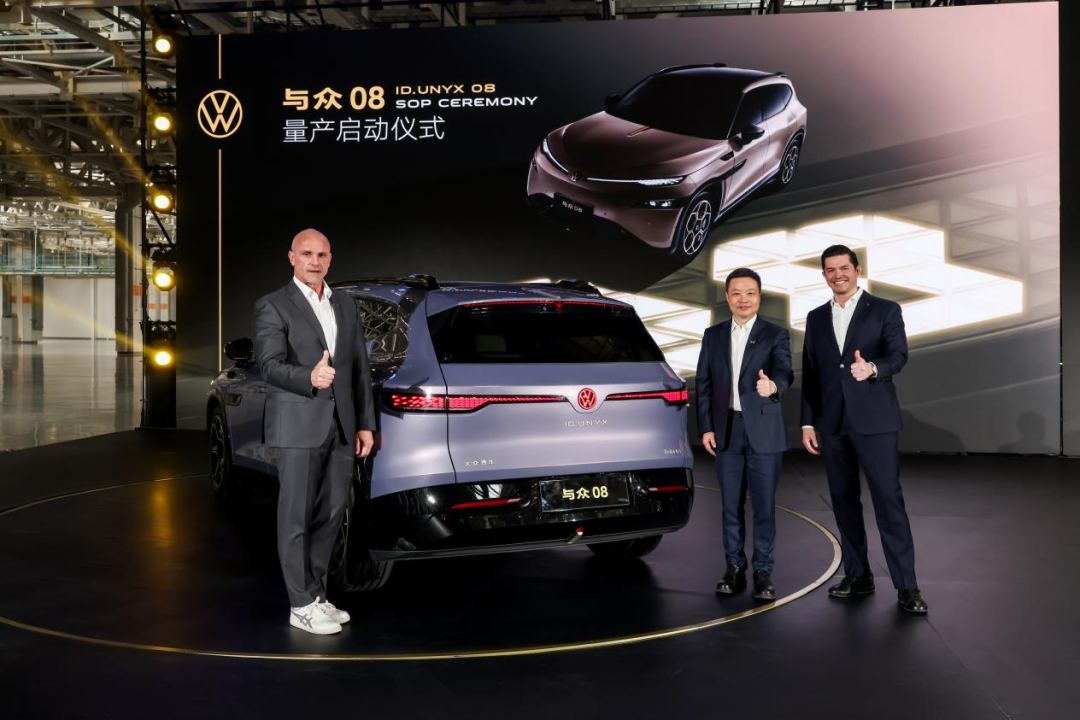
On one hand, Volkswagen is embracing Chinese local technologies with an unprecedented open attitude. Recently, the first model co-developed with XPENG Motors—the INCEPTION 08—officially went into production at Volkswagen Anhui, taking only 24 months from signing the joint development technology cooperation agreement to mass production. The model comes standard with XPENG's VLA all-scenario intelligent driving assistance system, boasting the highest class-leading intelligent driving computing power of 1500 TOPs.
On the other hand, Volkswagen has broken its prejudice against extended-range technology. SAIC Volkswagen's ID. ERA 9X will start pre-sales on March 30. The vehicle offers an extended-range powertrain, marking Volkswagen's official entry into the extended-range segment, which was once dismissed as 'nonsense' by its executives. Qi Zekai, CEO of Volkswagen Passenger Cars Brand China, admitted, 'We chose the extended-range route because we see that the coexistence of multiple powertrain forms, including pure electric and hybrid, will continue in the Chinese market.'

The 'Culling' of Joint Venture Brands Has Begun
The term 'joint venture' itself may gradually fade into history.
Looking back over the past few years, from Suzuki and Mitsubishi to now Skoda, more and more joint venture brands have exited the Chinese market. Their common dilemma is that the product definition rights and technological advantages established during the fuel vehicle era are gradually eroding in the face of the electrification and intelligent wave; meanwhile, traditional joint venture systems struggle to keep pace with the comprehensive lead of Chinese brands in terms of technological iteration speed, user demand responsiveness, and supply chain integration capabilities.
A deeper change lies in the structural transformation of the competitive landscape in China's auto market as the electrification and intelligent processes continue to deepen. With the penetration rate of new energy vehicles exceeding 50%, when consumer expectations for intelligent cockpits and autonomous driving have become a must-have for car purchases, and when Chinese brands have established a 'moat' with a complete industrial chain and leading technologies, brands with slow product iteration, hesitant electrification transformation, and lagging intelligent layouts, regardless of their past glory, will inevitably be marginalized in the market.
Volkswagen China stated in its response that it will 'continue to advance the development of intelligent connected vehicle technologies.' This statement not only sidelights the context of Skoda's exit from the Chinese market but also reflects the common challenges faced by multinational automakers in China's market transformation.
Skoda has left, but more brands like Skoda may be standing at the crossroads of fate. Next, second-tier joint venture brands will continue to contract, third-tier joint ventures will gradually exit, while mainstream brands will accelerate localized cooperation.
- End -
Disclaimer:
All works marked 'Source: XXX (non-Zhiche Technology)' in this official account are reprinted from other media, intended to disseminate and share more information, and do not represent this platform's endorsement of their views or responsibility for their authenticity. Copyright belongs to the original authors. If there is any infringement, please contact us for deletion.
-
![]()
The Unstoppable Rise of 'Optical Progress and Copper Decline': Sunny Optical’s Strategic Vision for the Next Decade
-
![]()
AI + Going Global in the Second Half: No Intermission for Robot Vacuum Cleaners
-
![]()
The Suffering Endured in E-commerce, Walmart Doesn't Want to Repeat in AI
-
![]()
What Does the Doubling of New Energy Vehicle Exports Mean?
-
![]()
Ghosn: 'Only I Can Save Nissan'
-
![]()
Volkswagen Lays Off 100,000 Employees, The Elephant Sits Down
-
![]()
Expanding Production Capacity! Yutong Optics Acquires Approximately 1.5 Hectares of Industrial Land in Chang'an, Dongguan
-
![]()
Why Is Nokia Making a Comeback in the AI Era?