Joy and Concern in the Used Car Market After Reaching 20 Million Vehicles
 03/27 2026
 424
424
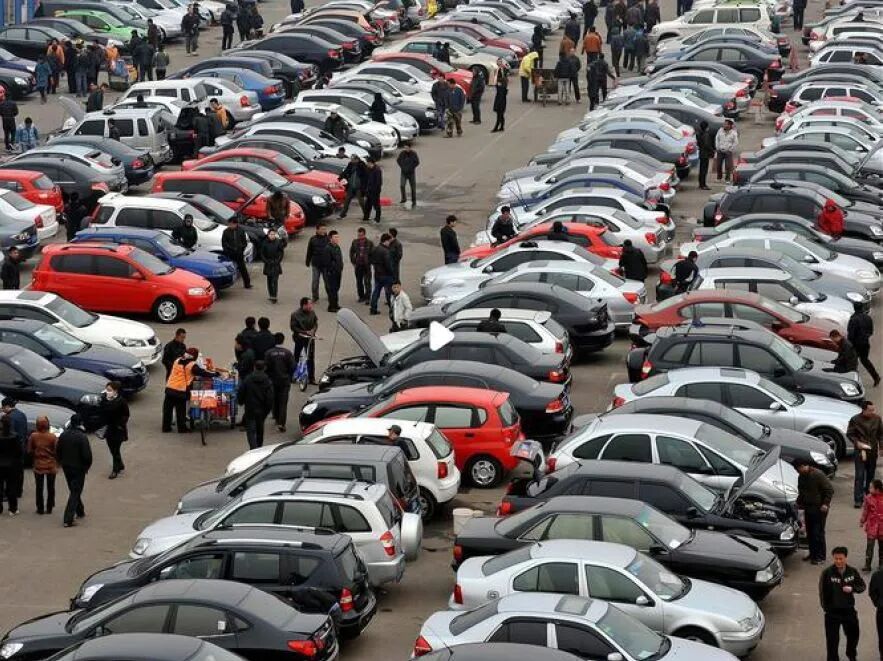
After crossing the 10 million vehicle threshold in 2016, the domestic used car market has, after nearly a decade of development, reached a new milestone of 20 million annual transactions, fully demonstrating its strong development resilience.
According to data released by the China Automobile Dealers Association (CADA), in 2025, China's used car market transaction volume exceeded 20 million vehicles for the first time, setting a new historical record. This marks another significant breakthrough and progress after surpassing the 10 million vehicle threshold in 2016, showcasing the market's strong development resilience through nearly a decade of growth.
After reaching this new milestone, the used car market faces both opportunities and challenges. On the positive side, the large existing vehicle base provides an ample supply of used cars, new energy used cars are becoming a core growth engine due to rising ownership and deeper consumer awareness, and policies promoting a unified national market continue to break down circulation barriers, unlocking cross-regional demand potential. These positive factors collectively form a solid foundation for the market to move toward large-scale and professional development. However, challenges persist, including volatile residual values of new energy vehicles (NEVs) due to rapid technological iterations and difficult battery degradation assessments, pressure on traditional dealers to transform their profit models amid the normalization of "small profits but high volume" operations, and long-standing structural issues such as opaque vehicle conditions and inconsistent pricing. These intertwined challenges represent obstacles that the industry must overcome in its pursuit of high-quality development, creating a mixed landscape of opportunities and difficulties.
A Milestone That Arrived 'Late'
Since the State Council issued the Several Opinions on Promoting the Convenient Transaction of Used Cars in 2016, marking the first time annual used car transactions exceeded 10 million vehicles, the domestic used car market has experienced a turbulent journey. Data shows that in 2017, used car sales grew by 19.3% year-on-year; however, by 2020, affected by the pandemic, transactions dropped to 14.341 million vehicles, a 3.9% decline. In 2021, the market rebounded strongly with a 22.62% increase, reaching 17.585 million vehicles. Despite multiple predictions of surpassing 20 million vehicles in subsequent years, the milestone remained elusive: transactions fell by 8.86% in 2022, rose by 14.88% in 2023 but still fell short, and grew by 6.52% in 2024 to 19.614 million vehicles, just shy of the target.
Lang Xuehong, Deputy Secretary-General of the CADA, admitted in a media interview, "As early as 2019, the industry predicted that national used car transactions could reach 25 million vehicles by 2025. Looking back, the milestone of 20 million annual transactions arrived later than expected." Nevertheless, the market's growth from 10 million to 20 million vehicles demonstrates its strong resilience. Analysts point out that while the nine-year journey was lengthy, it reflected a rational transformation from "wild growth" to "standardized development," avoiding risks associated with blind expansion.
Regarding the reasons behind the used car market finally reaching 20 million vehicles, industry insiders attribute it to multiple factors, including years of market accumulation, policy dividends, and consumption upgrades. On one hand, China's growing vehicle ownership has laid a solid foundation for the used car market. According to the Ministry of Public Security, by 2025, the number of motor vehicles in China reached 469 million, including 366 million cars, providing a steady stream of high-quality used vehicles and enabling a mature linkage mechanism between new and used car markets. On the other hand, trade-in policies have stimulated new car replacements, ensuring a stable supply of used cars while optimizing circulation support measures to effectively address key market bottlenecks. Notably, policies introduced in previous years, such as the inter-provincial handling of transactions in 2021, measures to invigorate circulation in 2022, and the full cancellation of migration restrictions, have effectively addressed long-standing issues of "small scale, fragmentation, and weakness," driving continuous improvements in industry operations and service systems and providing crucial support for the record-breaking transaction volume.
Analysts note that achieving 20 million transactions signifies that China's automotive circulation system has entered a new stage, representing not just a simple increase in transaction volume but also a profound shift in consumption structure from "new car-dominated" to " inventory optimization (stock optimization)" and an accelerated reshaping of consumer preferences from "buying new" to "buying value." In short, the domestic used car industry is transitioning from extensive expansion to high-quality growth.
Huge Market Potential, Cross-Regional Flow as a Highlight
Standing at this new historical juncture, the domestic used car market faces both opportunities and challenges.
First, the market potential remains enormous. Based on a vehicle ownership base of 360 million cars, China's used car transaction volume is far from reaching its full potential. "Referring to the mature U.S. automotive market, where 15 out of every 100 vehicles become used cars traded annually, China's current figure is only around 5 or 6," Lang Xuehong said. According to developed market experiences, China's ideal annual used car transaction volume should range from 40 million to 50 million vehicles, indicating significant growth potential.
On the supply side, policies such as trade-ins have promoted market expansion from the source. Driven by these policies, the national scale of vehicle trade-ins exceeded 11.5 million vehicles in 2025, with replacement updates accounting for over 6.6 million vehicles, adding 6.6 million vehicles to the used car market. Additionally, accelerated new car iteration cycles and shorter replacement periods have reduced the age and improved the condition of used cars in circulation. Data from the CADA shows that in 2025, the proportion of "nearly new" used cars (within three years) in the domestic market reached its highest level in three years at 28.74%, attracting more consumers to purchase used cars.
At the market level, China's automotive consumption structure is shifting from a single new car model to a "new car + used car" dual-wheel-driven model. In recent years, changing automotive consumption attitudes have made used cars a significant choice for first-time and additional purchases, particularly in third-, fourth-tier, and county-level markets, where this trend is more pronounced.
Lang Xuehong believes that as "two new" subsidy policies phase out, particularly with a noticeable decline in subsidies for vehicles priced below 150,000 yuan, and new car prices stabilize following the implementation of "anti-inner-roll" policies, the external environment for the used car market is improving. Meanwhile, with China's average vehicle age approaching eight years, a large number of vehicles are entering concentrated replacement cycles. Combined with the massive ownership base, used car transaction volume has a solid foundation for accelerated growth.
Another promising trend is the sustained strengthening of cross-regional circulation in the used car market. In January 2025, eight departments including the Ministry of Commerce issued the Notice on Conducting Pilot Reforms for Automotive Circulation and Consumption, proposing to promote efficient used car circulation. Local governments have also synchronized efforts to implement convenient measures such as "reverse invoicing" for used car sales and cross-regional transaction registration. Benefiting from these policies, the national used car transfer rate rose to 34.9% in December 2025, up 4.7 percentage points year-on-year. For the full year of 2025, the total volume of used car transfers increased significantly from 486,100 vehicles in 2023 to 653,000 vehicles.
The enhanced vitality of cross-regional circulation not only effectively unlocks the circulation value of used cars but also alleviates inventory pressure for local dealers. The CADA believes that this trend also reflects how consumer choices for used cars have transcended regional limitations, moving toward diversification and cross-regionalization, with overall market activity continuing to rise.
Rising Share of New Energy Vehicles, But Related Systems Remain Incomplete
Compared to the previous used car market, the most significant change in recent years has been the increasing share of new energy vehicles (NEVs). Historically, NEVs were less popular in the second-hand market due to rapid technological iterations and severe battery degradation issues. However, with recent improvements in NEV product technology and quality, along with growing consumer acceptance, many used car dealerships have seen increased acquisition and transaction volumes of NEVs, while their turnover cycles have shortened. Except for less popular brands or models, mainstream NEV used cars have shown improved performance.
According to CADA statistics, benefiting from the continuous growth of NEV ownership in China, annual NEV used car transactions reached 1.6 million vehicles in 2025, accounting for 7.9% of the total annual transaction volume, up 2.2 percentage points year-on-year. It should be noted that the overall transaction prices of NEV used cars are higher than the market average. The transaction volume proportions for the 120,000–150,000 yuan, 150,000–300,000 yuan, and above 300,000 yuan price ranges are approximately 4%, 9%, and 2%, respectively, while for NEVs in the same price ranges, the proportions are around 10%, 15%, and 3%. Strong policy support, the trend of consumption structure shifting toward green and low-carbon models, and the continuous emergence of innovative industry business models collectively provide solid guarantees for the rapid development of the NEV used car market.
However, challenges such as valuation difficulties, opaque vehicle condition information, and unreliable after-sales support persist, constraining the rapid growth of NEV used cars. Media reports indicate that some vehicle information for NEVs is not directly accessible. For example, on most platforms, only battery usage time and mileage are visible, while battery health and cycle counts are only accessible to manufacturers, with varying detection results across different 4S dealerships. On the other hand, unlike the well-established aftermarket for fuel vehicles, NEV after-sales services face numerous barriers. Except for a few brands, most NEVs' lifetime warranties for the battery, electric motor, and electronics ( three electric components ) are only valid for the first owner, meaning purchasing a used NEV equates to forgoing the warranty.
Additionally, residual value remains a major challenge for NEV development. A 2025 CADA special survey on NEV used cars revealed that the average three-year residual value for NEVs is only 43%, far lower than the 62% for fuel vehicles. According to the 2025 Guazi Used Car Annual Trend Report, NEV models experience more concentrated depreciation, with prices nearly halving after around two years of use and an additional 9% depreciation in the third year, before entering a relatively stable phase thereafter.
In response, Luo Lei, Vice President of the CADA, emphasized the need for enhanced collaboration among all parties to open up power battery-related data, establish a data-sharing mechanism, and facilitate the circulation of NEV used cars.
Average Profit Margin Around 4%, Industry Shakeout Imminent
Data from the CADA's Automotive Market Research Division shows that in 2025, the sales profit margin of China's domestic automotive industry dropped to 4.1%, a historical low, plummeting to 1.8% in December. Against this backdrop of overall industry pressure, the used car market cannot remain unscathed.

Luo Lei stated that the current average profit margin in the used car industry hovers around 4%. According to his understanding, more than half of dealers operate with profit margins below 4%, while those exceeding 6–8% are a minority, and cases reaching above 10% are extremely rare. From an industry perspective, the current profit margins in the used car market are indeed at a low level.
In particular, the recent "price wars" in the new car market have exacerbated profit declines in the used car market. In Luo Lei's view, the current challenges in the used car market are closely tied to significant price fluctuations in the new car market. In 2025, the new car market price war intensified, especially in the mainstream consumption segment below 150,000 yuan, where terminal discounts continued to expand, and new car transaction prices kept declining, with some popular new fuel vehicles' terminal prices dropping to around 70,000 yuan. Against this backdrop, the price gap between some relatively new and well-conditioned used cars and new cars' actual landing prices narrowed significantly, weakening the cost-effectiveness advantage of used cars and forcing dealers to reduce prices to maintain transactions. Meanwhile, frequent new car price adjustments disrupted the original pricing logic for used cars, creating higher uncertainty for dealers during vehicle acquisition.
Both individual dealers and dealer groups face challenges, with an industry shakeout imminent. Yongda Automobile's 2025 interim report showed a 13.6% year-on-year decline in used car transaction volume during the reporting period, with a used car gross profit margin of 5.21%. Zhongsheng Automobile's 2025 interim report revealed that the company traded approximately 111,000 used cars during the period, a 9.6% year-on-year increase, but per-vehicle revenue declined by 33.4% year-on-year. Zhongsheng attributed this to the new car market's price war further squeezing profit margins for used cars. In the first half of the year, the company's comprehensive profit per used car dropped to less than 3,000 yuan, with the used car business segment's comprehensive profit at approximately 300 million yuan, a 60.2% year-on-year decline.
Overall, Luo Lei believes that the domestic used car market will perform better in 2026 than in 2025. On one hand, after years of fluctuations, used car dealers have developed a certain "immunity," adopting more cautious business strategies, and some less resilient small and medium-sized dealers have exited the market, strengthening the industry's overall risk resistance. On the other hand, as the market gradually returns to rationality and automakers set more pragmatic sales targets, this will help alleviate dealers' price pressures, stabilize the pricing system, and benefit the used car market.
"From a historical perspective, the long-term trend of the used car market is upward, with very few years experiencing transaction volume declines, mainly concentrated around the pandemic period. Growth is the norm, while declines are occasional," Luo Lei predicted. He anticipates that national used car transaction volume could reach 21–22 million vehicles in 2026, maintaining moderate year-on-year growth. Rather than a rapid rebound, the domestic used car market will undergo a gradual recovery.
Note: This article was first published in the "Hot Topic Tracking" column of the March 2026 issue of Auto Review magazine. Please stay tuned.
Image: Sourced from the internet
Article: Auto Review
Layout: Auto Review
-
![]()
The Unstoppable Rise of 'Optical Progress and Copper Decline': Sunny Optical’s Strategic Vision for the Next Decade
-
![]()
AI + Going Global in the Second Half: No Intermission for Robot Vacuum Cleaners
-
![]()
The Suffering Endured in E-commerce, Walmart Doesn't Want to Repeat in AI
-
![]()
What Does the Doubling of New Energy Vehicle Exports Mean?
-
![]()
Ghosn: 'Only I Can Save Nissan'
-
![]()
Volkswagen Lays Off 100,000 Employees, The Elephant Sits Down
-
![]()
Expanding Production Capacity! Yutong Optics Acquires Approximately 1.5 Hectares of Industrial Land in Chang'an, Dongguan
-
![]()
Why Is Nokia Making a Comeback in the AI Era?