How China is Reshaping the Rules of the Global Auto Industry
 03/27 2026
 449
449
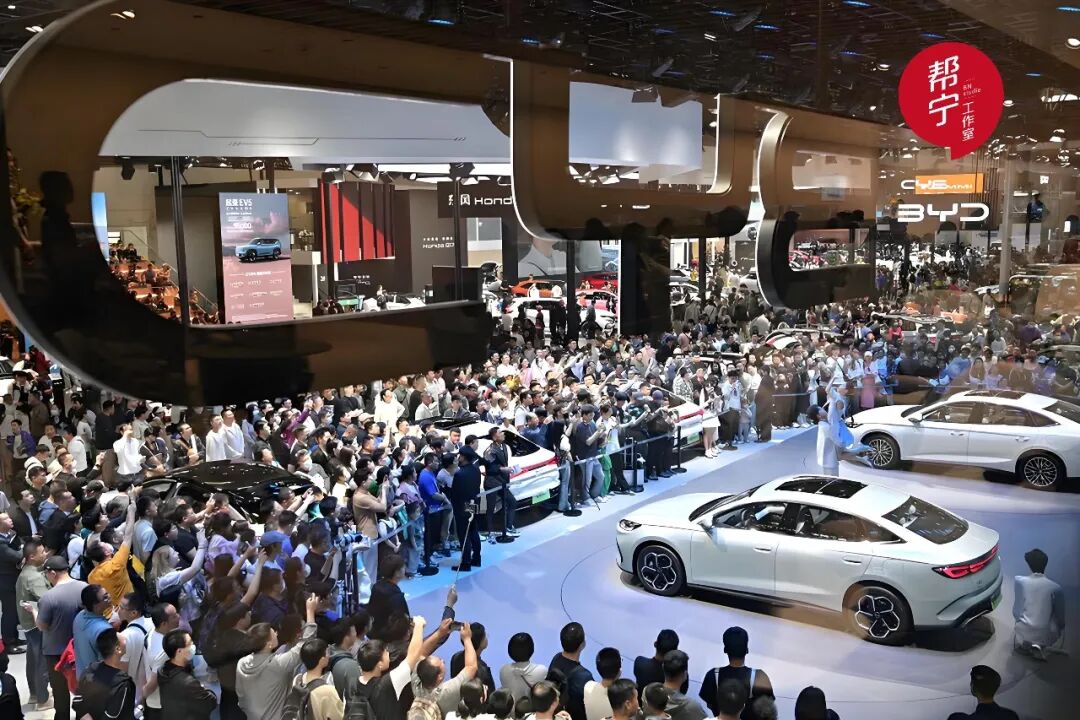
"Rapid Development, Software-First, and Cost Compression"
Compiled by Yang Yuke, Edited by Li Guozheng, Produced by Bangning Studio (gbngzs)
Last year, while driving a Chinese-made Leapmotor C10 on a German highway, the driver assistance system suddenly engaged an emergency brake, jerking the car to the side.
The person behind the wheel was Martin Resch, head of Leapmotor Germany. He emailed engineers in Hangzhou to report the issue and then proceeded to a meeting. By the time the meeting ended, the car had received a software update, resulting in smoother driving.
For a European automaker, a similar solution might have taken weeks. Industry executives refer to this as "Chinese speed"—a new benchmark in the global auto industry.
For decades, global automakers have revered German engineering, American scale, and Japanese reliability as benchmarks. Today, executives from Michigan to Wolfsburg are embracing a new standard—one defined by rapid development cycles, software-first design, and cost compression driven by China's electric vehicle boom.
Much like Japan's rise in the 1970s reshaped the auto industry with lean production and relentless efficiency, China's ascent is rewriting the rules with flatter development timelines, deep supply chain integration, innovative ideas, and wirelessly updated vehicles.
Wireless updates have disrupted the auto industry's goal of selling perfect products, creating items that can be fixed later—sometimes at a cost.
This industry shift is no longer theoretical. Stellantis is considering using Leapmotor's electric platform and software to underpin models for its European brands (Fiat, Opel, and Peugeot) and is separately discussing investments in European operations with Xiaomi and Xpeng.
It's a stunning reality: European legacy automakers may need to rely on Chinese engineering to compete on their own turf.
Bloomberg reports that Chinese technology penetration isn't limited to the mass market—Mercedes-Benz is in early talks with Geely about potential cooperation on future electric vehicles.
Japanese automakers are also tapping into China's expertise.
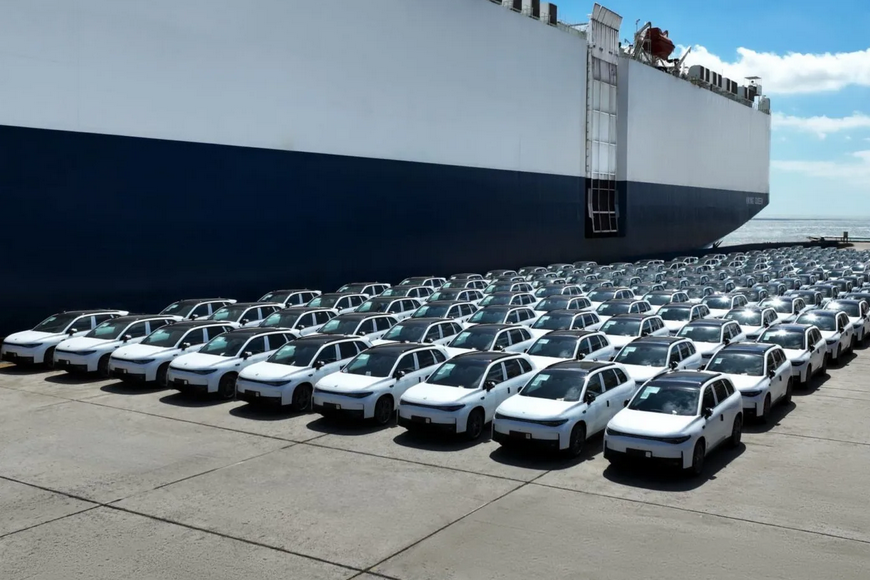
In 2010, Nissan pioneered the electric vehicle market with the LEAF. Today, the company plans to rely on China as a springboard for EV exports, investing at least 10 billion yuan to develop battery-powered vehicles in China for sale overseas.
"What China offers us is access to the same advantages reshaping the competitive landscape: speed, technology, and cost," outgoing Nissan CFO Jeremie Papin said in an interview. Soon, you'll see these first products made in China arrive in global markets.
In the U.S., while protectionist barriers have long kept Chinese cars out, cracks are beginning to show.
As China enters the Mexican and Canadian markets, Ford Motor has discussed with President Donald Trump's administration how Sino-American joint ventures should be structured when China inevitably enters the U.S. market. Ford CEO Jim Farley has called this scenario an "existential threat."
▍01 "Nokia Moment"
For decades, China was seen as a low-cost outpost. To escape this trap, China poured resources into a government-led advanced manufacturing race. Since 2009, Chinese government support in the electric vehicle sector alone has totaled at least $230 billion, according to the Center for Strategic and International Studies (CSIS).
While traditional automakers struggle to shorten 5-7 year product plans, their Chinese rivals can launch a new model in under two years. Founders of Xpeng, Nio, and Li Auto have internet startup backgrounds, while Xiaomi Auto's Lei Jun also has a software background.
China's workforce is younger and more mobile, with wages below Western counterparts—compensation is often tied to financial targets, fostering an entrepreneurial culture. Intense domestic competition forces constant innovation and culls inefficiency.
Patent data reflects China's rise to the world's top tier. From 2000 to 2023, China created over 343,000 patents in future land transport technologies—nearly five times Germany's total over the same period, according to the World Intellectual Property Organization.
Long-term government policy support means Chinese speed is both a product of state support and industrial might. Periodic support (support) and assistance for some firms are unlikely to be sustained indefinitely.
Regardless, the impact is clear. To stay competitive, automakers and suppliers outside China are shifting increasing engineering talent to the country.
Bosch, the world's largest traditional auto parts supplier, plans to cut thousands of manufacturing and R&D jobs in Baden-Württemberg, Germany, transferring work in areas like batteries and driver assistance systems to China.
Some European executives call this a "Nokia moment"—referring to when the iPhone crushed Finnish mobile leader Nokia. European auto giants may be forced to choose between clinging to dying business models and adopting Chinese technology.
In late February, after visiting China, German Chancellor Friedrich Merz said Germany's "productivity is no longer enough" compared to the new reality. "Work-life balance and a four-day workweek won't sustain our prosperity in the long run," he told reporters. "We must do more now."
European automakers, once the standard-setters for global manufacturing, are increasingly being forced to adopt Chinese platforms and engineering practices.
For Bosch, this advantage relates to both speed and cost. On one project, engineers in Suzhou, China, redesigned an electrical connector in six months—about half the time a German team would need, according to people familiar with the matter.
A Bosch spokesperson declined to comment on specific projects. They added that development timelines in China are typically much shorter, calling the country a key innovation hub for Bosch.
At Geely's Hangzhou Bay Research Center, lights sometimes burn 24/7 as engineers move in and out of glass-walled labs, shortening the timeline from concept to production.
Extra shifts like those in China can't be implemented in Europe due to workplace constraints.
▍02 Speed and Cost
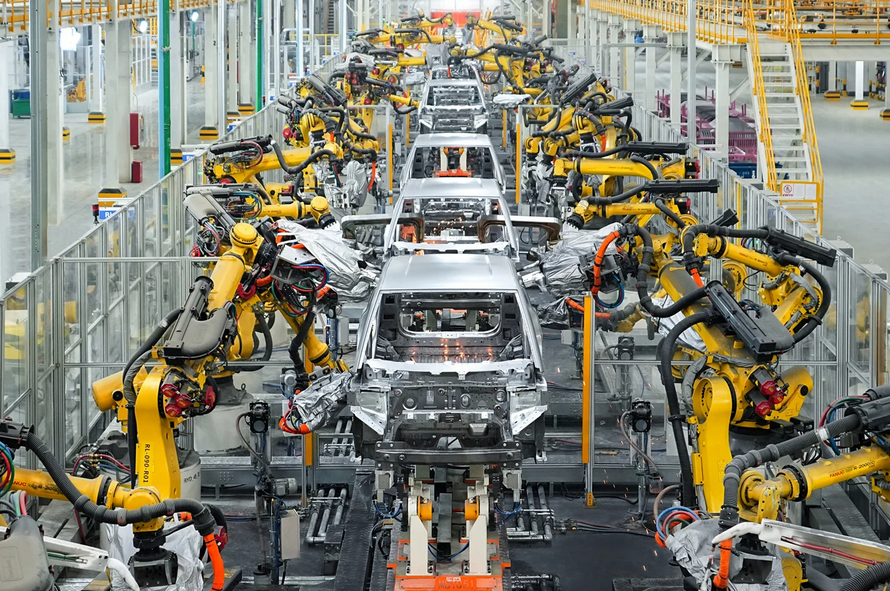
Tesla's 2019 factory opening in Shanghai reduced physical distances between design, manufacturing, and suppliers, accelerating development and simplifying communication.
Since then, EV makers in the Yangtze River Delta can typically find all components within 200 miles. This not only shortens production and logistics lead times but also lowers the barrier for potential automakers with software or design foundations to start companies—even if they lack deep manufacturing experience.
Leapmotor founder Zhu Jiangming started in electronics, and the company develops most core components in-house, including batteries, motors, electronic control systems, and intelligent driving technology. When problems suddenly arise, a team is in place to respond quickly, as happened with German executive Resch.
"Starting from a blank slate allows optimization of everything," said Xin Tianshu, CEO of Leapmotor International joint venture. Greater control over design and components enables manufacturers to fine-tune speed at every production stage. "This engineering culture permeates the entire ecosystem from top to bottom."
In the software industry mindset of China's new crop of automakers, vehicles don't need to launch with perfect new features—sometimes they're merely functional, with updates and fixes coming later.
John Paul MacDuffie, a Wharton School professor at the University of Pennsylvania who studies Chinese production methods, believes their higher tolerance for mistakes stems partly from flat hierarchies and aggressive work cultures, while also citing accelerating technology.
"Most of the speed comes from companies starting production before validation is complete and compressing development phases so they overlap instead of waiting for the previous one to finish," MacDuffie said.
This "launch first, fix later" approach raises reliability concerns. Last October, J.D. Power's annual survey found that vehicle reliability in China declined for the second straight year, with Japanese and American joint ventures outperforming local Chinese brands.
An imperfect R&D validation system and mounting cost pressures "are now becoming systemic risks to overall quality stability," the survey report stated.
Chinese regulators are also seeking to curb a protracted price war. They fear it could lead automakers to cut corners on vehicle safety.
In late February, a Lynk & Co Z20 compact SUV mistakenly turned off its headlights when the driver requested the interior reading lights be switched off. The incident quickly escalated. The malfunction plunged the vehicle into darkness, ultimately crashing into a roadside obstacle.
No one was injured.
But the ensuing online backlash raised questions about reliability and the issue of unintentionally offloading product testing onto customers. A Weibo post stated that Mu Jun, deputy general manager of Lynk & Co Sales Co., apologized for the incident. They installed a software patch to prevent lights from being turned off via voice commands.
▍03 50 Years in the Making
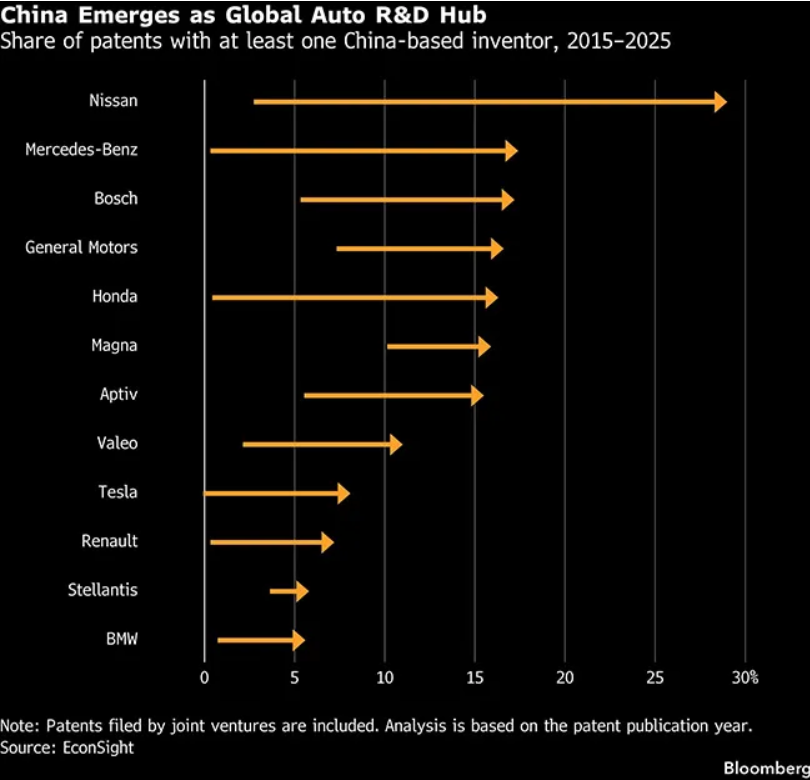
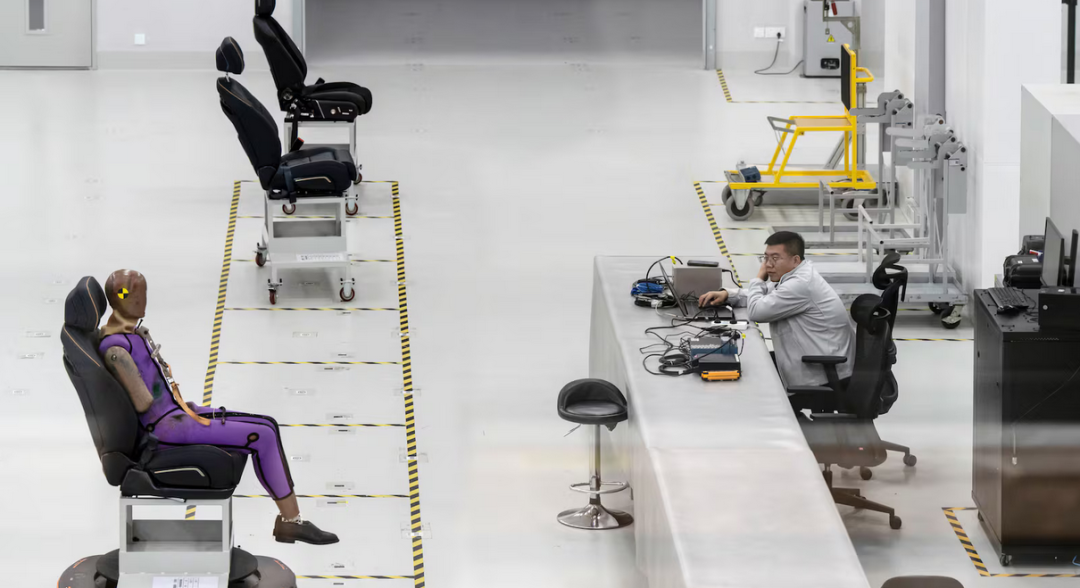
Kai Gramke, CEO of EconSight, a consultancy tracking patent trends, believes China's growing influence stems partly from earlier decisions by European, American, and Japanese automakers to set up factories in China in exchange for access to its rapidly growing market.
Innovation tends to follow manufacturing, he said. Many Chinese patents relate to advanced technologies like batteries, electric vehicles, artificial intelligence, and autonomous driving.
"In the past, China bought European-designed or American-designed cars. In the future, we may buy Chinese-designed cars with Chinese characteristics," Gramke said.
In Europe, Chinese brands are capturing a growing sales share, and the speed and depth of cooperation are accelerating.
Renault Group developed the new Twingo electric vehicle at its Shanghai R&D center, with 40% of components by value coming from China. This month, Leapmotor confirmed it's negotiating with Stellantis to expand cooperation on vehicles and parts.
Audi is collaborating with SAIC Motor to develop electric models on a local Chinese platform. Its parent company, Volkswagen Group, has already partnered with Xpeng, including platform sharing, to boost competitiveness in China.
Chinese automakers have spent nearly five decades closing this gap.
In 1978, a Chinese delegation appeared at Volkswagen Group's gates in Wolfsburg, Germany, proposing technology in exchange for market access—a deal that spawned Shanghai Volkswagen (later renamed SAIC Volkswagen) and a series of joint ventures combining German engineering with Chinese scale.
For years afterward, Volkswagen Group, BMW Group, and Mercedes-Benz reaped the benefits of China's explosive market demand. They secured sales and profits while preserving factory jobs.
Over time, Beijing began rewriting trade terms.
Under its "Made in China 2025" plan to dominate advanced manufacturing, automotive technology was elevated to a strategic priority. Wan Gang—a former Audi engineer who later became China's science and technology minister—advocated electric vehicles as a shortcut to surpass internal combustion engine cars and poured billions into battery research.
Today, through companies like BYD and CATL, China leads global battery production, controls key links in the EV supply chain, and sets the pace for automotive software—from digital cockpits to wireless updates.
Chinese automakers are leveraging cost and speed advantages to churn out affordable models as consumers, repeatedly hit by global economic crises, have less money in their wallets.
Barbara Resch, a Mercedes supervisory board member and president of the metalworkers' union in Baden-Württemberg, said European automakers and their suppliers have no chance to compete on cost.
Resch warned: "We're at a critical juncture. If policymakers fail to chart the right course, future technologies like batteries and hydrogen power will migrate away from Baden-Württemberg."
Nissan CFO Papin said the company will target Middle Eastern and Southern Hemisphere markets with EVs developed in China, where competition from Chinese brands is fiercest.
Nissan plans to launch 10 models in China and has introduced three so far, including the all-electric N7, which performed surprisingly well after its April launch last year.
Farley has been a fan of Xiaomi's SU7 electric vehicle. Bloomberg reported in February that he has been seeking a way to structure a U.S.-controlled joint venture so Chinese and American partners could share profits and technology.
Augustin Friedel, a partner at MHP, Porsche's management and IT consulting firm, believes that for American automakers, "it makes sense to follow what European automakers are already doing."
▍04 "The answer is already clear"
After writing off billions of dollars in electric vehicle investments, some established automakers have retreated to the relatively safe high-margin internal combustion engine models.
This move toward short-term gains will further leave traditional automakers behind in the energy transition. Yet, the energy transition continues to move forward, and the oil price shock brought about by the Iran war may accelerate it.
Currently, tariffs imposed by the United States on Chinese cars protect U.S. automakers from competition. Trump's cancellation of electric vehicle subsidies and emissions regulations has also made sales of battery-powered models more difficult.
EU regulators have set less stringent barriers, imposing tariffs on Chinese-made electric vehicles, but these tariffs are quickly offset by hybrid vehicles and commitments to local production.
Meanwhile, Chinese automakers have made progress in Brazil, Mexico, the UK, and the Middle East, encroaching on the home markets of Ford, General Motors, and Mercedes-Benz.
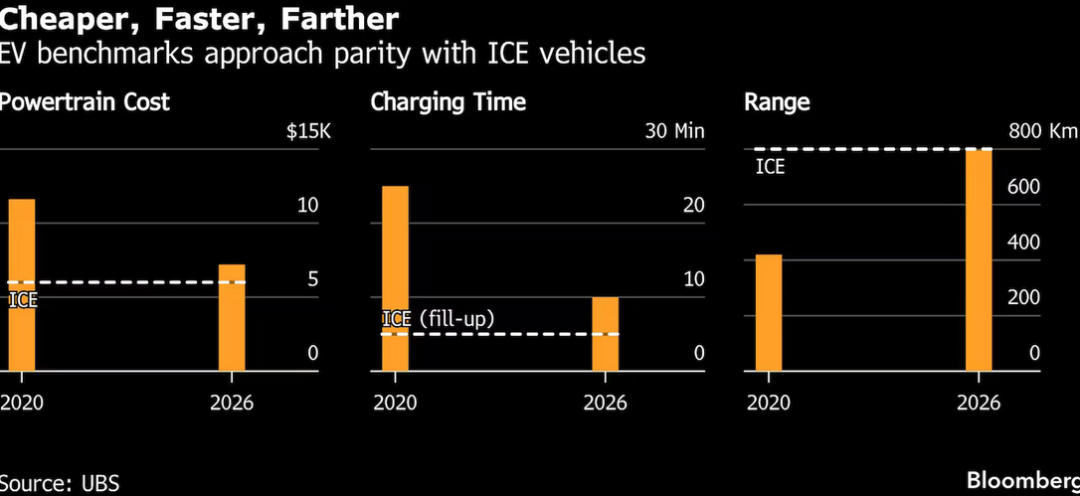
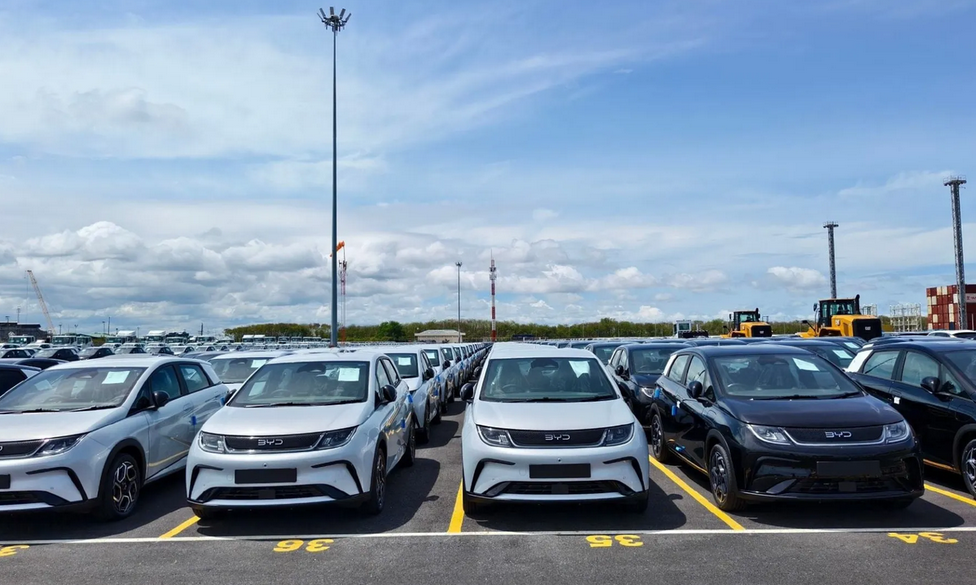
Analysts at UBS estimate that batteries alone can give Chinese automakers like BYD a $2,000 cost advantage per vehicle. They predict that by 2030, the global market share of Chinese cars will grow from 25% in 2025 to 35%, primarily driven by export sales.
In the view of analysts like Patrick Hummel, this advantage will persist due to China's scale, R&D leadership, and supply chain depth.
However, for Terry Woychowski, a former General Motors executive and president of engineering consultancy Caresoft Global, it remains an open question how much of this cost advantage Chinese automakers can replicate when manufacturing cars in the U.S. or Europe. He estimates that making BYD's and Xiaomi's new YU7 compliant with U.S. market requirements would add at least $3,000 in costs.
For European, Japanese, and U.S. automakers, promoting quality and reliability may be their path to maintaining a clear advantage in these markets.
Yet, according to J.D. Power's annual surveys, despite recent setbacks, Chinese automakers have closed their initial quality gap over the past 15 years. Japanese, U.S., and European brands have maintained a significant edge in reliability (a measure of long-term dependability).
Executives almost unanimously agree that China is setting the trend—a harbinger of a rough and unpredictable future for automakers that defined the internal combustion engine era and for the millions of Europeans and Americans who rely on the industry for their livelihoods.
In January this year, Volkswagen Group CEO Oliver Blume said at an event in Berlin: "No other region in the world is undergoing a more sustained, dynamic, and rapid transformation in the automotive industry than China. In China, the answer is already clear as to who will stand at the forefront of this transformation."
(Part of this article is based on Bloomberg reports, and some images are sourced from the internet.)

-
![]()
The Unstoppable Rise of 'Optical Progress and Copper Decline': Sunny Optical’s Strategic Vision for the Next Decade
-
![]()
AI + Going Global in the Second Half: No Intermission for Robot Vacuum Cleaners
-
![]()
The Suffering Endured in E-commerce, Walmart Doesn't Want to Repeat in AI
-
![]()
What Does the Doubling of New Energy Vehicle Exports Mean?
-
![]()
Ghosn: 'Only I Can Save Nissan'
-
![]()
Volkswagen Lays Off 100,000 Employees, The Elephant Sits Down
-
![]()
Expanding Production Capacity! Yutong Optics Acquires Approximately 1.5 Hectares of Industrial Land in Chang'an, Dongguan
-
![]()
Why Is Nokia Making a Comeback in the AI Era?