The Golden Age of Large Six-Seater SUVs is Over
 04/22 2026
 457
457
Lead
Introduction
Can Large Five-Seaters Take the Baton?
Driven by rising raw material costs, R&D investment amortization, and brand upscaling strategies, Chinese brands' overall price bands continue to climb. The once competitive 150,000-yuan range has now surged to 200,000 or even 300,000 yuan and above. It can be said that the Chinese auto market in 2026 is undergoing an overt "era of price hikes."
Large six-seater SUVs are quintessential products of this price surge: larger bodies, more seats, fuller configurations, and naturally higher prices. However, when the tide recedes, they are the first to be exposed. This year, the popularity of large six-seater SUVs is fading at a visible pace.
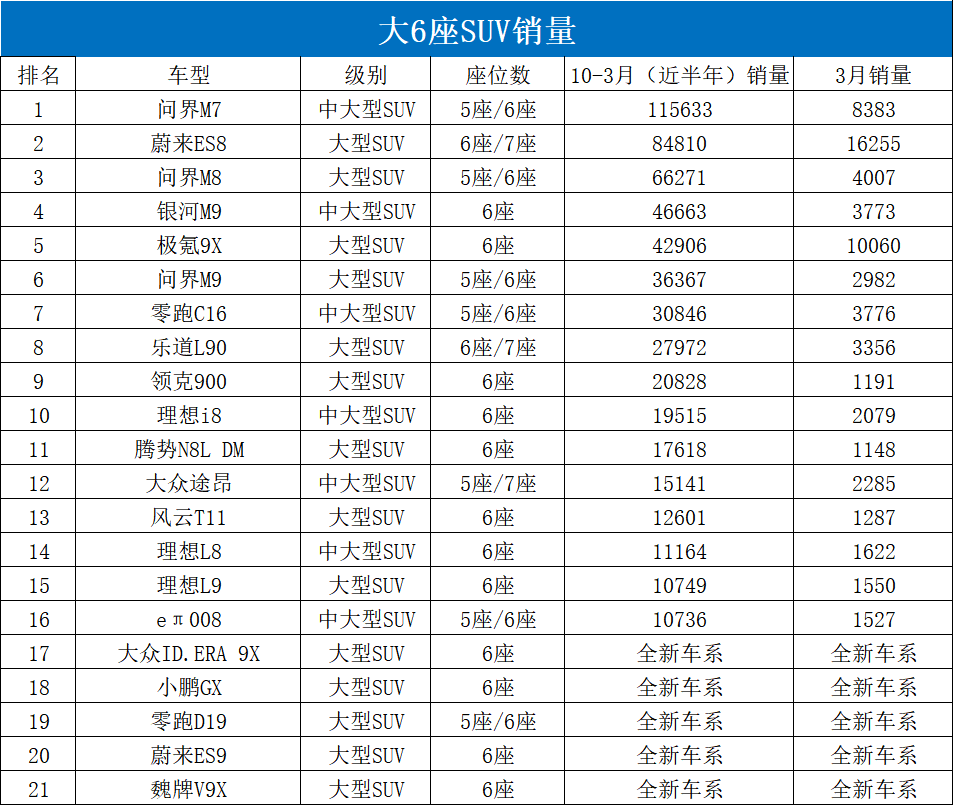
Reviewing the latest sales data, once-popular models in the large six-seater SUV segment, which routinely sold over 10,000 units per month, are now losing momentum. Take the Galaxy M9 and Lynk & Co 900 as examples—the former sold only 3,773 units in March, while the latter plummeted to 1,191 units, a stark contrast to their heyday of thousands or even over 10,000 monthly sales during last year's policy boom.
After relevant discussions, the reasons for this situation are multifaceted. Last year's robust policies, such as purchase tax subsidies and trade-in incentives, significantly stimulated large SUV consumption, directly driving a surge in large six-seater SUV sales. This year, with the phase-out of these policies, consumer demand, previously inflated and overly stimulated by policies, has returned to normal levels, causing model sales to naturally decline to rational market intervals.
Despite this, new players are still eagerly entering this niche market, attempting to seize brand value high ground with higher-priced models. For instance, the Volkswagen ID.ERA 9X, XPENG GX, Leapmotor D19, NIO ES9, and WEY V9X are among over five new models queued for launch.
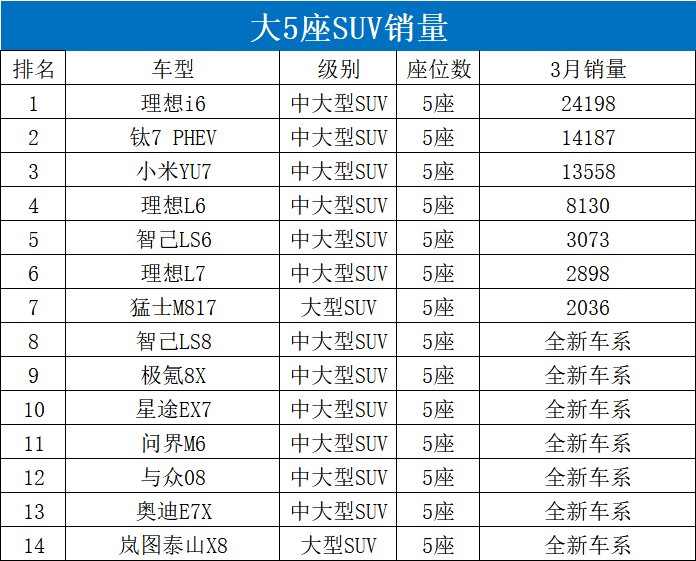
However, market demand falls far short of expectations. According to incomplete statistics, in 2025, only a dozen or so large six-seater SUVs on sale maintained stable monthly sales of over 5,000 units. Meanwhile, in March 2026, the large five-seater SUV market presented a starkly different picture, with the combined sales of just the top four models surpassing the total of the top 15 large six-seater SUV models.
From a hot trend to a receding tide, the golden age of large six-seater SUVs lasted a mere two years. What lies behind this? Is user demand genuinely shrinking, or is there a fundamental issue with product logic? Are six or seven seats truly a necessity? Looking further ahead, where will China's obsession with large vehicles lead?
01 Cannon Fodder Abounds in the Six-Seater SUV Segment
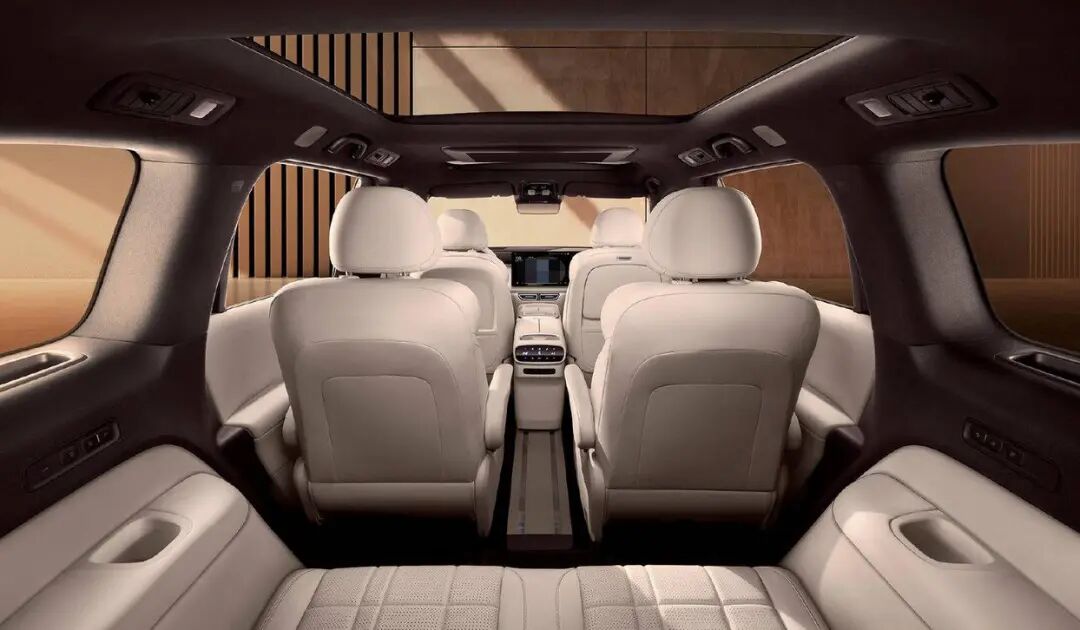
In reality, the large six-seater SUV market suffers from severe product homogenization. Examining the specification sheets of any six-seater SUV reveals astonishing similarities: axle lengths exceeding 3 meters, range-extender/plug-in hybrid/pure electric powertrains, independently adjustable second-row captain's chairs, central control screens over 15 inches, and L2+-level intelligent driving assistance...
When over 80% of models focus on "fridge, TV, sofa" features, differentiation becomes empty rhetoric. Consumers face not a lack of choices but an overwhelming abundance with no clear starting point. One six-seater SUV owner publicly lamented regretting not buying a five-seater: Nowadays, young people rush to buy six-seaters, as if more seats equate to grandeur and family happiness.
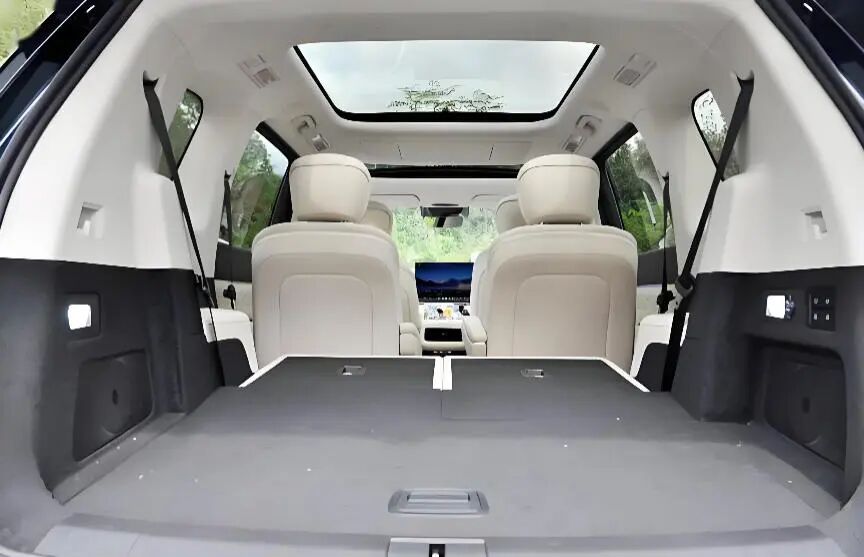
In reality, he usually drives alone or with one passenger, rendering the third row useless. The compressed trunk can't even fit camping gear, while he envies the spacious trunk of a friend's five-seater SUV.
When product values converge, brand loyalty becomes moot. Today, a user might choose Brand A due to a limited-time offer, only to switch to Brand B tomorrow after a new model launch. The lack of unique core selling points is common among all "cannon fodder" models, which merely pile on industry standards without posing their own questions.
A deeper issue lies in the intensifying competition within the large six-seater SUV niche, where some brands' positioning constrains high-end model sales breakthroughs. The number of brands and models entering the large six-seater arena continues to rise, with new competitors continuously improve product strength. However, the overall market demand cake has not expanded. As more models compete, sales are fragmented, causing significant declines in original model sales.
Some brands' pricing ceilings hover around the 150,000-yuan range, struggling to sustain volume sales for models priced at 200,000 yuan or higher. Brand positioning dictates the sales ceiling for their high-end models—this is not a product issue but an objective constraint at the brand level.
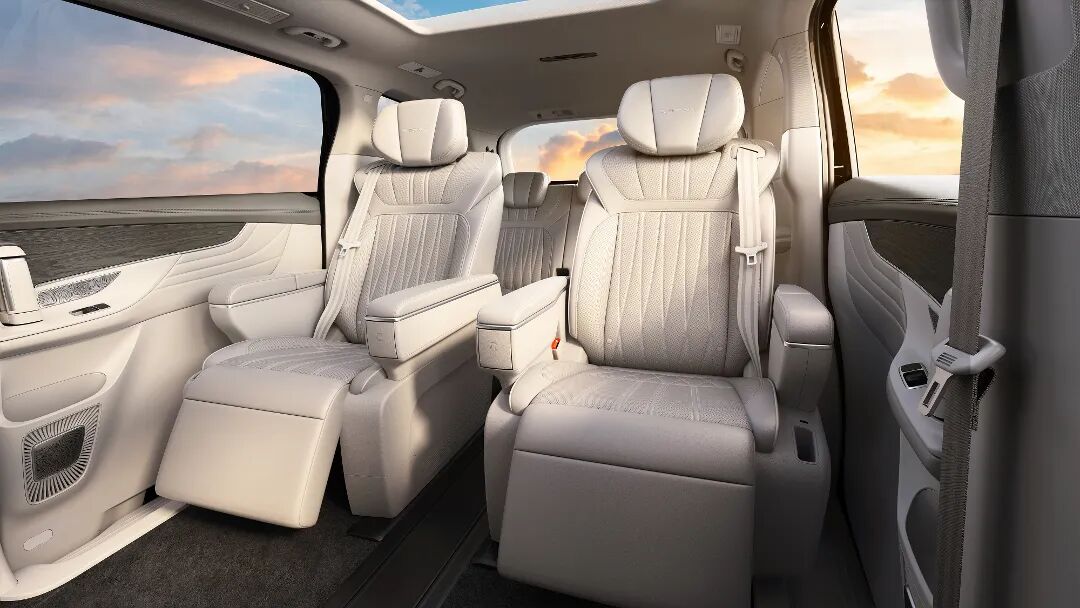
Additionally, from a consumer usage perspective, more people believe the product logic of large six-seater SUVs inherently contains structural flaws. What does the idealized image of a happy family trip look like? Couple in the front, two children in the second row with an aisle for play, and kindly (benevolent) parents in the third row—as depicted in advertisements.
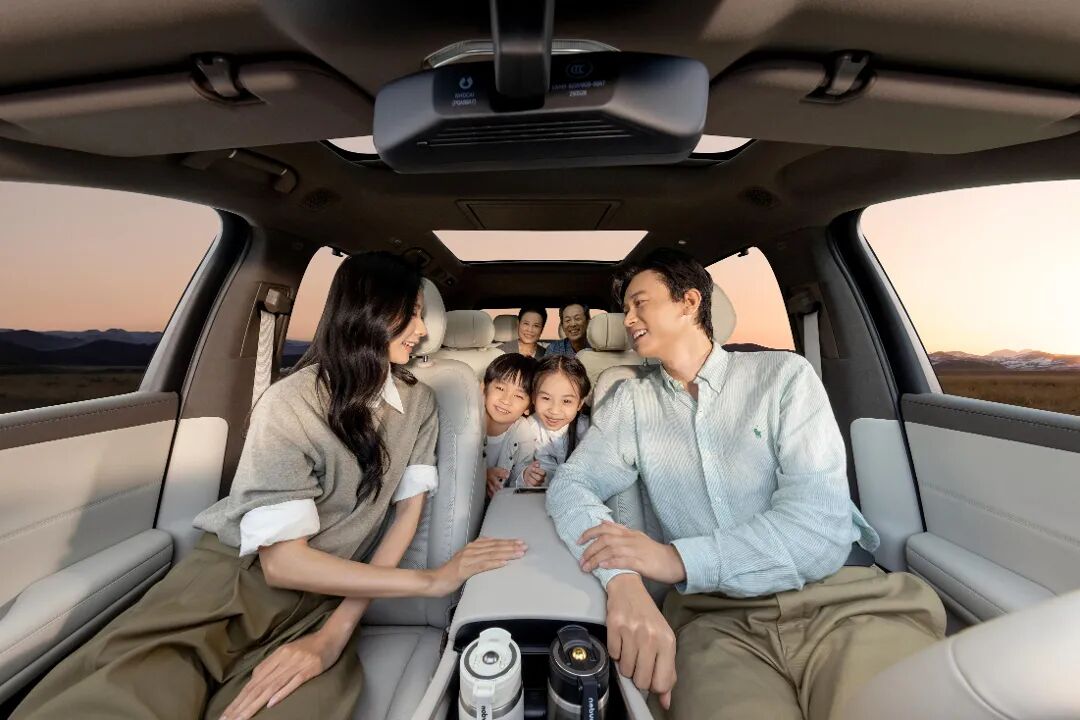
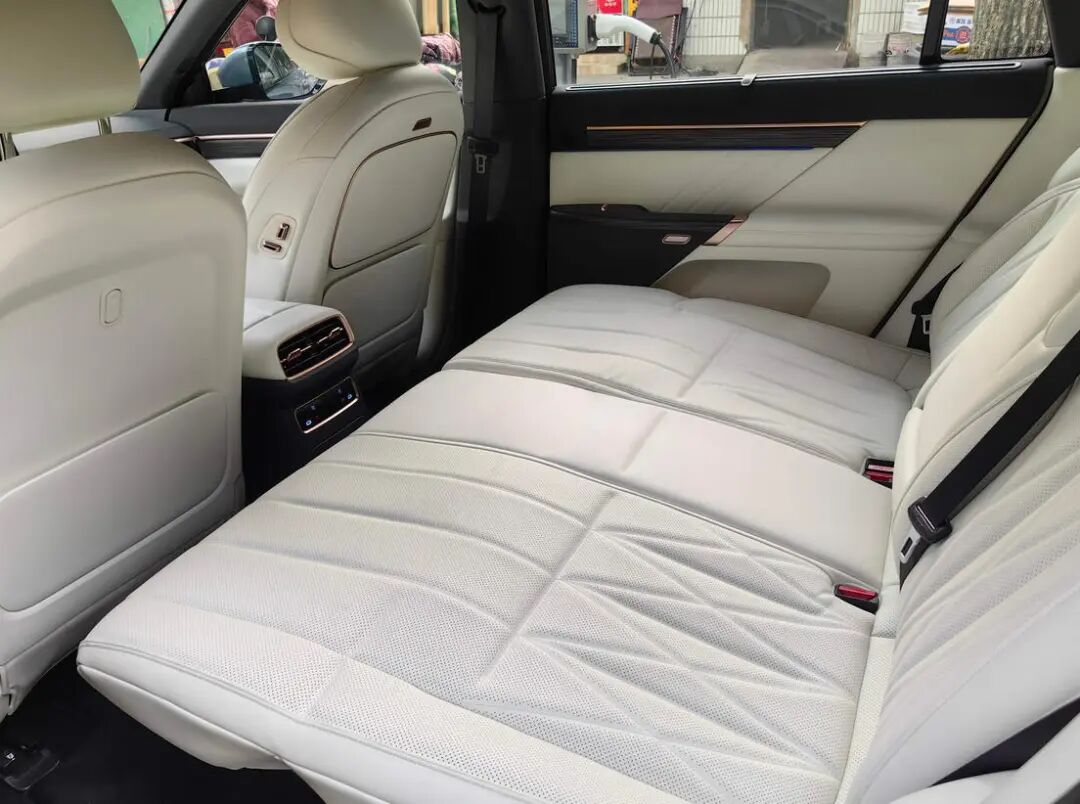
But reality tells a different story. Market research shows over 80% of six-seater SUV owners are dissatisfied with the third-row experience. Most users find the third row rarely used—perhaps once every ten days or half a month—with those two seats often serving as trunk extension space.
More importantly, large six-seater SUVs face a pincer attack from large five-seater SUVs and MPVs. From a user profile perspective, a typical household of three or four finds large five-seater SUVs more cost-effective, with sufficient second-row comfort, a spacious trunk, and easier parking for daily commutes.
In scenarios requiring full occupancy, MPVs clearly outperform in space and comfort. Critically, MPVs can essentially function as seven-seaters when needed. In contrast, large six-seater SUVs are stuck in an awkward middle ground—less practical than large five-seaters and less comfortable than MPVs, pleasing neither side.
Although the overall sales of large six-seater SUVs are growing, reaching 1.08 million units in 2025 with an 18.3% YoY increase, the market is highly uneven. Aierfa dominates, followed closely by the Li Auto lineup, with strong head (leading) brands creating a lively atmosphere for the entire segment. However, the reality is that tail (tail-end) models suffer from sluggish sales.
A more fundamental contradiction is that while demographic shifts indeed drive demand for spacious vehicles, six-seater SUVs are neither the only nor optimal solution from a supply perspective. As automakers flock to this segment, they overlook the simplest market principle: a product's ultimate competitiveness lies not in an extra seat but in genuinely addressing user pain points.
Notably, Geely remains unperturbed by the sales declines of the Lynk & Co 900 and Galaxy M9. According to insiders, this decline was anticipated and represents a normal market correction. Geely's goal is for the Lynk & Co 900 and Galaxy M9 to outperform industry averages under equal competitive conditions—a pragmatic approach worthy of industry reflection compared to blind pursuit of sales figures.
02 The Practical Large Five-Seater Makes a Comeback
While demand for large vehicles grows, six seats may not be the answer—this is dictated by demographic structures. Consider the data: According to the National Bureau of Statistics, China's birth count in 2025 was only 7.92 million, with a birth rate of 5.63‰, 11.31 million deaths, and a natural population growth rate of -2.41‰. The total fertility rate has dropped to approximately 1.09, well below the replacement level of 2.1.
This signifies accelerating low fertility rates. From a family vehicle usage perspective, three-generation, six-person trips are infrequent. Most families with school-age children use their vehicles for weekday commutes—mothers dropping off children and fathers driving to work—and weekend outings to parks or classes, with full family trips occurring only a few times annually.
In this context, using a large six-seater SUV for daily commutes—being heavy, power-hungry, and difficult to park—results in poor user experience. Precisely this mix of frequent short trips and infrequent long trips highlights the value of large five-seater SUVs. They retain comfort while allocating more body resources to trunk space and cargo capacity.
For households of three or four, second-row comfort suffices without needing to compromise for a third row, allowing strollers, camping gear, and suitcases to fit more easily. These consumer demands align with product strategies from some automakers.
Since March 2026, competition in the new energy large five-seater SUV segment has intensified, with multiple companies launching new models, pushing the market into a white-hot phase. The dense ( dense ) launches of models like the Zeekr 8X, Voyah Taishan X8, IM LS8, and Nissan NX8 signify a market focus shift from large six-seaters to large five-seaters.
The appeal of large five-seater SUVs is direct: their proportions are usually more compact and balanced, making daily commuting, parking, and narrow road U-turns easier while offering a driving feel closer to a large vehicle without heaviness. These advantages are particularly evident for urban families, as most driving occurs in frequent short-distance scenarios.
Sales data shows the Li Auto i6 leading with 24,198 units sold in March, while the Titan 7 PHEV and Xiaomi YU7 both surpassed 10,000 units. These figures indicate a clear trend: consumers are voting with their wallets for more practical space solutions over additional seats.
Chinese consumers have long harbored a preference for "bigger is better," from houses to cars, with this mindset influencing purchasing decisions. However, after the collective cooling of large six-seater SUVs, the market is returning to rationality. Consumers now realize that a vehicle's ultimate value lies in matching real usage scenarios rather than symbolizing social status.
Some analysts argue that large five-seater and six-seater SUVs are not substitutes but structurally complementary. Brands like Li Auto and Aierfa target multi-child families with six-seater models, while IM, Nissan, Audi, Zeekr, and Voyah cover family users with large five-seater models, collectively satisfying diverse usage scenarios from nuclear families to multi-generational households.
Amid intensifying inventory (stock) competition, this structural market division is far more rational than blindly following the six-seater trend. Of course, the market for large vehicles in China remains vast. The 2026 Chinese new vehicle market shows a clear trend toward larger models, with dense (intensive) launches of mid-size and large SUVs.
At least 10 large SUVs have entered the MIIT announcement, with models like the Li Auto L9, NIO ES8, and Aierfa M9 firmly established. This shows that "largeness" itself isn't the issue—the key is rational largeness. A truly competitive large vehicle should maximize space efficiency and best match users' actual driving scenarios, rather than simply designing for seat count.
However, concerns arise that automakers may shift from competing on large six-seaters to large five-seaters. If this merely trades one form of internal competition for another, the prosperity of large five-seater SUVs could become a repeat of the large six-seater tragedy. When all brands flood the same segment, differentiation disappears.
A foreseeable outcome is that the large five-seater SUV market will transition from blue ocean to red ocean in the second half of 2026, with most tail-end models again becoming cannon fodder. The truly rational approach is not chasing trends but returning to user scenarios to study unmet needs beyond driving.
Editor-in-Charge: Yang Jing Editor: He Zhengrong
THE END
-
![]()
Jitian Xingzhou: A Pioneer in Optical Payloads Secures Hundreds of Millions in Series B Funding!
-
![]()
Orders Secured Through to the Second Half of the Year! The Rationale Behind the 'Surge' in Demand for This Company’s Optical-Grade Base Films
-
![]()
Beyond Patents: The Retail Rivalry of Insta360 and DJI Unfolds
-
![]()
180 Billion Market Cap Vanished! How Did Seres Fall So Far?
-
![]()
Blockbuster! Domestic storage takes the global double crown for the first time, from an AI company
-
![]()
China Spearheads Formulation! World's Pioneering Global Technical Regulation for Automated Driving Systems Greenlit and Unveiled
-
![]()
Farewell to Pulsed Support Policies: Three Major Auto Policy Directions from Multiple Departments Take Effect on the Same Day
-
![]()
Embercore AI’s Accelerated Funding: The Robot Industry’s Shift Toward ‘Learning Systems’