Apple Unveils the ‘Ledger of Life and Death’ for AI Glasses
 04/22 2026
 636
636
Editor: Liu Zhicheng
Reviewer: Xu Xu
Is the Arrival of Apple's AI Glasses Imminent?
International news sources have disclosed that Apple has finalized the design of its AI glasses, with an anticipated launch date set for 2027.
Apple's venture into AI glasses comes as no surprise, given its hardware business has consistently adhered to an 'end-to-end fully closed-loop' strategy.
Having already made strides in the VR market, it's only logical for Apple to expand into the AI glasses sector.
However, Apple is entering a market that was already becoming increasingly crowded.
Statistics indicate that by 2025, over 40 AI glasses products will have been launched in the domestic market. Moreover, data from the Tianyancha APP reveals that more than 10,000 companies related to AI glasses have been established in the past year alone.

As the sector intensifies and more competitors join, an all-out competition across the AI glasses industry appears inevitable.
AI Glasses: A 'Flagship Product' or a 'Complementary Product'?
Apple's entry signals one thing: the industrial chain has reached maturity.
In the hardware arena, Apple does not engage in battles unprepared. Apple was not the pioneer in smartwatches, yet the Apple Watch revolutionized the category. Similarly, Apple was not the first in VR, but its VR experience is now industry-leading.
This is not solely due to Apple's technological prowess but, more importantly, because Apple excels at integrating mature supply chain technologies to create groundbreaking products.
Now, it's the turn of AI glasses.
With tech giants continuously entering the fray, the AI glasses industry is poised for rapid differentiation. After a brief growth phase, the industry will soon enter an era of low-margin competition.
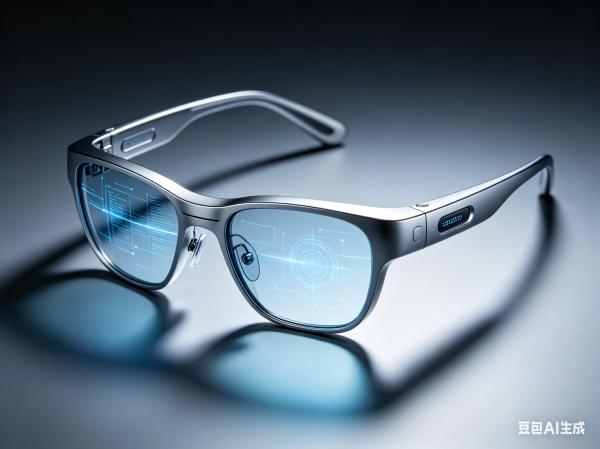
An all-out competition across the industry may already be underway.
During this competitive phase, AI glasses products have two core survival strategies:
One is the 'flagship product' strategy.
Ali's Qianwen AI glasses, Xiaodu AI glasses, Thunderbird, and Rokid all adhere to the 'flagship product' strategy. A key aspect of this strategy is volume.
For Ali and Xiaodu, achieving volume is essential to support various entry-point functions.
Qianwen AI glasses aim to integrate capabilities such as payment, search, and AI-powered e-commerce consumption into the glasses, providing Ali with an entry-point insurance in the AI era.
Therefore, the product focus of Qianwen AI glasses is not on extreme hardware parameters but on how to accommodate as much large model capability and service access capability as possible.
Qianwen AI glasses S1 is designed with this logic in mind. Thus, Qianwen AI glasses can access Ali's payment scenarios, e-commerce consumption on Taobao and Tmall, and ride-hailing services from Gaode.
In simple terms, hardware serves as the entry point, while the main focus remains on the ecosystem and services within the large corporation's framework.
Similarly adhering to the 'flagship product' strategy, Thunderbird and Rokid take a different approach. Unlike Ali and Xiaodu, Thunderbird and Rokid treat AI smart glasses as mobile phones.
Therefore, Rokid has incorporated binocular waveguides AR display into its product, with models that can be freely switched and support real-time translation in 89 languages, maximizing functionality.
Rokid's approach is clear: it hopes to pack as much display, computing power, battery life, and interaction capabilities as possible into a limited product volume, aiming to become an independent terminal that users carry with them daily.
Flagship smart hardware products cannot escape the 'bucket theory' – the weakness in experience ultimately determines the boundary of the market size.
Why did the iPhone Air's sales collapse?
Not because it was not lightweight enough or had an imperfect industrial design, but because the shortcomings in screen and battery life were too pronounced. This is even more critical for glasses, a product with extremely stringent weight requirements.
The smaller the product volume and the lighter the weight, the impossible triangle of display, computing power, and battery life becomes infinitely amplified in a demanding product like glasses. From this perspective, the path of stacking parameters is almost unsolvable.
Among the AI glasses products on the market, Rokid has the most comprehensive functionality, but at the cost of a weight of 49 grams, sacrificing much of the wearing experience.
Whether Rokid will follow the path of the iPhone Air remains unanswered. However, one thing is certain: when the industry begins to enter the competitive phase of close combat, any shortcomings in experience may be amplified by the market.
Beyond the 'flagship product,' the other strategy is the 'complementary product.'
Players following the 'complementary product' strategy do not pursue AI glasses as an independent super terminal but view them as a natural extension and scenario complement to their existing ecosystems.
Apple, Huawei, Xiaomi, and Li Auto all follow this path.
For these players, the hardware parameters and product strength of AI glasses are not the most important; what matters is complementing their ecosystems.
For example, Huawei's strategy in the AI glasses category is to focus more on experience. With a weight of 35.5 grams and a HarmonyOS full-scenario ecosystem, the product is positioned as an extension of mobile phones, following the same logic as smartwatches.
Why did the smartwatch category take off?
Not because the Apple Watch had exceptional product strength, but because the category found a core rigid demand complementary to mobile phones: health monitoring.
Xiaomi and Li Auto follow a similar logic.
Xiaomi's AI glasses may not have the strongest parameters but can form linkages with its human-vehicle-home ecosystem, providing complementary experiences. Li Auto's first-generation Livis also follows a smart voice route, with the glasses themselves not having a display but emphasizing the specific scenario of travel.
For these players making AI smart glasses, the question they need to answer is: What scenarios do mobile phones want to address but cannot do well, where glasses have a natural advantage?
Currently, real-time translation and real-time navigation seem to be the only two most essential demand scenarios for most AI glasses products on the market.
However, the problem is that for most users, these two scenario demands are not essential enough. On the one hand, there are already many mature AI translation hardware products on the market with superior translation accuracy and battery life, making the AI glasses product form not a necessity.
On the other hand, real-time navigation in scenarios like driving already has mature solutions like HUD. Spending thousands of yuan on AI glasses seems somewhat redundant.
What is the core complementary demand that AI glasses cannot replace?
This question may still require time to verify.
AI Glasses Are Just the Shell; Large Models Are the Essence
One thing that has been overlooked is that the market and industry ends exhibit two distinct trends.
While the industry end exclaims that AI glasses have ushered in their iPhone moment, the market end faces a high return rate. Monitoring by institutions shows that the average return rate of AI glasses on mainstream e-commerce platforms is as high as 30%.
This return rate may imply that, beyond essential scenarios, AI glasses still need to address the question: How to make users 'willing to wear them'?
Vision Pro serves as a good counterexample: it has advanced technology and a good experience, but users are simply not willing to wear it.
Not just because of the price issue, but more importantly, the experience bottleneck is too difficult to break through.
Therefore, to avoid repeating past mistakes, AI glasses must think clearly about a simple question: When users take off their glasses, what do they lose? Is it a heavy burden, or is it a truly convenient and intelligent product experience? This question is worth pondering.
Ultimately, the AI wave of 2026 surging from 'soft' to 'hard' is not an evolution of the AI glasses industry but rather being at the crest of the AI large model wave.
Simply put, the growth engine of AI glasses is also not optical lenses or micro-sensors but large model capabilities.
In other words, to retain users, AI glasses rely not on hardware but more on AI capabilities.
Xiaomi has already expressed its stance.
In February 2026, Xiaomi announced a pause in the research and development of AI glasses with displays, fully shifting towards AI glasses with cameras.
On the one hand, model capabilities largely determine the actual usage effectiveness of AI glasses. And there are only a few major players with strong model capabilities on the market.
In other words, at this stage, except for AI giants, other players may find it difficult to have truly differentiated advantages.
On the other hand, in the AI glasses sector, major players have a longer window of opportunity.
For example, in the VR industry, ByteDance acquired PICO for 9 billion yuan to enter the market. It wasn't until the PICO 4 that annual peak sales exceeded one million. Even if PICO remained unprofitable for a long time, ByteDance still had a sufficient window of opportunity to continuously iterate the product and increase sales volume.
AI glasses, on the other hand, are a complex industry combining hardware and software, with funding and technical difficulties no less than those of VR.
Moreover, when major players make AI glasses, they often do not focus solely on category growth itself. Based on this, judging from comprehensive strength, the industry landscape for AI glasses in the coming period seems already clear:
Huawei, Xiaomi, and Apple under the hardware route, and players like Ali and ByteDance under the software service ecosystem form the first tier; AI industry players like Xiaodu and iFlytek form the second tier; and players like Thunderbird and Leqi form the third tier.
When first-tier players treat AI glasses as part of their overall AI strategy, for second and third-tier players, there may only be two paths ahead:
One is to deeply explore vertical scenarios.
When large models become standard, and AI glasses face the awkward situation of 'being able to do everything but not doing anything well,' vertical scenarios may become a breakthrough for differentiation.
For example, at this year's AWE, BOE showcased its S7 AI+AR cycling glasses for the cycling scenario; another example is Thunderbird X3 Pro, which, in collaboration with Deutsche Telekom at MWC, showcased 'Magenta AI,' supporting menu translation, route planning, etc.
The advantage of vertical scenarios lies in the sufficiently niche user base, making short-term commercial growth easier. For example, cycling and outdoor enthusiasts have sufficient purchasing power.
Strategically, it is also easier to find opportunities to take root and grow in areas overlooked by giants.
This is similar to the imaging sector, where Sony and Nikon focus on DSLRs and mirrorless cameras, while Insta360 and DJI make handheld gimbal cameras, ultimately carving out a growth path.
Beyond deeply exploring vertical scenarios, another direction is to expand overseas.
The overseas market is still growing.
Institution Omdia predicts that the global shipment volume of AI glasses will reach 5.1 million units in 2025, with an annual growth rate of 158%. By 2026, the market size is expected to exceed 10 million units.
Although the overseas market also has players like Apple, Google, and Meta, players like Rokid and Thunderbird also have their advantages, such as price. Additionally, both Rokid and Thunderbird have achieved binocular full-color displays, with some product capabilities being leading-edge.
More importantly, Chinese AI glasses already have a first-mover industrial advantage.
Currently, although Chinese smart glasses manufacturers are expected to account for 45% of the global market in terms of shipment volume in 2026, most of this is still domestic, and there is still growth potential in the overseas market.
Ultimately, the war for AI glasses is essentially not about hardware but about AI technological capabilities. Perhaps, the key to winning the AI glasses battle was never in the hands of native AI glasses manufacturers from the start.
The decisive battle has arrived, but the outcome is still undetermined. How will the AI glasses industry fare in the future? Time will tell.
-
![]()
Wang Huiwen, Former Meituan Executive, Achieves 20-Fold ROI, Supports 24 AI Startups
-
![]()
Another AI Computing Power Unicorn Launches IPO! Founded by a Changjiang Scholar
-
![]()
OFILM Holdings Secures Zhongke Daojing, Marking a Significant Leap in the Optical Communication Industry!
-
What Will Be the Next Key Battleground for Large Models After AI Coding?
-
![]()
Leapmotor's Sales Soar, Yet Hidden Concerns Loom
-
![]()
China’s Action Camera Market Soars: 3.12 Million Units Sold in Six Months, DJI Secures 74% Dominance
-
![]()
Zhang Yiming: Strategic Retreat as a Path Forward
-
![]()
Exploring Charging for Some Features of QianWen App: Can It Follow the Path of Doubao?