Computing Power Begins to Enter the Market
 04/22 2026
 653
653

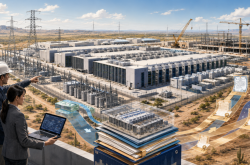
The computing power industry is undergoing a significant transformation, shifting its focus from "the quantity of machines constructed" to "the ability to market resources as services." Terms like "computing power banks" and "computing power supermarkets" represent not just new buzzwords but a fundamental shift in industrial strategy.
In April of this year, the Ministry of Industry and Information Technology (MIIT) issued a notice outlining a special initiative aimed at establishing a widely accessible computing power service system by the end of 2028. This initiative explicitly proposes billing based on "card-hours," "core-hours," and Tokens, exploring the concepts of "computing power banks" and "computing power supermarkets," supporting the cross-regional and cross-cycle scheduling of idle computing power, and introducing tools such as "computing power vouchers," "storage vouchers," and "transport vouchers."
The significance lies not in the novelty of terms like "computing power banks" and "computing power supermarkets," but in the fact that the policy focus has evolved. The competition in computing power is no longer solely about the number of data centers constructed or the quantity of cards installed; it also hinges on the smooth flow of resources and the stable delivery of services.
This transformation did not occur overnight.
Liu Liehong, Director of the National Data Administration, emphasized at the China Development Forum in March that China's daily average Token invocation volume had exceeded 140 trillion, referring to Tokens as the "settlement unit" bridging technological supply and commercial demand. These figures reflect a shift in how the industry is evaluated.
Previously, the industry placed greater emphasis on training scale, parameter volume, and infrastructure investment. Moving forward, factors such as invocation density, willingness to pay, turnover efficiency, and delivery stability will carry increasing weight. Consequently, computing power is no longer viewed merely as equipment and assets within data centers; it is increasingly recognized as a measurable, schedulable, and tradable service capability.
In recent years, the computing power market has competed on deploying GPUs, racks, and parks, with a focus on the speed of resource formation. The next phase of competition will center on pooling, scheduling, billing, operations, maintenance, and delivery.
The document clearly outlines the direction: integrate local idle and dispersed computing power, promote pooled integration and elastic configuration, categorize and display resources, and provide intelligent matching, one-stop selection and procurement, usage guidance, and consulting services. While resources remain crucial, the emphasis is shifting from resources themselves to capabilities; hardware remains the foundation, but delivery is becoming the new benchmark.
Shanghai Telecom has launched a "computing power supermarket," offering a diverse range of computing power resources, including intelligent computing cards, physical machines, elastic computing networks, bare metal, and GPU cloud instances, along with multi-level account systems and metering and billing functions. Overseas, differentiated supply and billing mechanisms have emerged earlier. Google Cloud offers Spot VMs, Azure provides reserved throughput mechanisms like PTUs, and CoreWeave emphasizes flexibility in pricing and capacity design. The commonality in mature markets has never been a single pricing method but rather enabling customers with varying budgets, latency requirements, and stability needs to find a suitable service tier.
Of course, challenges persist; they have merely evolved.
For computing power to truly become a marketable product, it does not automatically become standardized. Issues of compatibility between chips, networks, frameworks, and software stacks remain, and metrics such as bandwidth, latency, throughput, and dedicated deployment require clearer productization and more detailed pricing systems. To put it bluntly, the industry is not becoming less resource-intensive but is shifting from "heavy asset expansion" to "heavy operational delivery." The former competes on investment, while the latter competes on capability.
The issuance of the document is significant not because it will immediately trigger a new wave of investment but because it redefines the competitive landscape for the next phase.
In the future, the market will evaluate a computing power company not only by the number of machines it possesses or the size of its parks but also by its understanding of scenarios, resource scheduling capabilities, and ability to transform abstract resources into stable, purchasable, and sustainably repurchasable service products. The company that achieves this first will have a better chance of securing a position in the next round of competition.
For China's computing power industry, this transition is akin to moving from damming and impounding water to truly entering the navigation stage. Heat may not immediately translate into performance, and servitization will not mature overnight. However, the direction has been set, and the coordinates have changed. What follows is a competition not just on the availability of computing power but on its ability to be truly marketed as a service.
This Issue's Content
Information Sources
The expressions used in this article, such as the MIIT's "Special Initiative on Inclusive Computing Power Empowering the Development of Small and Medium-Sized Enterprises," billing based on "card-hours," "core-hours," and Tokens, and "computing power banks" and "computing power supermarkets," are primarily compiled from publicly available notices from the General Office of the MIIT. The statements regarding Liu Liehong's proposal that Tokens are the "settlement unit" connecting technological supply with commercial demand and China's daily average Token invocation volume surpassing 140 trillion are primarily based on the full text of public speeches by the National Data Administration. The descriptions of Shanghai Telecom's "computing power supermarket" and the differentiated supply and billing mechanisms of overseas cloud providers are primarily based on official public materials from China Telecom, Google Cloud, Microsoft Azure, and CoreWeave. The judgments in this article are based on the collation and commentary of publicly available information.
Disclaimer
This article is for informational reference and industrial research exchange only and does not constitute any form of investment advice, commercial advice, or decision-making basis. The views expressed herein are primarily based on the analysis and commentary of publicly available information and do not constitute a final determination of the effectiveness of relevant policies, industry trends, or corporate performance; for specific business, product, rule, and implementation details, please refer to the latest public disclosures by competent authorities and relevant institutions. Investment involves risk, and decision-making should be cautious.
Note: This article is based on the analysis and integration of publicly available information. If there are any errors, please contact us promptly for corrections.
-
![]()
AI Giants Start Borrowing to Fuel Computing Power Race
-
ByteDance Initiates Largest B2B Structural Adjustment, This Time It's Truly Different
-
![]()
Let's Talk About Kingsoft Office's Mid-Year Outlook and the True Strength of Its AI-Powered Office Solutions
-
Despite 150 Million Users, Struggles Persist: AIShige Faces Tough Competition from Seedance and Kling in AI Video Monetization
-
![]()
Ensuring Safe Gear Shifting in the Automotive Industry: Transitioning from 'Product Oversight' to 'Full-Chain Governance'
-
![]()
Net Profit Soars to $133.7 Billion! Azure Revenue Tops $100 Billion, with AI Fueling Microsoft's Growth
-
![]()
Before 6G Hits the Market, the U.S. Forges a 'Rules Alliance': What Challenges Await Chinese IoT Enterprises?
-
![]()
Intelligent Driving's 'Little Blue Light' Faces Ban: Night Glare and Cut-in Risks Prompt Official Action