The Fiercely Competitive Intelligent Driving Arena: Some Seek to Transcend Boundaries and 'Conquer the Dragon', While Others Stealthily Forsake Their 'Progeny'
 04/22 2026
 462
462
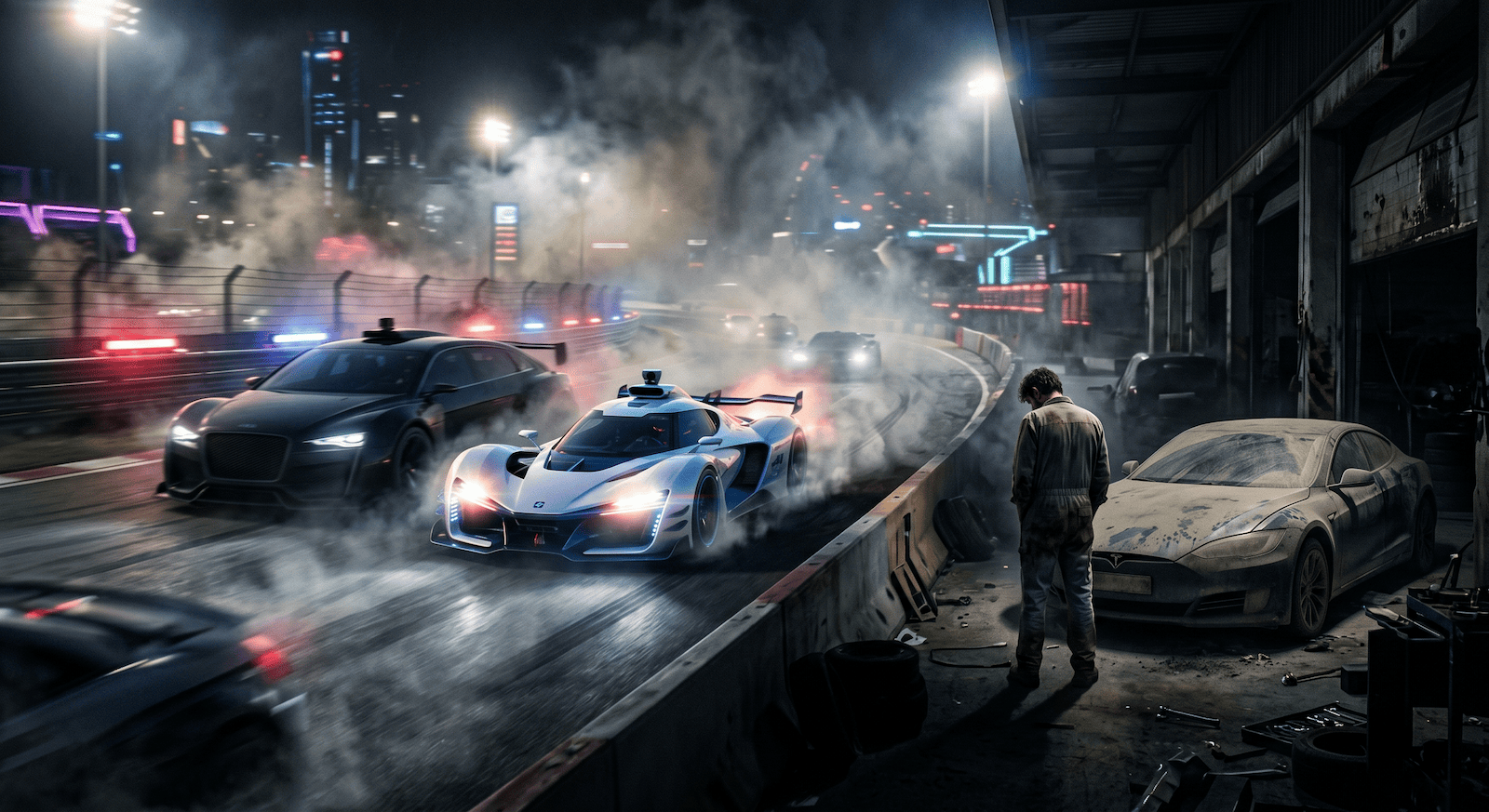
On the eve of the 2026 Beijing Auto Show, the intensity of competition within China's intelligent driving sector has reached unprecedented heights.
Horizon Robotics is poised to unveil a groundbreaking chip named 'Xingkong' (Starry Sky), which seamlessly integrates computational power for both the cockpit and intelligent driving, thereby eliminating the separation between cockpit and intelligent driving hardware.
Huawei ADS is anticipated to officially launch ADS 5, emphasizing that the WEWA 2.0 architecture will comprehensively enhance the driving experience across urban, highway, and parking scenarios...
What left a profound impression on us was the perspective articulated by Zhao Ming, the newly appointed co-chairman of Qianli Technology, during a recent media interview. He boldly declared, 'We must outperform Tesla; if not, we'll persist until we do,' and candidly discussed his former employer, Huawei, stating, 'The best way to honor our former comrades is to lead our current team to surpass them.'
The ambition of this seasoned tech veteran perfectly embodies the classic narrative of 'challengers slaying the dragon,' yet it also underscores the harsh realities of the entire intelligent driving industry: Following the 'divestment' in 2025, the remaining seats at the intelligent driving table are rapidly diminishing. Failing to cross the scale threshold in 2026 is destined to result in being 'left behind.'
01 The 'Soul Theory' Fades as More Automakers Forsake Their 'Progeny'
Five years ago, the 'Soul Theory' served as the ideological cornerstone for the entire Chinese automotive industry.
When queried about SAIC's potential collaboration with third parties like Huawei in autonomous driving, Chen Hong, then chairman of SAIC Motor, surprised many by stating, 'This is akin to having a company provide us with a comprehensive solution, thereby becoming the soul while SAIC becomes the body. SAIC cannot accept such an outcome; we must retain control over our soul.'
While other automakers' leaders did not explicitly echo this sentiment, their actions spoke volumes.
Great Wall Motors heavily invested in nurturing Momenta, Chery recruited top talent from Silicon Valley to establish Dazhuo Intelligence, and even Volkswagen Group in Germany formed a massive CARIAD... In the subsequent two years' new car launches, when discussing intelligent driving assistance, major automakers unanimously included 'self-developed' in their presentations.
Fast forward to 2026, the once highly anticipated 'battle for the soul' is now collapsing on a massive scale in a brutal fashion.
The most lamentable case is undoubtedly Momenta.
As the 'progeny' of Great Wall Motors, Momenta's valuation once soared beyond $1 billion, with a team size reaching 1,500. However, when the industry began to rapidly transition from 'light map + heavy perception' to 'end-to-end large models' in 2023, Momenta found itself embroiled in prolonged debates over its development path due to 'unpredictable research and development cycles and excessive resource investment.'
Another fatal flaw in automakers' self-development lies in the 'single-client trap.'
Without a substantial external customer base to share the enormous research and development costs, the cost-effectiveness of intelligent driving solutions is extremely low. For instance, in 2024, Momenta's pricing for 100 TOPS computing power was as high as 8,000 yuan, while similar products on the market had already dropped below 4,000 yuan.
Faced with Momenta's sluggishness and high costs in implementing urban NOA, Great Wall Motors demonstrated cold-blooded business acumen: Its main models opted to adopt Yuanrong Qixing's intelligent driving platform and directly led a $100 million Series C funding round for Yuanrong Qixing.
Momenta is not an isolated case; 'forsaking one's progeny for survival' is becoming a consensus across the industry.
Chery's Dazhuo Intelligence, after experiencing the constraints of traditional automakers' internal approval processes and the loss of core talent, effectively ceased to exist within two years. Chery then strengthened its cooperation with third-party suppliers such as Huawei, Momenta, Horizon Robotics, and Zhuoyu Technology.
Volkswagen Group's CARIAD, after experiencing the pain of 'subpar code' and software delays causing production bottlenecks for several key models, was ruthlessly downgraded to a 'technology integrator' by new CEO Oliver Blume. At the same time, Volkswagen Group made a substantial investment in XPENG Motors.
SAIC Motor, the originator of the 'Soul Theory,' unexpectedly declared in 2024 that 'we must learn to humble ourselves.' It first invested in Momenta, announcing a joint research and development of an autonomous driving system, and then collaborated with Huawei to create Shangjie, with new models featuring Huawei ADS and HarmonyOS cockpit...
Why did automakers, once brimming with ambition for intelligent driving, forsake their 'progeny' within a few years? Because the market does not reward sentimentality.
According to statistics from Xinluo Intelligent Driving's assisted driving database, from January to December 2025, the total sales of new energy passenger vehicles with urban NOA in the market reached 2.658 million units, with Seres, XPENG, and Li Auto ranking in the top three. Brands backed by traditional automakers, such as BYD and Zeekr, had sales less than half of Seres.
Data from another research firm, ZuoSi Auto Research, shows that the penetration rate of urban NOA in passenger vehicles priced between 300,000 and 500,000 yuan in January 2026 surged to 49.0% from 19.1% year-on-year, primarily driven by brands like Seres, Xiaomi, and Wey.
When intelligent driving capabilities become the decisive factor in the mid-to-high-end market and continuously penetrate into the 200,000, 150,000, and even 100,000 yuan markets, it is predictable that astute automakers will forsake their 'souls' for 'survival.'
02 2026: A Make-or-Break Battle; 'Internal Friction' Will Only Cause Automakers to Miss the Window of Opportunity
The intelligent driving market in 2026 is likely to be the starting point for a new round of elimination.
Compared to the essential market for vehicles priced between 100,000 and 200,000 yuan, models in the 300,000 to 500,000 yuan range often serve as bellwethers for consumer transformation: A year ago, intelligent driving was merely a checklist of 'having it or not'; a year later, the market has entered a new phase of 'whether it's good to use and whether one dares to use it.'
The most direct way to prove to users that one has not fallen behind is to 'benchmark' against the strongest competitor.
Not just Zhao Ming, but in the past few months, executives from several intelligent driving companies have mentioned Tesla in public speeches: Horizon Robotics founder Yu Kai stated, 'Intelligent driving will surpass Tesla within the year'; Geely Auto's CEO Gui Shengyue said at an earnings conference, 'We hope to reach Tesla's current FSD level within the year'; XPENG Motors Chairman He Xiaopeng remarked, 'Tesla's technical path is highly consistent with XPENG's ongoing VLA 2.0.'
Tesla has not publicly responded to the challenges from its Chinese counterparts, but Elon Musk once said, 'They will find that achieving 99% autonomous driving capability is easy, but conquering the remaining 'long-tail challenges' is as difficult as scaling the heavens.'
In the era of small models, assembling a team of several hundred people and relying on manual rule-writing and patching could indeed cobble together a highway NOA demonstration for expressways. However, in the era of physical AI in 2026, a 1% gap directly affects the survival of an intelligent driving company.
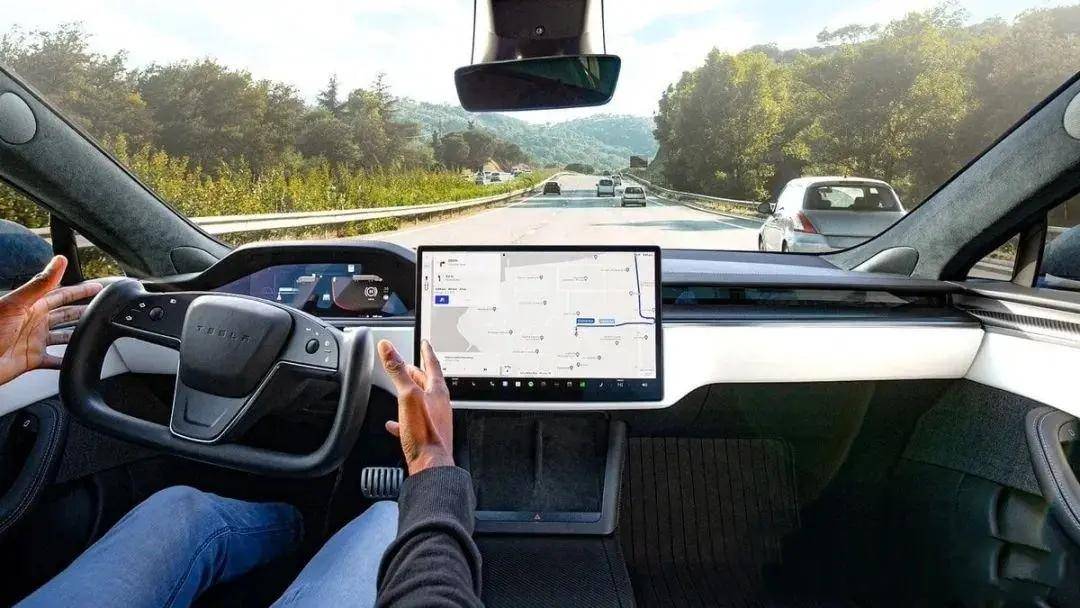
Taking Tesla FSD as an example, its moat is not code but data. By the end of 2025, Tesla's cumulative training mileage had exceeded 7 billion miles, with 4 million mass-produced vehicles continuously uploading real-world data every day. For a second- or third-tier automaker selling several hundred thousand units annually, catching up with the '1%' long-tail challenges is akin to filling the sea with stones.
Reflected in the market, 'high-profile' Qianli Technology is now a minority, as more and more automakers quietly embrace third-party solutions.
A direct example is BYD.
When developing its 'Divine Vision' system, BYD wisely partnered with Momenta, establishing a joint venture called Dipai Intelligent Driving. BYD opened up its vast data pool, while Momenta provided its cutting-edge algorithm models. In 2025 alone, BYD, Yangwang, and Denza accounted for nearly 70% of Momenta's urban NOA market share.
If even an industry leader like BYD chooses to ally with third parties, where does Qianli Technology's confidence lie in challenging Tesla and Huawei ADS?
The answer may lie in the stance of its majority shareholder, Geely Group.
In March 2025, Geely released the Qianli Haohan intelligent driving system, integrating technologies from Qianli Technology and Haohan Intelligent Driving. It offers five levels of intelligent driving solutions—H1, H3, H5, H7, and H9—providing various functionalities such as highway NOA, urban commuting NOA, and map-free NOA. According to media reports, Qianli Haohan has delivered nearly 500,000 units in the past year and plans to exceed 1 million units in 2026.
In other words, for most automakers, without million-level adoption rates, blind self-development will inevitably lead to the 'seesaw effect' trap: Due to insufficient computing power and poor model generalization, engineers must work overtime to fix bugs through code patches.
The problem is that consumer patience is limited. In 2026, there will be no time to tolerate the slow growth of a 'half-baked' system; consumers demand a mature experience that 'works right out of the box and can be used nationwide.' Continuing to 'stubbornly pursue self-development' will only accelerate the path to market elimination.
03 The Endgame of China's Intelligent Driving Industry: Inevitable Centralization and Ecological Integration
When traditional automakers abandon the 'Soul Theory,' the attitudes of new energy vehicle (NEV) startups are somewhat intriguing.
NIO, Li Auto, and XPENG have all built self-developed intelligent driving systems centered around AI chips and large models, successively equipping new models with self-developed chips after 2025. Leapmotor, a sales dark horse, uses Yuanrong Qixing's solution in products like the A10 but, when asked about self-development, responds, 'We still prioritize self-development.'
The reasons are not difficult to explain.
NEV startups were the earliest adopters of intelligent driving, and their intelligent driving capabilities are one of their differentiators compared to traditional automakers. Their first-mover advantage in time has enabled Li Auto, XPENG, and others to offer intelligent driving experiences on par with third parties like Yuanrong Qixing and Momenta.
From another perspective, compared to the third-party teams that have long operated behind the scenes, the intelligent driving systems of NEV startups enjoy higher user recognition. According to Xinluo Intelligent Driving's statistics, XPENG, Li Auto, and Xiaomi rank just behind Huawei ADS and Momenta in urban NOA sales.
Third-party intelligent driving companies are quite optimistic about this landscape.
Horizon Robotics founder and CEO Yu Kai said, 'In the future, 20% of China's automotive intelligent driving will be self-developed, while 80% will rely on suppliers.'
Momenta CEO Cao Xudong holds an even more aggressive view: 'The landscape of China's urban assisted driving will be set by 2026, with only two or three players remaining in the end.'
While these statements may be seen as self-promotional or even 'anxiety-inducing,' they do have underlying logic: Stripped of its flashy marketing veneer, intelligent driving is not a 'soul' meant to showcase individuality and sentimentality but a fundamental 'safety component' akin to ABS anti-lock braking systems and ESP electronic stability programs, pursuing utmost reliability, efficiency, and zero tolerance for errors.
The strong safety attributes dictate that the intelligent driving market cannot be a 'personalized talent show'; it must adhere to fundamental physical laws and engineering standards: Only those with the best algorithms, the most abundant computing power, and the richest data can be providers of the 'intelligent driving base.' This may not be the optimal solution for commercial efficiency, but it represents the greatest responsibility for life safety.
Following this logic, the intelligent driving solutions of NEV startups will either be open to more automakers, like Huawei ADS, or gradually decline under the influence of data and time. An independent and closed ecosystem is unlikely to survive until the end.
Looking back at decades of technological development, the script from a fragmented landscape to 'unification' has played out countless times.
PC-era brands like Lenovo and HP failed to surpass Windows; smartphone brands like Samsung, Xiaomi, and OPPO now uniformly run on Android. Only Apple and Huawei, with their full-ecosystem layouts, have become rare players building their own ecosystems.
The same pattern is destined to repeat in the intelligent driving industry, and 2026, with the rapid popularization of high-level intelligent driving, is likely to be the industry's watershed moment.
Currently, over a dozen automakers promote 'self-developed intelligent driving,' but most have yet to gain user recognition for their capabilities. There are also double-digit third-party teams remaining, but the top three already hold nearly 80% of the market share, leaving narrowing opportunities for others.
Unlike subjective and highly personalized aspects such as seat comfort, interior luxury, and suspension firmness, the usability of intelligent driving systems can be evaluated within just half an hour of a test drive. After all, no consumer is willing to gamble with their safety. Once intelligent driving capabilities emerge as a decisive factor in car purchases, the industry will inevitably face accelerated consolidation.
04 Conclusion
Returning to our initial topic, Zhao Ming's entry into the intelligent driving industry, armed with the fierce, wolf-like aggressiveness characteristic of the consumer electronics sector, marks a positive development for an industry governed by the law of the survival of the fittest.
At the crossroads of the 2026 elimination round, true business acumen lies in humbly embracing ecosystems and focusing resources on areas where one excels and where users can directly perceive value. Honoring pioneers does not mean repeating their mistakes. Standing on the shoulders of giants to see farther is the confidence that Chinese automakers need to truly surpass global competitors in the global market.
-
![]()
Jitian Xingzhou: A Pioneer in Optical Payloads Secures Hundreds of Millions in Series B Funding!
-
![]()
Orders Secured Through to the Second Half of the Year! The Rationale Behind the 'Surge' in Demand for This Company’s Optical-Grade Base Films
-
![]()
Beyond Patents: The Retail Rivalry of Insta360 and DJI Unfolds
-
![]()
180 Billion Market Cap Vanished! How Did Seres Fall So Far?
-
![]()
Blockbuster! Domestic storage takes the global double crown for the first time, from an AI company
-
![]()
China Spearheads Formulation! World's Pioneering Global Technical Regulation for Automated Driving Systems Greenlit and Unveiled
-
![]()
Farewell to Pulsed Support Policies: Three Major Auto Policy Directions from Multiple Departments Take Effect on the Same Day
-
![]()
Embercore AI’s Accelerated Funding: The Robot Industry’s Shift Toward ‘Learning Systems’