Audi E7X vs. Xiaomi YU7: Audi Adopts a Humble Stance, Xiaomi Makes Significant Strides
 05/09 2026
 422
422
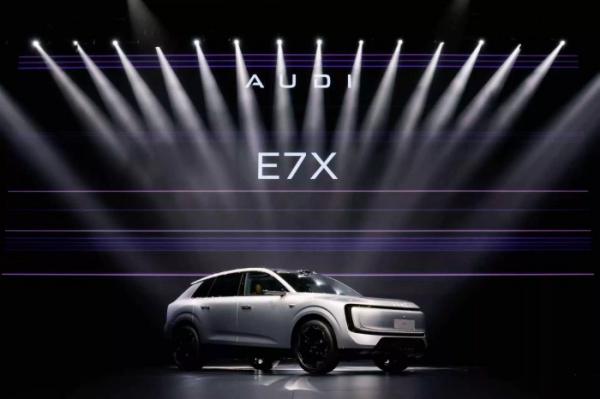
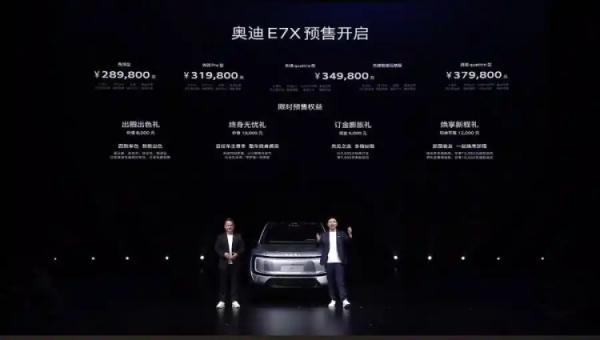
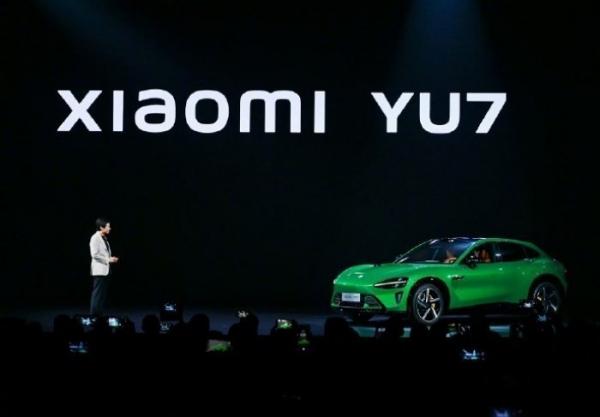
Last night, Audi officially commenced pre-sales for the E7X, with prices ranging from RMB 289,800 to RMB 379,800, a range that substantially overlaps with Xiaomi's YU7 (RMB 253,500-329,900). This price parity has inevitably sparked comparisons, with the hashtag #ChooseAudiOrXiaomiAtSamePrice trending on social media and igniting widespread debate.
In response, SAIC Volkswagen executive Fu Qiang remarked in a media interview, 'The ultimate decision lies with the consumers. We welcome all comparisons, be it regarding who truly dominates the roads, or assessments of design, intelligence, or luxury. We have complete confidence in the Audi E7X.'
In my opinion, this is more than a mere comparison of models; it signifies a direct clash between traditional luxury brands and tech-driven newcomers in the RMB 300,000 all-electric SUV segment. To grasp this phenomenon, let's delve into it through three dimensions:
1. A Nuanced Shift in Market Dynamics: From Benchmarking to Taking the Initiative
Traditionally, new automotive players actively benchmarked themselves against BBA (Benz, BMW, Audi) to demonstrate their capabilities. However, Audi's E7X now directly challenges Xiaomi in terms of pricing and marketing, indicating a subtle reversal in market dynamics. Xiaomi is making significant strides, while Audi seems to be adopting a more humble stance. Fu Qiang's public statement—'We welcome comparisons and have full confidence in the E7X'—conveys two key messages:
① Xiaomi's Growing Market Recognition: Audi's decision to engage Xiaomi directly confirms the latter's rising market prominence. Xiaomi has become a competitor that cannot be ignored, as endorsements from rivals often carry significant weight.
② Traditional Giants' Sense of Crisis and Confidence: Audi's willingness to compete on price reflects its belief that its mechanical prowess and brand heritage remain formidable strengths. It also underscores the urgency of traditional automakers in transitioning to new energy vehicles.
2. Fundamental Differences in Product Philosophies: Mechanical Heritage vs. Tech Ecosystem
This clash essentially pits two distinct automotive philosophies against each other. Consumers are now faced with not just a brand choice but differing visions of what a car should represent. Neither philosophy is objectively superior; demand is simply fragmented across different market segments.
The core distinction between the Audi E7X and Xiaomi YU7 lies in their approaches: the former adheres to a traditional luxury path, while the latter embodies a tech-newcomer ethos. Their selling points naturally diverge—the E7X emphasizes mechanical excellence and refined driving dynamics, while the YU7 focuses on smart ecosystems and extreme performance specifications. Key contrasts include:
① Chassis and Handling: The E7X features an all-aluminum chassis, air suspension, CDC, 14° rear-wheel steering, and quattro all-wheel drive, prioritizing high-speed stability and precise handling. The YU7 offers a sport-tuned chassis, with the Max version accelerating from 0-100 km/h in 3.23 seconds, emphasizing urban agility and explosive power.
② Charging Technology: The E7X supports a 900V high-voltage platform, recharging for 429 km in just 10 minutes, ideal for long-distance efficiency. The YU7 utilizes an 800V platform, with the rear-wheel-drive version offering up to 835 km CLTC range and excellent energy efficiency.
③ Smart Cockpit: The E7X debuts Momenta's L3-level autonomous driving, with interiors highlighting luxury materials and sustainability. The YU7 supports Xiaomi's HyperOS ecosystem, enabling seamless integration between vehicle, phone, and home, with standard laser radar.
④ Social Appeal: Audi, as a century-old luxury brand, naturally serves as a 'social currency' for business receptions and dignified travel. Xiaomi, a symbol of tech trends, generates buzz and appeals to younger demographics.
3. Rational Considerations in Consumer Decision-Making: Scenarios Determine Choice
As the debate intensifies, market perspectives are shifting from spectacle to substance. For consumers, the decision largely depends on usage scenarios:
Scenarios Favoring the Audi E7X:
① Frequent long-distance/highway travel: The 900V platform's charging efficiency, combined with quattro all-wheel drive and a mature thermal management system, ensures superior long-haul stability.
② Pursuit of driving refinement: Valuing chassis controllability at the limit, suspension responsiveness, and braking feel for a 'man-machine unity' driving confidence.
③ Business/social needs: Requiring a vehicle that doubles as a business asset, Audi's brand aura and luxurious interiors still command high recognition in certain contexts.
Scenarios Favoring the Xiaomi YU7:
① Heavy reliance on smart features: As a Xiaomi ecosystem user, HyperOS's 'human-vehicle-home' full-scene integration offers a core experience that traditional automakers struggle to replicate.
② Urban commuting/cost-effectiveness: Primarily for city driving, prioritizing affordability, widespread availability of advanced ADAS hardware (e.g., laser radar), and extreme acceleration.
③ Tech enthusiasm: Viewing the car as a smart mobile terminal, craving the novelty and entertainment of a digital cockpit.
Previously, the RMB 300,000 car market offered only BBA options. Now, newcomers like Xiaomi are empowering consumers with product strength, marking a mature market shift away from brand-centric choices. Luxury brands must now compete on merit—hence Audi's use of hardcore tech like 900V, air suspension, and rear-wheel steering. This ultimately benefits consumers.
In fact, the debate over 'Audi or Xiaomi at the same price' signifies China's automotive market entering a new era of pluralistic coexistence, with no absolute winner. It's akin to choosing between steak and pancakes—neither is objectively superior; it's a matter of personal preference. To me, the E7X is a well-driven, steady traditional luxury car, while the YU7 is a smart, efficient electronic device on wheels.
For consumers, spec sheet victories are theoretical. Test-driving to experience chassis feedback and cockpit interaction often leads to the most authentic decision. After all, 'voting with your feet' yields the truest results. What's your take?
-
![]()
Total Investment Hits Nearly 3.28 Billion! Goertek Launches Mass Production of 12-Inch Transparent Substrate Wafer for AR Glasses’ Micro-Nano Optical Components
-
![]()
Why Is This Precision Optical Film Leader Worth Reevaluating with a Tens of Millions Procurement?
-
![]()
AI Costs Plummet by 90% Over Nine Years: Key Insights from Davos You Shouldn’t Miss
-
Doubao, Your Late-Night AI Companion, Now Eyes Profitability
-
![]()
SRC Empowers SEER Intelligence to Reach a Market Cap of Tens of Billions, Yet Fails to Sustain Profitability
-
![]()
China’s Embodied AI Industry Faces Fierce Domestic Competition, Making Overseas Expansion Essential for Survival
-
![]()
32.8 Billion Yuan Investment! Goertek’s 12-Inch AR Glasses Optical Wafer Base in Lingang Begins Operations
-
![]()
How Far is the All-New Li Auto L8 from Being the Best Five-Seat SUV with In-House Full-Stack Development?