Can Honda’s ‘Shock Therapy’ in China Reverse Massive Losses?
 05/15 2026
 437
437
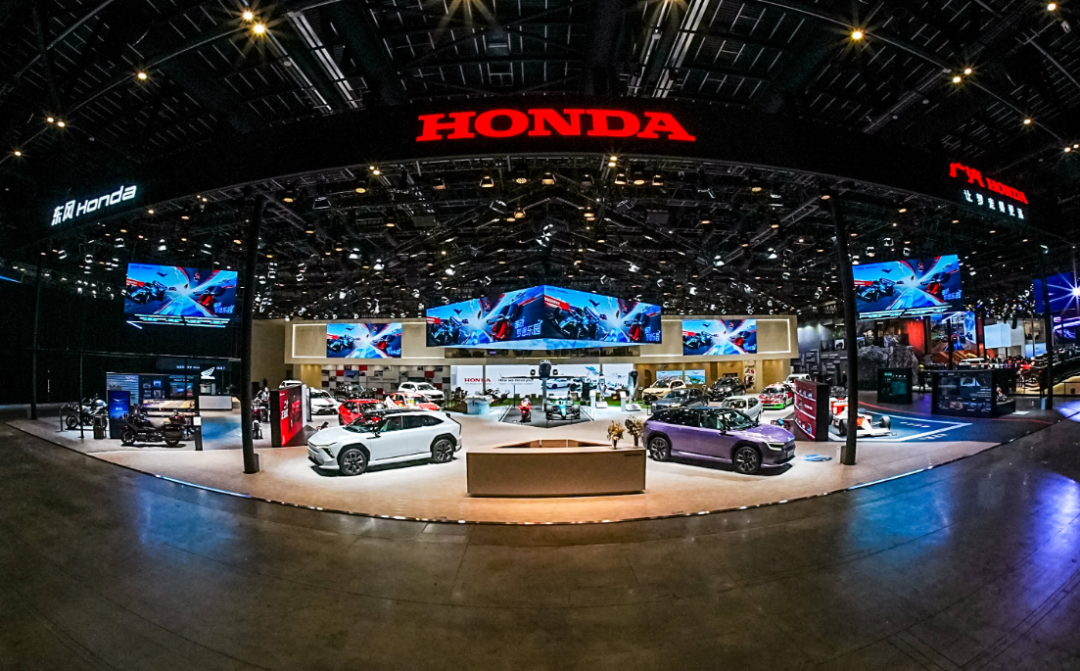
Recently, Honda released its financial results for fiscal year 2025 (ending March 2026), revealing an operating loss of ¥414.3 billion and a net loss of ¥423.9 billion. This marks Honda’s first annual operating loss since its founding in 1948. In response, Honda CEO Toshihiro Mibe unveiled the “2026 Global Business Strategic Plan” at headquarters, outlining a three-phase roadmap to restructure its four-wheeled vehicle business. Facing unprecedented financial turmoil, Honda is urgently seeking a “turnaround” through strategic restructuring.
Divergent Fates Among Japan’s Top Three Automakers
If fiscal year 2025 was a year of collective pressure for Japan’s automotive giants amid multiple “black swan” events, Honda’s performance无疑 (undoubtedly) delivered the heaviest blow. A horizontal comparison of financial reports from Toyota, Nissan, and Honda reveals stark contrasts. Honda has slipped from being one of Japan’s automotive “duopoly” alongside Toyota to the brink of falling behind.
Toyota became Japan’s first company to surpass ¥50 trillion in sales in fiscal year 2025. Despite a 21.5% year-on-year decline in operating profit to ¥3.7662 trillion, it maintained a high-profit margin of ¥3.8 trillion. This resilience, amid U.S. tariffs, Middle East turmoil, and rising raw material costs, underscores Toyota’s top-tier risk resistance and profit moats.
Nissan is enduring a prolonged downturn: a net loss of ¥533.1 billion in fiscal year 2025, adding to a ¥670.9 billion loss in fiscal year 2024, totaling over ¥1.2 trillion in two years. However, its second-half performance improved significantly, with positive free cash flow indicating initial signs of recovery.
Honda’s financial performance is the most alarming. Operating profit plummeted from a ¥1.21 trillion gain in fiscal year 2024 to a ¥414.3 billion loss, a 134% year-on-year decline. Net income also turned from an ¥835.8 billion gain to a ¥423.9 billion loss. Sliding from trillion-yen annual profits to operational losses in just one year is rare in automotive history.
The root cause of Honda’s massive losses lies in strategic electrification adjustments triggering large-scale asset impairments. Financial reports show impairment losses related to electric vehicle (EV) operations reached ¥23 trillion, compounded by model cancellations and development project terminations due to weak North American demand, as well as investment impairments in China amid intensifying competition. These factors collectively eroded Honda’s accumulated profits.
Globally, Honda’s vehicle sales totaled 3.4 million units in fiscal year 2025, down 8.9% year-on-year. While still ranking among the top globally in absolute terms, this marks a clear contraction from its peak of over 4.5 million units.
‘Shock Therapy’ for China Strategy
When examining Honda’s global performance decline, China undoubtedly represents the biggest “bleeding point.” For traditional joint-venture automakers, China was once the most critical “profit cow,” but now it has become the toughest market to conquer.
Latest data from April 2026 is even more shocking: Honda sold 22,600 units in China, a 48.3% year-on-year plunge, nearly halving. Trends show Honda’s Chinese sales have declined for five consecutive years, with no signs of stabilization in 2026. GAC Honda’s April sales dropped to just over 5,000 units, sliding from mainstream joint-venture brands to the fringes.
The reasons behind Honda’s sales collapse in China have been analyzed repeatedly, centered on three overlapping factors: First, a sluggish and directionally hesitant electrification transformation. Second, continuous erosion of its internal combustion engine vehicle (ICEV) base. Third, severe localization deficiencies. With monthly pure EV sales in the hundreds, Honda is virtually “offline” in China’s new energy vehicle (NEV) race.
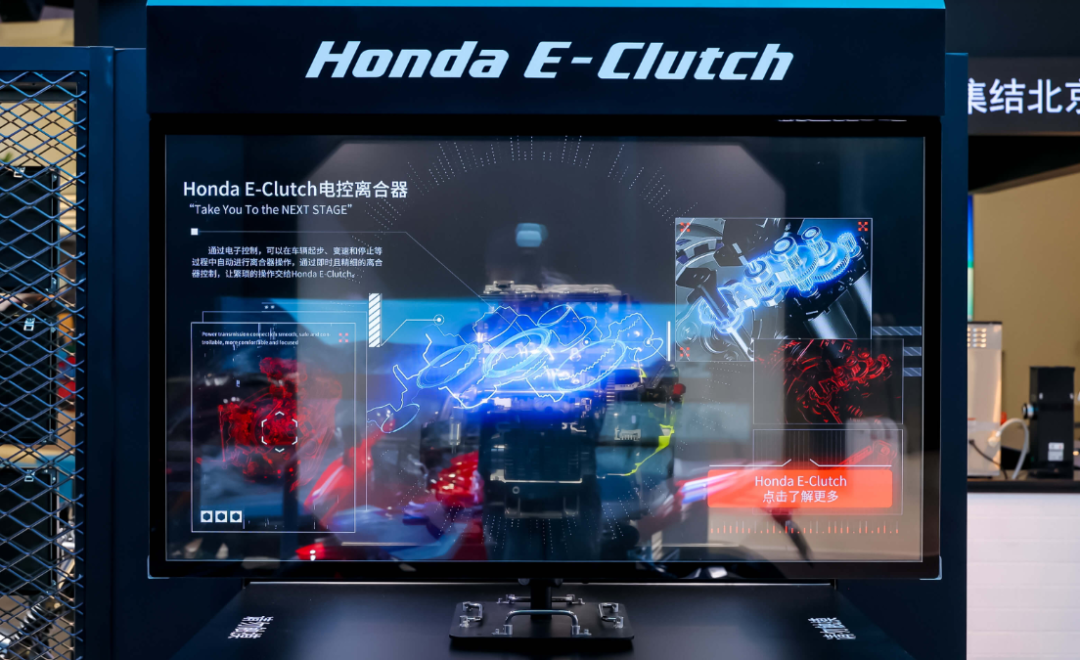
Based on a sober assessment of China’s harsh realities, Honda’s 2026 global strategic plan introduces a new directive for the Chinese market—akin to a “shock therapy” for its China operations.
Toshihiro Mibe stated bluntly that Honda will adopt localized standard components in China, actively leverage local resources in new technology areas, and launch NEV products based on local partner platforms, enhancing product competitiveness and cost efficiency at the “China speed.” This statement carries rich subtext: Honda finally acknowledges that in global automotive manufacturing’s core competition, China’s efficiency advantage is no longer a variable to chase but a technical standard and work paradigm that must be integrated.
The specific implementation plan is striking. According to sources, GAC Honda essentially hit “pause” on new product launches in 2026, abandoning its 2026 product offensive to focus entirely on localized R&D and capacity optimization. The product definition model previously led by Honda’s headquarters is being overhauled: future products, whether global or locally developed models, will be defined by GAC Honda’s Chinese team, with user-based demand research and product planning relying on China’s market foundation.
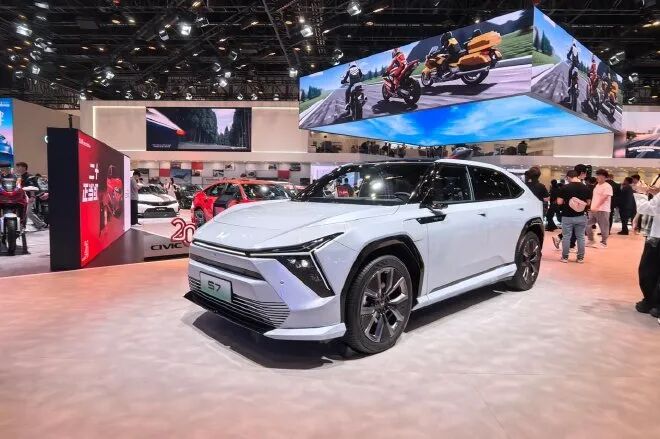
The shift from one-way technology input to a “bidirectional co-creation” R&D model marks the first time Honda has truly ceded product definition rights to local teams in its Chinese joint-venture system.
From 2027 onward, Honda’s product offensive in China will fully unfold. GAC Honda plans to launch three new models spanning ICEV, hybrid, and NEV segments, including a new-generation Accord, a new model equipped with fifth-generation i-MMD hybrid technology, and a self-developed model based on a China-exclusive NEV platform.
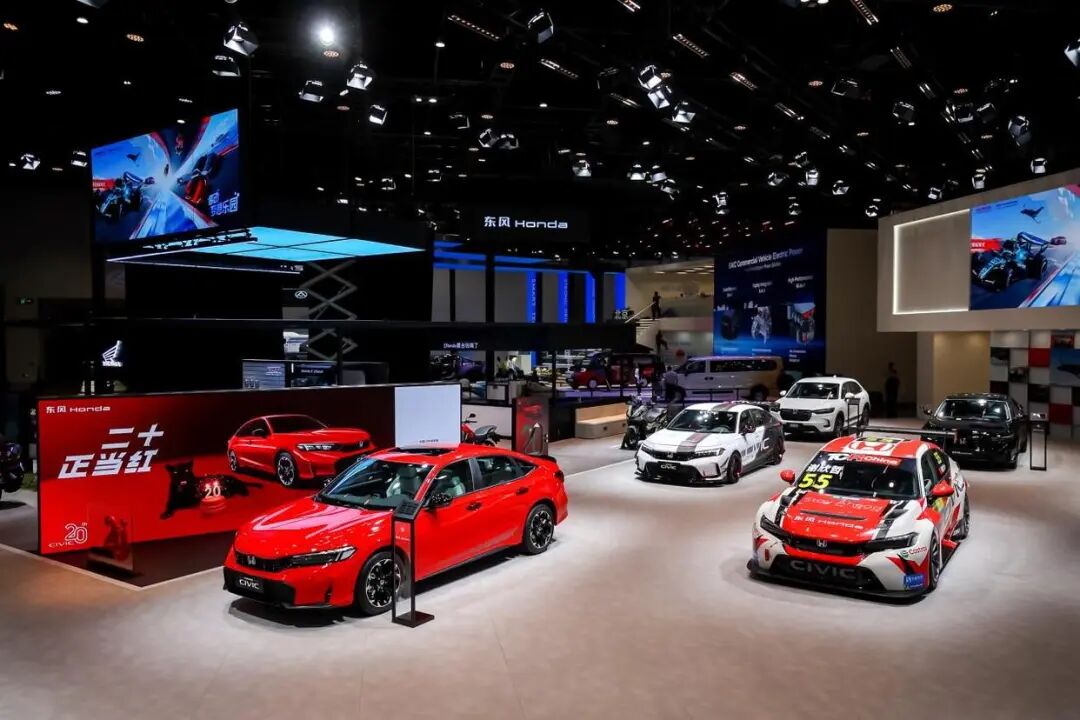
Following Nissan’s example, Honda will jointly develop intelligent cockpits with Huawei’s HarmonyOS and collaborate deeply with Momenta for intelligent driving, signaling a mindset shift in the intelligence race from “I can do it” to “I must rely on China to do it.” Dongfeng Honda is also undergoing profound structural transformations. Its future strategic core is summarized as three key tasks: cost control, fully leveraging technical resources from joint-venture partner Dongfeng Group, and accelerating speed. Dongfeng Honda will intensify joint development with Dongfeng’s platform in the NEV sector, localizing core components for three-electric technologies.
Evidently, before Honda announced its “2026 Global Business Strategic Plan,” its two Chinese joint-venture automakers had already begun taking action. The urgency for Honda’s transformation is clear, with a need to deliver recognizable results to consumers within a year.
Speed is the Key to Breakthrough
Industry analysts argue that while Honda’s global strategy points in the right direction, the core variable determining whether it can escape its predicament is “speed.” The dilemmas facing joint-venture automakers in China have long been diagnosed; the question is whether they can truly “operate.” Joint ventures once reshaped China’s automotive industry with a “technology-for-market” approach, but the situation has now completely reversed.
Chinese brands are using cost-for-technology logic to reverse-engineer their R&D systems onto Japanese automakers. Whether Honda can overcome conflicts between “face” and “substance,” accepting full Chinese team leadership while preserving its brand DNA, requires genuine cultural adjustment.
Additionally, Honda’s significant investment in North America’s hybrid market over the next five years and its development of sub-4-meter mid-size strategic models for India represent pragmatic adjustments based on real demand. However, given Japanese automakers’ many years of experience, juggling three vastly different core markets often leads to resource fragmentation. Whether Honda can truly implement “resource concentration on key markets” over the next three years remains to be seen.
The core message of Honda’s strategic announcement: Restructure its four-wheeled vehicle business over three years, aiming to restore operating profit to its historic peak of ¥1.4 trillion by fiscal year March 2029. However, this goal becomes feasible only if the first truly China-exclusive product launches successfully before the 2027 deadline and achieves impressive sales.
-
Domestic Computing Power Clears a Major Hurdle: DeepSeek Migrates, Meituan’s LongCat Advances
-
![]()
Behind ByteDance’s Massive AI Investment: With Douyin E-commerce Growth Slowing, Can Doubao and Hongguo Offer a Lifeline?
-
![]()
Analysis of the Heated Debate on Doubao’s Charging Model: Short-Term Controversy, Long-Term Rationality
-
![]()
When Machines Learn 'Craftsmanship': How Agent Skills Are Reshaping the World
-
![]()
Pocketing 20 Billion: What’s DeepSeek Founder Liang Wenfeng’s Big Bet?
-
![]()
TikTok砸下250亿美元,全球大厂为何涌向东南亚建机房?
-
![]()
600 Employees, $6.6 Billion: The Pioneering Massive "Cash-Out" in the Large Model Era
-
![]()
Those Predicting China’s EVs Will Follow Japan’s Path Overlook Three Key Factors