TikTok砸下250亿美元,全球大厂为何涌向东南亚建机房?
 05/15 2026
 737
737
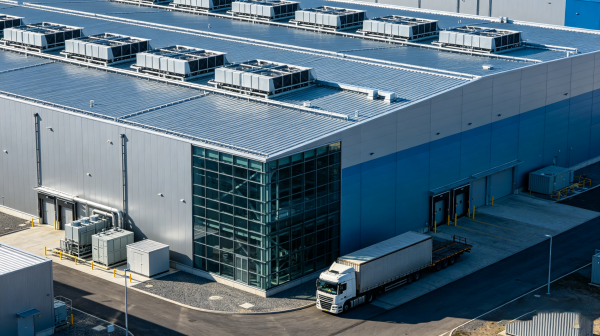
TikTok is ramping up infrastructure deployment in Southeast Asia.
Recently, Thailand's Board of Investment announced the approval of six large-scale investment projects totaling 958 billion Thai baht (approximately $29 billion). The most notable among these is TikTok's massive data infrastructure expansion project in Thailand, involving an investment of 842 billion Thai baht (around $25 billion).
This investment will fund the installation of additional servers in Bangkok, Samut Prakan, and Chachoengsao, along with expanded data storage and processing infrastructure to meet growing digital service demands.
TikTok's investment marks a significant increase from its initial plan announced last year. Previously, TikTok had pledged to invest $8.8 billion in Thailand's digital infrastructure over five years in February 2025. The newly approved $25 billion project nearly triples this commitment, representing TikTok's largest investment in Southeast Asia to date.
Why has TikTok escalated its bet on Thailand from $8.8 billion to $25 billion? Beyond ByteDance, AWS, Google, Alibaba Cloud, and Tencent Cloud are also establishing data centers in Southeast Asia, sparking an infrastructure race centered around computing power.
1. TikTok's Global Data Center Footprint
To understand this $25 billion investment, we must first examine Thailand's significance to TikTok.
TikTok has disclosed that Thailand boasts over 50 million monthly active users, equivalent to roughly three-quarters of the country's population (66-71.5 million).
TikTok Shop continues to deepen its e-commerce penetration in Southeast Asia, hosting over 3 million merchants on the platform.
In Q1 2025, TikTok Shop Thailand achieved $2.5-3 billion in GMV, surging 217% quarter-on-quarter to become the fastest-growing market globally, outpacing the U.S. By Q1 2026, Echotik data showed Thailand's GMV reached $5.2 billion, up 105% year-on-year—maintaining high growth despite slowing from 2025's pace.
Thailand represents one of TikTok's fastest-growing and most fiercely competitive core markets.
Behind these numbers lies genuine demand for computing power.
TikTok Shop's product recommendation algorithms, ad bidding systems, real-time logistics coordination, and live-stream content distribution all require exceptional data processing speed and stability.
Meanwhile, Thailand's Personal Data Protection Act (PDPA) took full effect in 2022, mandating that citizens' personal data be stored domestically or in equivalent jurisdictions with adequate protections.
Market demand and regulatory requirements make large local data centers indispensable. Over the past few years, ByteDance has accelerated overseas data center construction.
For the U.S. market, TikTok adopted a joint venture hosting model. In December 2025, TikTok established "TikTok U.S. Data Security Joint Venture LLC" with Oracle, Silver Lake, and UAE-based MGX. All user data is stored on Oracle-operated U.S. servers, while ByteDance retains algorithmic IP and commercial operational rights.
In Europe, ByteDance advanced "Project Clover," storing existing European user data across three third-party data centers in Norway and Ireland. Finland's first self-built data center is slated to open by late 2026, with a second facility in Lahti launching in 2027—initially offering 50MW capacity, expanding to 128MW long-term. European data centers primarily aim to comply with GDPR.
However, Southeast Asia represents a growth-driven logic.
The Thailand project dwarfs investments in Europe and the U.S., reflecting Southeast Asia's mature revenue contribution to TikTok. According to Momentum Works' February 2026 report, TikTok Shop's global GMV reached $64.3 billion in 2025 (+94% YoY), with Southeast Asia contributing $45.6 billion (+100% YoY) and the U.S. $15.1 billion (+68% YoY).
Markets like Thailand, Indonesia, Vietnam, and the Philippines are growing rapidly. Building proprietary large-scale data centers locally reduces live-stream latency, enhances recommendation system responsiveness, and ensures compliance with local data regulations.
While ByteDance has primarily relied on leasing third-party data centers domestically and overseas, escalating e-commerce demands for latency control and compliant storage now make self-built data centers essential.
Thailand's $25 billion project marks ByteDance's strategic shift from asset-light to asset-heavy overseas operations, representing one of the largest single overseas data center investments by a Chinese internet company.
2. Why Tech Giants Flock to Southeast Asia for Data Centers
TikTok's $25 billion investment in Thailand stands out, but it's merely the latest chapter in a global infrastructure boom. During the same period, major cloud and internet companies worldwide accelerated digital infrastructure expansion in Southeast Asia.
According to Arizton's April 2026 report, Southeast Asia's data center construction market attracted $6.59 billion in investment in 2025, projected to reach $17.65 billion by 2031 (17.83% CAGR). Cumulative investments from 2026-2031 are expected to exceed $86 billion. Malaysia, Indonesia, Thailand, and the Philippines account for over 85% of the region's planned IT load capacity.
Currently, Southeast Asia hosts approximately 290 operational data centers, with 135 more planned or under construction, primarily in Malaysia, Singapore, and Indonesia.
U.S. cloud giants were early entrants.
AWS's Thailand presence dates back to 2022, with a $5 billion investment pledge over 15 years. In January 2025, AWS launched its Asia Pacific (Thailand) Cloud Region—the country's first global top-tier cloud region—comprising three availability zones.
Google announced a $1 billion investment in data centers in Bangkok and Chonburi, co-developing sovereign cloud services with local partner Gulf Edge. Microsoft similarly unveiled plans for new regional data centers in Thailand to expand cloud and AI infrastructure.
Chinese cloud providers quickly followed suit.
Alibaba Cloud was the earliest Chinese entrant in Southeast Asia, with nodes in Malaysia and Indonesia. In February 2025, Alibaba Cloud opened its second Thai data center, serving local enterprises and Chinese companies going global.
Tencent Cloud prioritized different markets, announcing a new availability zone in Frankfurt, Germany, while advancing overseas rollouts of its Hunyuan large language model and AI services. Nonetheless, it maintains Southeast Asian nodes.
Huawei established the ASEAN region's first 5G innovation center in Thailand, deepening local digital infrastructure collaboration.
Three key drivers fuel this Southeast Asian data center expansion:
First, soaring AI computing demand. Large model training and inference require high-density computing, accelerating data center construction. Southeast Asia's data center market is transitioning from cloud computing hubs to AI computing nodes, with liquid cooling, high-density racks, and green power becoming standard for new projects.
Second, rigid data localization regulations. Following the EU's GDPR, Thailand's PDPA took effect in 2022, while Indonesia and Malaysia enacted or revised data protection laws. Local data storage mandates render data centers in China and the West inadequate for Southeast Asian markets, making local construction a compliance prerequisite.
Third, circumventing high-end chip restrictions. U.S. export controls on advanced AI chips to China have prompted some Chinese firms to deploy computing power in Southeast Asia for model training and application deployment.
Undeniably, domestic chips have matured for AI inference tasks. Huawei's Ascend leads with 812,000 units shipped, followed by Alibaba's T-Head, Baidu's Kunlunxin, and Cambricon. By 2025, domestic AI accelerators captured 41% of China's market.
However, gaps persist in training chips. To match OpenAI, Google, and Meta's high-end training capabilities, Chinese firms must deploy clusters in countries with relaxed high-performance chip policies.
Southeast Asian nations like Malaysia and Thailand, which fully permit high-end chips, have become critical breakthroughs for Chinese firms to alleviate training chip supply constraints.
According to The Wall Street Journal's March 2026 report, ByteDance is partnering with Southeast Asian cloud provider Aolani Cloud to deploy approximately 500 NVIDIA Blackwell computing systems in Malaysia, totaling around 36,000 B200 chips with hardware costs exceeding $2.5 billion.
In this wave, Southeast Asia has evolved from a regional market battleground to a strategic computing power stronghold in the AI era.
-
![]()
AI Giants Start Borrowing to Fuel Computing Power Race
-
ByteDance Initiates Largest B2B Structural Adjustment, This Time It's Truly Different
-
![]()
Let's Talk About Kingsoft Office's Mid-Year Outlook and the True Strength of Its AI-Powered Office Solutions
-
Despite 150 Million Users, Struggles Persist: AIShige Faces Tough Competition from Seedance and Kling in AI Video Monetization
-
![]()
Ensuring Safe Gear Shifting in the Automotive Industry: Transitioning from 'Product Oversight' to 'Full-Chain Governance'
-
![]()
Net Profit Soars to $133.7 Billion! Azure Revenue Tops $100 Billion, with AI Fueling Microsoft's Growth
-
![]()
Before 6G Hits the Market, the U.S. Forges a 'Rules Alliance': What Challenges Await Chinese IoT Enterprises?
-
![]()
Intelligent Driving's 'Little Blue Light' Faces Ban: Night Glare and Cut-in Risks Prompt Official Action