600 Employees, $6.6 Billion: The Pioneering Massive "Cash-Out" in the Large Model Era
 05/15 2026
 446
446
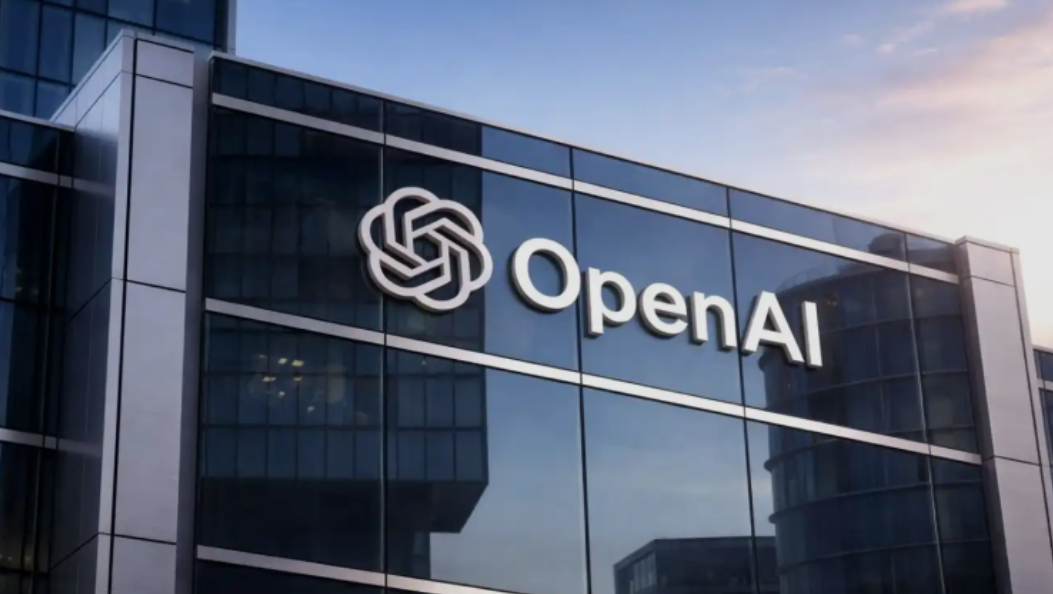
Throughout Silicon Valley's extensive history of wealth generation, no company has facilitated such a massive cash-out of wealth for a large number of employees in a single pre-IPO event.
According to a May 10 report by The Wall Street Journal, in October 2025, over 600 current and former employees of OpenAI collectively sold shares worth $6.6 billion through secondary markets. Approximately 75 of them reached their individual selling limits of $30 million, while the remaining roughly 525 employees cashed out an average of approximately $8.3 million each.
This event marks the first systematic "major cash-out" in the AI era.
The traditional social contract in Silicon Valley was straightforward yet protracted: join a startup, work diligently for seven years, await the IPO, wait for the lock-up period to end, and then cash out.
When Google went public in 2004, it created over a thousand paper millionaires. However, these employees could only access their wealth after the lock-up period expired. The same scenario applied to Facebook. Even the most robust B2B IPOs of the past decade, such as Snowflake, Datadog, and MongoDB, produced only a handful of multi-millionaires after the lock-up period, not hundreds.
OpenAI bypassed all these traditional steps.
The scale of this transaction exceeded any formal IPO in the U.S. market in 2024. The largest IPO that year, Lineage, raised just $4.8 billion. An AI company achieved a "shadow IPO" through a single internal share transfer.
The rules for this liquidity event were remarkably simple: employees could sell their shares only after holding them for two years. This meant that a significant number of employees who joined after the release of ChatGPT converted their paper wealth into actual bank balances for the first time in this transaction. Some of them had only been with the company for two years but received cash returns that typically take entrepreneurs a decade to achieve.
For OpenAI, this was one of the most direct methods to retain talent. Competitors were aggressively poaching employees with lucrative offers. According to previous reports, Meta offered top AI researchers a compensation package of $300 million over four years, along with signing bonuses of up to $100 million. OpenAI's response was clear-cut: we don't make employees wait for an IPO. Here, after two years of work, you can take away $30 million in cash.
However, problems ensued. The cash-out opportunity could retain some employees but would inevitably drive others away.
This batch of transactions took place when the company was valued at around $400 billion. Less than six months later, by March 2026, OpenAI secured $122 billion in financing, and its valuation soared to $852 billion. Employees who had been with the company since 2019 saw their shareholdings appreciate more than a hundredfold. Those who cashed out heavily before this round of valuation increases voluntarily relinquished decades of potential fair value revaluation gains; those who held back during the cash-out window, awaiting the next private equity round, faced the risk of sudden changes in the company's fundamentals.
This is the profound dilemma that emerged after the first wave of cash-outs. Silicon Valley has indeed grappled with the issue of employees getting rich and leaving after IPOs in the past—Google was concerned about a "brain drain" when it went public. But OpenAI faces a more complex challenge: a group of people achieved financial freedom before an IPO, and competitors could trigger a wave of departures with offers that are even a fraction smaller than their current equity stakes. The only potential countermeasures might be an even more extreme sense of mission or a more thorough cultural cohesion.
In contrast to OpenAI is Anthropic.
Anthropic also facilitated an employee secondary sale in April 2026 at a pre-money valuation of $350 billion, but the scale was significantly smaller than OpenAI's: investors wanted to purchase more shares from employees, but the employees were reluctant to sell.
On one hand, there's a rush to cash out; on the other, there's a reluctance to sell shares. The two AI labs have made starkly different private bets on their own futures. These two distinct employee behaviors correspond to two different company valuation narratives.
Because there's another, even more conspicuous narrative—one derived from financial fundamentals.
OpenAI's CFO, Friar, publicly acknowledged that the company's annualized revenue surpassed $20 billion in 2025, up more than 230% from $6 billion in 2024. Monthly revenue is around $2 billion, with over 900 million weekly active users. However, Goldman Sachs pointed out that its cash burn in 2026 is expected to be around $7 billion to $17 billion. Other estimates suggest full-year revenue of about $13.1 billion and losses of about $8 billion in 2025; losses are expected to reach $14 billion in 2026, and cash flow might not turn positive until 2030. The company is also burdened with a long-term clause to pay Microsoft 20% of its revenue until 2032; this expenditure is expected to exceed $13 billion in 2026 and 2027 alone.
Now, consider Anthropic. Its annual recurring revenue (ARR) was about $9 billion at the end of 2025, $14 billion in February 2026, $19 billion in March, $30 billion in April, and $44 billion in May. Its inference gross margin rose from 38% to over 70%. The number of enterprise clients spending over $1 million exceeded 1,000, a sevenfold increase over the past year. Its relative share of enterprise AI spending jumped from about 10% in early 2025 to over 65% in February 2026. The company expects to become profitable by 2028.
OpenAI's valuation is anchored at one end to the valuation surge fueled by financing narratives and at the other end to the risks of talent drain and multi-year financial deficits following the massive cash-outs. It's akin to pressing both the accelerator and the brake simultaneously—every meter of forward momentum consumes the organization's internal resolve.
Greg Brockman disclosed that he holds shares worth about $30 billion. These $30 billion, along with OpenAI's ambition for a $1 trillion IPO, have become targets of Elon Musk's lawsuit.
This is no longer just a battle of AI code. It's a battle of AI capital, the most expensive human nature experiment in San Francisco. When billions of dollars flow from paper into real bank accounts, from contract terms into single-family homes in the Bay Area hills and charity lists for DAF funds, people finally realize: the most extreme algorithms often lie not in the models but in people's calculations of greed and fear.
When algorithms get too close to power and money, they cease to be pure algorithms anymore.
-
![]()
From Energy Conservation and Carbon Reduction to AI Decision-Making: GECON East Intelligence and Chery Group Explore a New Green and Smart Paradigm for Automobile Manufacturing
-
![]()
WAIC 2026 Observation | AI Accelerates Towards the Core of Industries, Industrial AI Enters a Critical Phase
-
![]()
Volkswagen China Fires the First Shot in Foreign-Funded 'White Box Delivery'!
-
![]()
AI Agent Smartphones: The Next Competitive Edge Transcends Large Models
-
![]()
Over 880 Million Yuan Worth of Orders Unveiled, Bidding Launched for Shenzhen Eastern Public Transport
-
![]()
Tesla's Robotaxi Hits the Road: A Monumental Gamble with an Uncertain Future
-
![]()
Ford and Geely Forge New Joint Venture in Spain, Sidestepping Changan and JMC
-
![]()
199 RMB! Godox's First Camera Review: Subpar Photography, Transparent Viewfinder Frame is the Highlight