China's Robotaxi: Don't Rush to Talk About Profitability
 05/18 2026
 433
433
Abstract: Rising Revenues but Falling Stocks—Is It Time to Buy the Dip on China's Robotaxi Future?
Source: Chaoyang Capital Theory
The 2026 tech bull market is highly anticipated by countless investment bank research reports. Morgan Stanley has positioned this year as the 'singularity' moment for autonomous driving, while institutions like CITIC Construction Investment straightforward (directly state) that this will be the first year of commercialization for driverless technology.
When an industry is slapped with inflection point labels at every turn, it often means the reality has yet to materialize—and profitability remains a distant prospect.
On May 13, autonomous driving technology company WeRide (NASDAQ: WRD, HKEX: 0800) released its Q1 2026 financial report.
The report showed WeRide's revenue at RMB 114 million, up 58% year-on-year; gross margin at 35%, holding steady at a high industry level; net loss at RMB 389 million, nearly flat year-on-year, but operating losses narrowed further, reflecting improved operational efficiency and cost control.
Looking at revenue and gross profit, WeRide demonstrates the high-growth characteristics of an emerging industry. However, following the release of these financials, WeRide's Hong Kong-listed stock price fell for two consecutive days, accumulating a year-to-date decline of over 12%.
Similarly, Pony.ai's seventh-generation Robotaxi in Shenzhen generates a net daily profit of RMB 338, with 26 orders on a single day during the Spring Festival, validating the profitability of L4 autonomous travel. Yet, the company's stock price has plummeted by over 40% year-to-date.
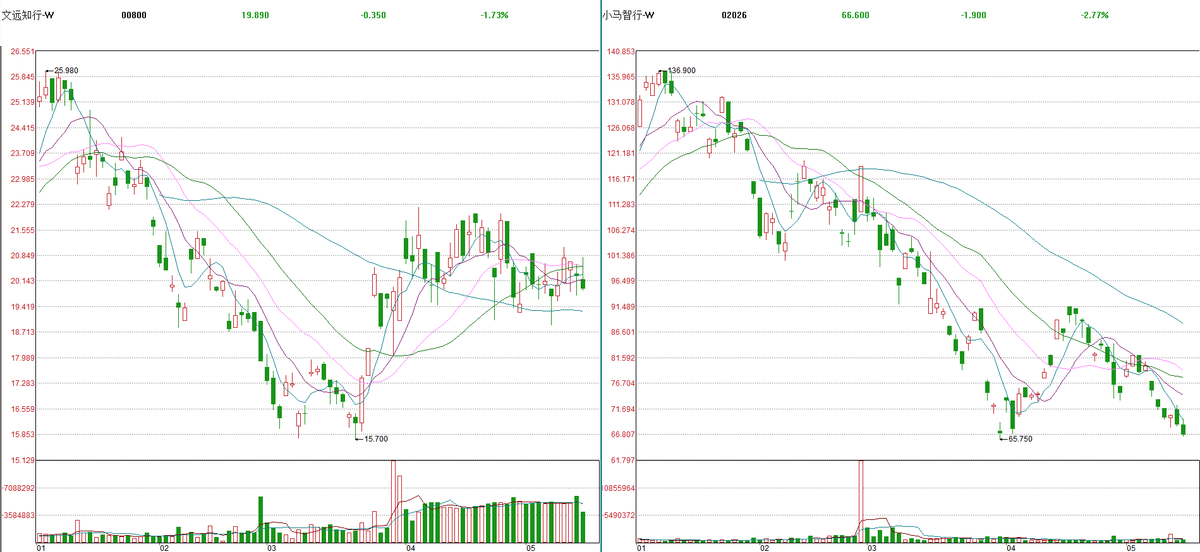
Stock Price Daily K-Line Chart: WeRide-W (left), Pony.ai-W (right)
Rising revenues and falling stock prices mirror the experience of past new energy vehicle (NEV) upstarts. The autonomous driving industry is booming on the operational front but entering the most grueling phase of commercial validation in the capital markets.
Shifting from a technical narrative to a commercial one, China's intelligent driving sector in 2026 is a race to see who can move fastest and survive longest. Capital is waiting to see just how large the disconnect is between technology and market demand—and who can bridge it first.
Why Is the Market Indifferent to Revenue Growth?
A closer look at WeRide's seemingly solid financials reveals why the market remains unimpressed.
R&D expenditure reached RMB 363 million, up 11.5% year-on-year, accounting for 318% of total revenue.
In plain terms, for every RMB 1 earned, RMB 3 is burned on R&D. WeRide is still in a critical phase of technological breakthroughs.
The company's current core logic relies on L2++ ADAS solutions for short-term cash flow while using Robotaxi to sustain L4-level exploration. This 'dual-track' approach aims to balance both sides, but the issue lies in the significant gap between L2++ revenue growth and L4 R&D investment.
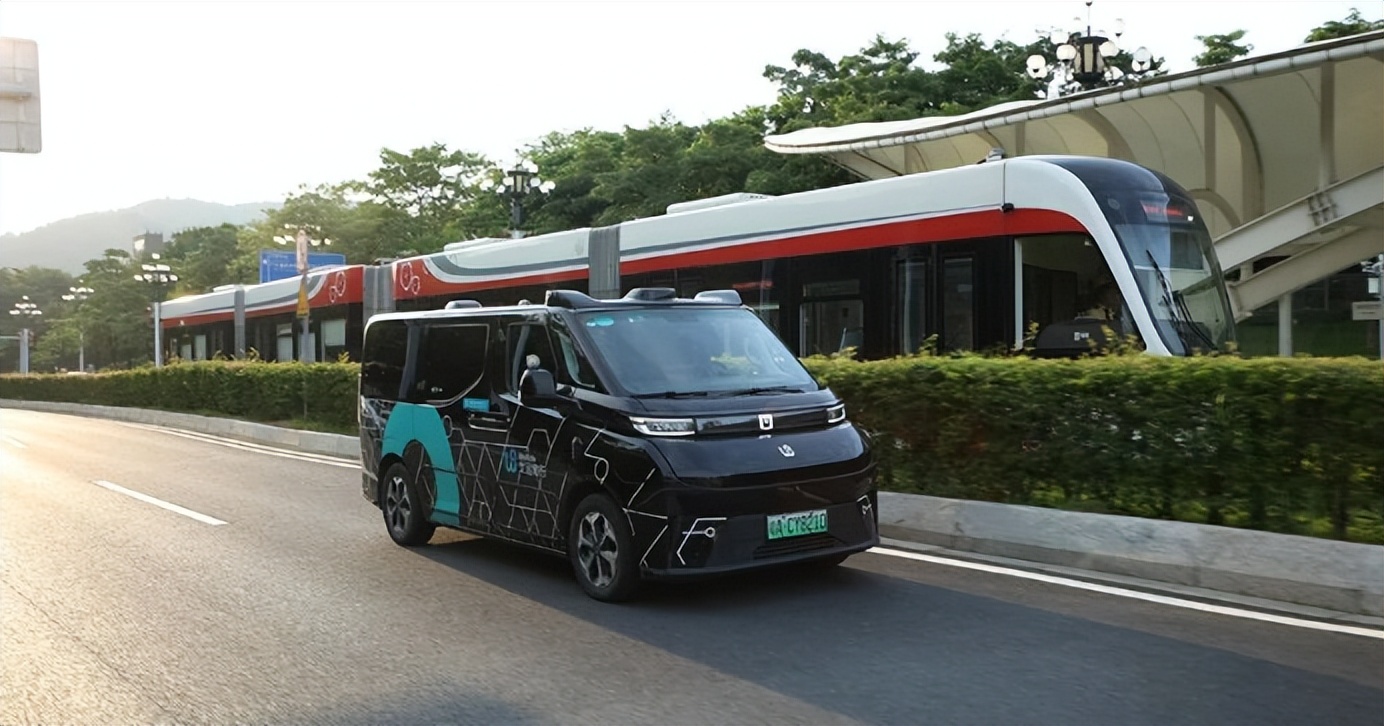
Iterations of end-to-end large models, establishment of data collection systems, and continuous optimization of underlying system architectures make it impossible to contract R&D investment in the short term.
Meanwhile, future fleet expansion investments also worry the market.
The global Robotaxi fleet stands at around 1,300 vehicles, with domestic per-vehicle daily orders exceeding 17, peaking at 28. Utilization rates are rising, but costs from hardware depreciation, safety officer staffing, and operational scheduling keep true per-vehicle profitability out of reach.
Forget WeRide, which hasn't yet validated its UE model (unit economics). Even Pony.ai, which has achieved per-vehicle profitability in Guangzhou and Shenzhen, has seen its stock price collapse. Why? Because even immediate validation of UE model replicability cannot solve the issue of massive company-wide investments.
Achieving positive UE is just the first step on a long march. Fleet expansion and entry into new cities will keep the company in a 'money-burning' state overall due to enormous fixed-cost investments.
Notably, Robotaxi has just entered a 'Warring States' phase, with fierce competition ahead.
XPENG Motors officially established its Robotaxi business unit in March 2026, planning to launch passenger demonstration operations in the second half of the year. Qianli Technology aims to roll out dedicated Robotaxi vehicles and integrated solutions by 2027. Qingzhou Zhihang has begun planning small-scale pilots in 2026 and large-scale deployments in 2027.
Not to mention Baidu's Apollo Go, which operates in 26 global cities with over 20 million trips completed.
With so many contenders, the domestic Robotaxi track may not be as vast as imagined.
According to estimates by China Merchants Bank Research Institute and other institutions, the existing fleet of ride-hailing and taxi vehicles in China's first- and second-tier cities stands at approximately 4.3 million to 5 million units. Even by 2030, optimistic market penetration forecasts for Robotaxi hover around 5%-10%—equating to a maximum of several hundred thousand units.
The travel market is relatively mature. Domestic ride-hailing capacity is already oversupplied, with saturation warnings issued in multiple regions. Robotaxi deployments at scale have not created significant incremental demand.
So, it's not that WeRide's financials are poor.
The stock price decline, despite revenue growth, primarily reflects capital market concerns about future money-burning expansion.
From a capital perspective, Robotaxi missed the tech frenzy era of hot money inflows. In the current macro environment, investors prioritize tangible cash flow and sustainable profitability—even AI companies are judged by annual recurring revenue.
For hardware-heavy, 'high-investment, long-cycle' tech firms like WeRide and Pony.ai, focusing solely on the domestic market and current financials naturally subjects them to greater valuation pressure and stock price volatility.
Rational Valuation Anchors: Focusing on Global First-Mover Advantages
The full-scale rollout of high-level autonomous driving is inevitably a long-term story.
Expecting substantial short-term investment returns is unrealistic. By analogy with NVIDIA, the current autonomous driving industry roughly aligns with the infrastructure investment and ecosystem-building phase around 2010-2015.
For now, securing market dominance is more critical for future takeoff than profitability. On this front, Chinese autonomous driving players shine brightly.
In 2026, while Waymo remains cautious and Tesla's Robotaxi layout (layout) is restrained, Chinese Robotaxi players have become the most aggressive global expanders.
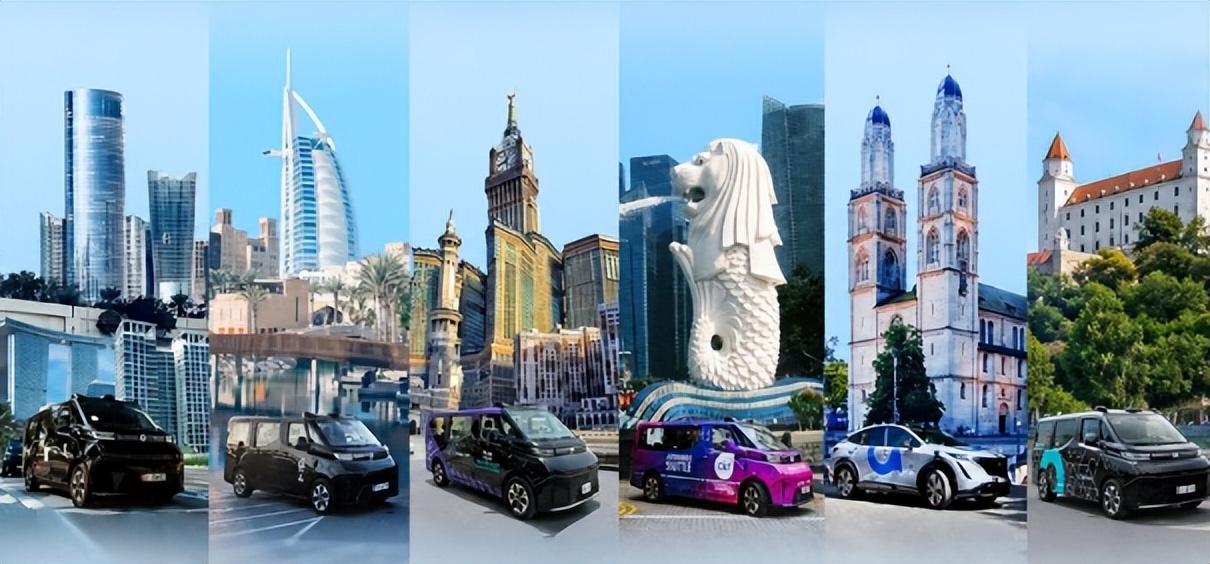
WeRide is accelerating its rollout across the Middle East, Southeast Asia, and Europe. By the end of Q1, WeRide held autonomous driving licenses in eight countries: China, Switzerland, the UAE, Singapore, France, Saudi Arabia, Belgium, and the US. By 2027, it plans to deploy at least 1,200 Robotaxis in the Middle East alone.
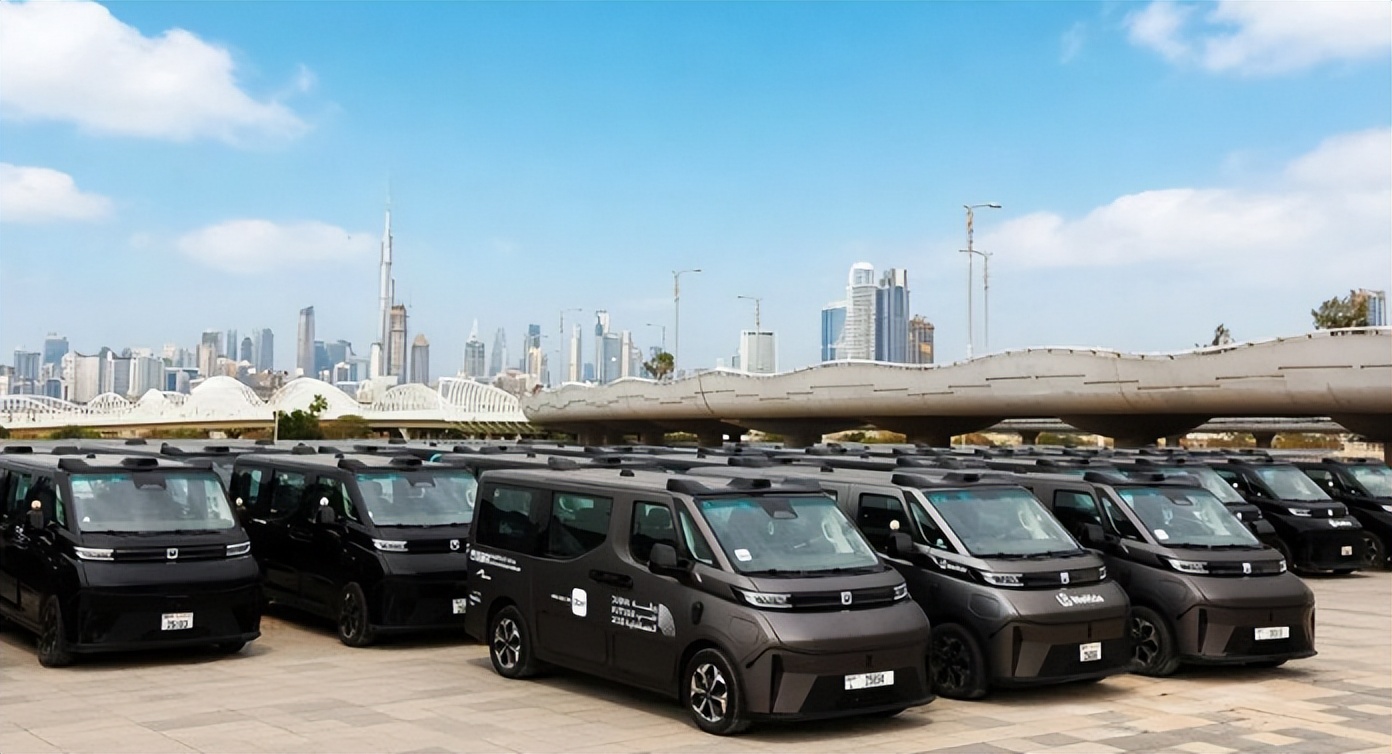
Pony.ai is equally active. Globally, it plans to deploy over 3,000 Robotaxis across 20+ cities by 2026, with overseas cities accounting for nearly half.
Adding Baidu's Apollo Go overseas layout (layout), it's clear that Chinese Robotaxi companies' outbound moves are highly concentrated and strategically targeted: Dubai, Abu Dhabi, and Riyadh in the Middle East; Singapore in Southeast Asia; and Croatia and Slovakia in Europe.
These markets are chosen for two main reasons.
First, these countries are aggressively pursuing transportation electrification and intelligence transitions, with urgent demand and open attitudes. For example, Dubai has set a hard target of 25% autonomous travel by 2030. Chinese companies excel in urban transportation operations.
Many view China's Robotaxi go overseas (going global) as mere technology export, but it's more complex. Once autonomous driving hits the roads, it becomes a city-wide public issue akin to water supply, power, or subway systems.
Chinese companies, honed in the world's most complex urban traffic environments, possess superior adaptability advantages over US firms when deployed in the Middle East and Southeast Asia.
Consider Tesla's FSD struggles in China, where urban intelligent driving functions have delayed deployments and required fan adaptation.
Second, it's about staking claims before US players arrive.
Undoubtedly, the future autonomous driving landscape will be dominated by China and the US.
Chinese firms' core strength lies in their supply chain, excelling in cost and scalability. Baidu's sixth-generation driverless vehicle, through localized supply chains, has slashed per-unit costs to just over RMB 200,000—about one-fifth of Waymo's vehicle costs.
This enables Chinese players to 'stake claims' in emerging markets before US giants fully deploy.
Of course, as pioneers, they face numerous challenges.
Overseas operations require additional localization adaptations, compliance costs, and government relations maintenance. This essentially trades higher management complexity for greater market space.
The window of opportunity won't stay open long. Waymo and Tesla are also expanding globally. How long China's first-mover advantage lasts depends on the next few years.
Thus, Chinese intelligent driving can afford to delay overall profitability discussions. To nurture a future ecosystem giant, enduring the investment phase is inevitable—for both companies and investors.
Regardless, in this tech transformation, Chinese firms increasingly exhibit a 'born global' trait, fueling imagination for future valuations.
Long-Term Perspective: How Should China's Robotaxi Be Priced?
At this inflection point from technical validation to commercial rollout, market disagreements are natural. Valuations for China's Robotaxi industry are undergoing structural shifts.
Historically, the market valued autonomous driving companies based on road test mileage, license counts, and quarterly loss reductions.
But by 2026, as the industry enters scaling commercial operations and global expansion—much like NIO, XPENG, and Li Auto in their heyday—valuation logics have begun to diverge.
Consider WeRide, whose core narrative is 'global mobility operator,' with technical services also catalyzing stock prices.
By 2027, the Middle East is expected to contribute over 30% of total revenue, with the fleet expanding from ~1,300 vehicles in Q1 to 2,600 by year-end, ~30% deployed overseas.
Deep ties with Uber and Grab help WeRide clear market access and fleet integration hurdles.
Overseas expansion will be key to its revaluation.
Mainstream brokerage rating adjustments after WeRide's Q1 earnings reflect this revaluation trend. For example, Bank of America Securities raised WeRide's target price and 2026-2028 sales forecasts, citing accelerated overseas Robotaxi rollouts and a strong partner ecosystem.
Note that last point: a strong partner ecosystem. In April, WeRide's collaboration with GAC Aion launched the Aion N60, while WRD 3.0 has secured nearly 30 model designations from OEMs like GAC and Chery—critical factors for future growth.
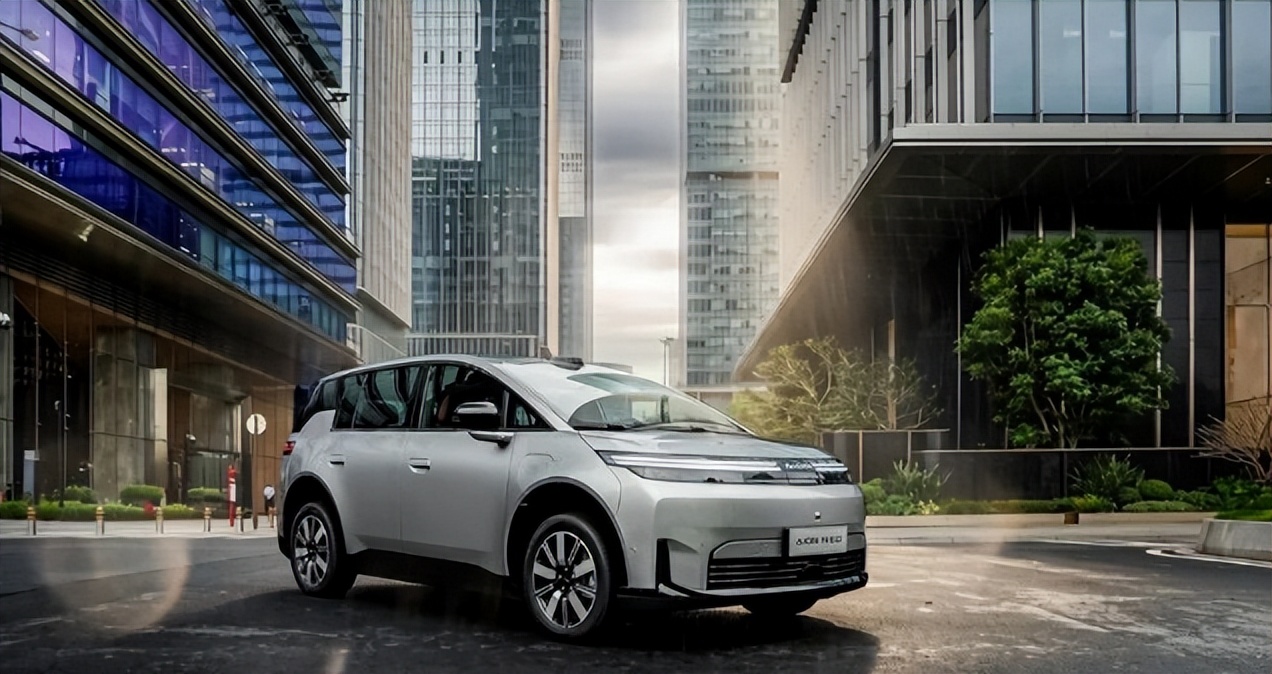
Now, Pony.ai, which pursues a dual commercialization track of Robotaxi + Robotruck.
Robotaxi has achieved per-vehicle monthly profitability in Guangzhou and Shenzhen, targeting global deployment in 20+ cities and a fleet exceeding 3,000 vehicles by 2026.
Robotruck revenue reached RMB 284 million in 2025, becoming a stable cash flow source. With 2027 fully driverless vehicle costs dipping below RMB 230,000 and gross margins climbing from 9.2% to 18.4%, improvement trends are clear.
Finally, Baidu's Apollo Go, through a 'self-operated + platform aggregation' dual-line model, is accelerating its domestic network rollout.
Cost advantages, coupled with Baidu's traffic entrance (entry points), position Apollo Go to scale faster domestically.
Multiple top-tier investment banks have issued dense ( dense ) research reports defining 2026-2027 as the critical inflection point for the Robotaxi industry, transitioning from 'demonstration operations' to 'initial industrial landscape formation.'
WeRide's global positioning, Pony.ai's dual-track approach, and Baidu Apollo Go's domestic first-mover and traffic advantages will all be tested during this 2026-2027 window.
Currently, the entire Robotaxi sector is in a correction phase, with the market awaiting operational data over the next few quarters.
For companies that validate UE, expand globally, and build ecosystems, today's prices may prove to be just another undervalued starting point in hindsight.
-
![]()
A 2 Billion Yuan Wager on Computing Power Leasing: SiE Consulting's Bold Leap into Cross-Border Transformation
-
Analysis | A 4-month-old Startup Valued at $4 Billion: What's Behind Google and NVIDIA's Simultaneous Investments in 'Self-Learning' AI?
-
Balancing Compliance and AI Innovations: How Long Can Kuaishou Tread the Tightrope?
-
![]()
Anthropic Releases Report Detailing Two Potential Scenarios for Global AI Leadership by 2028
-
![]()
Breaking News! Major Leadership Shake-up at OpenAI: ChatGPT and CodeX Set to Merge, Heralding the Super AI Agent Era?
-
Navigating Compliance and AI Innovation: Can Kuaishou Maintain Its Precarious Balance?
-
![]()
Kuaishou’s AI Video Division Kling Targets $20 Billion Valuation Amid Key Founder’s Move to Alibaba
-
![]()
Breaking News! ChatGPT Unveils AI Financial Management, Sparking Outrage Among U.S. Netizens