Nissan Faces 1.2 Trillion Yen Loss Over Two Years, Stakes Its Future on the Chinese Market
 05/22 2026
 402
402
Introduction
This is a high-risk strategy, placing the company's destiny in the hands of the world's most fiercely competitive market.
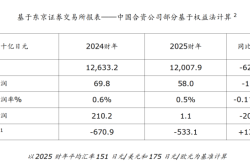
On May 13, 2026, Japanese automotive powerhouse Nissan Motor unveiled its annual financial results for the 2025 fiscal year (spanning from April 2025 to March 2026). To label the report as 'startling' would hardly be an overstatement: the company reported a staggering net loss of 533.1 billion yen (roughly equivalent to RMB 22.9 billion), marking its second consecutive fiscal year of significant losses.
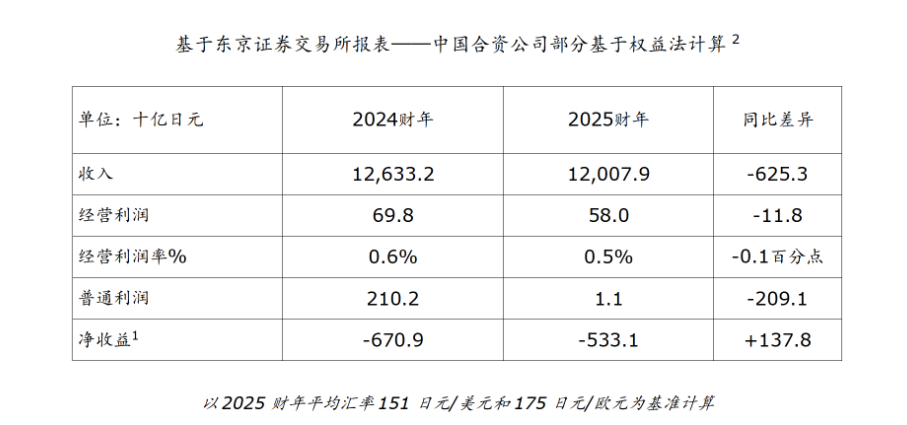
When combined with the 670.9 billion yen net loss sustained in the 2024 fiscal year, Nissan's cumulative losses over the two-year period have surpassed 1.2 trillion yen (approximately RMB 51.6 billion).
The financial data underscores that Nissan's challenges are all-encompassing. In the 2025 fiscal year, the company's global sales amounted to 12.0078 trillion yen, a 4.9% decline year-on-year; its operating profit, a key indicator of core business profitability, stood at 58 billion yen, plummeting by 16.9% compared to the previous year. In terms of sales volume, global sales in March 2026 dropped by 7% year-on-year, with a 4.2% decrease for the entire fiscal year.
The root causes of this 'performance earthquake' are manifold. Nissan explicitly highlighted in its financial report that sluggish global sales and escalating inflationary pressures form the primary backdrop. However, the decisive blow came from the U.S. government's tariff policies. The company stated that these policies alone eroded its operating profit by approximately 286 billion yen in the 2025 fiscal year. Amidst intensifying global trade frictions, Nissan, heavily reliant on international markets, bore the brunt of the impact.
Confronted with the grim reality of consecutive losses, Nissan is implementing a sweeping structural reform, the severity of which can be described as 'radical measures.' According to publicly available information, the reform initiatives encompass reducing the number of global vehicle assembly plants, trimming labor costs through layoffs, and even contemplating the sale of its headquarters building in Yokohama.
Nissan's President and CEO, Ivan Espinosa, underscored at the financial results press conference that the company has achieved its cost-cutting target of 200 billion yen, stating that 'restructuring measures are progressing at a faster-than-anticipated pace.' These efforts aim to streamline the company's bloated organizational structure, restore its cost competitiveness, and lay the groundwork for future recovery.
Despite enduring significant setbacks over the past two years, Nissan has adopted a cautiously optimistic stance for the upcoming 2026 fiscal year (from April 2026 to March 2027). The company projects a net profit of 20 billion yen, signaling a return to profitability after two years since the 2023 fiscal year.
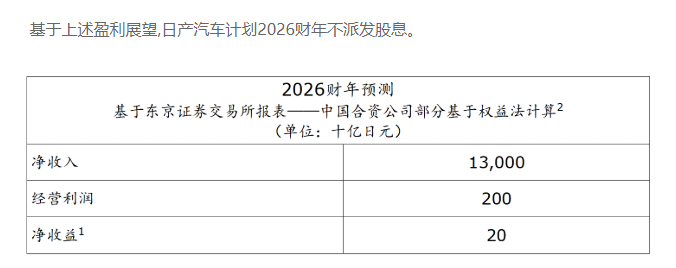
This forecast is bolstered by confidence in sales growth driven by the introduction of new models in the Chinese market, with global sales expected to surge by 4.7% year-on-year to 3.3 million units in the 2026 fiscal year.
The Chinese market has emerged as the pivotal factor. Nissan is pinning its hopes for sales revival, in part, on new models tailored for the Chinese market, underscoring the significance of China as the world's largest automotive market. However, it is also the most fiercely contested 'red ocean,' where the ascent of local new energy brands is continuously narrowing the market share of joint-venture brands. Whether Nissan can regain the favor of Chinese consumers with its new offerings will be a decisive factor in determining the success of its turnaround strategy.
The automotive industry's elimination race has also entered its decisive phase, and mere cost-cutting and tweaking traditional models are unlikely to suffice. Whether Nissan can deliver truly competitive products in the electric and intelligent vehicle arena and effectively respond to the rapidly evolving global market will determine whether this former titan will stage a comeback or continue its downward trajectory.
-
![]()
Token Package Launched: The 'Traffic War' in the AI Era Now Involves Doubao and Peers
-
![]()
Structural Transformation in Satellite Communications: Growth Driven by Technology, Geopolitics, and Commerce
-
![]()
China Telecom’s Monumental 17.4 Billion Yuan ‘Token Factory’ Deal Revealed! A New Stealthy Competition Among Telecom Operators in the AI Era
-
![]()
Nissan Faces 1.2 Trillion Yen Loss Over Two Years, Stakes Its Future on the Chinese Market
-
Token Is Not a Lucrative Business
-
![]()
The Retreat of European and American Brands Accelerates Chinese Automakers' Seizure of the Ultra-Luxury Market
-
![]()
Chip ETF Tumbles! ChinaAMC Rides the Wave of AI Profits
-
![]()
Stellantis Re-embraces 'Chinese Capabilities,' But the Approach Has Changed