Back then, you came in to seize my market share; now, I'm going out to take over your factories.
 05/26 2026
 469
469
A closer look at this global transfer of production capacity reveals that the most intriguing aspect has never been the change in factory ownership itself, but rather the subtle shift in industrial discourse power behind it.
When the documents for XPENG Motors' acquisition of a 90.1% stake in Indonesia's core electric vehicle manufacturing entity recently appeared on the screen of the Indonesia Stock Exchange, the significance of this transaction extended far beyond the establishment of a new production base.
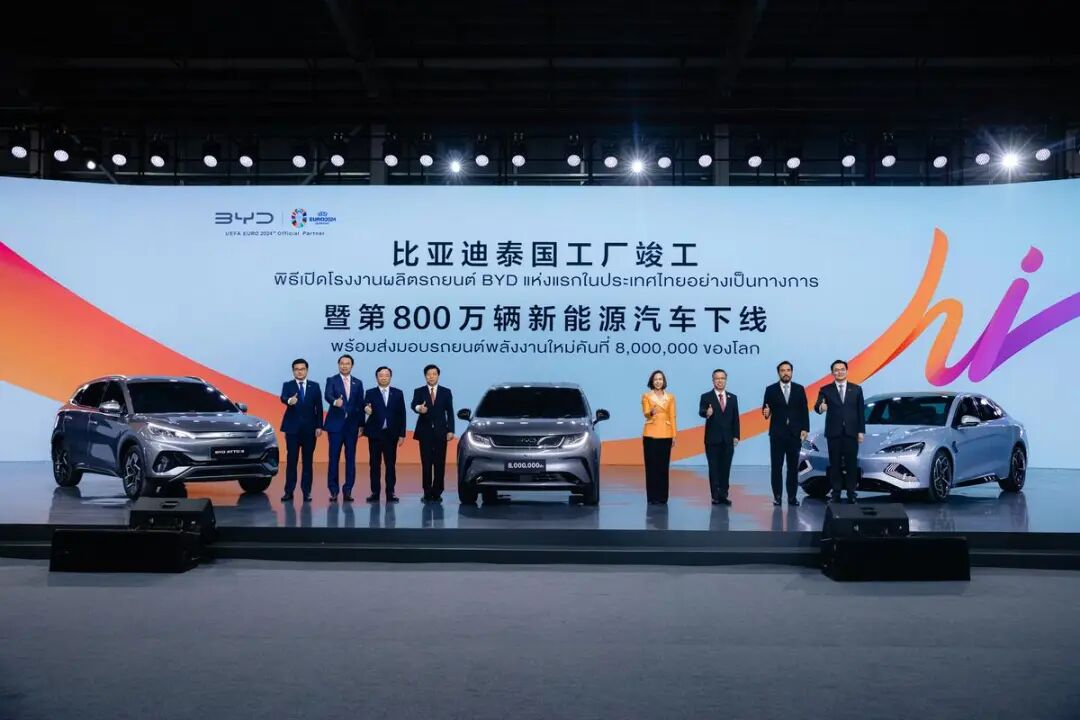
Within just a month, Dongfeng and Stellantis prepared for local production at a French factory, Leapmotor engaged with existing production capacity in Spain, and automakers like BYD, Great Wall, and Chery made successive global deployments targeting idle capacities. These moves are collectively sketching out a new profile of Chinese automakers' global expansion.
But if we rewind the clock ten years, few could have imagined today's scenario.
Once upon a time, automotive giants from Europe, the United States, Japan, and South Korea brought blueprints and capital to China to build new factories, expanding their production capacities across the world's largest emerging market. Now, Chinese automakers, armed with new energy technologies and capital, are taking over the idle capacities they left behind, setting down roots for local production and reactivating dormant machinery.
Localized Transformation Becomes a Natural Progression
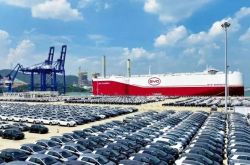
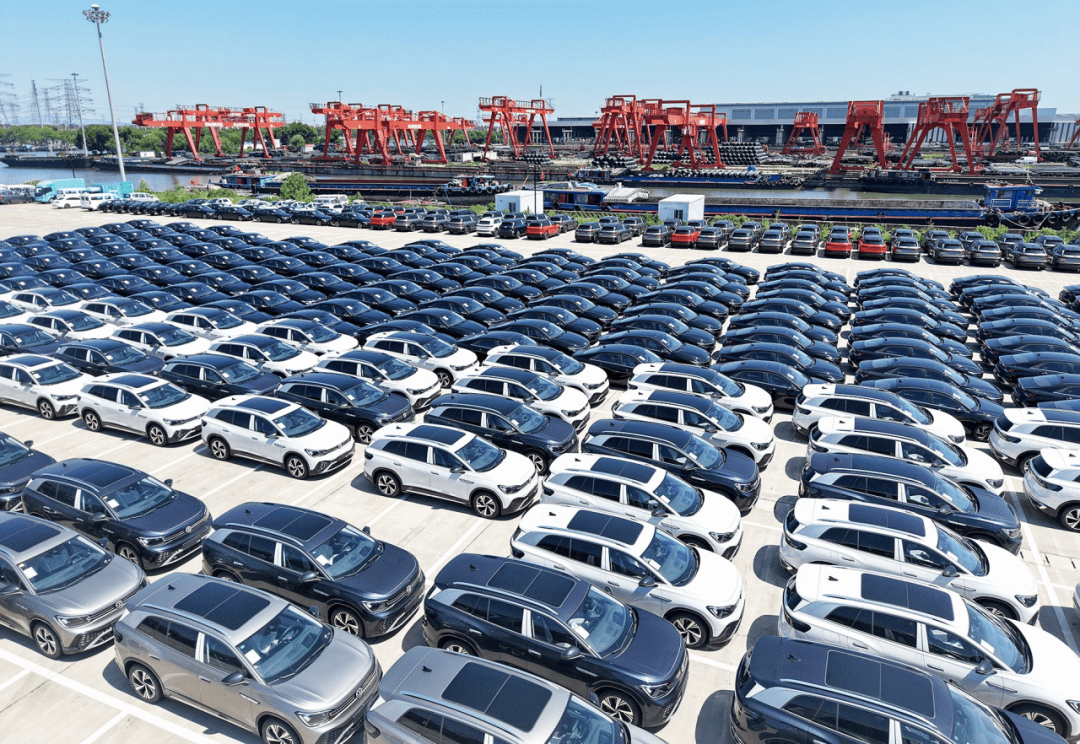
The latest data from the General Administration of Customs is impressive: in the first quarter of 2026, China's exports of new energy vehicles approached one million units, more than doubling year-on-year. This means that for every ten new energy vehicles sold globally, six bear the label 'Made in China.'
However, as the fleet of export ro-ro ships grows denser, new problems are piling up at ports. The logistics costs of crossing oceans are soaring, with the EU's imposition of anti-subsidy taxes directly driving up end-market prices. The cycle from ship departure to consumer delivery can stretch to two or three months, during which market trends can shift rapidly—distant solutions cannot meet urgent needs.
'The 1.0 era of exporting vehicles via ro-ro ships can no longer accommodate the ambitions of Chinese automakers,' an industry insider remarked. Against this backdrop, those idle factories gathering dust on traditional automakers' balance sheets have suddenly become coveted assets for Chinese automakers.
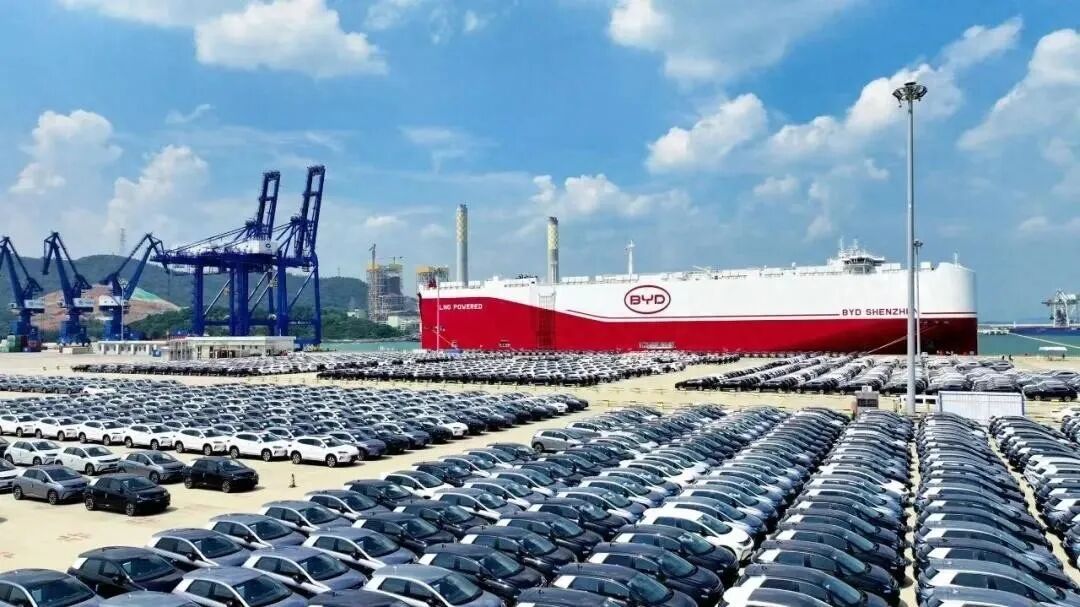
From an industry perspective, building new factories from scratch involves significant investment, long timelines, and a host of uncertainties related to land acquisition, approvals, and labor. In contrast, acquiring or collaborating with existing mature overseas factories can drastically shorten the timeline for capacity deployment, enabling rapid local production and supply while circumventing trade barriers and demonstrating long-term commitment to local markets.
Whether motivated by tariff avoidance or the need to share benefits with local industries and stakeholders, localized production has evolved from a long-term plan into an immediate reality for Chinese automakers.
Thus, we witness a continuous stream of industrial transfers.
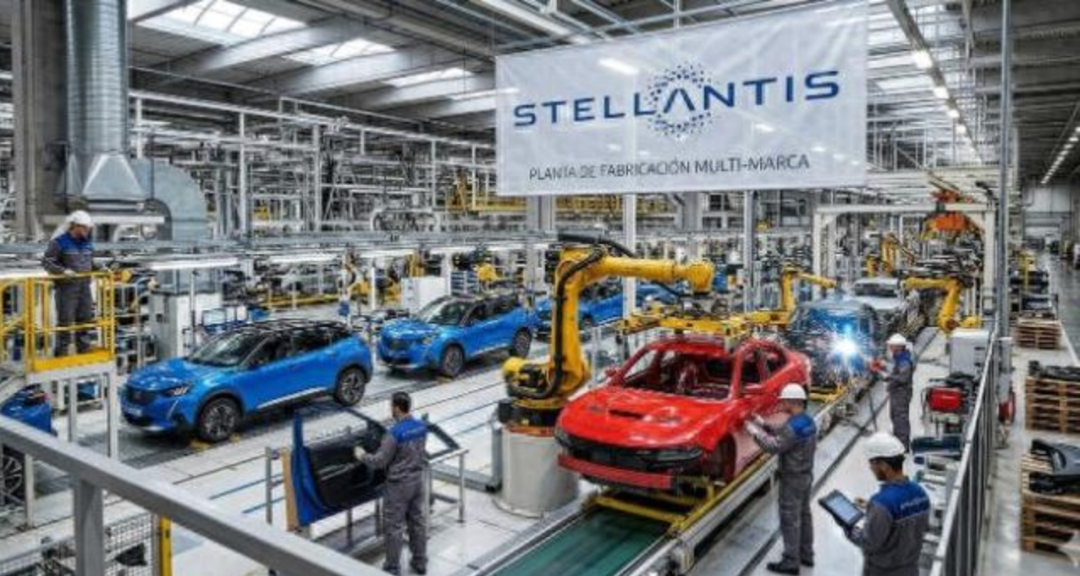
Factories once labeled as 'non-performing assets' by traditional automakers have been revitalized under Chinese ownership. At the former Ford plant in Camaçari, Brazil, the revamped production line now churns out over a thousand BYD vehicles per month, with previously laid-off workers returning to their posts. The former General Motors plant in Rayong, Thailand, has become Great Wall Motors' core production base in Southeast Asia...
It can be said that behind Chinese automakers' dense (intensive) acquisitions of overseas idle capacities lies a restructuring of global automotive production capacity driven by the industry's electrification transition.
In recent years, traditional automakers in Europe and the United States have faced significant pressure during the electrification transition. Demand for internal combustion engine vehicles continues to decline, while electrification requires substantial investment with long payback periods. As a result, many traditional fuel vehicle factories operate below capacity utilization, becoming low-efficiency assets for corporations. Long-idled factories not only require ongoing investment in depreciation, labor, and maintenance but also divert significant attention during corporate transitions.
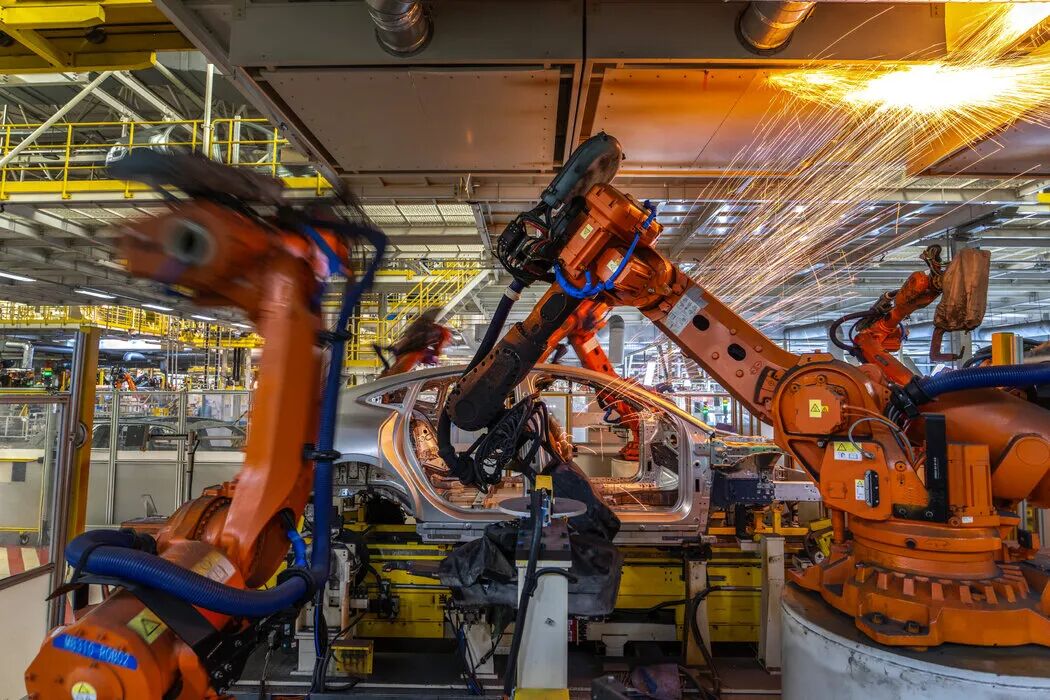
For these traditional automakers, opening idle capacities to collaboration with Chinese automakers represents an asset optimization strategy. It revitalizes existing assets to generate revenue while stabilizing local employment, maintaining supply chain operations, and buying buffer space for their own electrification transitions—a win-win arrangement that meets the needs of all parties involved.
From a global industrial division perspective, this flow of production capacity reflects a shift in the automotive industry's value center.
In the past, these mature overseas factories represented core assets for traditional automakers' global expansion, symbolizing manufacturing capabilities and market discourse power during the internal combustion engine era. In the electrification era, however, traditional fuel production capacities have gradually become transformation (transition) burdens. Leveraging their advantages in new energy technologies, complete supply chain systems, and cost-effective product competitiveness, Chinese automakers have taken over these existing assets, transforming them into beachheads for entering local markets.
What New Wine Can Be Poured into Old Bottles?
While revitalizing idle capacities may sound straightforward, it poses an even greater challenge for Chinese automakers than exporting complete vehicles. Receiving the factory keys is merely the first step; the true test lies in whether they can manufacture, sell, and sustain operations effectively.
The most immediate challenges stem from 'cultural mismatch.'
Factories in every country operate under their own 'rules.' For example, European factories enforce strict working hour regulations, with powerful unions demanding lengthy negotiations for wage increases or process changes. South American markets feature environmental regulations and certification standards vastly different from those in China, with potential legal pitfalls for non-compliance. Even workers' operational habits vary; efficient management methods honed in domestic factories may prove ineffective overseas.
Merely transforming production lines while neglecting localized construction of operational systems and service networks makes stable production and sustained profitability elusive.
The head of the German Association of the Automotive Industry put it bluntly: 'Factories are just skeletons; services and brands are the soul. Without a soul, even the newest production lines cannot produce best-selling vehicles.'
Zhang Xiang, a visiting professor at Huanghe S&T University, also pointed out that Chinese automakers entering overseas markets must undergo a full-chain localized reconstruction spanning production to services. Particularly for Chinese automakers accustomed to efficient domestic supply chains and rapid decision-making, adapting to regulatory environments and cultural differences in different countries while establishing operational systems compliant with local rules poses a greater challenge than simply acquiring production capacity.
Thus, acquiring idle capacities merely grants entry tickets. Whether Chinese automakers can succeed depends on their ability to settle in and learn to operate on foreign soil. As Yin Tongyue, Chairman of Chery Automobile, remarked, 'Overseas factories are not tools for short-term sales surges; they are litmus tests of a company's true global capabilities.'
Nevertheless, a closer examination of this global transfer of production capacity reveals that the most intriguing aspect has never been the change in factory ownership itself, but rather the subtle shift in industrial discourse power behind it.
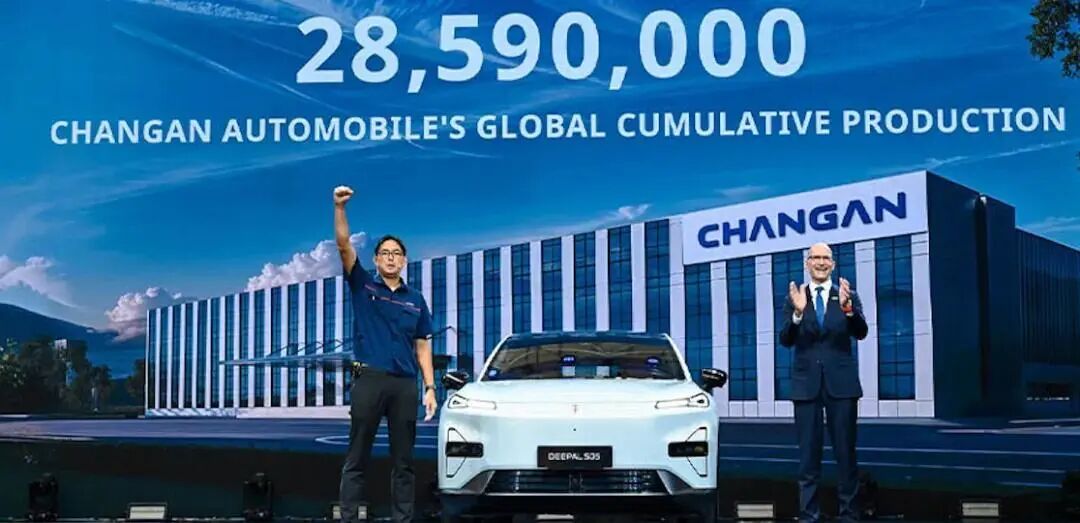
Three decades ago, when China's automotive market first opened, the script saw European, American, Japanese, and South Korean automakers bringing technology and capital to establish factories in China, transferring their production capacities to the low-cost Chinese market. We ceded market share for technology, while they took profits and occupied markets.
Back then, the rules of the global automotive industry were set by them, and they dictated where production capacities would flow. Over the past decade, however, Chinese automakers have completed their technological accumulation and product upgrades by acquiring core technologies from bankrupt overseas automakers—from Rover and Saab to Volvo—achieving technological catch-up from zero to one.
The electrification race has fundamentally rewritten the script.
Chinese automakers made early layout (layouts), amassing complete supply chains, leading battery-electric-vehicle (BEV) technologies, and rapid product iteration capabilities, leaving traditional European and American automakers behind. Slow to transition, reluctant to shut down fuel vehicle factories, and unable to invest in new electric vehicle production lines, traditional automakers could only watch as their capacities idled and market share slipped away.
From another perspective, the global flow of automotive production capacities toward Chinese automakers reflects a transfer of global automotive industry discourse power.
Of course, we must recognize that shifting to 'local production' marks only a new starting point for Chinese automakers' globalization. From operational challenges arising from cultural mismatches to the long-term construction of brand recognition, their 2.0 global expansion journey will not be smooth sailing. However, it is undeniable that the once-dormant factories around the world have begun to hum with activity again thanks to the arrival of Chinese new energy vehicles.
Standing at the crossroads of industrial transformation, this reversal in production capacity flows resembles a mirror reflecting the dynamic trajectory of a century's worth of change in the global automotive industry. It heralds the gradual unveiling of a new automotive era. In the future, more and more locally produced Chinese electric vehicles will populate global roads—and that, precisely, is the most compelling annotation China's automotive industry has written on the world's industrial transformation.
Note: Some images sourced from the internet. For copyright infringements, please contact for removal.
-END-

-
![]()
Experiencing Tencent's Marvis: How Close Are We to Emulating 'Iron Man'?
-
![]()
1.25 million AI store managers secure hundreds of millions in funding, achieving 20 billion GMV
-
![]()
DeepSeek Announces Permanent Price Reduction, First Winner Emerges
-
![]()
Back then, you came in to seize my market share; now, I'm going out to take over your factories.
-
![]()
NIO’s Q1 Revenue Surges 112% Year-on-Year, Notching Two Straight Quarters of Profitability
-
![]()
Can Token Packages from China’s Top Telecom Operators Unlock a New Revenue Frontier?
-
![]()
What If Computing Power Could Be Traded Like Futures?
-
![]()
Huawei’s Star Performer: Can AITO Sustain Its Market Dominance?