Ferrari’s Maiden Electric Vehicle Distances Itself from Porsche and Yangwang
 05/29 2026
 521
521
Cautious Not to Resemble a Ferrari Too Closely
Original content from Autopix (ID: autopix)
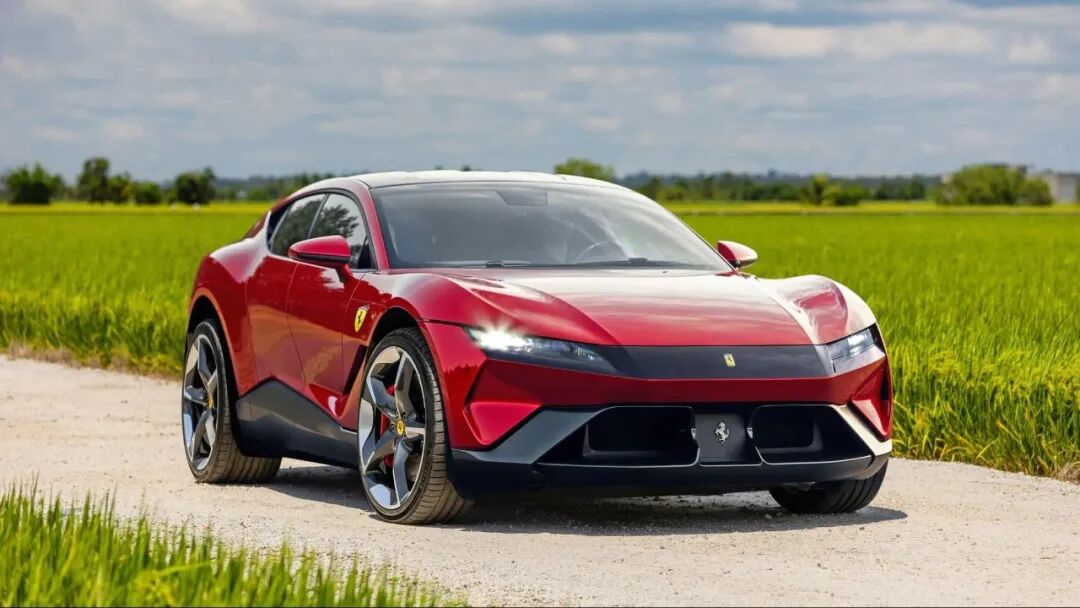
On May 26, Ferrari launched Luce, its inaugural Battery Electric Vehicle (BEV), named after the Italian word for 'light.' The car's design was primarily crafted by the team led by former Apple Chief Designer Jony Ive. This marks Ferrari's debut into the four-door, five-seat segment, boasting four electric motors, a peak power output of 1,050 horsepower, 0-100 km/h acceleration in just 2.5 seconds, a top speed of 310 km/h, and a range of 530 kilometers. Priced starting at €550,000 (approximately RMB 4.35 million), it stands as Ferrari's most expensive non-limited edition production model.
On the day of its release, Ferrari's stock price plummeted nearly 8% during European trading hours, wiping out approximately $5 billion in market value, with Milan-listed shares closing down 6.3%. Over the past 12 months, this stock, often perceived more as a 'luxury good than a car,' has seen a cumulative decline exceeding 31%.
The controversy primarily revolves around its appearance. On social media, the Luce has drawn comparisons to the Nissan Leaf and Li Auto i6, with widespread criticism labeling it as 'reminiscent of HiPhi' and 'incompatible with Ferrari's heritage.'
An analyst noted in a research note to clients that the Luce's design falls somewhere between the electric version of the Honda Accord and the Tesla Model 3, stating he 'completely fails to grasp Ferrari's new strategy.' Even in Ferrari's own promotional video, staff members reacted with surprise upon first seeing the actual vehicle, commenting that it was 'unexpected.'
Ferrari has ventured into the electric car market but appears to deliberately avoid positioning the Luce alongside its iconic supercars.
It is neither the fastest nor the most extreme. It does not resemble a traditional Ferrari and is not even officially classified as a supercar.
Why has Ferrari, now the subject of widespread ridicule, taken this approach? This is not a misstep but a carefully calculated decision.
01 Electrification Does Not Shake Ferrari's Core Principles
Ferrari's core business model can be encapsulated by founder Enzo Ferrari's management philosophy: 'Produce one fewer car than the market demands.'
The company delivers fewer than 14,000 vehicles annually, intentionally keeping supply below demand and creating lengthy waiting lists. New car orders now extend to the end of 2027.
This strategy has yielded unique financial metrics within the automotive industry, with a gross margin of approximately 52% and an average net profit of around RMB 920,000 per vehicle sold. In 2025, Ferrari's revenue grew by 7% year-on-year to €7.146 billion, with net profit increasing by 5% to €1.6 billion, setting new historical highs.
In the first quarter of 2026, it reported €1.848 billion in revenue and €413 million in net profit.
These profits are not reliant on scale but on pricing power. Due to excess demand, Ferrari can raise prices without losing customers. From 2019 to 2025, revenue from car sales grew at an annualized rate of approximately 12.7%, while sales volume increased by only about 5.1% annually. The primary driver of growth was not increased sales but higher prices per vehicle. In 2025, to offset U.S. tariffs of 25%, Ferrari raised prices for certain models by up to 10%, fully passing policy impacts onto consumers.
Supporting this model is a highly exclusive customer network. Over 65% of the more than 10,000 vehicles Ferrari produces annually are sold to individuals who already own at least one Ferrari. New models are often fully booked (sold out before production) almost immediately, with buyers almost exclusively repeat customers.
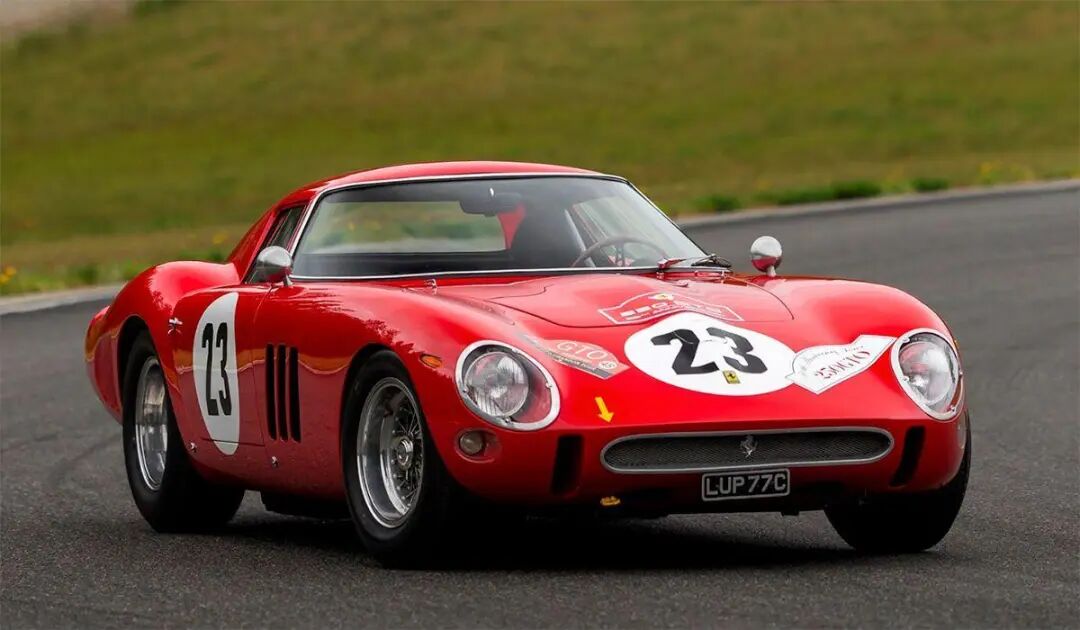
Combined with highly profitable personalized customization options—full carbon fiber finishes, exclusive color schemes, bespoke interiors—there is a saying in the industry: 'A white horse is not just a horse; a luxury car is not just a car.' This perfectly describes Ferrari, whose financial model sets it apart from other automakers.
It is precisely this 'anti-scale' approach that has made Ferrari one of the few players largely unscathed by the current wave of electrification.
Over the past two years, ultra-luxury brands have experienced a collective slowdown in the Chinese market. In 2025, retail sales of imported cars in China declined by 33% year-on-year, with Porsche deliveries falling by 26%; Bentley, Ferrari, and Lamborghini have also seen three consecutive years of decline.
Ferrari was no exception, with Chinese sales reaching 664 units last year, down another 15% year-on-year. However, its global performance remained unaffected, as China accounts for a limited share, and the global waiting list extending to 2027 is sufficient to redistribute demand. While competitors see profits decline alongside sales, Ferrari simply adjusts its order book to maintain profitability despite losing one market.
Its independence also plays a role. Controlled by the Agnelli family through Exor, Ferrari does not operate as a profit cow for a mass-market parent company like Porsche or Lamborghini within the Volkswagen Group, nor as a pawn for Stellantis like Maserati. It is not forced to pursue volume to feed a larger corporation, and volume is precisely the enemy of exclusivity.
In other words, Ferrari enters the electric era with a completely different hand than its rivals.
It lacks neither money, orders, nor time, nor does it need to prove its future to anyone. This positions it to approach electric vehicles from a place of extreme comfort, focusing not on using electrification for survival but on how to embrace it without shaking its foundations.
The Luce embodies this approach.
02 Luce Deliberately Avoids Supercar Territory
To understand the Luce's design, consider its polar opposite—the Yangwang U9.
As BYD's foray into the supercar market, the U9 follows the classic supercar formula: long front overhang, short rear overhang, low and sleek cabin, dimensions of 4,966/2,029/1,295 mm, butterfly doors, two-seat configuration, and a price tag of RMB 1.68 million. It is a textbook poster car.
However, the U9 comes with an unavoidable trade-off: weight. To accommodate its battery, its curb weight reaches approximately 2.5 tons, over a ton heavier than comparable internal combustion engine (ICE) supercars. For a supercar where lightweight construction and handling are paramount, this represents a structural flaw.
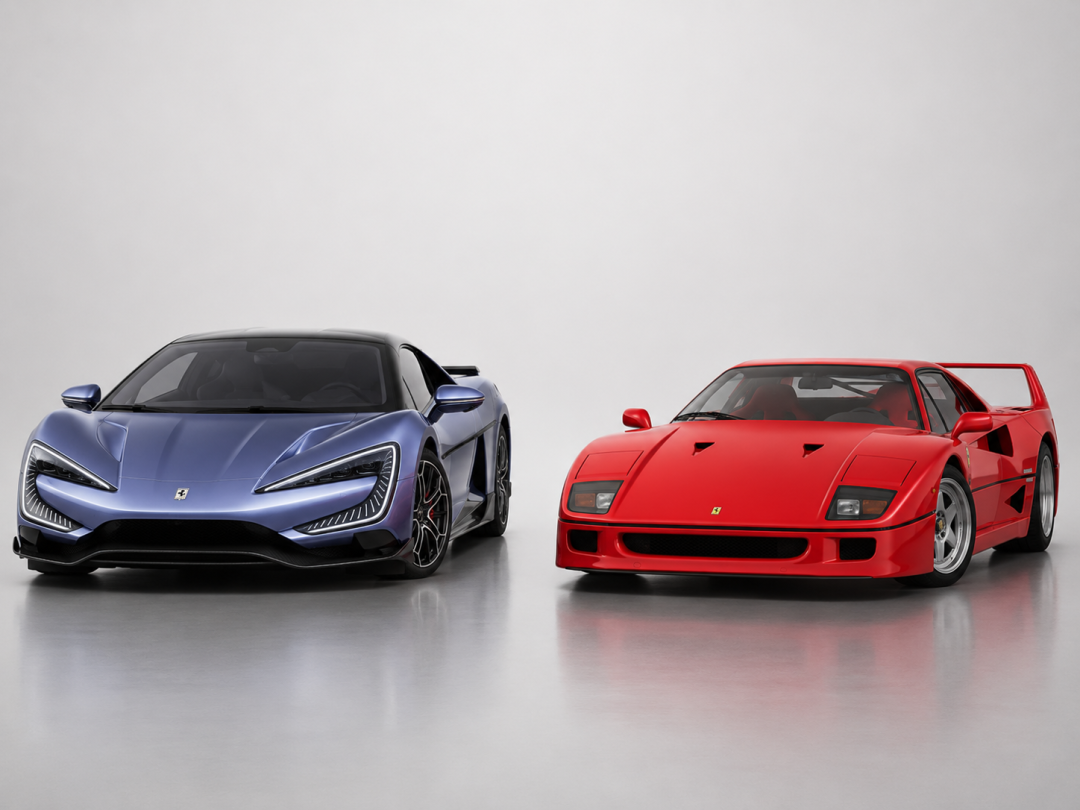
Ferrari disdains such products. It looks down on electric vehicles that 'can only accelerate in a straight line but lack handling finesse,' privately referring to them as 'elephants.'
Ferrari believes the traditional supercar form is a trap for BEVs. The allure of low-slung, two-seat supercars hinges on being 'light, agile, and at one with the driver,' yet a vehicle weighing over two tons cannot convey that sense of lightness, regardless of how low its profile is.
Thus, the Luce abandons the low-slung design, taking the opposite path of the Yangwang U9. With dimensions of 5,026/1,999/1,544 mm, it stands nearly 250 mm taller than the U9, weighs 2,260 kg, and offers four doors and five seats.
Ferrari's logic is to align with the characteristics of BEVs. Since batteries must be flatly integrated into the floor, pushing the vehicle toward a taller, longer, and more GT-like profile, Ferrari embraces this direction to create a spacious, comfortable, and practical electric vehicle. The Luce becomes Ferrari's first model capable of seating a driver and four passengers simultaneously, with a trunk capacity of 597 liters.
Ultimately, Ferrari officially refuses to classify the Luce as either a supercar or an SUV, leaving the media to dub it a 'four-door, five-seat all-electric GT crossover.'
When it comes to high-priced electric vehicles, Ferrari and Yangwang adopt vastly different approaches. The deeper reason lies at the brand level: Yangwang is a challenger, so it leans into the most iconic supercar form, which serves as its entry ticket.
Ferrari, however, defines this form. It needs to prove nothing in the two-seat supercar segment and prefers to avoid placing its BEV alongside its roaring V12 models for direct comparison. Instead, it intentionally guides BEVs into new territory while reserving the brand's soul-bearing vehicles for internal combustion engines and hybrids.
Ferrari reinforced this direction by enlisting Jony Ive's team. The collaboration, personally brokered by Ferrari Executive Chairman John Elkann, granted the designers significant freedom to define the car from scratch rather than modifying an existing model.
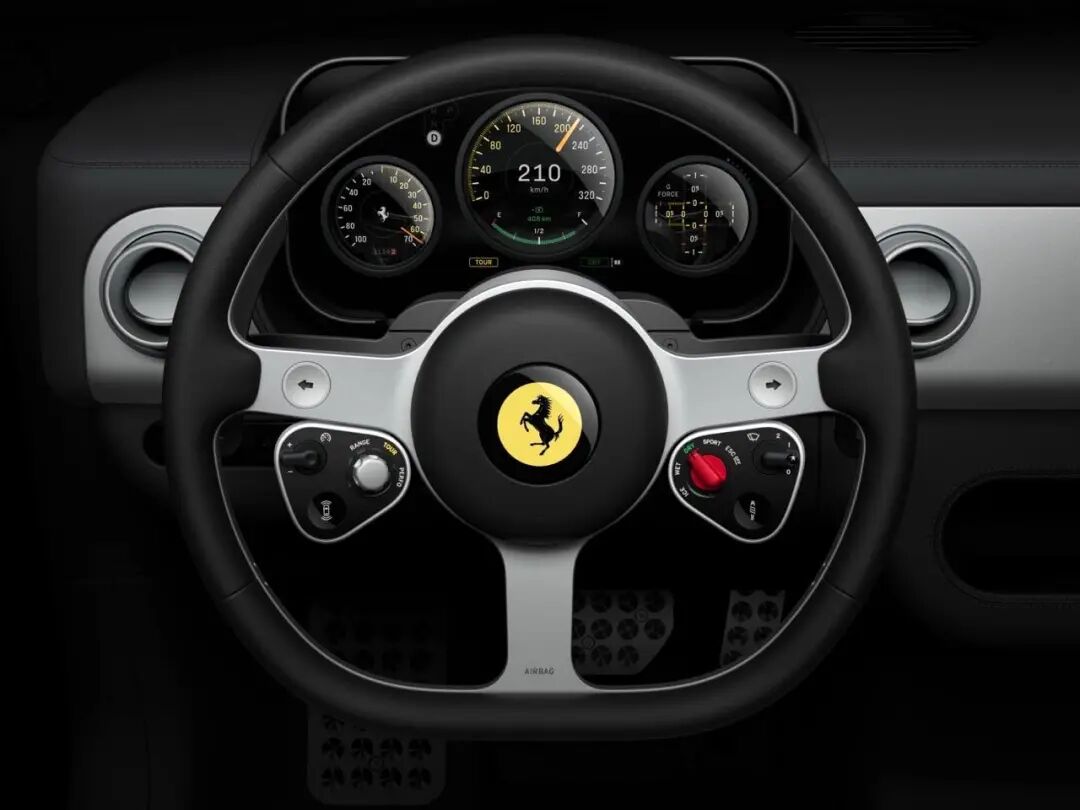
Jony Ive's team, designers who aimed to eliminate buttons during their Apple tenure, became staunch defenders of physical controls at Ferrari. The Luce retains numerous physical knobs and levers, operating on the principle that the best interactions in a cockpit rely on muscle memory.
The instrument cluster features an OLED display with a convex lens, with colors changing based on driving mode. The steering wheel is CNC-machined from recycled aluminum, the launch control lever draws inspiration from helicopter instrumentation, and Corning glass is extensively used throughout the interior.
These details do not add functionality but subtract complexity while enhancing texture. Their refinement lies beyond mere styling.
03 The Greatest Risk Is Not Poor Sales
To understand the Luce's strategy, Porsche serves as the best reference point.
Like Ferrari, Porsche specializes in performance vehicles and has just announced its worst quarterly performance in 77 years. In 2025, its annual revenue fell to €36.27 billion, with operating profit plummeting to €413 million, a 92.7% year-on-year decline, and a return on sales dropping from 14.1% to 1.1%.
From the Taycan to the all-electric Macan, Porsche's product definitions have become increasingly clear: using BEVs to succeed its ICE models and reinterpreting Porsche's sports car DNA through batteries, software, and acceleration.
It has bet not just on a technical route but also on scale and growth over the next decade. However, electrification has failed to sustain Porsche's pricing power. The Taycan's luster faded faster than expected, while the electric Macan collided with the fiercest competition in China's luxury EV segment. Meanwhile, legacy cash cows like the ICE Macan, Cayenne, and 911 remain the products customers are more willing to pay for.
In September 2025, Porsche began backtracking. Its planned large all-electric SUV will launch with ICE and plug-in hybrid (PHEV) variants first; the ICE and PHEV versions of the Panamera and Cayenne will continue selling into the 2030s.
Porsche's stumble stems from precisely the pitfalls Ferrari deliberately avoids.
Last year, Ferrari similarly lowered its electrification targets, reducing its 2030 BEV share from 40% to 20% and setting ICE targets at twice that of BEVs. The current plan envisions a parallel structure of approximately 40% ICE, 40% hybrid, and 20% BEV. This revision also caused a significant stock price drop at the time.
Within this framework, the Luce's positioning is clear: it represents incremental growth, not replacement. It targets customers Ferrari has rarely served before—those who desire a Ferrari but need five seats and daily practicality.
John Elkann stated that existing ICE and hybrid customers have clearly signaled their interest in an electric Ferrari. With growing numbers of city centers banning ICE vehicles, wealthy owners have a 'rigid demand' for a zero-emission vehicle bearing their beloved logo. The Luce aims at individuals who already own multiple Ferraris and wish to add an electric model to their collection.
Given its price point and target demographic, the Luce is unlikely to be a losing proposition.
However, capital markets worry not about whether the Luce will find buyers.
Their concern is whether Ferrari, by expanding its customer base with a four-door, five-seat BEV, might inadvertently dilute its most valuable asset: its brand aura.
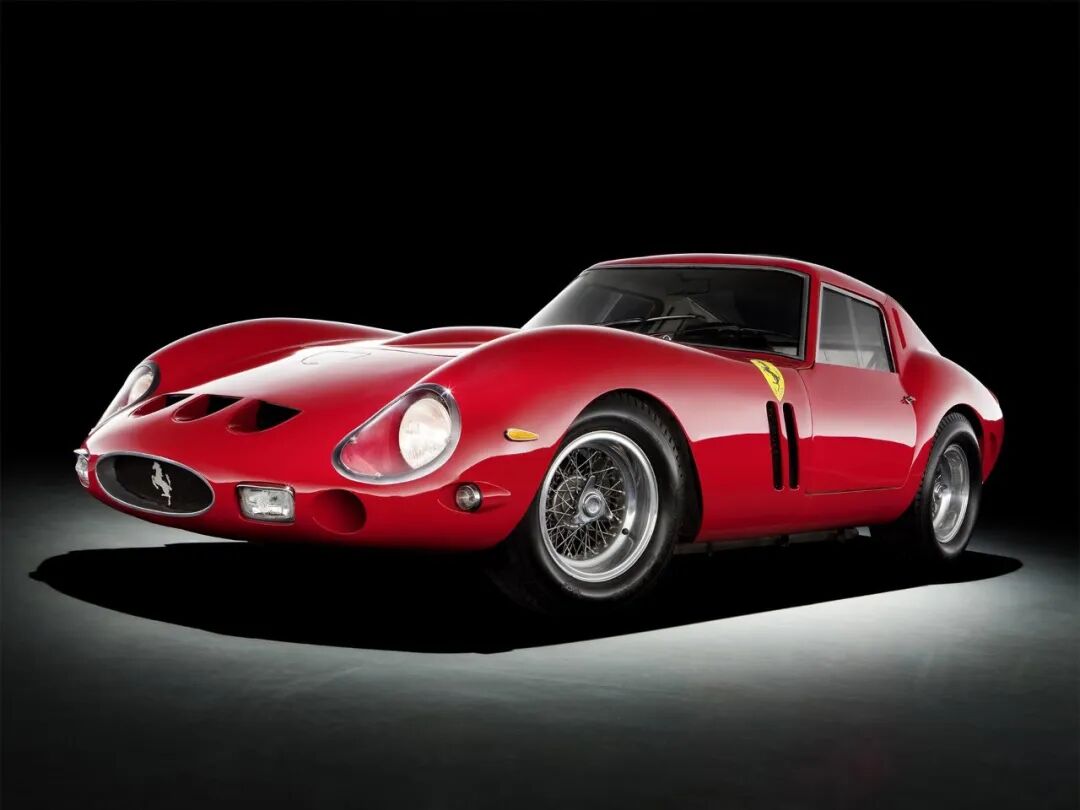
People pay far above cost for a Ferrari, wait years for delivery, and treat it as an appreciating asset—not because of horsepower figures but because the prancing horse emblem represents scarcity and irreplaceability.
The Luce's greatest risk lies here. Prior to the Luce, Ferrari had never released a model publicly described as 'looking unlike a Ferrari.'
Ferrari's aura derives its value from a self-reinforcing cycle.
New models are scarce enough that owners willingly wait; used models hold their value well, making new ones more asset-like; the stronger the asset appeal, the more irreplaceable the prancing horse becomes.
Yet BEVs inherently disrupt this cycle.
Battery degradation, technological iteration, and smart feature obsolescence all make residual values harder to predict for electric vehicles. For ordinary brands, this is merely a residual value issue; for Ferrari, it directly undermines brand faith.
Moreover, the Luce is no marginal product. As Ferrari's first BEV and first four-door, five-seat model, its debut has already drawn comparisons to mass-market brands like Nissan from many observers who claim it 'does not look like a Ferrari.'
This is what makes investors nervous.
Ferrari must provide an answer to electrification and find new customer segments and growth curves. However, if each exploration moves Ferrari further from its original mystique, it will gradually erode its most critical moat.

This article is original content from Autopix (autopix) and may not be reproduced without authorization.
-
![]()
The Agent hasn't arrived yet, but Ascend has already paved the way from hardware to software.
-
![]()
In 71 years, He sold products to 100 million people
-
![]()
First-hand Practical Test! Opus 4.8 Vs ChatGPT 5.5 Vs Kimi 2.6: Which is the Most Usable?
-
![]()
Fourfold Uncertainty Challenges Facing China's Agent Industry - Interpretation of the 'Report' (Part Six)
-
Crazy Anthropic
-
![]()
CNPC’s Kunlun Model Advances with 152 Implemented Scenarios, Showcasing Proactive AI
-
![]()
Revenue Increases, But Profits Don't: Pinduoduo's Anxiety Amidst Billion-Dollar Brand Building
-
![]()
Half Flock In, Half Flee Out: The Dual Dynamics of Singapore as an AI Hub