Half Flock In, Half Flee Out: The Dual Dynamics of Singapore as an AI Hub
 05/29 2026
 484
484
Author | Li Xiaotian
After three years of entrepreneurship in Singapore, Zhou Yu is planning to leave.
Today, Singapore has earned the moniker of 'Asia's Silicon Valley,' drawing AI entrepreneurs from across the globe. Within this vibrant ecosystem, the Chinese entrepreneurial community can be broadly categorized into two distinct groups: young individuals studying at Singaporean universities who conceive novel and intriguing entrepreneurial ideas and seek like-minded partners on campus; and seasoned executives from large corporations who have secured funding from U.S. dollar-denominated funds in China, possess mature business models, and utilize Singapore as a launchpad for global market expansion.
The former group primarily comprises young entrepreneurs new to the industry who prioritize a relaxed environment conducive to innovation; the latter group boasts mature businesses and extensive experience, with a clear objective of leveraging local geographical advantages to expand internationally.
Zhou Yu falls into the former category. In her view, Singapore's entrepreneurial environment is somewhat lacking in excitement: mediocre technology, conservative investments, and a dearth of entrepreneurial vigor in the social atmosphere. In contrast, China continuously churns out innovative projects, while the Middle East is also striving to emerge as the third pole in the global AI race. The desire to 'venture out and explore' grows stronger.
For the latter group, Singapore represents the optimal platform to maximize their strengths.
In China, the venture capital landscape has evolved to favor and be enamored with the so-called 'AI-native generation' of post-95s and post-2000s; founders born in 1985 or earlier are now at a distinct disadvantage in investment considerations.
Singapore's pragmatic, rational, and steady business ethos resonates well with middle-aged individuals.
Ellen, a former domestic U.S. dollar fund investor, relocated to Singapore in 2023 and documented in-depth conversations with AI entrepreneurs who had made the move through her podcast, 'Offline Time.' She realized that in the AI era, a profound understanding of needs and a reverence for the market constitute the greatest competitive moats. 'This is honed over a decade or two—product instincts, market judgment, and risk identification are the rarest assets and the greatest confidence boosters for entrepreneurs. So, for the middle-aged and elderly in the AI world, as long as our foundational strengths remain intact, we are still in the game,' she remarked.
Some leave, some flock in—Singapore has become a fortress besieged for AI entrepreneurs and a constant offshore hub for Chinese entrepreneurs on the path to AI globalization.

Is Singapore Truly the Ultimate Destination for Chinese AI Entrepreneurs?
In recent years, Singapore has witnessed a surge in activity, capturing the attention of the global business community.
According to Bloomberg data, by 2025, Asian wealthy individuals will have injected S$77 billion (approximately RMB 408.5 billion) into Singapore. Amid tense U.S.-China relations, volatile Middle Eastern situations, and the ongoing Russia-Ukraine conflict, more high-net-worth individuals opt to place their assets in politically stable and tax-advantaged Singapore.
Also in 2025, China surpassed the United States to become Singapore's largest source of fixed asset investment, accounting for 20.6% of investment commitments, while U.S. companies accounted for 17.3%; in 2024, U.S. companies accounted for as high as 55.5%, while China accounted for only 2.5%.
Where the money flows, people follow.
Individuals in the venture capital circle track the capital and trends, initiating new business ventures in Singapore. 'Now, the end of the universe is Singapore,' joked one investor.
Ellen is among them. She shared with Xiaguang Society, 'After the pandemic, more and more investors flocked to Singapore. At that time, the entrepreneurial ecosystem here was a mixed bag: consumer goods, fintech, robotics, catering—everyone was dabbling in something. I didn't settle on a direction immediately and spoke to almost every offshore company I could find. But as I delved deeper, I noticed the wind direction (trend) had shifted. With the rise of large Chinese models and Manus's arrival in Singapore, AI entrepreneurship transitioned from niche to a regional mainstream.'
The suspension of Manus's cross-border merger and acquisition case served as a clear warning signal and a turning point for Singapore's AI entrepreneurs. This compelled entrepreneurs to clarify their identity and direction from the outset, leaving no room for ambiguity or negotiation.
In response, Ellen analyzed that the Singaporean government doesn't concern itself with whether you 'have a Chinese background'; they focus on three key aspects: where the company is registered, whether the equity structure is locked to one country, and whether the business is global. 'As long as it's a Singaporean entity with global clients, it's an international company, not the 'Chinese-funded label' you might imagine. The real invisible red line is—a single team, like all Chinese, Indians, or Americans, because a company with a homogeneous culture is hard to treat as an international company.'
In Ellen's view, Singapore's greatest strength lies in its geopolitical neutrality. In her podcast interviews, an AI entrepreneur told her, 'Singapore's survival hinges on its ability to remain neutral. In the past, when the world was relatively peaceful, Singapore could maintain neutrality. But if geopolitics become discordant, can it continue to remain impartial? This question concerns the nation's fate.'
Another advantage may stem from Singapore's compact size—a one-hour commute covers the entire country, and social networks among different classes highly overlap, reducing information friction, evenly distributing resources, and fostering a more open and transparent power and cultural landscape.
This garden city, less than one-ninth the size of Shanghai, is home to tech giants like Google, Meta, IBM, Microsoft, Amazon, and TikTok, creating a dense and vibrant interpersonal network.
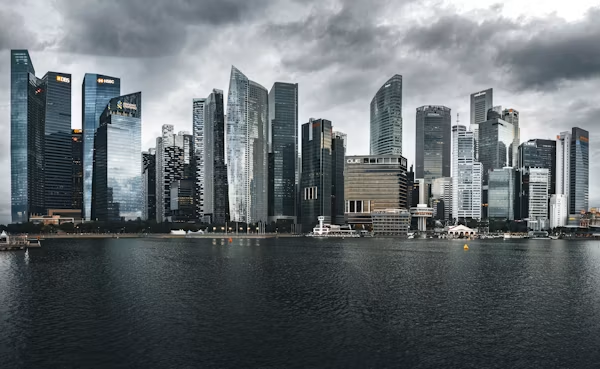
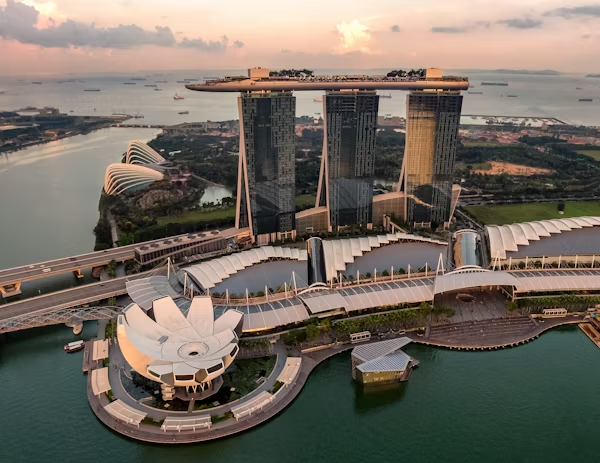
One of Singapore's modern landmarks: Marina Bay Sands
'There are so many AI-related events in Singapore, and the same group of people attend them all. The person sitting across from you today might be an OpenAI executive. So you can access fresh, firsthand information here, whereas in China, there might be many middlemen,' Ellen said.
The dissolution of information barriers lowers the entrepreneurial threshold. This aligns perfectly with AI's role: accelerating information flow and dissemination, narrowing the global cognitive gap.
In this sense, Singapore is inherently a promised land for AI entrepreneurs.

The Dual Nature of the 'AI Hub': Opportunities and Constraints
Several AI entrepreneurs based in Singapore shared a project with Xiaguang Society that 'uses AI to sell eggs.'
This is a homegrown Singaporean company that positions itself as an egg trader but is, in reality, an AI-driven food supply chain company. With a team of only five, they leverage AI to optimize the entire supply chain process. Restaurants can place orders with a single click via WhatsApp, enabling efficient procurement and delivery, making ingredients affordable and high-quality. In just one year, they served nearly 2,000 local restaurants, secured a scarce egg import license, ranked sixth in the local industry, achieved annual sales of several million U.S. dollars, and are now expanding into cooking oil, attracting interest from numerous industrial investors.
This company's development path perhaps best encapsulates the character of Singapore's AI entrepreneurial projects: pragmatic, specific, lightweight, and concise. If they can't build large models, they focus on steady and solid niche applications.
This also stems from the inherent business opportunities in the Singaporean market itself.
In October 2025, the Singapore Infocomm Media Development Authority (IMDA) released the 'Singapore Digital Economy Report 2025,' revealing that only 14.5% of Singaporean SMEs have adopted AI—a vast untapped space representing opportunities for entrepreneurs.
In response, the Financial Times analyzed, 'The greatest dividends of the next wave of AI entrepreneurship may not be at the model layer or infrastructure layer but at the 'last mile' implementation layer—and the center of gravity for this battleground is shifting toward the Asia-Pacific. The Asia-Pacific AI market, valued at approximately $102.5 billion in 2025, is expected to exceed $816 billion by 2032, with a compound annual growth rate of 34.5%—behind this growth is a vast market that has just been awakened. These AI projects that solve specific problems don't build their moats in code but in relationships, trust, and local knowledge.'
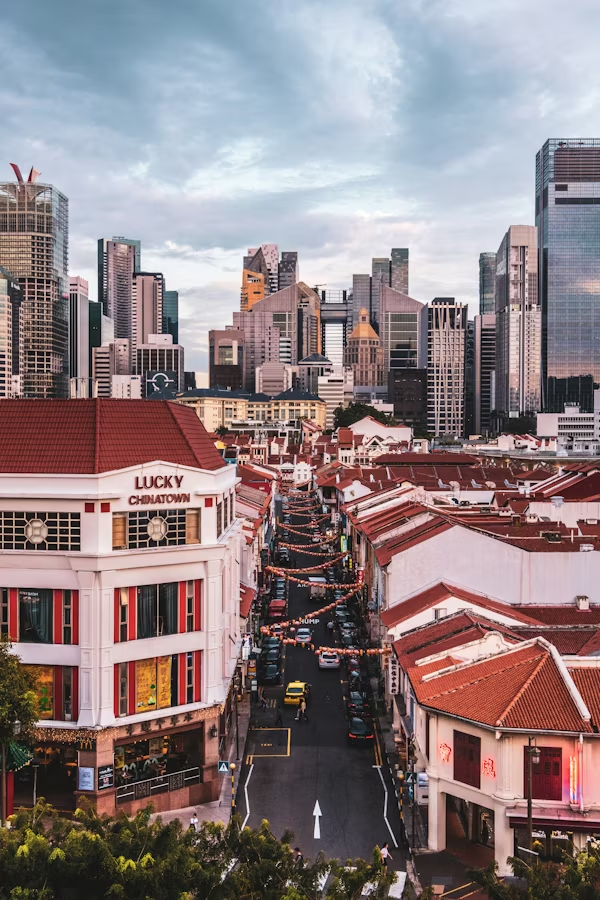
Bustling streets of Singapore
Pragmatism, however, has its flip side: conservatism.
Specifically regarding financing, Ellen told Xiaguang Society that Singapore's shortcomings are glaring: 'VCs give very little money; they are very conservative. As a result, many people choose to return to China or go to the U.S. as they progress. You must know that no local Singaporean fund has exceeded a DPI of 1 since 2016. The best is around 0.6—meaning LPs get back at most 60% of their invested money. A previously decent fund from 2014 returned about 1.5 times, but this figure is basically at the bottom among Chinese U.S. dollar funds. Failing to make money for LPs in a decade directly shapes their project investment mindset: valuations are tightly controlled, generally not exceeding a $30 million post-money valuation.'
'I often feel that Singapore is a great place to register a company and a great market entry point, but its capital ecosystem is far from mature enough to support a high-growth startup. The pace is slow, valuations are conservative, and exit paths are unclear—these aren't individual problems but systemic realities. For Chinese AI founders going overseas, the most pragmatic strategy might be: set up structures, do business, and build customer relationships in Singapore, but don't limit financing to just local sources. For angel rounds, look to industry insiders; for institutional rounds, consider established Chinese U.S. dollar funds or global funds,' Ellen said.
Zhou Yu concurs: 'Singapore's capital market still prefers later-stage investments because Singapore's overall culture is risk-averse. They are unwilling to take on very risky ventures, and their own entrepreneurial spirit is not strong.'
From a project and product competitiveness perspective, an overly tranquil business environment can easily leave entrepreneurs 'unaware of the changing times.'
In terms of competitive atmosphere, Singapore lacks the anxiety and pressure found in China, with a constant sense of FOMO during technological transformations; on the other hand, an overly comfortable market environment may lead entrepreneurs to refine their products leisurely. 'But when you step outside, you realize everything has changed—your product already has countless competitors, or even the next era's technology has arrived. So entrepreneurs must find a balance themselves,' she said.
This 'pragmatism' route also stems from Singapore's national character. When discussing the local population's personality, 'kiasu' (a Hokkien term meaning 'fear of losing') is an unavoidable word.
'Kiasu' originates from the survival instinct fostered by living in a tiny, densely populated land. Singaporeans always strive to stay ahead. In Singapore's bustling hawker centers, locals habitually reserve seats with tissues, umbrellas, work badges, or jackets due to fear of not getting a table; when Luckin Coffee first launched in Singapore, it witnessed long queues—Singaporeans love queuing and will join one upon seeing it, fearing they might miss out on a deal or trend.
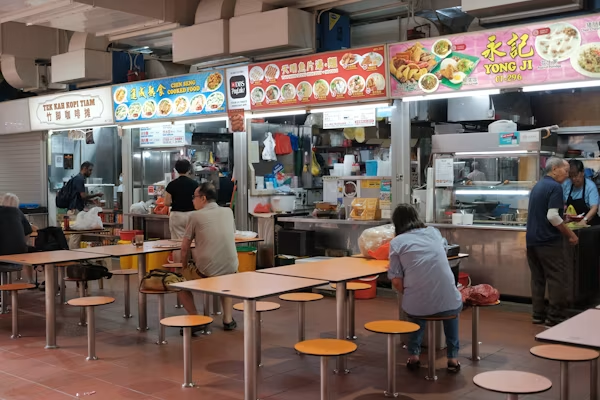
Singapore's hawker center
On the other hand, the 'kiasu' mentality also fosters a risk-averse, conservative, and pragmatic social atmosphere. This is the most practical survival tactic for a small nation with a limited population; it also reflects the contentment and stability of citizens under Singapore's well-developed and precise social welfare system.
BBC journalist Nicolas Walton precisely described this mentality of Singaporeans in his book 'Singapore: A Modern History,' written during his posting in Singapore.
Sometimes, people don't even know why they are queuing but join anyway because they fear missing out. 'Kiasu' stems from Singapore's constant emphasis on its small size and vulnerability. Kiasu people don't care whether they are creating and sharing value. As a result, Singapore cannot produce true entrepreneurs but only fosters 'copy-and-paste' businesses, like bubble tea shops... trendy cafes and cat cafes.'

Based in Singapore, but Not Limited to It
In Joyce's view, the founder of the Chinese AI Entrepreneurs Association in Singapore (CSAIA), for local citizens, Singapore is a peaceful utopia: 'They are too well-protected.'
For example, almost all Singaporean entrepreneurial policies involving direct funding, subsidies, or co-investments require: local citizens or PRs to hold ≥30% (mostly ≥51%) of shares, + the main applicant must be a local. Foreigners can start businesses, hold 100% of the company's shares, and obtain an EntrePass, but they basically cannot access core subsidies; to receive government funding, they must find local major shareholders or local founders to endorse them.
In Zhou Yu's view, Singapore is not only a Shangri-La but also an Asian version of 'Zootopia'.
It serves as a home to ethnic Chinese, Malays, Indians, Europeans, and Americans, where a diverse array of ethnic groups coexist in perfect harmony. Every legal policy is disseminated in four official languages, echoing the utopian vision of Zootopia, where "all animals live together in peace, each fulfilling their unique roles."
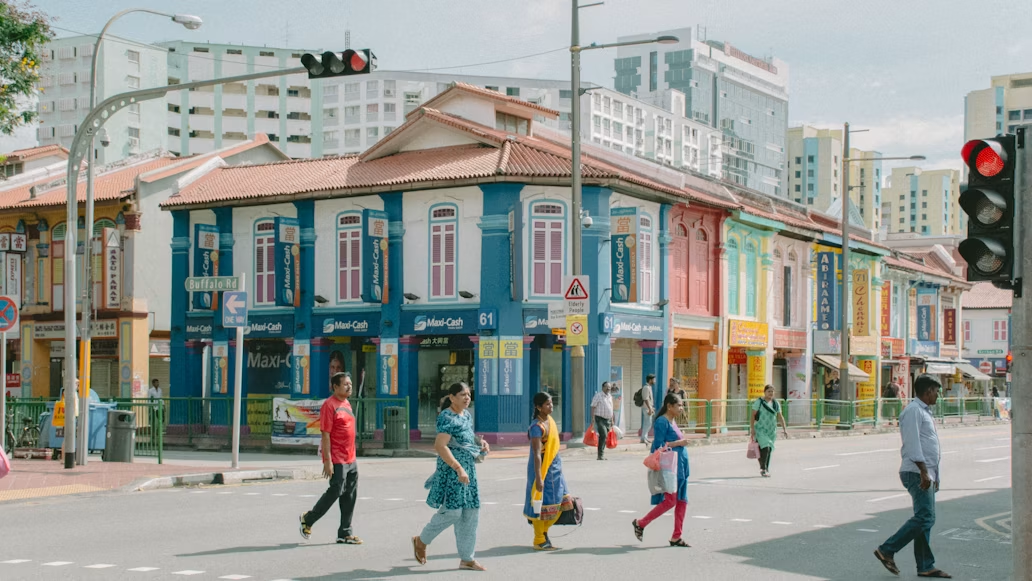
Little India Street in Singapore
For Chinese entrepreneurs, while they undoubtedly possess a competitive edge in product strength, recruiting dependable local talent and assembling an ideal local team in Singapore poses a significant hurdle.
It's crucial to recognize that the recruitment strategy for startup teams diverges from that of large corporations, which often hire numerous junior engineers. Startups, on the other hand, require a leader capable of propelling a project from inception to fruition. Such an individual must possess a profound understanding of overseas markets, grasp the nuances of Chinese work culture, and collaborate effortlessly with Chinese teams. However, the pool of locals in Singapore who embody both entrepreneurial spirit and capabilities is limited.
"Individuals like Shou Zi Chew are quite scarce," remarked Ellen. She elucidated that the prevailing strategies for Chinese companies venturing into Singapore involve either relocating personnel from China or forging strong ties with local communities and identifying trustworthy individuals through referrals.
Nevertheless, truly integrating into Singapore's local social circles is no small feat. One formidable obstacle is the unique Singaporean English, or Singlish, which intertwines accents from Hokkien, Cantonese, and Malay, presenting a linguistic challenge akin to learning a new foreign language for outsiders. A quintessential example is the local pronunciation of the English word 'three' as 'tree.' A corporate staff member stationed in Singapore once missed his flight at Changi Airport due to his inability to comprehend the repeated boarding announcements, which utilized the local pronunciation of 'tree' instead of 'three.'
Furthermore, as an international financial hub, Singapore's financial sector offers substantially higher remuneration than the tech industry. With a finite talent pool, more locals opt for careers in finance, which promise clear career progression paths. "Their career choices also tend to be more conservative. Locals and Indians often prefer to ascend the corporate ladder gradually to executive positions within large companies, a feat that is relatively attainable for them. Consequently, many startup teams may spend months without securing a highly satisfactory candidate," Zhou Yu stated.
The exorbitant operating costs have also compelled startup teams in Singapore to adopt increasingly lean structures, with a growing number of one-person companies emerging. Since the onset of the pandemic, office rental prices in Singapore have continued to escalate, with ordinary Grade A CBD offices witnessing price hikes for eight consecutive quarters, culminating in an approximate 30% increase. Rents in core areas have soared to 688 RMB/㎡/month, double that of Shanghai's Lujiazui business district and quadruple that of Shenzhen's Futian CBD.
Today, in addition to established financial institutions, a plethora of AI startups are driving up rental prices. Data from CBRE reveals that many AI companies are no longer content with shared office spaces and are opting for long-term, large-area leases, signaling their intention to establish a permanent foothold. Coupled with geopolitical factors, Singapore's allure as a safe haven has become increasingly pronounced. Amid Middle East tensions, numerous capital firms and businesses originally based in Dubai have shifted their focus to Singapore.
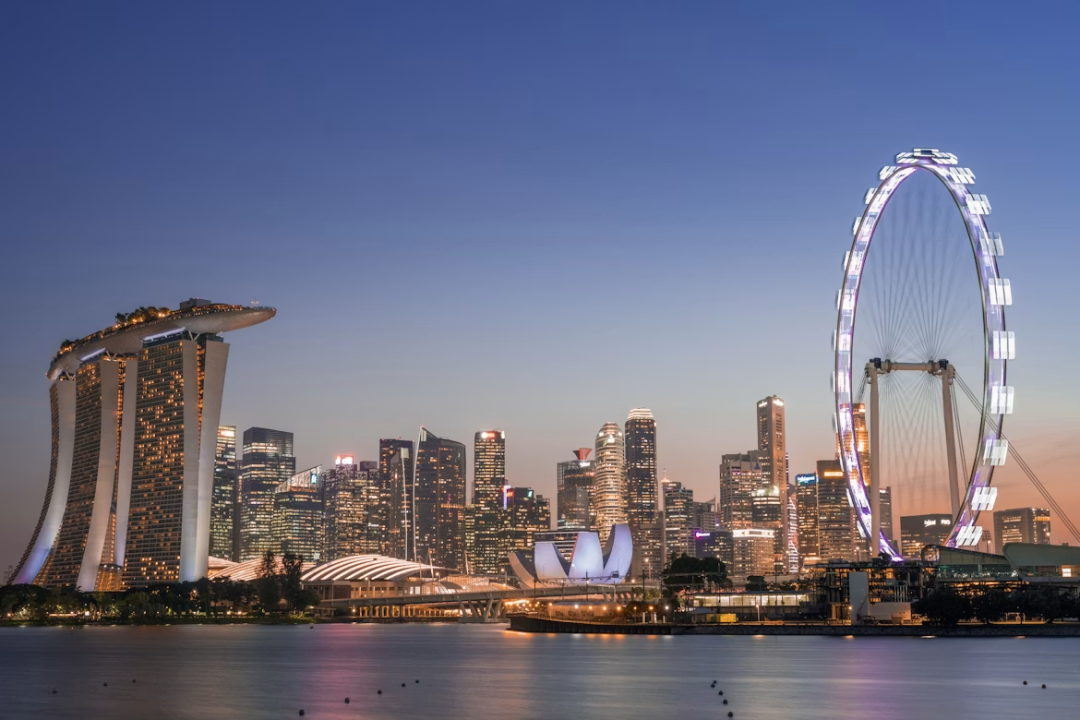
Sunset at Marina Bay
Due to the soaring cost of office rentals, one entrepreneur planning to return to China had to sublet their office before departing due to an unexpired lease. Another startup team, after downsizing, found themselves with several vacant seats and temporarily sought other entrepreneurs to "share the space."
For a multitude of reasons, Zhou Yu is contemplating a departure. She informed Xiaguang Society of her plans to explore the local startup ecosystem in Shanghai's Zhangjiang area next. "Recently, I've heard that some of the more innovative entrepreneurs are congregating in Zhangjiang, while the tech exhibitions I regularly attend in Singapore are relatively lackluster. In the future, Singapore will undoubtedly remain a major startup hub, but company founders will traverse the globe and not be confined to Singapore alone," she said.
In this context, Singapore is harnessing its neutrality and internationalization to emerge as a pivotal startup hub and offshore headquarters in the AI era. Many entrepreneurs are leveraging Singapore as a springboard to launch globally nomadic startups.
This nation, roughly equivalent in size to Yiwu, may not be able to accommodate global aspirations, but it remains the optimal starting point.
-
Ofilm Teams Up with ADSensE to Propel Large-Scale Deployment of All-Solid-State LiDAR Powered by ADS6311 Chip!
-
![]()
Loss of 2.5 Billion Yet Facing Strong Demand for Shares? Another Battle for Control of Lianchuang Electronics
-
![]()
Huawei’s Enjoy Series Flies Off the Shelves, Prompting Xiaomi to Double Down on Budget Smartphones
-
![]()
Beijing Hyundai's Top Executive Criticizes Industry Disorder: Certain Brands Treat Customers as Beta Testers
-
![]()
The domestic mobile phone market has declined for five consecutive quarters! Huawei defies the trend with significant growth: maintains its top market share
-
Annual Revenue Surpasses 3 Billion: An Automotive Trim 'Little Giant' Makes Its Debut on the Beijing Stock Exchange
-
![]()
The Space Force Wants to Spend $30 Billion on Rocket Launches: Is Trump Doubling Down, and Is SpaceX the Big Winner?
-
![]()
Going Crazy! One out of Every Three Plug-in Hybrids Sold in Europe is a Chinese Vehicle