Wei Jianjun’s Bold Gamble: Staking His Surname on Success
 05/29 2026
 378
378
Source | Benyuan Finance
Author | Zhang Yexing
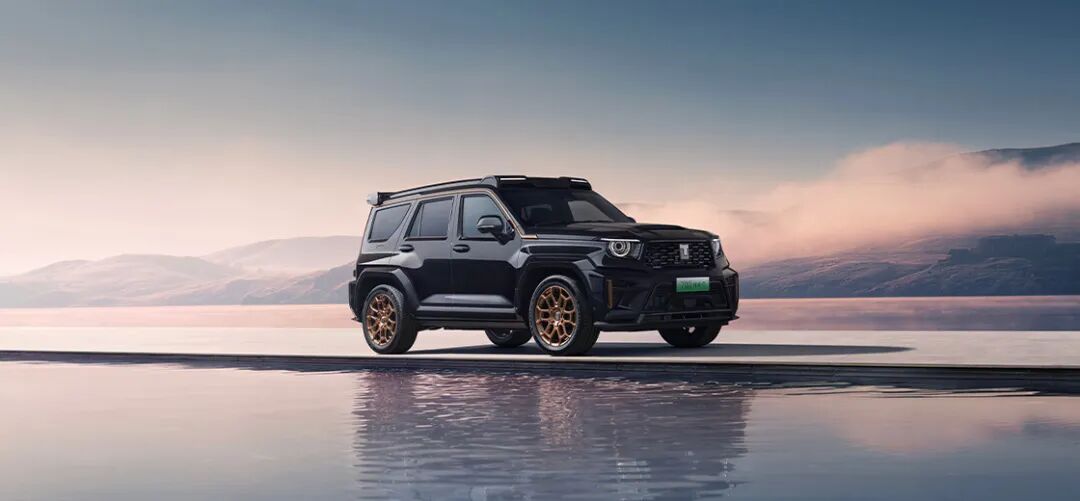
“Since I’m personally endorsing it, there’s no turning back,” declared Wei Jianjun, founder of Great Wall Motors, at the launch event for the WEY V9X. Dressed in a black shirt and jeans, he officially announced his role as the “lifetime spokesperson for the V9X.” This move came exactly two years after he expressed his ambition to become a high-quality “internet celebrity.”
Over the past two years, China’s large SUV market has undergone significant upheaval. Previously dominated by the Aito M9 and Li Auto L9—with other competitors collectively selling no more than 10,000 units—both benchmark models have now faced setbacks, while market competition has intensified further.
In the first quarter of 2026, data from the industrial association revealed that retail sales in the large SUV market surged by 143.5% year-on-year, reaching 627,000 units. This segment has become the second most sought-after category for automakers. Nearly 10 “9-series” flagship SUVs made their debuts in May alone this year.
During the same period, Great Wall Motors (601633.SH) released its Q1 2026 financial report, showing quarterly revenue of RMB 45.109 billion, up 12.72% year-on-year. However, net profit attributable to shareholders shrank to RMB 945 million, nearly halving compared to the previous year.
By staking his personal reputation on the WEY V9X, Wei Jianjun is not only showcasing the brand’s ambition to move upmarket but also aiming to address financial figures that show increasing revenue without corresponding profit growth.
“The stronger the wind blows, the more resolute I become,” Wei Jianjun remarked at the launch event, repeatedly mentioning the word “fear.” Fear, for him, represents expectations, pressure, and challenges. Indeed, Great Wall and WEY have no room for retreat.

Eroding Profits
Great Wall Motors’ corporate identity closely mirrors that of its founder, Wei Jianjun.
Wei Jianjun, now in his 60s, grew up in a military compound and emerged as a first-generation entrepreneur from Baoding, Hebei. In 1996, he introduced the Great Wall Deer pickup, and by 2003, Great Wall Motors had become the market leader in both pickups and SUVs in China. At the age of 39, Wei led Great Wall Motors to list on the Hong Kong Stock Exchange, making it China’s first privately-owned vehicle manufacturer to go public.
After a brief setback with sedans, Wei introduced the Haval H6, which soon became a cornerstone of his portfolio. This SUV, renowned for its exceptional cost-performance ratio and reliable quality control, became a national bestseller, claiming the top spot in China’s compact SUV market for a cumulative 100 months.
In 2016, when the Haval H6 reached its peak with monthly sales of 80,000 units, Wei Jianjun established the WEY brand, using his surname as a symbol of quality and commitment.
During this period, Great Wall Motors differentiated itself from joint-venture brands, with sales growing year after year.
A clear turning point came in 2022 when new energy vehicle makers, led by BYD, launched a counteroffensive. Great Wall Motors’ passenger vehicle sales dropped from 910,000 units the previous year to 780,000 units, with its market share slipping from 4.3% to 3.3%.
Marketing approaches in the automotive industry were also undergoing subtle shifts.
Xiaomi and Huawei entered the automotive arena, with Lei Jun’s short videos garnering more attention than traditional product launches, and Yu Chengdong’s “far ahead” catchphrase dominating trending lists.
Great Wall Motors actively sought change. In June 2023, it announced that 18 executives would collectively join Weibo to “operate online,” but the results fell short of expectations. The following year, it focused on capturing traffic and attention by building the founder’s IP, with efforts spread across teams, mid-level platforms, and full platforms, while also opening direct-sales stores nationwide.
The usually low-profile Wei Jianjun stepped in front of the camera, acting as a test driver, experiencing life as a bubble tea barista, participating in the Dunhuang Off-Road Endurance Race, and more—busier than a frontline salesperson.
In 2025, Great Wall Motors sold a record 1.32 million vehicles, but the completion rate of Wei Jianjun’s previously set target was not high. Consumers questioned why, with the boss trending on hot searches every day, the company couldn’t produce a blockbuster model.
In terms of sales structure, Haval accounted for nearly 60% of revenue with 758,000 units sold, followed by Tank and pickups. The premium-oriented WEY brand, featuring the Blue Mountain and Gaoshan models, grew rapidly but remained small at 102,000 units, while the feminine-oriented Ora brand saw declining sales for two consecutive years.
During the same period, the average selling price per vehicle for Great Wall Motors was RMB 147,900, up nearly RMB 5,600 year-on-year; however, profit per vehicle was approximately RMB 7,500, down nearly RMB 2,800. Profitability clearly declined.
Where did the money go? It went into sales and R&D expenses.
The construction of direct-sales channels and promotion of new models led to a 43.93% year-on-year increase in sales expenses to RMB 11.273 billion. Meanwhile, R&D expenses reached RMB 10.432 billion, up 12.13% year-on-year.
In the first quarter of this year, Great Wall Motors continued to see “increasing revenue without increasing profits,” with revenue of RMB 45.109 billion and net profit attributable to shareholders of RMB 945 million, down 46% year-on-year. After deducting non-recurring items such as RMB 189 million in government subsidies, the profit from the main business was only RMB 482 million, eroded by expenses and exchange rates.
In other words, for every RMB 100 in revenue at Great Wall Motors, only RMB 1 was truly earned from vehicle sales.
In its annual report, Great Wall Motors lowered its performance assessment target for the 2026 employee stock ownership plan, setting sales at no less than 1.8 million units while maintaining the net profit target at no less than RMB 10 billion. This means that Great Wall Motors urgently needs to further improve its profit margins, with pressure remaining high.
Lifetime Spokesperson for WEY V9X
Porsche bears the Porsche name, Mercedes-Benz bears the Benz name, and WEY bears the Wei name. WEY V9X is unique in having its founder serve as its lifetime spokesperson.
When internet celebrity Dali Lun exclaimed in a short video, “Yeah, my dream car! Great Wall~Cannon!” she became the “wild spokesperson” for the Great Wall Cannon, and Great Wall Motors’ market value surged by RMB 17 billion with the video’s popularity. This time, Wei Jianjun aims to be an upgraded version of Dali Lun, taking the stage himself.
Wei Jianjun clearly stated that he is the “first product manager, first experience officer, and first quality inspector” for the V9X, staking his surname and reputation on the line.
Compared to the all-new Li Auto L9 Livis edition, Aito M9, and NIO ES9 launched in May, the WEY V9X does not rank high in terms of brand recognition.
Its confidence may come from the Guiyuan S platform.
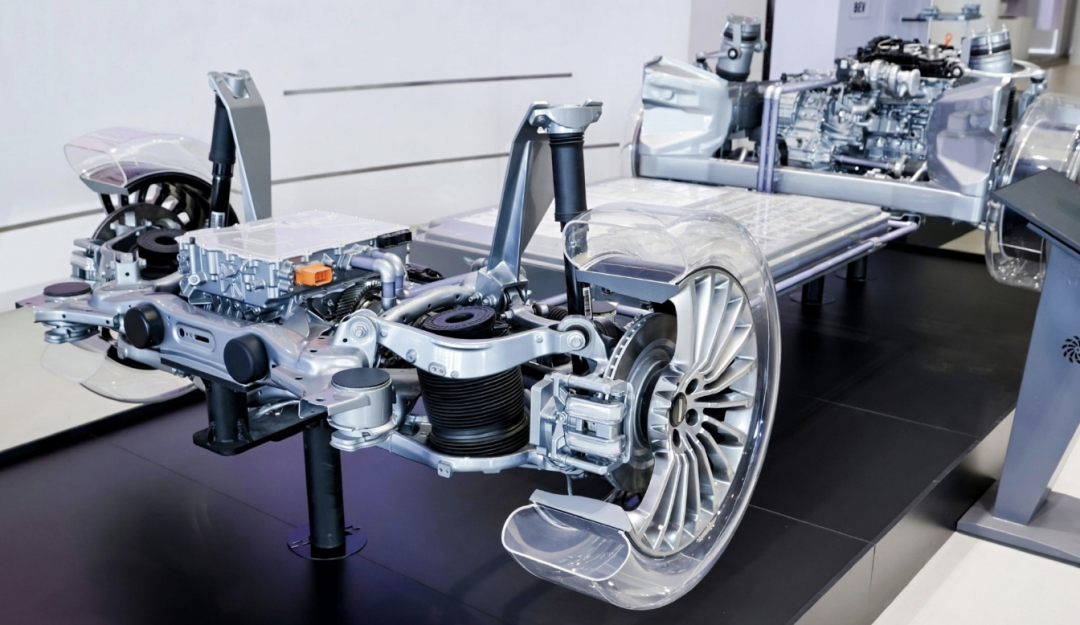
The Guiyuan S platform is a million-level technical foundation developed by Great Wall Motors over six years, compatible with five powertrain forms: fuel, hybrid, plug-in hybrid, pure electric, and hydrogen energy. Additionally, 100% of the chassis’s core structures are universal, with over 90% component compatibility, allowing for cost savings and fewer component changes.
The WEY V9X is the epitome of this philosophy, deeply integrating multi-powertrain capabilities, Super Hi4, Super Smart Chassis, and a native AI cockpit-driving intelligence system, with dual-chamber air suspension as standard across all trims.
The V9X is priced starting at RMB 349,800, RMB 22,000 lower than the pre-sale price across all trims. In this battle of technological fulfillment, Great Wall Motors has shown sufficient sincerity in pricing compared to competitors, but price will not be a long-term competitive advantage for automakers.
In the new energy era, the discourse power of luxury vehicles has shifted to domestic brands, and Great Wall Motors has set a pricing anchor for its high-end cluster. The reality is that most of Great Wall’s trending topics still revolve around the founder himself, “Wei Jianjun.”
Whether the WEY V9X can break through monthly sales of 5,000 units, effectively boost profits, and achieve economies of scale remains a tough battle.
With the dominance of 9-series flagship models, almost all mainstream automakers have poured their most advanced technologies into this segment. The V9X also has its sights set on overseas markets, stating that it will launch in Europe, Asia, and the Middle East this year, with a 2026 overseas sales target of 600,000 units.
Overseas markets are one of Great Wall Motors’ key focus areas.
According to Tianyancha and public data, in 2025, Great Wall Motors sold 506,800 new vehicles overseas, accounting for nearly 40% of total sales, with overseas revenue contributing over 40%. However, its overseas gross profit margin was only 16.7%, slightly lower than the 18.6% in the domestic market.
Uncertainties in overseas markets due to geopolitical conflicts and increased trade barriers persist, while Chinese automakers such as Chery, Geely, and SAIC are accelerating their global expansion, meaning Great Wall Motors will still go through a period of adjustment.
With six years and billions in investment, can Wei Jianjun’s bold gamble, backed by his surname, pay off? Product sales and market feedback will provide the answer. Regardless of the outcome, this veteran automaker’s courage and commitment deserve respect from the entire industry.
*All rights reserved. Unauthorized reproduction is prohibited. Data support from Tianyancha.
End
Thank You for Subscribing
Please contact us first if you have any suggestions.
-
![]()
The Agent hasn't arrived yet, but Ascend has already paved the way from hardware to software.
-
![]()
In 71 years, He sold products to 100 million people
-
![]()
First-hand Practical Test! Opus 4.8 Vs ChatGPT 5.5 Vs Kimi 2.6: Which is the Most Usable?
-
![]()
Fourfold Uncertainty Challenges Facing China's Agent Industry - Interpretation of the 'Report' (Part Six)
-
Crazy Anthropic
-
![]()
CNPC’s Kunlun Model Advances with 152 Implemented Scenarios, Showcasing Proactive AI
-
![]()
Revenue Increases, But Profits Don't: Pinduoduo's Anxiety Amidst Billion-Dollar Brand Building
-
![]()
Half Flock In, Half Flee Out: The Dual Dynamics of Singapore as an AI Hub