Wang Chuanfu Addresses Declining Sales Again: Affirms Worst is Over, Projects Monthly Sales to Rise by 20,000-30,000 Units
 06/10 2026
 325
325
"The worst is behind us," declared BYD's chairman at the 2025 shareholders' meeting on June 9. He pointed out that industry sales faced pressure in the first quarter due to the phase-out of purchase tax subsidies, which had a notable impact on BYD's full range of new energy products.
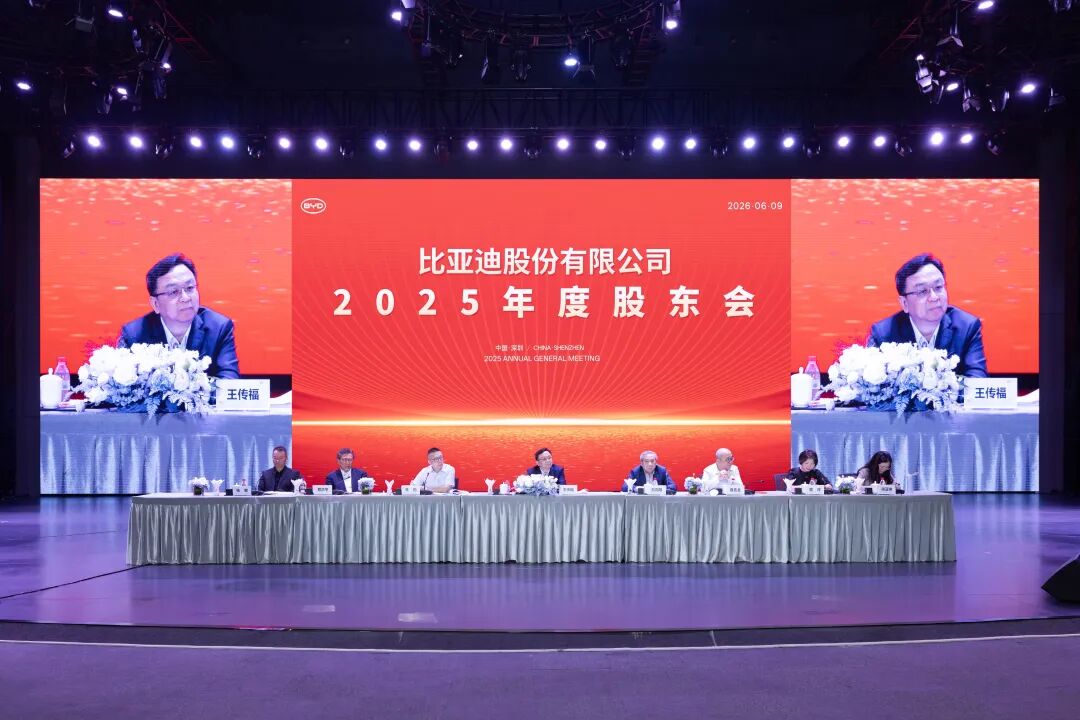
In the recently concluded month of May, BYD sold 383,453 units, marking a 0.25% year-on-year increase. Although the growth rate is modest, it serves as a positive indicator for BYD: it signifies the company's first return to positive year-on-year growth after eight consecutive months of decline, indicating signs of stabilization and recovery. This resurgence is primarily attributed to the launch of two core technologies—the second-generation blade battery and flash charging technology—in March, along with rapid growth in overseas expansion.
"The subsequent data will continue to improve. With the production ramp-up of the second-generation blade battery, I anticipate a monthly sales increase of 20,000-30,000 units until the end of this year," stated Wang Chuanfu. If this projection holds true, BYD's monthly sales are expected to reach a minimum of 520,000 units by December this year, setting a new monthly sales record.
Exports have also emerged as a significant contributor to BYD's sales. Wang Chuanfu highlighted that the overseas expansion momentum in the automotive industry is robust this year, with Chinese automakers like BYD enjoying a favorable development trajectory. Their product competitiveness, pricing, technology, and user experience surpass those of many local competitors. Ultimately, product strength will be reflected in the data and real growth.
"Regarding overseas expansion, everyone acknowledges the strong momentum, particularly for BYD," Wang Chuanfu remarked. He noted that a group of Chinese new energy automakers, led by BYD, are experiencing robust growth because their product competitiveness outperforms local peers in terms of user experience, technology, and other aspects.

Wang Chuanfu stated that BYD has localized its operations in South America, Europe, Southeast Asia, and other regions, with the Tang 7 experiencing "high demand" in the Middle East market. "We have been nurturing overseas markets for many years, establishing a solid reputation, technology, and service networks. Localized production drives local supply chains, sustaining this positive momentum," he explained. Based on this, Wang Chuanfu predicted that BYD will surpass its target of 1.6 million overseas sales this year.
Regarding BYD's challenges in the domestic high-end market, Wang Chuanfu reflected, "We need to explore ways to break this deadlock. We cannot shift the blame; our product refinement and technology are insufficient, and our products are not up to par." He announced that BYD will introduce new technologies next year and even more groundbreaking innovations the following year, aiming to gain a reputation in the mid-to-high-end market through technology and high-quality products.
Although BYD's performance in the domestic high-end market is mediocre, it has achieved success in overseas high-end markets. Wang Chuanfu emphasized that in regions such as Australia, Europe, and South America, the BYD brand is already perceived as high-end. "Once we establish a high-end presence, the issues of gross margin and per-unit profit that our shareholders care about will be resolved," Wang Chuanfu assured.
In addition to high-end market development, Wang Chuanfu acknowledged that product design and marketing planning were once weaknesses for BYD, but the company has begun to strengthen and improve these areas. Citing the success of the Tang 7 as an example, Wang Chuanfu believed that while its technology is comparable to other BYD models, its success lies in its exceptional exterior design.
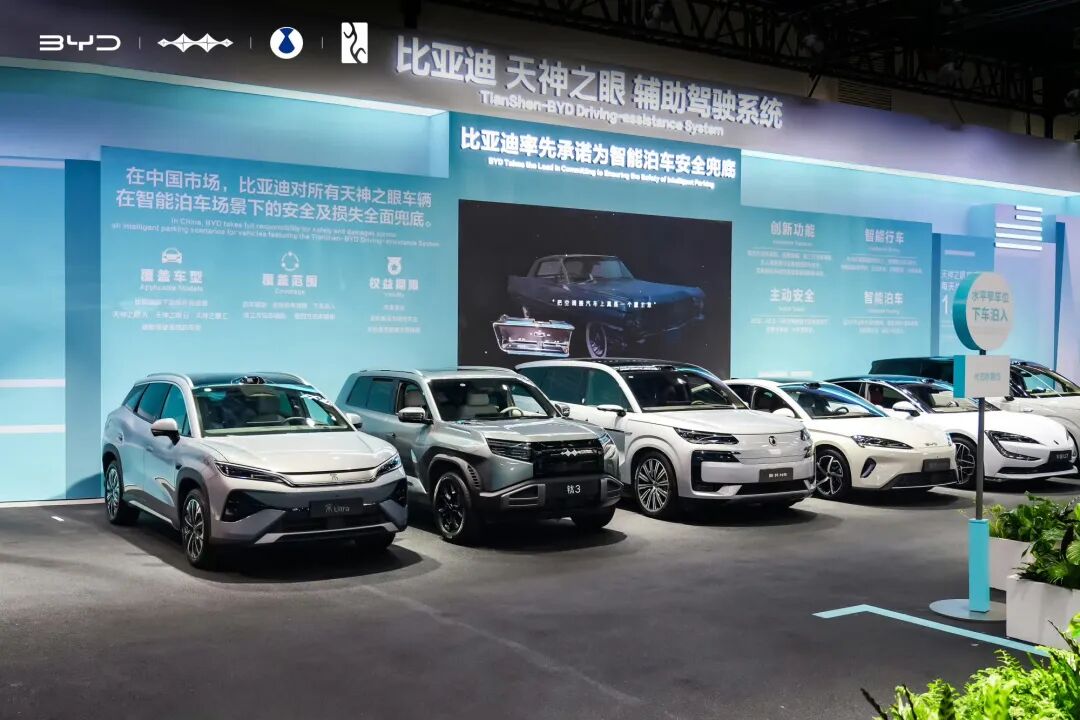
"In the future, we will launch numerous creatively designed products and marketing strategies that are well-received and practical, addressing some of BYD's weaknesses. If we can overcome all our weaknesses, the power of our technology will become even more formidable and versatile," Wang Chuanfu said.
At the shareholders' meeting, a shareholder became emotional while inquiring about the company's business and stock price prospects. In response, Wang Chuanfu stated that BYD will maintain sustained growth over the next three to five years. With the support of second-generation blade batteries, flash charging technology, and new technologies to be launched next year and the following year, BYD expects to achieve dual-wheel-driven growth domestically and internationally, forming a virtuous cycle and taking Chinese technology global. Wang Chuanfu predicted that BYD will "achieve significant growth" by 2030, becoming the true global leader in scale.
Regarding the undervaluation of the stock price, Wang Chuanfu said, "Everyone recognizes our potential, but our stock price has not yet reflected it. On behalf of the management, I understand and appreciate your support." BYD's A-share price has declined more than 19% over the past year and more than 7% in the past three months.
Wang Chuanfu expressed confidence that BYD's performance will continue to improve and urged shareholders to remain patient. At the same time, he pledged that BYD will continue to drive future growth through technological innovation, seizing every major technological transformation and making early strategic layouts to ensure better returns for shareholders.
-
![]()
Breaking into the AI Computing Power and Low-Altitude Economy Sectors! Tongya Technology Heads for Hong Kong IPO: Tripling Revenue in Three Years, Third in Global Market Share, with Matrix Partners Ch
-
![]()
Will ByteDance’s Collaboration with Saido Follow Huawei’s Footsteps?
-
![]()
Revenue Surges 50-Fold: Q1 Earnings Match Annual Profit, This Year's Hottest Business Revealed
-
![]()
Cook’s Gourd Holds No Magic Cure for Apple’s AI Woes
-
![]()
Stellantis Presents a Catalyst, Propelling Chinese Automobiles Towards Global Supremacy
-
![]()
The First AI Car! Seres + ByteDance, AIVA Targets the 200,000+ Market with Its First Vehicle Launching This Year | Mirror Pro
-
![]()
Most People Don't Understand Kimi's World Cup Prediction
-
![]()
Behind Saido: The Strategy of a Company Backed by CATL and ByteDance