The First AI Car! Seres + ByteDance, AIVA Targets the 200,000+ Market with Its First Vehicle Launching This Year | Mirror Pro
 06/10 2026
 335
335
Is there still a need for a new brand? This question has been repeatedly asked in the Chinese market over the past decade, and now yet another new brand has arrived.
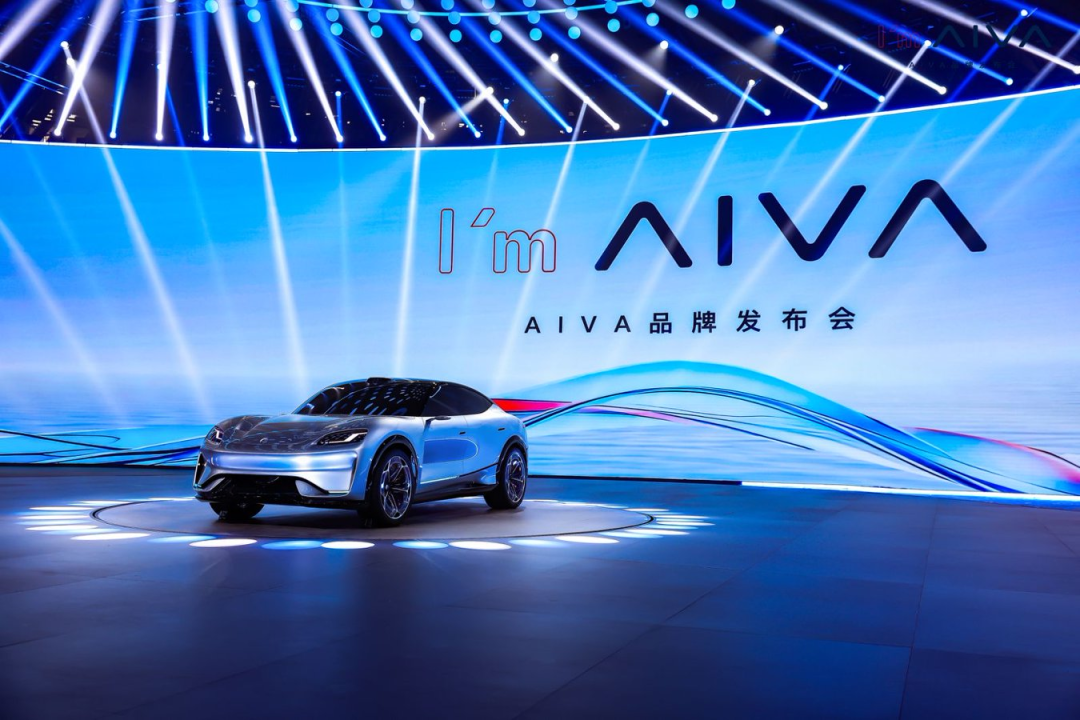
On June 9th, Saidou Technology launched its new brand, AIVA, sparking widespread discussion. Saidou Technology is a new tech company established with the Chongqing Municipal Government as its majority shareholder, in partnership with Seres and CATL. In addressing why a new brand has emerged, AIVA’s answer is: differentiation, or even a new track (which translates to “market segment” or “new playing field”). AIVA is not just another new car brand; it is an AI car brand. AIVA President Li Bo stated on-site that AIVA started with existing AI before developing the car. Simply put, AIVA builds cars based on a foundation of AI, focusing on more native AI-driven vehicles.
From the overall launch event, it is clear that AIVA’s style is entirely centered around AI, to the extent that even the host was Doubao, with no physical presenter. In the industry, the intelligence of new energy vehicles in China is entering its second half, with AI technology becoming a core competitive variable for OEMs. For example, Roewe has introduced an AI-native vehicle lineup, stating that it is not simply adding AI software to cars but involving AI in the design process from the very beginning of vehicle development. Additionally, new forces such as Li Auto and Wey have also proposed the concept of AI-native vehicles.
For instance, NIO founder Li Bin explicitly stated at the Qualcomm Automotive Technology and Collaboration Summit in early June 2026: “Today’s car companies must become AI companies, and today’s smart cockpits must become AI cockpits.” In January 2026, Li Auto founder Li Xiang stated at an internal company meeting that 2026 represents the “last boarding time” for those aiming to become leading AI enterprises. In November 2025, XPENG announced at its Tech Day that it was fully repositioning itself as a “pioneer in mobility within the physical AI world and a global embodied intelligence company.” However, no brand has yet emerged specifically because of AI cars.
This is precisely Saidou Technology’s goal: to become the top brand for AI cars. Furthermore, for Seres, the actual operator behind Saidou Technology, there are plans to create a new growth point and establish a second growth curve after AITO. For ByteDance, there is also a desire to create a benchmark project in the automotive industry—although ByteDance has explicitly denied plans to directly manufacture cars, we believe that, like Huawei, it aspires to be deeply involved. Moreover, judging from the AITO model, Seres has demonstrated a high degree of openness and commitment in its collaborations with tech giants, making the two parties highly compatible in the industry.
Furthermore, with AI rapidly emerging as a technological hotspot, both automakers and AI giants face the challenge of securing entry points. The arrival of AIVA offers immense imaginative potential for both sides. In this entirely new track (market segment) of AI cars, there are currently few participants, and AIVA’s swift entry has given it a first-mover advantage, establishing a strong brand recognition.
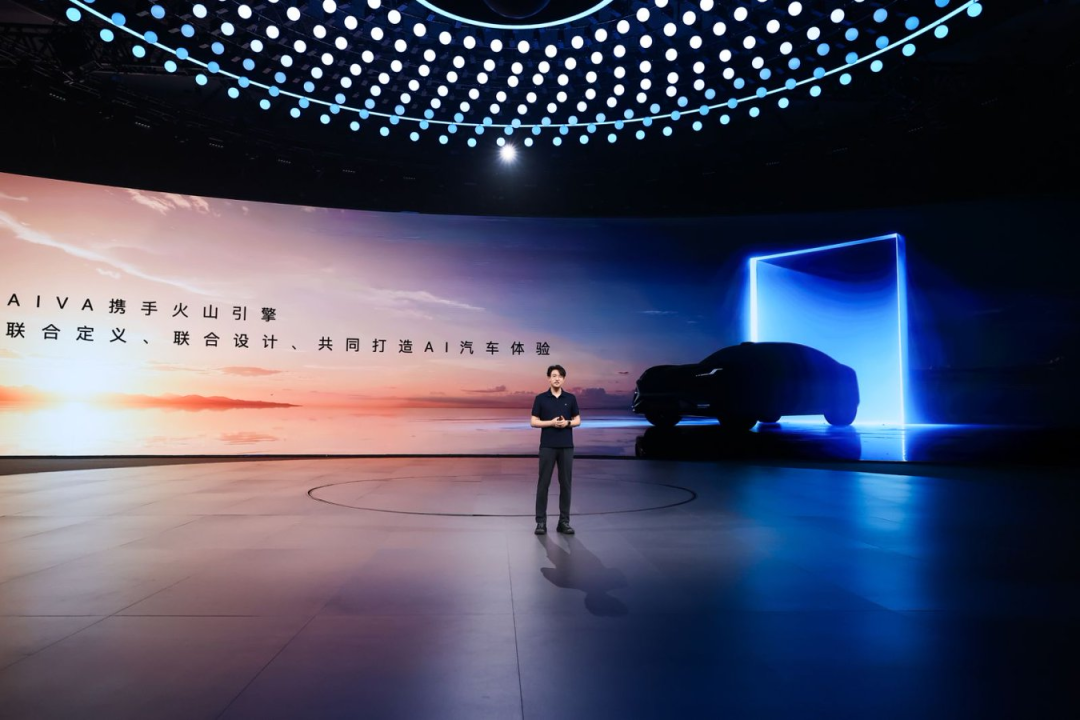
However, there is a slight difference in the collaboration model between ByteDance and Saidou Technology compared to the AITO model. In the case of AIVA, ByteDance is currently the most deeply involved in vehicle manufacturing. According to official introductions, ByteDance and Saidou Technology are jointly defining, designing, and creating AI car experiences. Unlike Huawei’s model, there is no joint marketing involved, indicating that ByteDance’s focus lies in product development rather than full participation. Of course, it remains to be seen how things will unfold, as the situation is dynamically evolving.
Similarly, ByteDance has emphasized that it has not taken any equity stake. This is consistent with Huawei’s approach and is beyond dispute. However, we believe that if ByteDance aims to establish strong product capabilities and brand recognition, it needs to fully commit to AIVA and should therefore participate in marketing empowerment and deeper integration. For example, although Huawei did not directly take an equity stake, it spun off its automotive business unit to establish HiNova, with several key partners of Hongmeng Zhixing taking equity stakes. This has significantly contributed to Huawei’s later success in the automotive market. Therefore, we believe ByteDance could afford to be bolder and more deeply involved in AIVA.
Of course, creating an “AI car” presents challenges, as public understanding remains unclear. The foremost question is: What defines an AI car? How does it differ from today’s smart cars? What distinguishes an AI car from the ordinary supplier model—such as integrating Doubao applications into vehicles? AIVA has addressed these questions with a single vehicle.
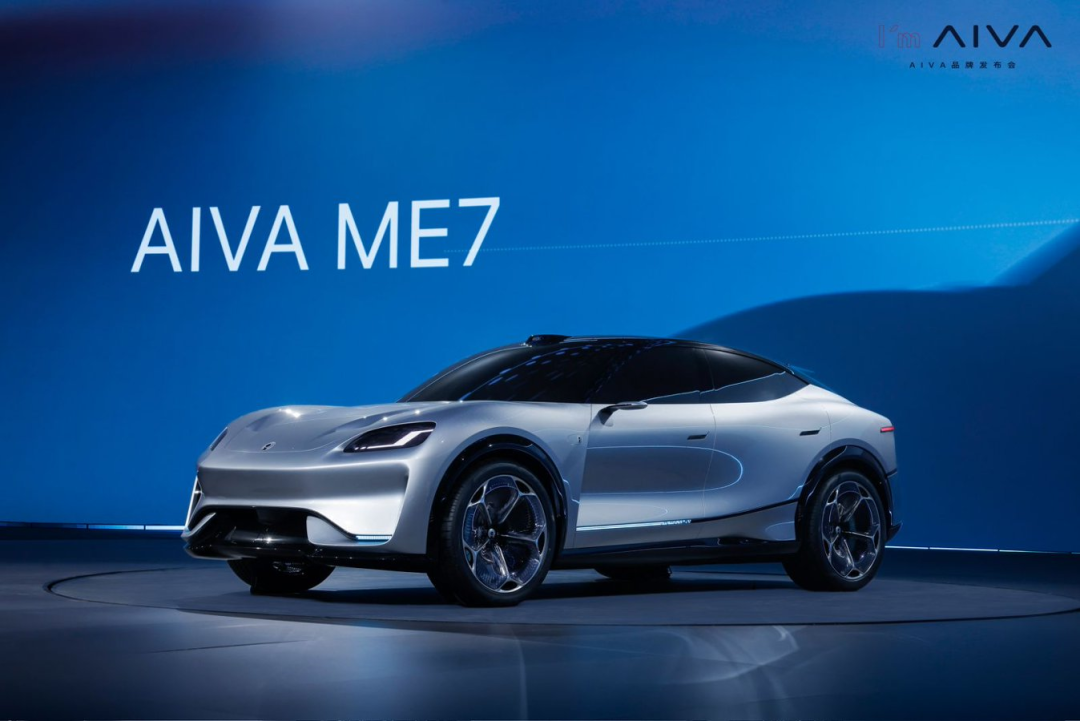
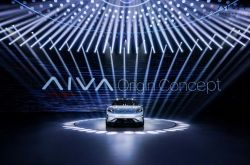
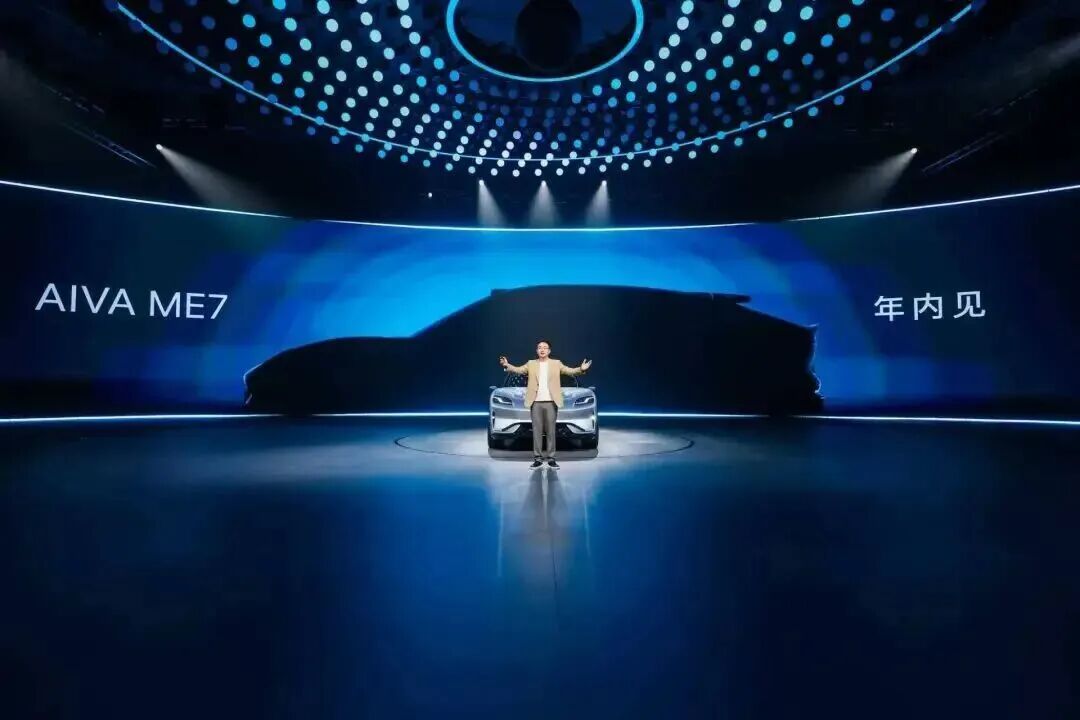
On June 9th, the AIVA Origin Concept concept car made its debut. Li Bo stated that the brand’s first mass-produced model, AIVA ME7, will be unveiled within 2026. Given that only six months remain in the year, this indicates a rapid timeline for mass production, suggesting that the Origin Concept is already close to its final production form. Regarding the ME7, numerous media outlets have already leaked key product information. However, its positioning and product strategy have not been fully and accurately outlined. For instance, while previous media reports suggested a price point around 150,000 yuan, the official announcement at the launch event indicated that the entire product lineup will be priced above 200,000 yuan. Additionally, no further details were provided regarding intelligent driving or cockpit features.
Rumors suggest that the intelligent driving solution will indeed be provided by Yuanrong Qixing, with Yitu serving as the intelligent cockpit technology partner. AIVA has not adopted Huawei’s solution for intelligent driving, opting instead for a differentiated strategy to avoid internal competition with AITO—a choice that appears correct at present. However, whether AIVA will ultimately select these two suppliers remains to be seen. Considering the future development of integrated driving and cockpit systems and the need for deep AI integration, it is possible that ByteDance may directly participate. Of course, ByteDance has consistently emphasized that its model differs from Huawei’s—its core approach is to offer AI large models, cloud computing, content ecosystems, and other “toolkits” and “capability components” to empower automakers through collaborations with Tier 1 suppliers.
ByteDance’s vision is that this model offers greater flexibility, providing automakers with more autonomy in integration while also earning the trust of traditional automakers and new energy vehicle manufacturers, who are particularly sensitive about retaining control over their “souls.” However, Huawei’s model has also gained significant acceptance in the automotive industry and can even be considered quite popular. Therefore, ByteDance’s concerns may gradually diminish.
Of course, this alone is not enough. To create an AI car, Saidou Technology has differentiated itself from traditional automakers in terms of company inception, organizational structure, and operational model. Operationally, Saidou Technology adopts a new “state-owned + private” partnership model. Recently, the company completed a strategic capital increase totaling 6.671 billion yuan, with Chongqing State-Owned Assets Shacizhiyuan becoming the largest shareholder with a 34.50% stake, followed by Seres as the second-largest shareholder (32.96%), and CATL’s wholly-owned subsidiary “Wending Investment” holding nearly 9.89%. This structure, backed by state-owned assets and operated by private enterprises, provides Saidou with significant flexibility.
Secondly, in terms of organizational structure, Saidou Technology has driven changes from the outset to integrate AI into its framework, enhancing decision-making and execution efficiency. Simply put, it is not about establishing a department to drive AI R&D but about adopting a native approach, structured like a tech company, with AI at the core of the entire organizational structure. This has also led to the formation of a new R&D model. As Li Bo put it, “AI comes first, then the car,” rather than the traditional automaker approach of developing AI based on existing vehicles. This represents a strategic shift in focus.
With the rapid development of AI and new energy vehicles, AI cars undoubtedly represent the next major trend. Moving forward, Saidou Technology will further unveil technical and product details in the second half of the year. What is certain is that, in the new race for AI cars, Saidou has already taken a successful lead, further demonstrating its innovative and open capabilities, which are deeply ingrained in its DNA.
-
![]()
Apple’s Cook Bids Adieu: Siri Reinvented, Gemini Joins the Fray, But Are Capital Markets Unimpressed?
-
![]()
Breaking into the AI Computing Power and Low-Altitude Economy Sectors! Tongya Technology Heads for Hong Kong IPO: Tripling Revenue in Three Years, Third in Global Market Share, with Matrix Partners Ch
-
![]()
Will ByteDance’s Collaboration with Saido Follow Huawei’s Footsteps?
-
![]()
Revenue Surges 50-Fold: Q1 Earnings Match Annual Profit, This Year's Hottest Business Revealed
-
![]()
Cook’s Gourd Holds No Magic Cure for Apple’s AI Woes
-
![]()
Stellantis Presents a Catalyst, Propelling Chinese Automobiles Towards Global Supremacy
-
![]()
The First AI Car! Seres + ByteDance, AIVA Targets the 200,000+ Market with Its First Vehicle Launching This Year | Mirror Pro
-
![]()
Most People Don't Understand Kimi's World Cup Prediction