Seres Faces Six Months of Declining Sales: Challenges Coexist with Opportunities
 06/10 2026
 527
527
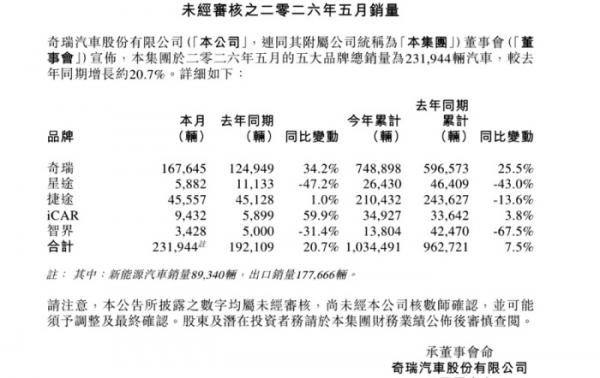
As the second brand under the Harmony Intelligent Mobility Alliance (HIMA), Seres has notably underperformed in the market this year. According to data released by Chery, Seres sold 3,428 units in May, marking a year-on-year decrease of 31.4%. Its total sales for the first five months amounted to 13,800 units, down 67.5% compared to the same period last year.
What's more disconcerting is that Seres has experienced a six-month consecutive decline in sales since December of the previous year. In February, sales plummeted to a mere 945 units, a staggering 90.6% drop year-on-year, hitting an all-time low. At the beginning of the year, Seres set an ambitious annual sales target ranging from 300,000 to 350,000 units. However, based on the minimum target of 300,000 units, Seres has only achieved 4.6% of its annual sales goal in the first five months, making it highly improbable to meet the full-year target.
This raises the question: Why has Seres, backed by industry giants Huawei and Chery and seemingly born with every advantage, underperformed in the market this year? I have identified three primary reasons:
1. Product Strength: Blurred Positioning and Slow Iteration Leave Seres Vulnerable to Competitors
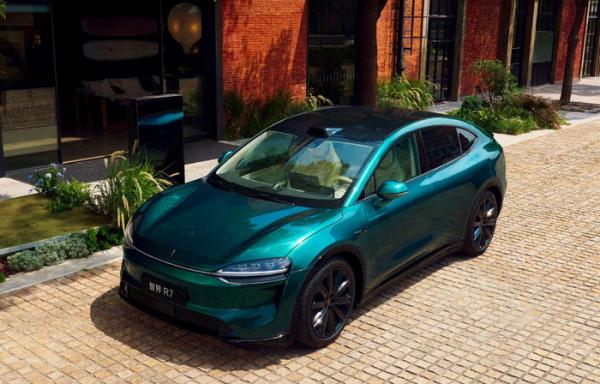
The Seres S7 and R7 are the main contributors to Seres' sales, yet they find themselves in a precarious pricing dilemma. Positioned within the 250,000-350,000 yuan range, they face stiff competition from AITO and Tesla at the higher end, and Xiaomi SU7 and Zeekr 007 at the lower end, lacking a competitive edge in terms of cost-effectiveness. Simultaneously, the Seres S7 and R7 have suffered from slow iteration, with minimal hardware updates, incremental OTA improvements, and delayed major version releases. This has fostered a strong wait-and-see sentiment among users. For instance, the "new model" launched in April this year was essentially a minor facelift, with no changes to the platform, radar, or chips.
Furthermore, the Seres R7 faces internal competition, being highly similar to Chery's own Exeed Sterrato ET, leading to price and channel conflicts that dilute internal sales. Ultimately, Seres lacks clear brand differentiation. Although it positions itself as "sporty and tech-savvy," it has failed to establish sufficient recognition among users. When all HIMA brands share the same core intelligent technologies, the technological edge that Seres promotes loses its appeal as a differentiating factor.
2. Huawei Ecosystem: 'AITO Dominance' Sidelines Seres
Within the HIMA ecosystem, resources are clearly skewed towards the AITO brand, creating a scenario where "AITO stands out alone." This directly dilutes Seres' uniqueness and leads to a rapid erosion of its competitiveness. In the first five months of this year, AITO sold 145,000 units, far surpassing Seres' 13,800 units and accounting for 75.7% of HIMA's total sales, establishing itself as the undisputed main force.
This outcome is not surprising, considering that Seres' partner, Seres Electric (formerly Sokon), was the first automaker to collaborate with Huawei. It received comprehensive support from Huawei in product development, sales, and after-sales services, enjoying better treatment than other automakers. For example, Huawei stores prioritize displaying AITO models, while Seres is often "relegated" or even removed from display, seemingly marginalized. This results in insufficient exposure and a lack of user experience.
3. Partnership Model: Mismatched Rights and Responsibilities Between Huawei and Chery Lead to Inefficient Decision-Making
While partnerships between Huawei and Seres Electric, BAIC, and JAC have been relatively smooth, the collaboration between Huawei and Chery has encountered setbacks. In December 2024, Chery's chairman, Yin Tongyue, revealed that collaborating with Huawei was initially very challenging, to the extent that a senior executive was dismissed to ensure smooth cooperation. This move not only demonstrates Chery's firm commitment to partnering with Huawei but also indirectly confirms the significant resistance in their collaboration, rooted in cultural conflicts.
Huawei emphasizes an internet-based mindset, focusing on rapid iteration and strong execution. In contrast, Chery, a traditional automaker, prioritizes processes and slow decision-making, with relatively sluggish responses. Therefore, disagreements and power struggles are inevitable in various aspects of their partnership, including the cooperation model, resource allocation, product positioning, and channel management, ultimately affecting the effectiveness of their collaboration.
It's worth mentioning that although Yin Tongyue has positioned Seres as Chery's highest-level strategic layout, indicating its importance, the reality is that Chery's own sales are strong, exceeding 1.1 million units in the first five months. This means that Seres is not Chery's "lifeline" and may not be as internally important as Arcfox is to BAIC or Maextro is to JAC. Consequently, resource allocation to Seres is relatively limited, and it inevitably faces internal competition with Exeed.
Faced with a severe sales situation, Seres has not remained idle but has launched a series of proactive self-rescue measures, primarily reflected in the following two aspects:
1. Management Shake-Up: In the first half of this year, Zhao Changjiang, a former executive from BYD's Denza, and Guo Rui, a former executive from Huawei and Honor, joined Seres, forming a "pragmatic automaker + Huawei strategist" dream team aimed at strengthening brand building and channel operations. Notably, Yu Jiufeng from Chery stepped down, and Guo Rui from Huawei took over as CEO, fully overseeing Seres' operations. Meanwhile, Chery shifted to a "holding without directing" role, giving Guo Rui and Zhao Changjiang more room to maneuver.
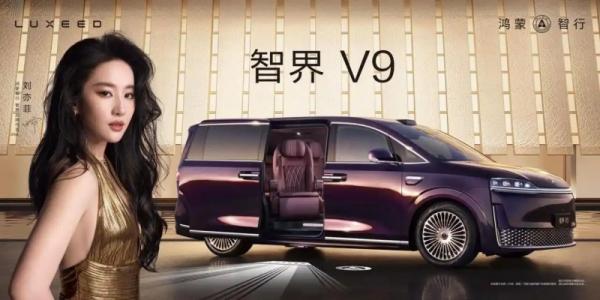
2. Betting on the Flagship MPV Seres V9: Seres is pinning its hopes for a breakthrough on the HIMA's first flagship MPV, the Seres V9, going head-to-head with strong competitors like the Zeekr 009 and Denza D9. Fortunately, it has lived up to expectations, with extremely strong pre-sales, surpassing 18,000 orders in just 21 days after its launch. The first deliveries began on June 6. To ensure quality, Seres invested 1 billion yuan in building a dedicated welding production line and brought in Ferrari's former chief designer and BMW's chassis tuning team.
In summary, the sharp decline in sales represents a period of growing pains for Seres, but challenges also bring opportunities. Currently, by introducing top talent, launching differentiated high-end MPV products, and restructuring its partnership framework, Seres is undergoing a transformative self-reinvention. Moving forward, the key test of Seres' self-rescue efforts will be whether it can convert the pre-sale excitement for the Seres V9 into actual deliveries.
To be blunt, Seres' management should not celebrate prematurely. Given the historical performance gaps of the Seres S7 and R7, there should be a high alert for a potential "pre-sale boom but post-sale slump" with the V9. Considering that bulk deliveries of this model only recently began, its contribution to first-half sales will be limited, making the second-half market performance crucial. If monthly sales can stabilize between 5,000 and 8,000 units, it could halt Seres' declining trend. Let's wait and see!
-
![]()
Apple's Cook Takes Final Bow: Siri Reimagined, Gemini Steps In, But Capital Markets Remain Unconvinced
-
![]()
Apple’s Cook Bids Adieu: Siri Reinvented, Gemini Joins the Fray, But Are Capital Markets Unimpressed?
-
![]()
Breaking into the AI Computing Power and Low-Altitude Economy Sectors! Tongya Technology Heads for Hong Kong IPO: Tripling Revenue in Three Years, Third in Global Market Share, with Matrix Partners Ch
-
![]()
Will ByteDance’s Collaboration with Saido Follow Huawei’s Footsteps?
-
![]()
Revenue Surges 50-Fold: Q1 Earnings Match Annual Profit, This Year's Hottest Business Revealed
-
![]()
Cook’s Gourd Holds No Magic Cure for Apple’s AI Woes
-
![]()
Stellantis Presents a Catalyst, Propelling Chinese Automobiles Towards Global Supremacy
-
![]()
The First AI Car! Seres + ByteDance, AIVA Targets the 200,000+ Market with Its First Vehicle Launching This Year | Mirror Pro