Cars Can't Be Made with the 'Quick Buck' Mentality: Li Shufu's Candid yet Impactful Remarks
 06/15 2026
 355
355
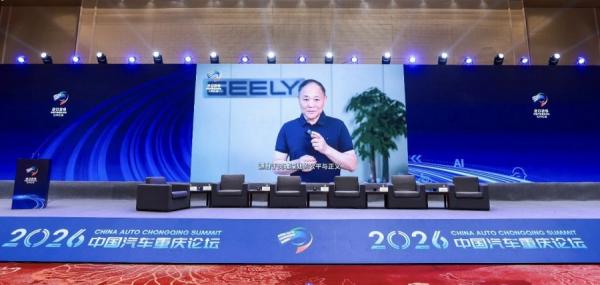
Yesterday, at the 2026 China Automobile Chongqing Forum, Li Shufu, Chairman of Geely Holding Group, underscored that cars cannot be manufactured with a 'quick buck' mindset. 'Vehicles are durable consumer goods where safety takes precedence. Faking expertise only leads to endless problems. The development of any new automotive product must follow the objective laws of automotive R&D, rather than skipping testing phases, shortening testing and validation periods, or taking shortcuts.'
His latest remarks, bold and straightforward, point to the core risks in the current fierce competition within the new energy vehicle sector, namely the prevailing impatient and shortcut-driven atmosphere in the industry fueled by capital. This is primarily manifested in the following four aspects:
① Capital-driven approach: New car-making entrants follow the pattern of 'raising funds → adding features → chasing volume → going public', prioritizing speed over substance.
② Shortened development cycles: While automotive R&D traditionally took 3-5 years, some new models are now mass-produced in just 1-2 years, with insufficient validation.
③ Postponed risk management: Relying on OTA updates to fix vulnerabilities, shifting safety and reliability risks to users.
④ Misguided values: Treating car manufacturing as a 'hype' business, neglecting the long-term foundations of safety, health, and sustainability.
In response, Li Shufu maintains a clear-eyed perspective. His blunt words, though coarse in expression, carry profound implications, encompassing the following three core points:
1. Upholding Safety Standards and Valuing Life
Automobiles are directly linked to human lives and are durable consumer goods where safety is paramount. Li Shufu stresses that faking expertise only leads to endless problems. The development of any new product must adhere to the objective laws of R&D, and shortcuts must never be taken to pursue speed by skipping testing phases or shortening validation periods. The development of cutting-edge technologies such as autonomous driving in vehicles must also be based on the safety concept of safeguarding human lives, which fundamentally differs from the internet thinking in the IT industry that prioritizes rapid iteration and rebooting after crashes.
2. Respecting R&D Rules and Rejecting Shortcuts
The transition from traditional vehicles to internet-connected and new energy vehicles is an orderly process that cannot be simply leapfrogged. True technological innovation must undergo a rigorous process that withstands scrutiny, just as mathematical problem-solving requires computational steps. Any technological achievement must have a clear origin and basis, comply with laws and regulations, and must not blindly copy or take shortcuts.
3. Embracing Forward-Looking R&D and Long-Termism
Faced with unprecedented global changes in the past century, enterprises must strategically build a management team and corporate culture capable of waging a protracted war. There are no shortcuts in developing industrial businesses; one must endure solitude, resist temptations, and stay grounded and dedicated to achieve significant success over time. Geely's approach of 'learning from masters' through investments and acquisitions, deeply studying the essence of car-making technologies, and grasping technical principles from the source, while continuously laying foundations and enhancing internal capabilities, is precisely aimed at overcoming short-sightedness and achieving comprehensive leadership.
In fact, independent brand automobiles must pursue a path of high-quality development, abandoning mere price wars and instead engaging in technological, quality, and brand competitions. Safety, health, and sustainability are the lifeblood of automotive enterprises. Only by respecting intellectual property rights and the history of automotive industry development can they provide better consumer experiences and ensure sustainable development for the enterprises.
Overall, Li Shufu's statement this time serves as a corrective to the impatient market atmosphere, calling for the automotive industry to return to the essence of car manufacturing, prioritize safety, quality, and core underlying technologies, and respond to industrial changes with a long-term perspective. This is also based on his experience. Geely's 30-year journey, marked by steadiness and caution, from a grassroots player to a global entity, relies on technological accumulation and a commitment to safety standards.
In other words, speed is a means, while stability is the foundation; capital can accelerate technological development but cannot rush safety and reverence for life. In my opinion, Li Shufu is not opposed to innovation but to reckless advances that ignore safety. New energy vehicles must prioritize safety above all else. Looking ahead, players who take shortcuts are destined to be eliminated, and the survivors will be those with solid technology, reliable safety, and a commitment to long-termism. What do you think?
-
Who Can Challenge SpaceX: Global Commercial Rockets Enter a New Phase of Differentiation
-
![]()
Could BYD Achieve the Title of 'World's Largest Automaker' by 2030?
-
![]()
Tencent Backs Another Robot IPO Despite Over 1 Billion Yuan in Cumulative Losses
-
![]()
AI Leads the Way, Cars Follow Suit: How AIVA's Visionary Slogan Unlocks New Horizons
-
![]()
Final Verdict: 2026 China Automotive Chongqing Forum Takes a High-End Stance and Highlights Core Issues
-
![]()
DingTalk Leadership Overhaul: Wu Zhao's 'Triumphs and Trials,' Chen Yusen's 'Challenge'
-
Challenges Loom for Amazon and Meta's Free Cash Flow: Is There an AI Bubble?
-
![]()
With Zhang Xiaolong Leading the Charge, Can WeChat’s AI Agent Secure Another Win?