With Zhang Xiaolong Leading the Charge, Can WeChat’s AI Agent Secure Another Win?
 06/15 2026
 494
494
The much-anticipated WeChat AI agent has finally unveiled a glimpse of its capabilities.
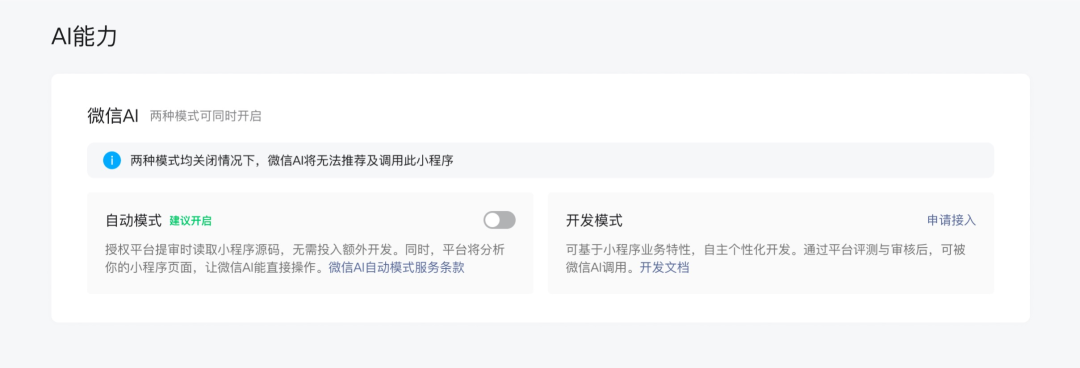
On June 8, 2026, the official WeChat Developer public account released the "Guidelines for Developers to Access the WeChat AI Ecosystem," confirming the launch of internal testing for WeChat AI. Developers can now integrate mini-programs into the WeChat AI ecosystem via automatic or development modes.
According to the service terms for WeChat AI’s automatic mode, "WeChat AI" functions as an AI assistant within the WeChat software, capable of natural language dialogue interactions with users and executing specific tasks.
WeChat is not alone in the AI agent race. Since the latter half of 2025, with the gradual maturation of AI technology, tech giants like OpenAI, Alibaba, and ByteDance have been actively deploying AI agents capable of performing specific tasks.
For instance, as reported by the Financial Times, ChatGPT is set to undergo its most significant transformation since its launch, evolving from a chatbot into a "super app" that integrates programming tools and agent capabilities. A senior OpenAI executive even declared, "Chat is dead."
In this competitive landscape, WeChat’s advantages stand out. Not only does it boast 1.4 billion monthly active users and a mature content and service ecosystem, but it also has Zhang Xiaolong at the helm.
As a legendary product manager spanning the PC and mobile internet eras, Zhang Xiaolong has navigated multiple industrial cycles. He first triumphed in the email war with Foxmail and QQ Mailbox, then propelled WeChat to dominance in the mobile internet battle, consistently staying ahead of the curve.
The question now is: As the AI era accelerates, can Zhang Xiaolong secure a third product victory and continue his legendary streak?
Yuanbao "Leaks," Zhang Xiaolong Steps Up Again
The WeChat Agent has captured significant attention not only because it is embedded in a national social platform affecting billions of users’ daily lives but also because it represents Tencent and WeChat’s ambition to secure a foothold in the AI race.
In the first half of 2025 and during the 2026 Spring Festival, Tencent launched two large-scale marketing campaigns to promote its AI assistant, Yuanbao. However, due to a lack of differentiation, Yuanbao failed to become a leading player in the AI sector.
In response, at the 2026 Annual General Meeting, Tencent’s Chairman and CEO, Ma Huateng, lamented, "A year ago, we thought we were on board, but later discovered the ship was leaking. We quickly switched to another ship, and now we feel like we're standing but can't sit comfortably. We still hope the ship can speed up."
Just as Tencent regained its footing in the short-video sector with WeChat Channels after failed attempts with products like Weishi, Huoguo Video, and Penguin Kan Kan, now, with independent AI assistants like Yuanbao struggling, Tencent is naturally pushing WeChat to the forefront again.
At this stage, Tencent urgently needs WeChat to seize the AI opportunity, and Zhang Xiaolong aspires to reshape WeChat through AI technology. As the mobile internet dividend fades, WeChat finds itself at a crossroads with "no cards left to play."
Since the launch of WeChat 8.0 in January 2021, marking WeChat’s 10th anniversary, WeChat has not released a major version update for five years, with only minor product detail optimizations in daily updates.
This is not due to a decline in Zhang Xiaolong’s product innovation capabilities but because the innovation space in the mobile internet sector continues to narrow. With smartphone hardware innovation dividends waning and user growth hitting a ceiling, the mobile internet industry has not seen a new product paradigm that reshapes user behavior since the rise of short videos.
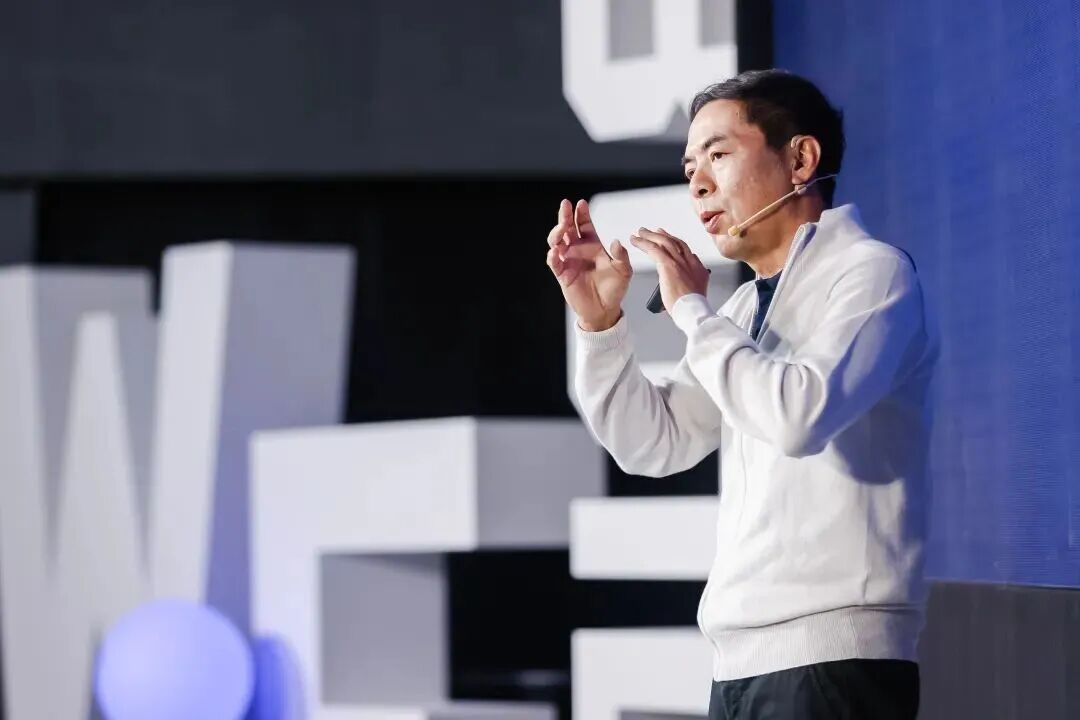
Due to the lack of novel product concepts to elaborate on, Zhang Xiaolong has faded from the public eye since his speech at the WeChat Open Class Pro in early 2021 and has not held a large-scale public theme speech since.
With the maturation of AI technology, Zhang Xiaolong has finally found a new focal point. In late April 2026, the official "Yuanbao" microblog revealed that WeChat 9.0 is expected to be fully rolled out in Q3 2026, with the core highlight being a built-in super AI agent.
It can be said that WeChat Agent is not only a key strategic pivot for Tencent in the competition for AI access points but also shoulders the responsibility of assisting WeChat in opening up new growth spaces. Leveraging Agent technology, WeChat aims to evolve from a platform connecting people and services into an intelligent service network that understands needs and proactively coordinates resources, thus achieving a glorious transformation towards the AI era.
From Foxmail to WeChat Agent: Zhang Xiaolong’s Evolution and Consistency
As a product manager with a career spanning nearly three decades, from the PC era, Zhang Xiaolong has created more than just WeChat; he has developed products like Foxmail and QQ Mailbox, each with distinct forms.
However, it is important to note that despite the varying application scenarios of these products, Zhang Xiaolong’s product philosophy remains consistent—centering on user value to create "good products" and then gently promoting commercialization. Among them, "good products" must adhere to the ten design principles proposed by Dieter Rams, the former chief industrial designer at Braun, including creativity, usefulness, and aesthetics.
Reviewing products like Foxmail, QQ Mailbox, and WeChat, it is evident that these products are not the result of blind innovation but are all grounded in meeting users’ real needs for efficient communication and align with Dieter Rams’ design principles.
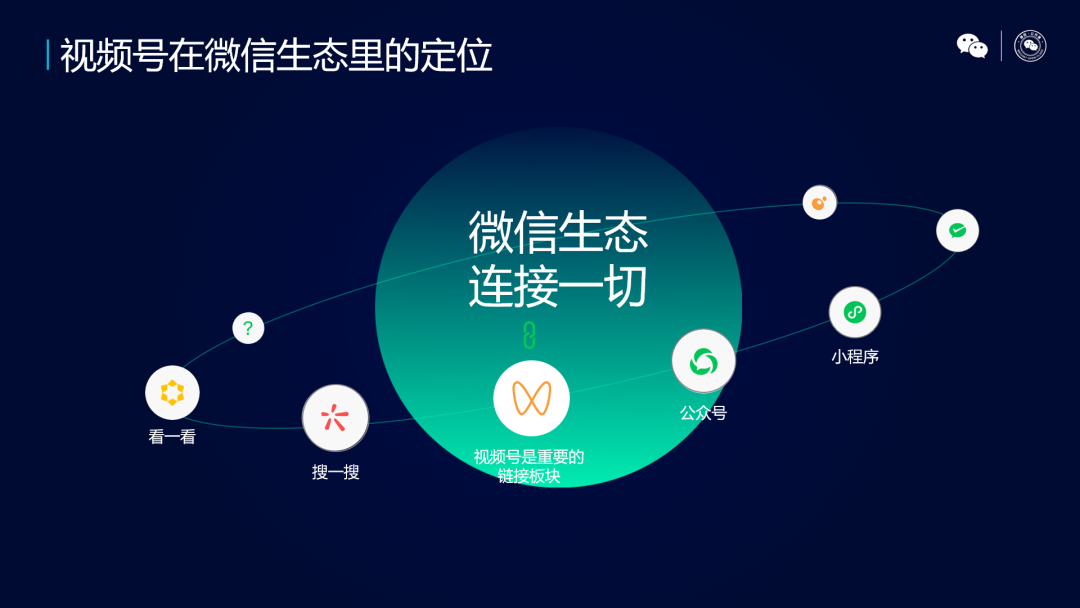
Building on this foundation, Zhang Xiaolong then strengthens the unique qualities of different tools based on various terminal carriers and usage scenarios. A typical example is WeChat, which, due to its portable nature, has not limited itself to social networking but has extended into payments, entertainment, mini-programs, and other businesses, successfully evolving into "a way of life."
Despite creating numerous products that have captured vast audiences, Zhang Xiaolong has not, like most product managers, hastily pushed for commercialization.
According to Caijing, when developing Foxmail, Zhou Hongyi, the founder and chairman of 360 Group, advised Zhang Xiaolong, "Foxmail has no business model; it needs to add ads to be profitable." Zhang Xiaolong responded, "Why must it be that way? As long as there are users and sentiment, it's enough."

As a national-level social product, WeChat’s splash screen holds immense commercial value, but to this day, WeChat has not introduced splash screen ads.
In response, at the WeChat Open Class PRO held in early 2019, Zhang Xiaolong stated, "You spend more time on WeChat than with your family and friends. WeChat must be your best friend, and I don’t want you to have to see ads on your best friend’s face every time you talk."
Through the design philosophies of products like Foxmail, QQ Mailbox, and WeChat, it is not difficult to infer the traits of WeChat Agent.
In terms of form, although WeChat Agent will become an important access point, considering simple design and not disrupting user habits, it may not occupy WeChat’s primary page or force users to engage but will integrate into WeChat as seamlessly as mini-programs.
At the functional level, services like WeChat Official Accounts, mini-programs, and mini-games have always aimed to "help creators realize their value," and WeChat Agent will likely continue this product philosophy, not limiting itself to being a Chatbot but horizontally connecting WeChat’s vast ecosystem to improve user efficiency and service provider reach.
When invoking specific services, WeChat Agent may not follow simple commercialization logics like bidding but will intelligently screen and schedule different services based on user needs and service quality, prioritizing services that best meet user intentions and solve practical problems.
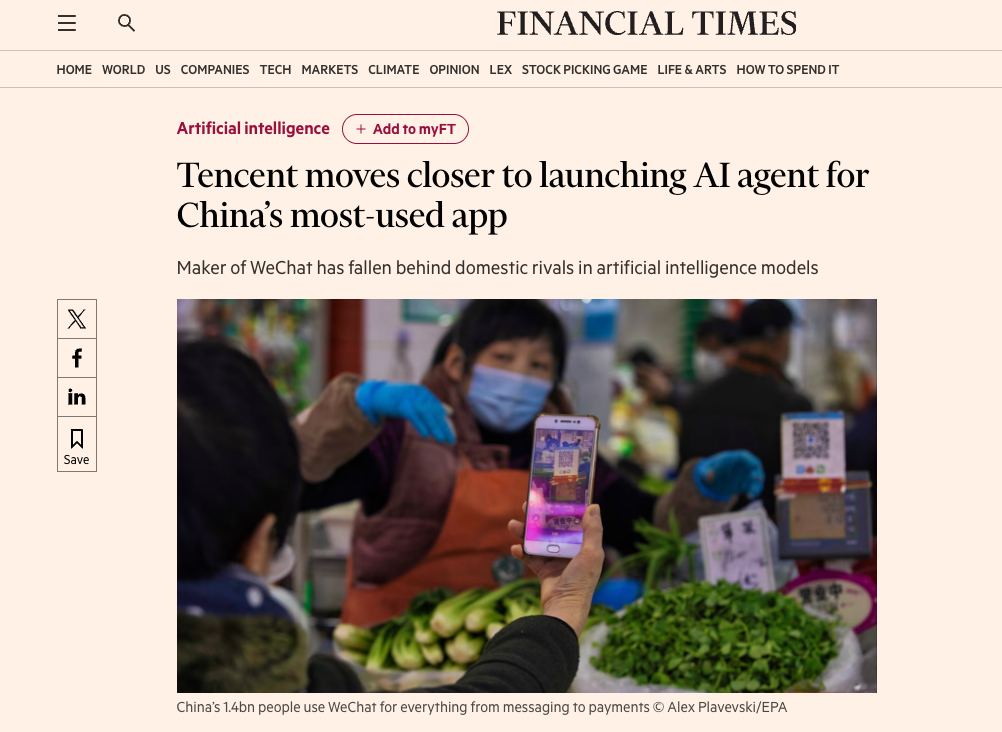
According to the Financial Times, citing a person who saw an early demonstration of WeChat Agent, users can simply swipe right on the main WeChat chat interface to bring up the AI agent’s dialogue window. After entering instructions, the agent can automatically invoke mini-programs to perform various tasks.
If a keyword were to summarize WeChat’s development over the past decade, "connection" would undoubtedly be the most fitting. Through launching social, payment, and Channels businesses, Zhang Xiaolong has transformed WeChat into a vital hub connecting people, services, and content.
With the maturation of AI technology, WeChat’s connection capabilities are poised for a qualitative leap—not only connecting various services but also understanding needs, scheduling resources, and completing tasks. For Zhang Xiaolong, this represents a significant opportunity to realize his product ideal of "connecting everything."
WeChat Holds Strong Influence, but Zhang Xiaolong Faces Significant Challenges
As AI technology applications delve deeper, AI assistants developed by tech companies like Alibaba and ByteDance are no longer limited to being Chatbots but are evolving towards "executing tasks with a single sentence."
However, due to a lack of rich ecological resources, products like Qianwen and Doubao have built service systems around their respective ecosystems, capable of completing only limited tasks and struggling to achieve true "general intelligence."
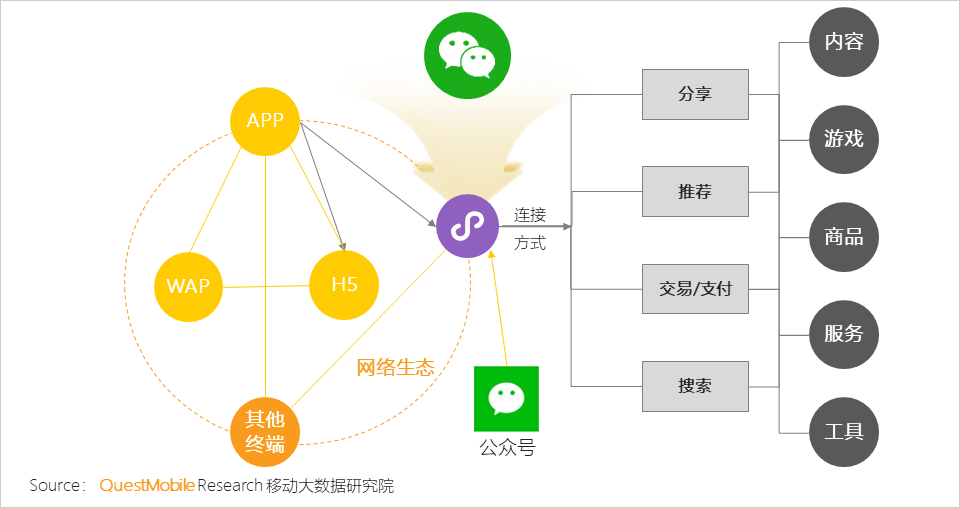
In contrast, after years of cultivation, WeChat’s mini-program ecosystem is highly mature. According to LatePost, citing WeChat sources, the WeChat mini-program ecosystem is flourishing, with users able to complete 70% of their government service needs on WeChat, representing a natural advantage for WeChat’s Agentification. "These ecosystems are unlikely to have the incentive to move to a new platform, sign new agreements, or build new systems."
Indeed, WeChat possesses strong influence—after the official announcement of WeChat AI’s internal testing, dozens of internet platforms, including Meituan, JD.com, and Didi, quickly adapted.
However, it is important to note that while WeChat has a natural ecological advantage in deploying Agent, AI agents are not simple internet products but involve complex industrial chain coordination, posing significant challenges for Zhang Xiaolong.
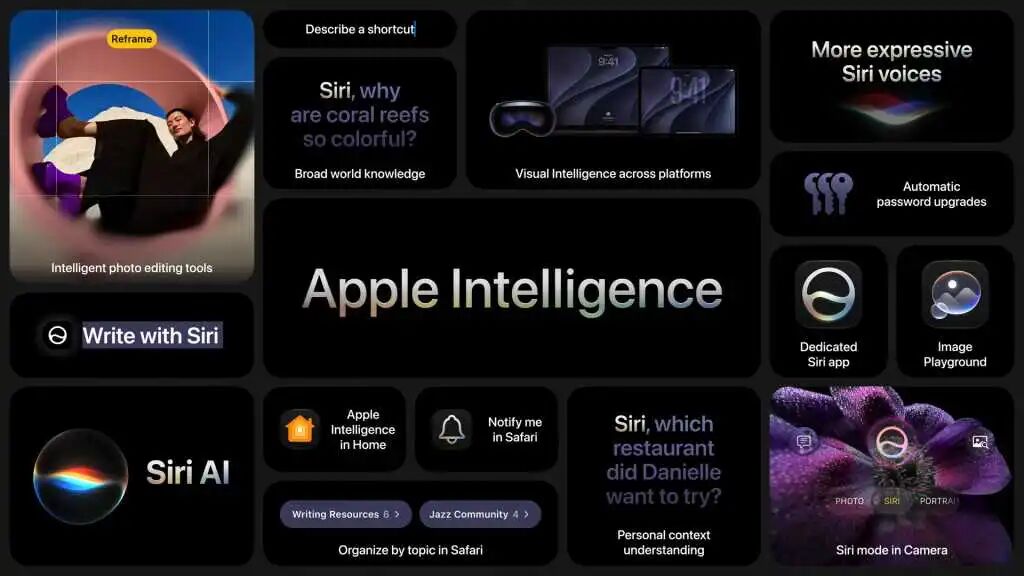
Due to the involvement of intent understanding, task decomposition, and tool invocation, Agent tasks have high computational demands. As a software product, WeChat does not control terminal hardware and cannot, like Apple’s Apple Intelligence, invoke on-device computational power to perform tasks but is highly dependent on cloud computational power.
In this context, 1.4 billion monthly active users will pose significant challenges for WeChat Agent’s implementation. After WeChat Agent’s launch, if Tencent’s computational power reserves cannot meet the demands of a vast user base, it could easily lead to product crashes. A typical example is Qianwen, which, despite being backed by Alibaba, frequently experienced system crashes and page lag during its "Spring Festival 3 Billion Yuan Giveaway" campaign.
Furthermore, unlike traditional software where user growth reduces unit costs, Agent costs rise with usage volume, easily falling into a "scale trap." Consequently, many tech companies’ AI assistants have introduced paid models.
As an instant messaging product with infrastructure attributes, to lower user barriers, most of WeChat’s services do not directly charge users. It is foreseeable that WeChat Agent will likely offer free services initially.
Financial reports show that in Q1 2026, Tencent’s new AI products incurred a net loss of approximately 8.8 billion yuan, annualized at around 35.2 billion yuan, or approximately 96 million yuan daily. Considering WeChat Agent’s greater influence, Tencent’s AI-related losses may further increase after the business launches.
Thus, WeChat Agent faces a dilemma: offering free services will impose significant cost pressures on the company, while charging fees will suppress user demand. How to lead WeChat Agent to achieve a closed-loop commercialization will be another major challenge for Zhang Xiaolong.
In summary, reviewing Zhang Xiaolong’s nearly three-decade career, from Foxmail to QQ Mailbox and then to WeChat, his product philosophy remains consistent: continuously reducing the connection costs between people, information, and services while ensuring an outstanding user experience through restrained, elegant, and simple product design.
In the past, internet products solved "connection" problems; in the AI era, users demand more than just connected services—they need capabilities to understand needs, schedule resources, and complete tasks. From this perspective, WeChat Agent is competing for the core strategic access point of the next era.
However, unlike the mobile internet era, where success relied on product design and traffic scale, competition in the AI era involves model capabilities, computational infrastructure, ecological coordination, and user habit reconstruction, with far more complex variables than before. Therefore, WeChat Agent may well become the most challenging product battle in Zhang Xiaolong’s career.
While WeChat possesses unparalleled user scale and ecological advantages, whether it can translate these advantages into a moat in the AI era remains to be seen over time.
-
![]()
Zhongji Innolight and Its Peers Turned into AI Scratch Cards by Wall Street
-
![]()
Li Jie's 'High-Speed Charge' and J&T Express's 'Abrupt Halt'
-
![]()
Two Departments Jointly Announce the 2026 Special Initiative for Practical Training of Humanoid Robots and Embodied AI
-
Who Can Challenge SpaceX: Global Commercial Rockets Enter a New Phase of Differentiation
-
![]()
Could BYD Achieve the Title of 'World's Largest Automaker' by 2030?
-
![]()
Tencent Backs Another Robot IPO Despite Over 1 Billion Yuan in Cumulative Losses
-
![]()
AI Leads the Way, Cars Follow Suit: How AIVA's Visionary Slogan Unlocks New Horizons
-
![]()
Final Verdict: 2026 China Automotive Chongqing Forum Takes a High-End Stance and Highlights Core Issues