AI Leads the Way, Cars Follow Suit: How AIVA's Visionary Slogan Unlocks New Horizons
 06/15 2026
 385
385

By Wan Yanbo
Edited by Xiao Zhuzhu
In 2026, China's auto market finds itself at a crossroads, grappling with what could be termed a 'seven-year itch.' Seven years on from the surge of new entrants around 2019, the industry has yet to establish a clear competitive hierarchy; instead, competition has only intensified. Price wars have dragged gross margins into the red by the third year. The product definition logic across automakers has become increasingly homogenized: 800V architectures, LiDAR systems, oversized screens, and even the style of presentation slides during product launches are strikingly similar. Consumers are growing weary. One can't help but wonder: Does this market genuinely need another new brand?
When Saido Technology unveiled its new brand, AIVA, on June 9, my initial reaction was skeptical: Another one? Is there really any room left in this crowded market?
However, after watching Li Bo's hour-long live address, I couldn't simply dismiss AIVA as just another 'PPT carmaker.' It wasn't his flashy rhetoric that convinced me, but rather his omission of the traditional parameters that automakers typically obsess over during launches—such as zero-to-100 km/h acceleration times, driving range, and wheelbase dimensions. Instead, he repeatedly delved into a seemingly abstract question: What does 'AI-defined automobiles' truly entail?
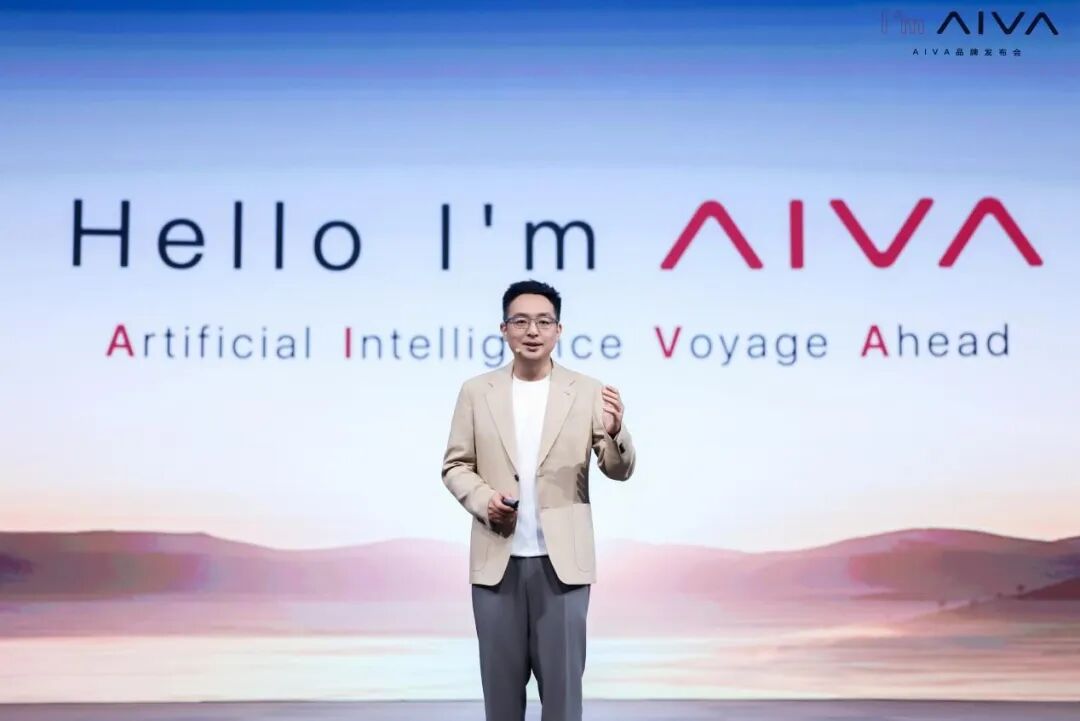
(Li Bo, President & Product Manager of AIVA)
To be honest, the term 'AI-defined automobiles' has become somewhat of a cliché. Nearly every new car these days claims to be 'AI-powered,' but in practice, this often translates to incorporating a large language model voice assistant into the infotainment system—capable of engaging in small talk, adjusting air conditioning temperatures, or cracking bad jokes—and then branding it as 'AI-native.' This superficial application of AI falls far short of true integration.
AIVA offers a different perspective. They advocate for a counterintuitive sequence: 'AI first, then cars.' From the very inception of product definition, the focus isn't on sketching chassis designs, fixing wheelbases, or selecting batteries. Instead, they pose questions like: What does this AI need? Which sensors must it utilize? What data flow architecture is required? How should executive systems collaborate? Only after clarifying these questions do they proceed to design the vehicle's hardware and mechanical structures.
Is this logic revolutionary in 2026? Not necessarily. Tesla adopted a similar approach when constructing its Dojo supercomputing center, but AIVA might be the first in China to systematically implement it in product development. Li Bo acknowledges that the biggest pain point in traditional carmaking was 'human cognitive limits defining demand boundaries.' No matter how skilled product managers are, reliance on surveys and deductions can only uncover so much. Now, AI handles massive data analysis, trend insights, and demand reasoning, uncovering needs 'that humans never imagined.' Product managers then 'pan for gold' in these findings. He likens it to 'miners digging with AI upfront, humans refining afterward.'
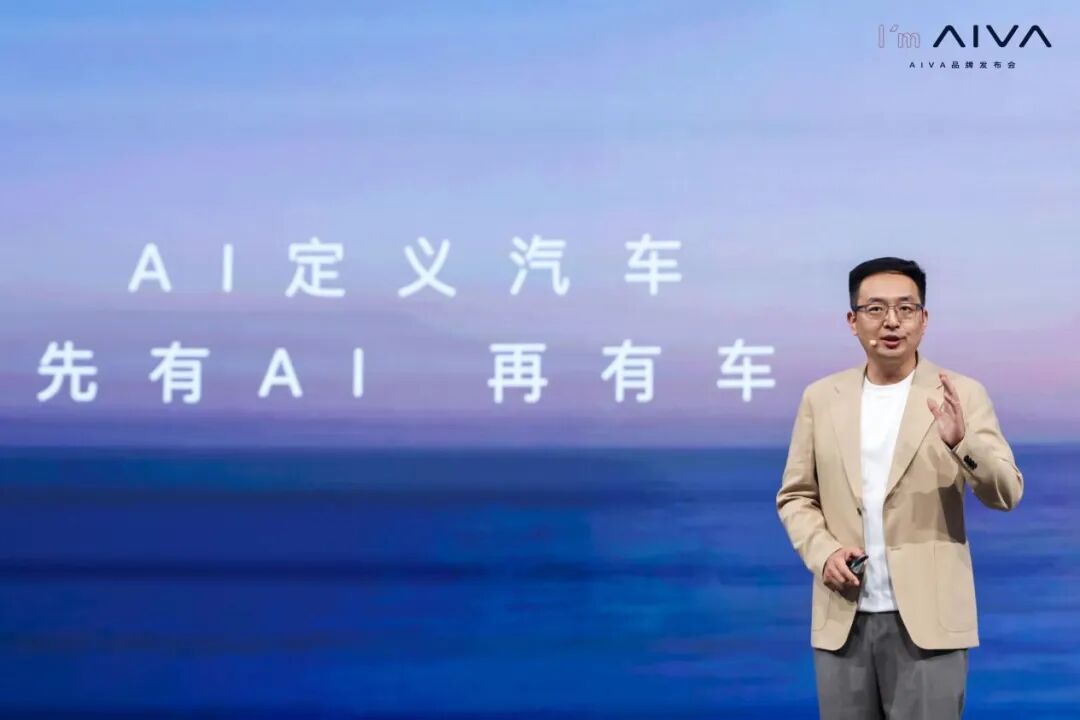
(Li Bo, President & Product Manager of AIVA)
This may sound idealistic, but it's not mere empty talk. AIVA's shareholder structure is intriguing—state-owned capital holds the majority stake, Seres is the second-largest shareholder, CATL is also a shareholder, and Volcano Engine is a deep collaborator. This isn't the traditional model where OEMs simply purchase APIs from suppliers; it binds AI capabilities with manufacturing at the capital level. Yang Liwei, VP of Volcano Engine, made a lasting impression with his remark: 'If a car is defined around AI from day one, its interaction methods, intelligence ceiling, and user experience will fundamentally change.' The keyword here is 'day one'—not relying on OTA updates before launch or post-delivery upgrades, but treating AI as the vehicle's soul from the very beginning.
What tangible benefits does this 'AI-first' approach offer to users? Li Bo shared several examples that I found compelling.

(Yang Liwei, VP of Volcano Engine)
Consider air conditioning set to 22°C. The experience differs greatly when you set it to 22°C while wearing a T-shirt in summer versus a wool sweater in winter. Or after playing sports, drenched in sweat, versus wearing a suit for a client meeting. Or when a child is fussing in the backseat versus sleeping quietly. Traditional cars don't account for these variations—they simply stick to 22°C. But AIVA's logic is to remember your preferences, sense your and the environment's state, and automatically adjust to 'your 22°C' without manual input.
Another example is driving rhythm. If you oversleep by five minutes, AIVA proactively selects the fastest lane to make up time. Approaching a poorly lit corner in a parking garage, it automatically activates surround-view cameras. In traffic jams, it reduces the following distance slightly because it knows you hate cut-ins, then widens it automatically on highways for safety. The challenge isn't implementing these features—it's making AI truly understand 'your habits' rather than applying generic driving modes.
One detail I particularly appreciate is that AIVA's in-car assistant has no fixed personality. It evolves based on your interaction time. If you're straightforward, it minimizes chatter; if you prefer gentle companionship, it engages more. When elders or superiors are aboard, it switches to professional mode; with strangers, it isolates your private memories. In essence, it's not 'an AI' but 'your AI'—as unique as you are.
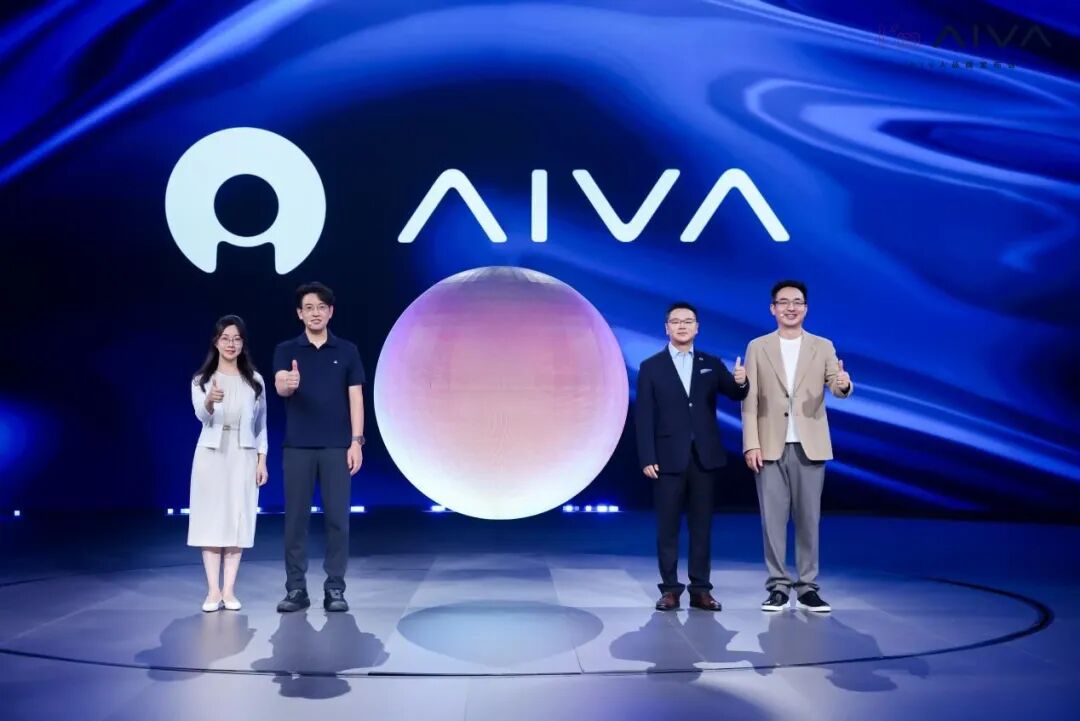
(From left: Chen Jingwen, Head of Volcano Engine's Smart Cockpit; Yang Liwei, VP of Volcano Engine; Zhang Zhengyuan, Chairman of AIVA; Li Bo, President & Product Manager of AIVA)
Does this sound like dating? Yes, it does. Li Bo admitted at the launch that AIVA aims to foster 'tacit understanding and emotional connection' with users, not just a 'command-execution' tool relationship. He even used phrases like 'the beautiful convergence of carbon-based and silicon-based life,' which might sound cheesy for a car launch. But consider this: Mainstream consumers—especially in the ¥200,000+ market—care about more than just specs. They want something that 'understands' them. That's why Li Auto turned 'dad cars' into a category and NIO built 'user enterprise' into a belief. Emotional value is never trivial in the automotive industry.
That said, my stance on AIVA is 'cautiously optimistic.' I'm optimistic because their approach differs from the mainstream—when everyone else is stacking hardware, spending an hour discussing product logic, human-car relationships, and emotional companionship deserves respect. Their backend resources are solid: Seres' manufacturing expertise, CATL's battery ecosystem, and Volcano Engine's AI foundation—not something any new player can assemble casually.
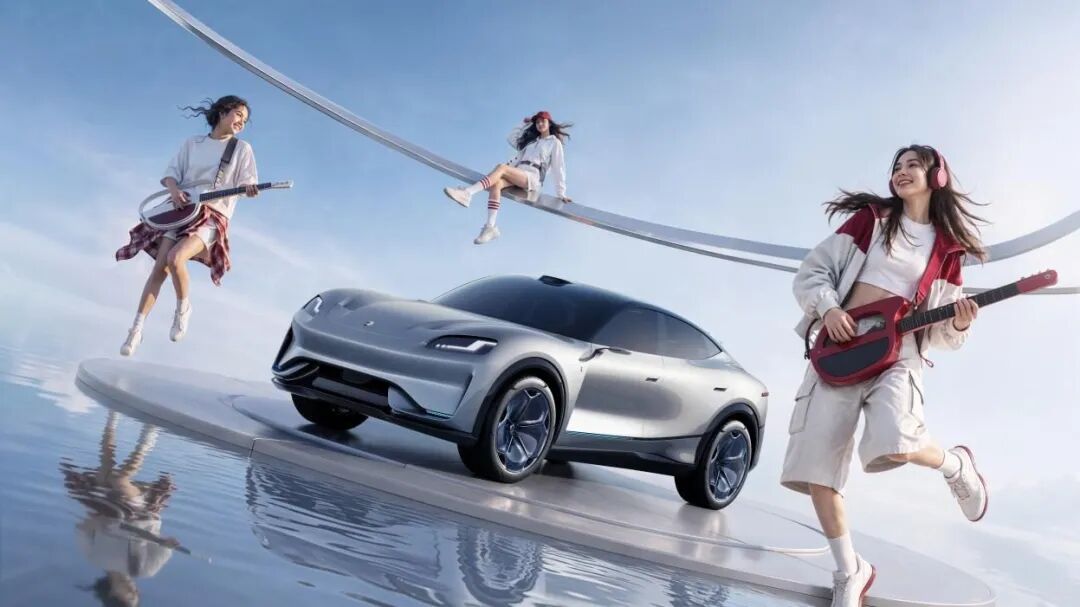
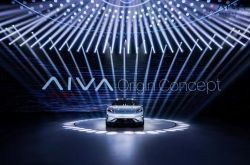
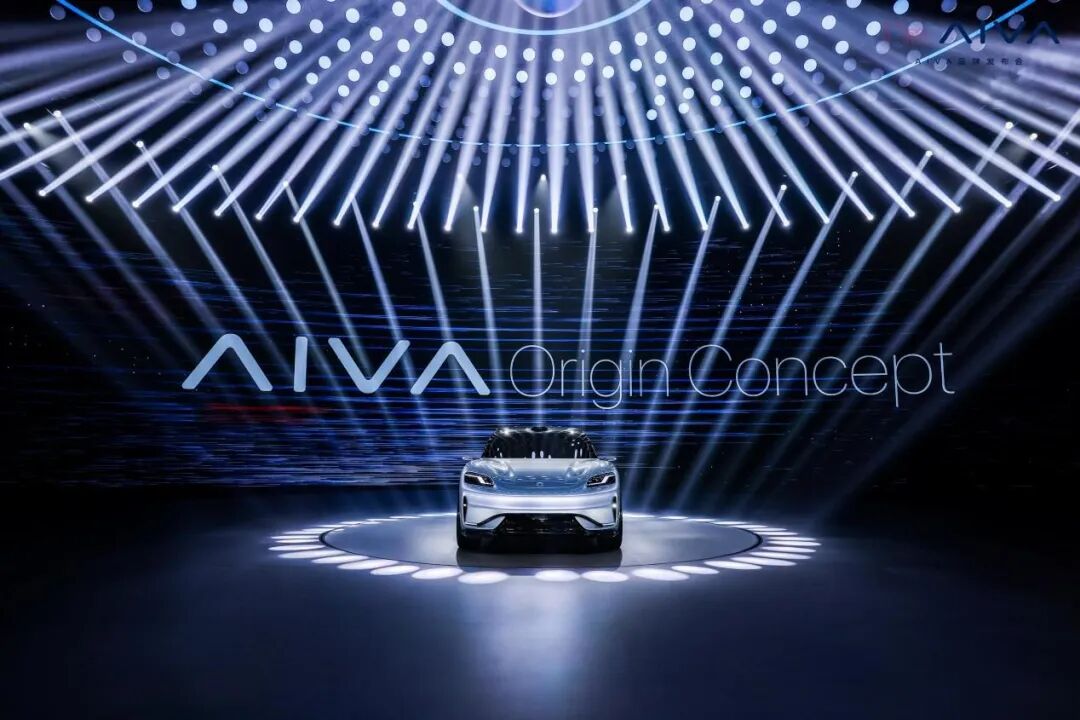
However, caution is warranted. First, whether the 'AI-first' logic truly works depends on the ME7's performance after its debut this year. The Origin Concept show car could be stunning, but concepts remain just that—concepts. Second, AI's 'emergent abilities' must remain stable and reliable in complex real-world driving scenarios—a technical challenge that goes beyond mere storytelling. Third, the ¥200,000+ market is fiercely competitive, with Tesla, NIO, Li Auto, XPeng, Huawei, and others already dominant. Why should consumers choose AIVA? 'Understanding you' isn't enough.
As the launch concluded, Li Bo said: 'May each of us grow freely and move forward relaxed under AIVA's companionship.' It sounded like an ad slogan, but his gaze was sincere—no teleprompter in sight. Maybe he truly believes this.
Let's wait and see. When the ME7 debuts this year, we'll know if this 'AI-first, then cars' AIVA truly understands me. If it automatically plays a song that suits my mood, adjusts my seat to the most comfortable position, and stays quietly unobtrusive when I'm exhausted from overtime work—then I'll seriously tell my readers: This brand is worth trying.

-
![]()
Zhongji Innolight and Its Peers Turned into AI Scratch Cards by Wall Street
-
![]()
Li Jie's 'High-Speed Charge' and J&T Express's 'Abrupt Halt'
-
![]()
Two Departments Jointly Announce the 2026 Special Initiative for Practical Training of Humanoid Robots and Embodied AI
-
Who Can Challenge SpaceX: Global Commercial Rockets Enter a New Phase of Differentiation
-
![]()
Could BYD Achieve the Title of 'World's Largest Automaker' by 2030?
-
![]()
Tencent Backs Another Robot IPO Despite Over 1 Billion Yuan in Cumulative Losses
-
![]()
AI Leads the Way, Cars Follow Suit: How AIVA's Visionary Slogan Unlocks New Horizons
-
![]()
Final Verdict: 2026 China Automotive Chongqing Forum Takes a High-End Stance and Highlights Core Issues