Li Shufu's Lesson in 'Abstract' Thinking: With Speed Dividends Peaking, What Will Drive China's Auto Industry Through the Next Two Decades?
 06/15 2026
 379
379
By AUTO Core ball
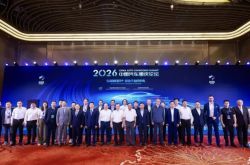
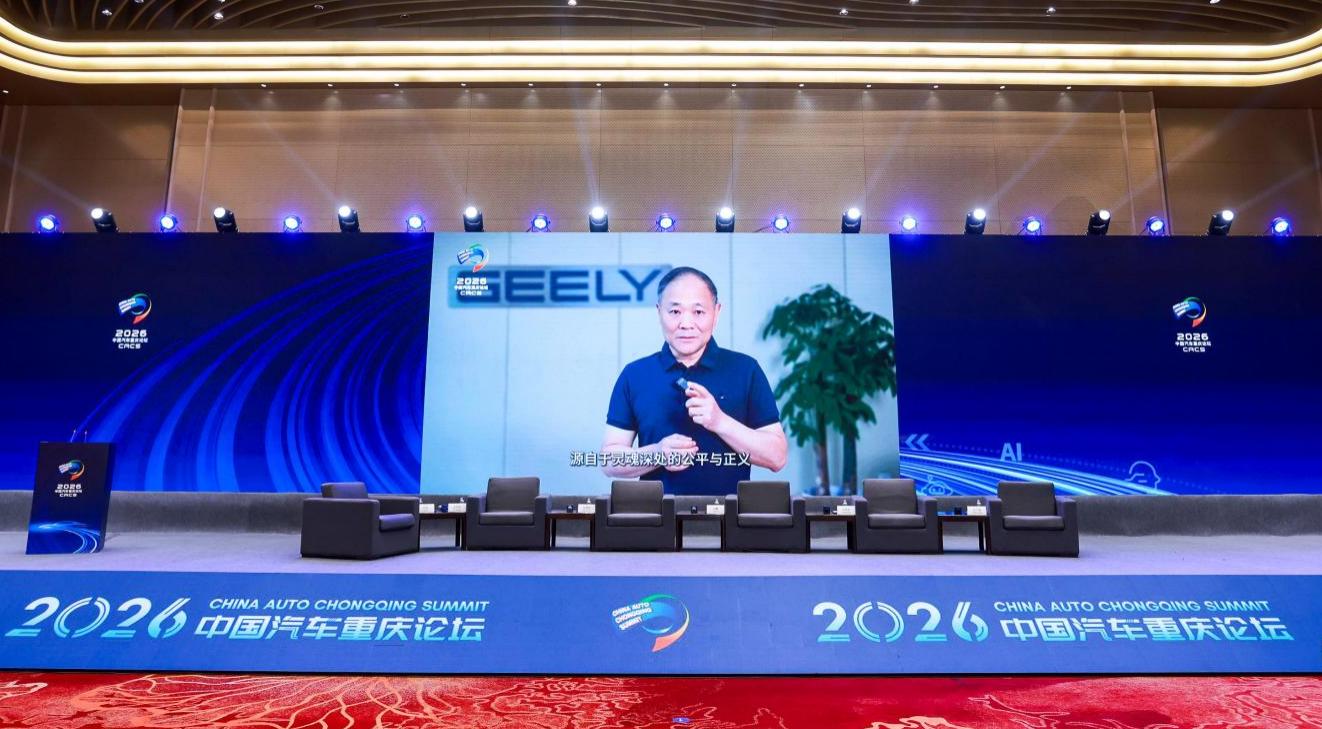
At the recently held China Automotive Chongqing Forum, Li Shufu did not talk about new car models, unveil technologies, or flaunt sales figures. Instead, he chose the most 'abstract' topic of the event: corporate legacy and value orientation.
In a context where nearly all automotive CEOs are lined up at product launches to talk about specifications, intelligent driving, and zero-to-100 km/h acceleration times, this choice may seem somewhat out of place. However, when you place this speech within the current development stage of China's automotive industry, you realize that it actually addresses a very concrete question: When speed is no longer a competitive moat, what will enable Chinese automakers to navigate the next two decades?
The urgency of this question has been repeatedly validated over the past two years.
Data from the National Bureau of Statistics shows that by 2025, the profit margin of China's automotive industry will have dropped to a historic low of 4.1%, falling below 2% in December alone. Many new energy vehicle (NEV) startups are experiencing losses that exceed their revenues. Volkswagen Group's global operating profit plummeted by 53% year-on-year in 2025, hitting a new low since 2016. The competition over technical routes has escalated from battles over the three electric components (battery, motor, and electronic control) to intelligent driving, and from end-to-end solutions to in-cabin large models. Some automakers are updating their models as frequently as two or three times a year.
However, the capital markets are no longer impressed. It has become difficult to distinguish—which companies' 'speed' represents genuine competitiveness, and which companies' 'speed' is merely an illusion built on losses.
Li Shufu's choice to discuss values at this juncture is not merely inspirational rhetoric. He has exposed a fact that many have chosen to ignore: When all players are competing on the same dimension of speed, speed itself ceases to be an advantage. The real gap (gap) lies in whether you can endure, remain stable, and go the distance.
From the 'Fast Fish Logic' to the 'Long-Distance Runner Logic': Why Have Values Suddenly Become a Competitive Variable?
Over the past two decades, China's automotive industry has operated under a simple principle: the fast fish eats the slow fish. The companies that launched new models quickly, implemented aggressive price cuts, and expanded their distribution networks the most were the ones that won. This logic proved effective during the growth market phase—from 2015 to 2023, China's NEV sector achieved a compound annual growth rate exceeding 55%. Companies that moved too slowly risked being left out entirely.
However, 2025 marks a watershed moment. That year, for the first time, NEV penetration exceeded 50%, and the market officially transitioned from growth-oriented competition to a struggle for market share within a saturated market.
Here's a point of reference: By 2025, the combined market share of China's top five domestic automakers—BYD, Geely, Great Wall, Changan, and Chery—in the domestic passenger vehicle market exceeded 44%. Meanwhile, over the past five years, dozens of NEV startups have gone bankrupt or been consolidated. The rules of a saturated market are fundamentally different from those of a growth market—survival depends not on outpacing others but on making fewer mistakes.
Li Shufu's critique of industry 'shortcuts' in this speech was unexpectedly direct.
He stated, 'The development of any new automotive product must adhere to the objective laws of automotive R&D. It cannot involve reducing testing phases, compressing verification timelines, or taking shortcuts.' He also made an even more pointed remark: 'Automobiles are safety-first durable consumer goods. Pretending to understand when you don't leads to endless trouble.'
If these comments had been made five years ago, they might have been dismissed as conservative or as defending traditional automakers. However, in 2026, they strike at the industry's most painful point: when 'speed' becomes ingrained as a reflex, innovation loses its essence.
The past two years have seen numerous industry incidents. A leading NEV startup faced widespread online backlash over an intelligent driving accident. A brand delivered models that severely mismatched their promotional claims, triggering mass cancellations. Several automakers updated their models so frequently that existing customers collectively sought legal recourse.
The root cause of these issues is the same—'speed' has overridden 'correctness.' When R&D cycles are cut to the bone, testing mileage is reduced wherever possible, and software riddled with bugs is pushed out via OTA updates, this is no longer innovation but recklessness. In the automotive industry, such recklessness comes at a cost far greater than a few complaints—it jeopardizes user safety.
Therefore, discussing 'values' at this juncture is not about preaching but about redefining the competitive dimensions of the industry. In the past, the focus was on 'how much better your car is than mine.' In the future, the real differentiator will be 'whether your company is trustworthy'—whether consumers are willing to entrust their families' safety to you, whether suppliers are willing to entrust their upstream and downstream supply chains to you, and whether the capital markets are willing to entrust long-term valuations to you.
From the author's perspective, this transformation represents the awakening of value-based resilience in China's automotive industry.
Value-based resilience is not just a slogan; it entails an entirely different competitive logic. The 'fast fish logic' focuses on short-term performance, while the 'long-distance runner logic' looks at who will still be standing a decade from now. The former prioritizes speed and cost, while the latter emphasizes governance and legacy.
This is why Li Shufu discussed both values and governance structures in the same speech—the two are inseparable. Without a governance framework to support them, values remain mere wall posters. Without values to guide them, governance structures eventually devolve into bureaucracy and internal friction.
The 'Two-Legged' Approach to Value-Based Resilience: Streamlining Governance and Expanding Globalization
To understand Li Shufu's speech, one must look beyond the three words 'values' and examine the two other actions he highlighted simultaneously: the 'streamlining, shutdown, merger, and transfer' governance overhaul and the strategic layout of a 'global innovation consortium.' These two moves—one contraction and one expansion—represent the two legs of value-based resilience at the organizational level.
First, let's discuss governance streamlining.
In his speech, Li Shufu revealed a major initiative: Geely is systematically shutting down, merging, or transferring redundant entities under Geely Automobile Group Co., Ltd., consolidating its advantageous resources (advantageous resources) into its core listed platform, Geely Automobile Holdings Limited (0175.HK). He referred to this as the 'One Geely' approach.
If you view this merely as a routine organizational adjustment, you're missing the bigger picture.
Over the past decade, the Chinese automotive industry has been obsessed with 'multi-brand, multi-entity' organizational structures. BYD has deployed brands like Wangchao, Ocean, Denza, Yangwang, and Fangchengbao. Great Wall Motor has launched Haval, WEY, Ora, Tank, and Saloon. Geely itself has operated a long lineup of brands, including Volvo, Polestar, Zeekr, Lynk & Co, Lotus, and Geely Galaxy.
This strategy proved effective during the growth era—new brands targeted new markets, and new entities told new stories. However, once the market transitioned from growth to saturation, the math behind multi-brand strategies began to work against them: brands cannibalized each other's customers, R&D resources were duplicated, and management attention was fragmented.
This is not a problem unique to Geely; it's a collective hangover from the industry's overextension.
Li Shufu's 'One Geely' initiative is, in essence, a deliberate slowdown. His goal is not more brands and more stories but stronger foundational capabilities—consolidating dispersed entities onto a single core platform is fundamentally about building the skeleton for 'long-distance running.'
When speed is the priority, having multiple legs running independently offers flexibility. However, when endurance is the goal, stability and concentration of force become essential. This principle is not new in any industry. Huawei used its ' Legion system ' (regiment system) to address the disperse (fragmentation) of efforts across multiple fronts. Tencent restructured its business with the '930 transformation' to combat fragmentation. Now, Geely is using 'One Geely' to address a tougher question: How can Chinese automakers evolve their organizational capabilities from 'agility' to 'robustness' as they enter the second half of global competition?
Now, let's discuss globalization expansion.
Li Shufu devoted significant time to discussing Geely's global innovation network—the Volvo joint venture technology company in Sweden, the Lotus R&D center in Germany, and the Renault-Saudi Aramco-Geely powertrain consortium in the UK. Individually, these projects represent specific business ventures, but collectively, they point to a deeper transformation: China's automakers are undergoing a fundamental shift in the underlying logic of their globalization strategies.
In previous waves of globalization, Chinese automakers followed a standard path of 'product exports'—taking domestically successful models, making minor modifications, and selling them overseas. This approach worked reasonably well in Southeast Asia, the Middle East, and Latin America but hit walls in Europe and the United States. BYD's expansion into Europe has been bumpy, and multiple Chinese automakers have seen their progress in developed markets fall far short of expectations.
The root issue lies not in the products themselves. In developed markets, the real barriers are not about vehicle quality but about systems—regulatory frameworks, after-sales service systems, and brand trust systems. Having a good car is not enough; you need a complete set of locally rooted capabilities. European consumers will not abandon Volkswagen for an unfamiliar brand simply because it accelerates from zero to 100 km/h one second faster.
Li Shufu's 'global innovation consortium' directly addresses this challenge.
Its underlying logic is not about 'selling Geely's cars globally' but about 'integrating Geely's R&D capabilities with local capabilities worldwide and sharing the rewards.' This represents a fundamentally different narrative of globalization—Chinese automakers are not going overseas to harvest but to co-build. They are not using China's supply chain advantages to overwhelm local competitors but leveraging China's engineering capabilities alongside local technological foundations to create synergies.
Of course, the viability of this narrative ultimately depends on value-based resilience.
Li Shufu made a particularly strong statement in his speech: 'Any technological achievement must have a clear source, comply with laws and regulations, and be aboveboard.' His choice of timing for this remark was no accident.
Over the past few years, Chinese companies have repeatedly encountered intellectual property (IP) issues overseas, with some brands being expelled from markets entirely. In an increasingly stringent global environment for IP protection and technological compliance, the cost of 'shortcut-driven innovation' is skyrocketing. Only companies that inherently respect innovation laws and are willing to take the broad path rather than the narrow one can establish long-term cross-cultural and cross-border trust.
And trust is the deepest moat in globalization.
Who Will Dominate the Next Two Decades? China's Automotive Industry Needs Long-Termism
Over the past five years, speed has been the default yardstick for measuring success among Chinese automakers. However, over the next five or even twenty years, this yardstick will lose its relevance.
Consider the names that have truly endured across the century-long history of the global automotive industry.
Toyota, founded in 1937, has weathered the oil crisis, the collapse of Japan's bubble economy, the Lehman shock, and the COVID-19 pandemic. In nearly nine decades, it has only incurred losses once—during the 2008 global financial crisis—and has remained profitable in all other years.
Volkswagen, also founded in 1937, has survived post-WWII reconstruction, the Dieselgate scandal, and the electric vehicle (EV) transition, remaining one of the world's largest automakers by sales volume today.
Their commonality is not speed. Toyota has even been notoriously 'slow' in electrification. However, they have never faltered in one area: through every industry upheaval, their organizational frameworks have remained intact, and their strategic directions have never veered off course. This capability does not rely on the genius of a single CEO but on a set of values and governance systems that can be passed down through generations.
China's automotive industry today finds itself in a situation reminiscent of Japan's automotive industry in the late 1970s and early 1980s. Back then, Japanese cars dominated the U.S. market, capturing over 25% market share at one point, leading Americans and Europeans to cry, 'The Japanese are coming!'
However, what truly enabled Toyota and Honda to survive to this day was not their market share gains at the time but their ability to simultaneously establish global R&D systems, supply chain systems, and management systems during their rapid expansion, transforming from 'Japanese companies' into 'global companies.'
Chinese automakers now stand at the same crossroads.
According to data from the China Association of Automobile Manufacturers (CAAM) and the General Administration of Customs, China's NEV global market share surged from approximately 5% in 2020 to around 60% by 2025, exceeding 60% in the first quarter of 2026. This growth is even wilder than Japan's rise in the U.S. market during its heyday.
However, speed comes with its own reckoning. Weak brands, unstable overseas expansion, and inflated valuations—these gaps must be addressed now, or they will become fatal vulnerabilities when the real global protracted war begins.
At the end of his speech, Li Shufu made an interesting remark: 'We are fortunate to live in this great era and to work in this difficult yet fascinating industry.' On the surface, this sounds like the musings of an elder, but the choice of words—'difficult' and 'fascinating'—is deliberate. The difficulty lies in the cutthroat competitive environment, while the fascination stems from the immense opportunities.
An entrepreneur who truly understands 'difficulty' will not bet everything on 'speed.' An entrepreneur who truly grasps 'fascination' will not reduce their company to a machine that only knows how to press the accelerator.
Value-based resilience is not a concept unique to Li Shufu. It addresses an unavoidable question for China's automotive industry: After two decades of running, it's time to establish a new set of benchmarks.
These benchmarks cannot focus solely on sales volume, market share, or capital stories. They must also measure governance quality, long-term strategic stability, the credibility of global cooperation, and the compliance of technological innovation—shifting from 'who can run the fastest' to 'who can stand the longest.'
Li Shufu's speech at the Chongqing Forum may mark the beginning of this question being brought to the forefront.
*All images in this article are sourced from the internet.
-
Who Can Challenge SpaceX: Global Commercial Rockets Enter a New Phase of Differentiation
-
![]()
Could BYD Achieve the Title of 'World's Largest Automaker' by 2030?
-
![]()
Tencent Backs Another Robot IPO Despite Over 1 Billion Yuan in Cumulative Losses
-
![]()
AI Leads the Way, Cars Follow Suit: How AIVA's Visionary Slogan Unlocks New Horizons
-
![]()
Final Verdict: 2026 China Automotive Chongqing Forum Takes a High-End Stance and Highlights Core Issues
-
![]()
DingTalk Leadership Overhaul: Wu Zhao's 'Triumphs and Trials,' Chen Yusen's 'Challenge'
-
Challenges Loom for Amazon and Meta's Free Cash Flow: Is There an AI Bubble?
-
![]()
With Zhang Xiaolong Leading the Charge, Can WeChat’s AI Agent Secure Another Win?