IM Motors' CMO Li Weimeng Transfers to AI: Everyone Selling Cars is Now Diving into AI
 06/15 2026
 517
517
When a brand has just delivered two consecutive months of over 10,000 units sold and achieved a year-on-year growth of 115% in cumulative sales from January to May, most automakers would keep the key contributor in their original role to capitalize on the momentum. However, IM Motors made a seemingly surprising decision: to reassign CMO Li Weimeng, who led the brand's sales turnaround, away from the frontlines of marketing to oversee AI-related operations. 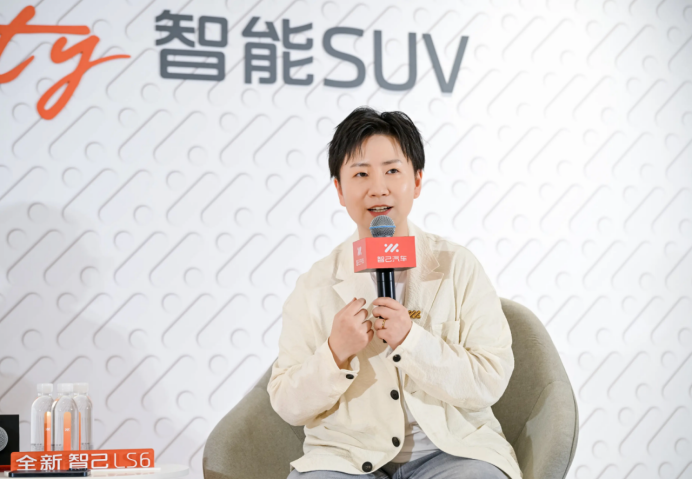
This is not just an ordinary personnel adjustment; it serves as a symbolic signal that China's new energy vehicle (NEV) industry is entering its 'second half.' In the first half of 2026, China's new auto players are undergoing a collective identity shift, transforming from 'automotive companies' to 'AI companies.' The thoroughness and aggressiveness of this transformation have surpassed the narrative framework of 'smart cars,' entering the competitive dimension of 'physical AI.' 
The question remains: Is this a strategic foresight aimed at the future, or a desperate move to find a new narrative amid intense competition? Notably, while China's overall auto market sales reached 12.207 million units from January to May 2026, representing only a 4.2% year-on-year decline, a closer look reveals that sales stability is largely driven by exports. If we focus solely on the domestic market, the decline reaches 20.6%. Even though the weekly penetration rate of NEVs has hit 66.7%, cumulative domestic NEV retail sales have still fallen by 15% year-to-date. Undoubtedly, the buzz around AI and the sales slump have fueled this identity shift, with nearly every notable new auto player participating. Xpeng's transformation is the most thorough. In the first quarter of 2026, the company officially renamed itself from 'Xpeng Motors' to 'Xpeng Group,' shifting its strategic positioning from a 'smart electric vehicle company' to a 'physical AI company.' This represents not just a name change but a complete reconstruction of its business logic. 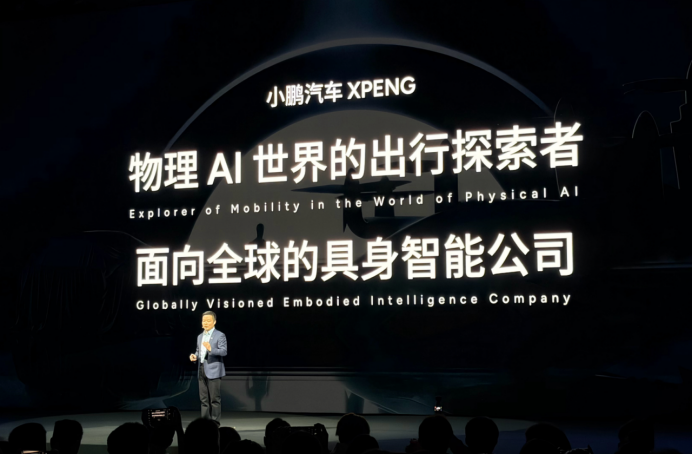
Li Auto's transformation began after the unsuccessful launch of the MEGA in 2024. Li Xiang, who remained silent for six months, gave his first interview, focusing not on products or users but entirely on artificial intelligence. He announced for the first time that Li Auto would pivot toward becoming a 'full-stack AI company.' This shift was widely interpreted by outsiders as 'evading reality.' However, by 2026, Li Auto's AI layout (AI layout means AI layout , 'AI layout ' here refers to 'AI strategic layout ' or 'AI deployment') began to materialize substantially. In January, Li Xiang presented three key judgments at an internal all-hands meeting: 2026 represents the 'last boarding time' to become a leading AI enterprise; Level 4 autonomous driving will arrive by 2028 at the latest; and globally, no more than three companies will simultaneously deploy foundational models, chips, operating systems, and embodied AI. Subsequently, Li Auto initiated a 'drastic' organizational restructuring: the autonomous driving department was disbanded, the foundational model team took charge of VLA model development, and humanoid robots were upgraded to an independent hardware division. On June 15, Li Xiang will prove his commitment to AI with a dedicated AI launch event. 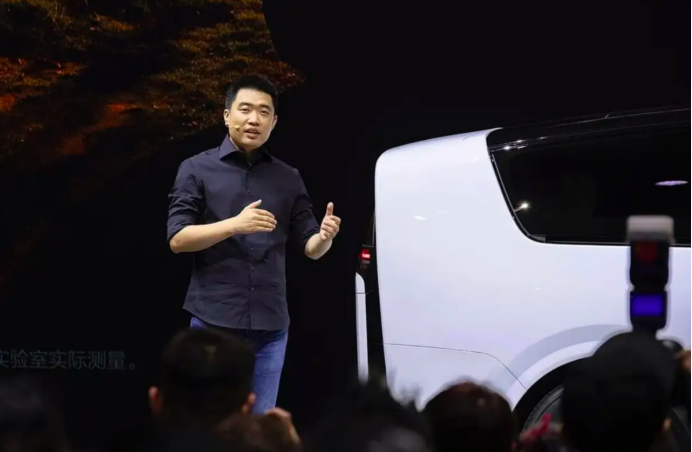
NIO's AI transformation is more evident in its technical approach. At the Qualcomm Summit, William Li (Li Bin) stated, 'Today's auto companies must become AI companies, and today's smart cockpits must become AI cockpits.' He introduced the concept of a 'cognitive cockpit,' which differs fundamentally from a 'smart cockpit': while a smart cockpit executes tasks based on user commands, a cognitive cockpit anticipates user needs and acts proactively. The technological backbone of this approach is NIO's self-developed NWM World Model—China's first generative embodied driving model based on a multivariate autoregressive architecture, capable of simultaneously simulating 216 potential driving scenarios within 100 milliseconds. 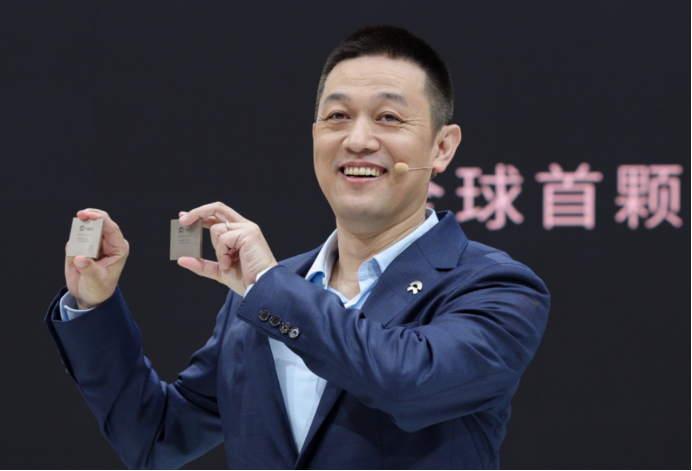
Compared to the high-profile layout (strategic layout ) of the top three, Leapmotor is taking a 'latecomer advantage' approach. Zhu Jiangming, Leapmotor's chairman, admitted, 'Leapmotor remains true to its original style—slow to start but leveraging latecomer advantages.' However, this does not mean Leapmotor is falling behind in AI. According to its plans, Leapmotor will equip all its models with advanced driver-assistance systems by 2026, covering 'parking spot to parking spot' full-scenario driving. In the second quarter of 2026, it will launch nationwide urban navigation-assisted driving. By the end of 2026, it aims to complete the development of its intelligent driving foundational model and deploy an AI large model-based driver-assistance solution. Then there's the recently hyped Saido, which directly claims, 'AI defines the car—AI comes first, then the car.' 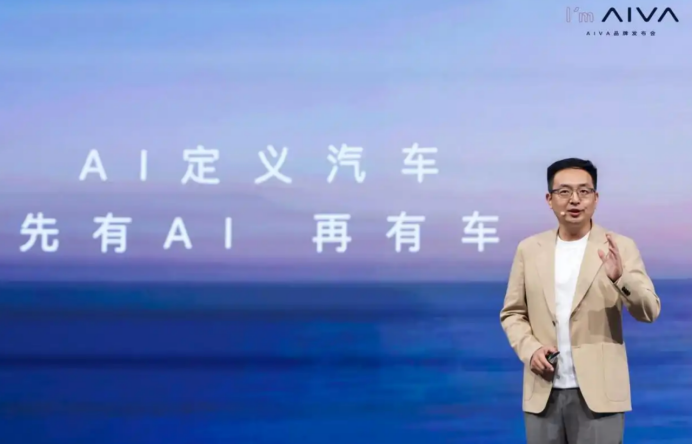
It is clear that new auto players' shift toward AI is not just rhetoric but involves substantial investment. According to Roland Berger's 2026 automotive industry outlook report, industry competition will revolve around six key themes, with 'technological warfare determining success' and 'AI warfare deciding supremacy' being the most critical. Product definitions are evolving from traditional transportation tools to 'AI-driven intelligent entities.' Wang Xianbin, vice president of Gasgoo Automotive Research Institute, put it bluntly: 'The industry is moving from the 'software-defined car' phase to the 'AI-defined car' phase.' The essential difference lies in 'proactivity'—vehicles can now perceive, judge, and execute tasks autonomously, 'as if the car has its own 'soul.'' This is not mere fantasy. ByteDance's Doubao large model is already installed in over 7 million vehicles, completing over 30 million daily interactions in the cockpit. AI is already transforming the human-vehicle relationship. 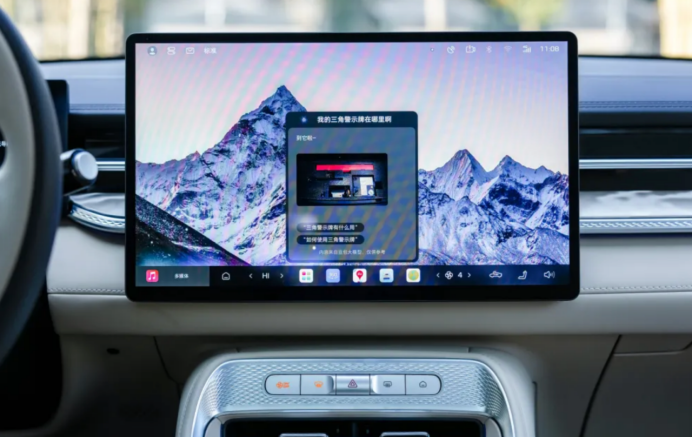
Returning to the original question: Is the new auto players' rush into AI a gimmick or the future? The answer is both a 'lifeline' and a 'new continent.' It is a lifeline because the current automotive industry is excessively competitive—sales growth has peaked, products are becoming homogenized, and price wars persist. In this context, telling an AI story is both a search for a second growth curve and a way to prove to capital markets that 'the future still belongs to us.' It is a new continent because AI is genuinely redefining automobiles. When cockpit AI completes 30 million daily interactions, when VLA models enable cars to truly 'understand' the world, and when Level 4 autonomous driving shifts from 'can it be done' to 'when will it be done,' AI's transformation of automobiles is no longer a concept but a reality in progress. Whoever can first complete the transition from 'automotive company' to 'AI company' may secure a ticket to the next era. Perhaps this is why IM Motors would push the person responsible for boosting sales into the AI spotlight. (Images sourced from the internet; removal upon infringement claim.)
-
AI Asset Spin-offs at Tech Giants: Is Kling Paving the Way for ByteDance and Alibaba?
-
![]()
Why Zhang Xue? Why HONOR?
-
![]()
Exclusive! Tencent’s ‘Tencent Drive’ with AI-Powered Asset Backup in the Works—A Game-Changing Move
-
![]()
Internal Upheaval in Initial Listing Days: SpaceX's AI Division Faces Accelerated Talent Loss, with 50+ R&D Staff Exiting in 2026
-
![]()
Price War Fails, Chinese Automakers Have No Retreat
-
![]()
Still in the Red but Outpacing Tesla: What Lies Behind SpaceX's $2.1 Trillion Valuation?
-
![]()
Humanoid Robots Go Global: From 'Actors' to 'Workers'
-
![]()
Still Incurring Losses Yet Outpacing Tesla: What Does SpaceX's $2.1 Trillion Valuation Signify?