Direct Layoffs Affecting One-Sixth of Workforce: How Did Volkswagen, a Company Attempting to Survive by Self-Amputation, Reach This Point?
 06/23 2026
 381
381
Recently, the news about Volkswagen's layoffs has sparked intense discussions within China's automotive industry. So, why have Volkswagen's layoffs caused such a significant uproar? The answer can be succinctly captured in four words: Volkswagen is remarkable.
Let's delve deeper into why Volkswagen is so remarkable. Given the limited space, I'll use numbers to provide a concise and visually intuitive explanation.
Firstly, let's examine the sales data. Volkswagen has consistently ranked second in global automotive sales among car companies, just behind Toyota, for numerous years. In terms of revenue, Volkswagen has even surpassed Toyota for many years, leading the global car companies. It was only in 2025, as the sales gap with Toyota widened, that Volkswagen was overtaken by Toyota in revenue.
Taking 2025 as an example, Volkswagen's total annual sales reached 8.984 million vehicles, with a global market share exceeding 10%. This means that one out of every ten cars sold worldwide is a Volkswagen. Particularly in the European market, Volkswagen's market share is even higher, reaching 25%. Its total revenue amounted to €321.9 billion, ranking second only to Toyota and far surpassing automotive giants such as Mercedes-Benz, BMW, Ford, General Motors, and Stellantis. It was 3.9 times the total revenue of Tesla during the same period.
In terms of brands, Volkswagen currently owns one motorcycle brand, Ducati, three commercial vehicle brands, and seven passenger vehicle brands, including Lamborghini, Bentley, Porsche, Audi, Volkswagen, Skoda, and Seat, covering ultra-luxury, luxury, and mainstream automotive segments. Another ultra-luxury automotive brand, Bugatti, was recently sold by Volkswagen.
According to officially published data, Volkswagen has 111 production bases worldwide. It has established vehicle assembly plants in Europe, Asia, and the Americas, with a maximum annual production capacity of 12 million vehicles. Additionally, Volkswagen has set up three power battery factories in Germany, Canada, and Spain.
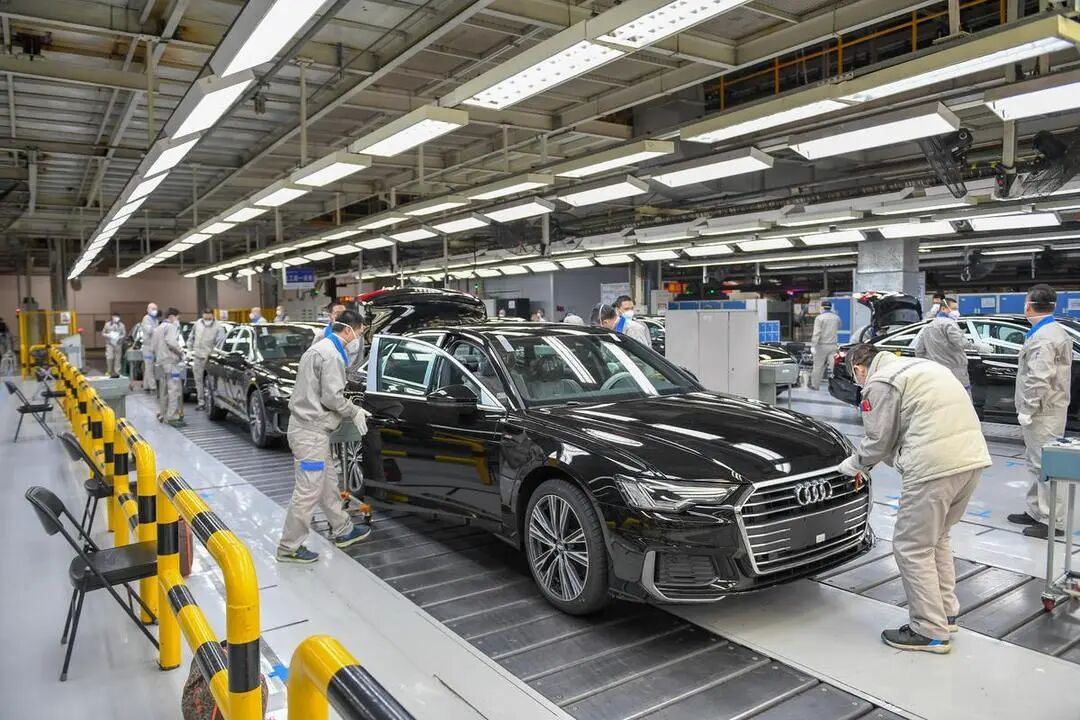
After reviewing this information, I believe you should now have a preliminary understanding of Volkswagen's situation. Without exaggeration, given its current status, Volkswagen remains one of the top automotive giants globally.
However, it is precisely such a formidable automotive group that has recently officially announced large-scale layoffs, naturally drawing attention from the entire industry.
According to media reports, on June 18th, Volkswagen Group officially announced a deep business restructuring. According to the plan, Volkswagen will cut 19,000 jobs in Germany by the end of 2026. By 2030, it plans to streamline approximately 50,000 positions in total, accounting for one-sixth of Volkswagen's total workforce in Germany, affecting brands including Volkswagen, Porsche, and Audi.
In addition, Volkswagen also stated that it would reduce its annual production capacity from 12 million vehicles to 9 million vehicles, with Germany alone experiencing a reduction of 730,000 units in annual production capacity.
As for why Volkswagen is conducting large-scale layoffs at this time, in addition to the significant declines in sales, revenue, and profits in 2025, the current situation does not seem to have improved in the first quarter of this year. Total revenue was €75.657 billion, with a profit of €2.463 billion. Revenue decreased by 2.5% year-on-year, while profit plummeted by 14.3% year-on-year.
In terms of sales, Volkswagen also saw a 4% decline compared to the same period last year, with cumulative sales falling short of 2.05 million vehicles. The market with the highest decline was China, with a 14.8% year-on-year decrease and sales of only 548,700 vehicles.
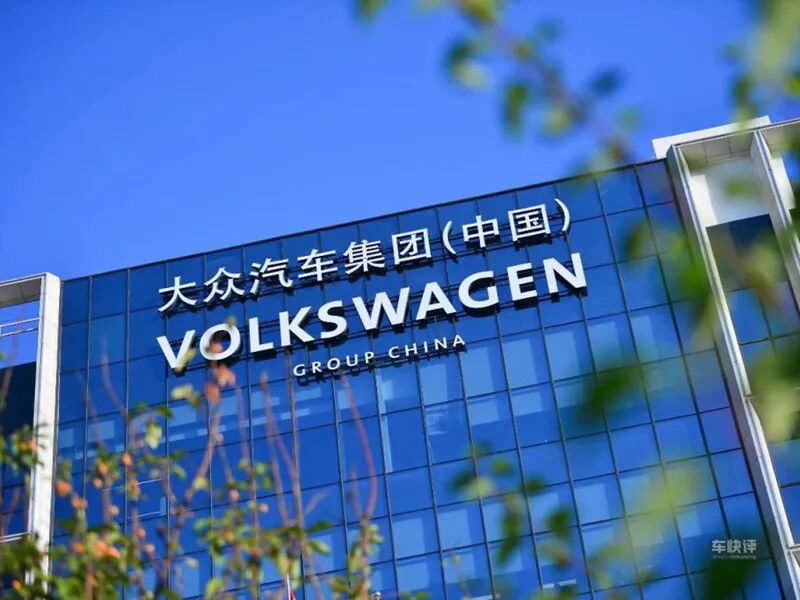
It should be noted that the Chinese market has always been Volkswagen's largest single market globally.
Speaking of the Chinese market, it's impossible not to mention China's new energy vehicle companies. In both China and Europe, Volkswagen's two highest-selling markets, Chinese new energy vehicles, represented by BYD, Geely, and Chery, have made significant strides, capturing a substantial portion of Volkswagen's market share. This is also the primary reason for the declines in Volkswagen's sales, revenue, and profits.
So, what other factors do you think contributed to Volkswagen's large-scale layoffs besides those mentioned above? Feel free to leave a comment and engage in the discussion section.
Copyright Notice: This article is original content from Che Kuaiping. Reproduction requires authorization. Unauthorized reproduction is strictly prohibited, and any form of plagiarism or misappropriation of images and text will result in legal action. Some images in the article are sourced from the internet, and the copyright belongs to the original authors. If your work has been used, please contact us to claim royalties or request deletion.
-
![]()
When AI Dominates 618, Is Human Live Streaming the Ultimate Challenge?
-
![]()
Behind SpaceX's IPO: Musk, Boasting a Trillion-Dollar Net Worth, Still Grapples with a Severe 'Cash Crunch'
-
![]()
【OFweek Weike Cup】CASTECH Nominated for 2026 Optics Industry Outstanding Component Supplier
-
![]()
【OFweek Weike Cup】Accelink Technologies Competes for 2026 Outstanding Optical Component Supplier in Optical Industry
-
![]()
A Leading Computing Power Provider Secures 1.5 Billion Yuan in Private Placement, Expands Smart Computing Center to 12,000 Racks
-
![]()
【OFweek Weike Cup】Sundek Officially Enters for the 2026 Outstanding Contribution Award for Optical Industry Application Solutions
-
![]()
Geely's Three Strategic Cards for Future Layout Unveiled at Hong Kong Auto Show
-
![]()
GAC Toyota’s Sales Boom: Forging Vehicles with Enduring Value for the Long Haul