Volkswagen Takes Drastic Measures: 50,000 Job Cuts, 3 Million Unit Production Reduction—Is the Golden Age of German Automakers Over?
 06/23 2026
 325
325
Extreme Cost-Cutting
Author|Wang Lei
Editor|Qin Zhangyong
"We were once at the peak of this industry, but we didn't make 'enough' money."
Volkswagen CEO Oliver Blume's summary at the shareholders' meeting highlighted the company's frustration.
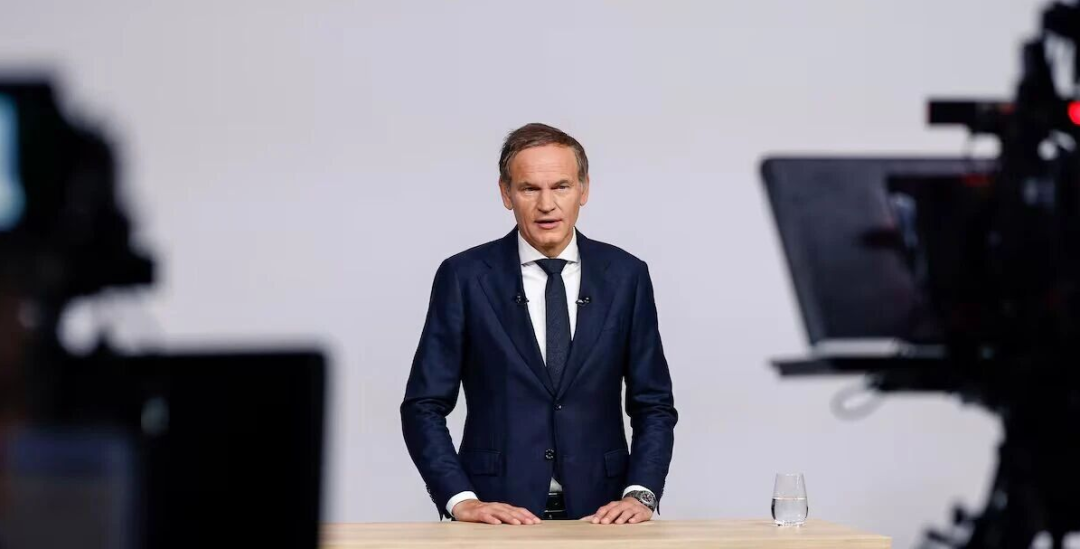
From being one of the most profitable automakers globally to relying on layoffs to stem losses, Volkswagen took just a year.
In 2025, while Volkswagen Group's scale and revenue remained stable, net profit plummeted 53%, and the operating profit margin dropped to 2.8%, the lowest level since the 2016 "Dieselgate" scandal.
The stock price also slid from a high of around €357 in 2021 to the current range of €105 to €111, with market capitalization shrinking by nearly 70% from its peak.
In this context, the annual shareholders' meeting, which in previous years focused on dividend approvals and "counting money," evolved into a concentrated inquiry into the group's strategic execution and underlying corporate governance structure.
Faced with a series of tough questions, Blume acknowledged reality and unveiled a more aggressive cost-cutting plan, encompassing everything from layoffs to capacity reductions.
01 The Efforts Are Not Enough
At the start of the Q&A session at the shareholders' meeting, an investor from Deka Investment didn't mince words: "Without a complete strategic overhaul, Volkswagen faces the risk of decline." They drew a parallel to VfL Wolfsburg's relegation to the second division of German football.
The implication was clear: if the company, rooted in Wolfsburg, continues on its current trajectory, its "home-field advantage" will eventually erode. They specifically highlighted the lagging software business, arguing that the prolonged delays in digital initiatives like Cariad were dragging down the group's overall competitiveness.
Other investors criticized the severe lack of internal synergy within the group, describing the excess capacity and inefficient structures as a millstone around Volkswagen's neck. At this point, Volkswagen must face reality.
Indeed, since being surpassed by Toyota in sales volume in 2020, Volkswagen has held its position as the world's second-largest automaker for six years, but its production capacity has remained unchanged at 12 million units. The reality is that Volkswagen's average sales over the past five years have been only 9 million units.
This means that a significant portion of factories, equipment, and personnel remain idle annually, yet costs continue to accrue.
"Our starting point was based on pre-pandemic plans for global production capacity of 12 million vehicles annually and more optimistic assumptions at the time. Today, we believe a figure around 9 million is more realistic, which aligns with the average output over the past five years," Blume stated at the meeting.
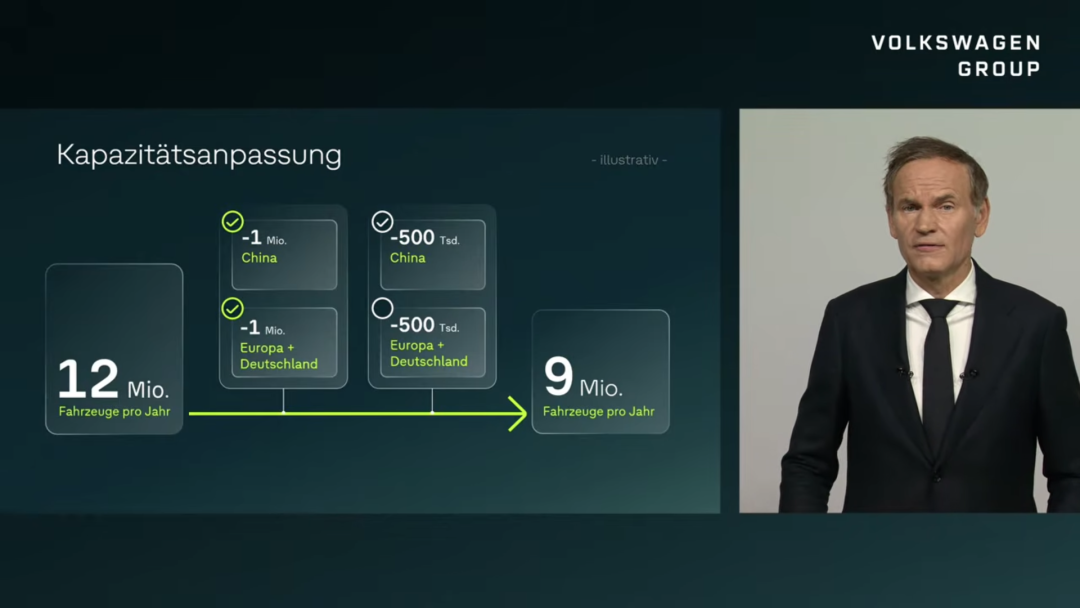
He made it clear that Volkswagen would formally implement production cuts, reducing annual capacity from 12 million to 9 million units.
Specific measures are already being rolled out: Zwickau and Emden will each reduce from two production lines to one, while the main Wolfsburg plant will shrink from four to two lines. Additionally, production of the fuel-powered Golf will shift to Mexico starting in 2027.
The "Transparent Factory" in Dresden ceased full-vehicle production in December 2025 and is being transformed into an innovation park led by Dresden University of Technology. This marks the first time in Volkswagen Group's history that a OEM (Original Equipment Manufacturer) (vehicle assembly plant) in Germany has been shut down.
By the end of 2025, Volkswagen had reduced production capacity by 2 million units in China and Europe, with six vehicle assembly plants ceasing operations. Furthermore, Volkswagen plans to cut another 500,000 units of capacity in China, with the plan finalized, though Blume did not disclose which production bases would be affected.
Additionally, Ulrich Hocker from the German Shareholder Protection Association (DSW) bluntly stated at the shareholders' meeting that Volkswagen's current stock price was dismal.
He said there were no signs of the group's intrinsic value being restored in the stock price, and that the so-called transformation remained on paper. His follow-up questions were even sharper: "Are the current layoffs sufficient, or are more severe cuts still to come?"
Blume disagreed, arguing that over the past three years, Volkswagen Group had completed a fundamental strategic reshaping, comprehensive technological architecture upgrades, and group-wide restructuring. Not only had it fulfilled all commitments, but some core objectives were achieved even faster than planned.
The first-quarter report for 2026, released earlier, validated the scale of these reforms. In Q1 2026, Volkswagen cut indirect costs by approximately €1 billion through labor negotiations and staff reductions, while net cash flow from its automotive business swung sharply positive from -€800 million in the same period last year.
Even though the effects of the reforms are becoming evident, Blume believes they are far from sufficient.
Layoffs will intensify further, with Volkswagen Group planning to cut 50,000 jobs by 2030, affecting Volkswagen, Audi, Porsche, and software subsidiary CARIAD. Of these, 19,000 positions will be eliminated this year.
Blume said that over 28,000 voluntary separation agreements targeting 2030 have already been signed, mostly through "voluntary exits, early retirement, and natural attrition." Factory costs across German production bases fell by more than 20% last year.
Notably, Blume used the term "verbindlich" (binding) in his remarks, implying that these are no longer just plans but hard targets.
02 Counteroffensive Amid Retrenchment
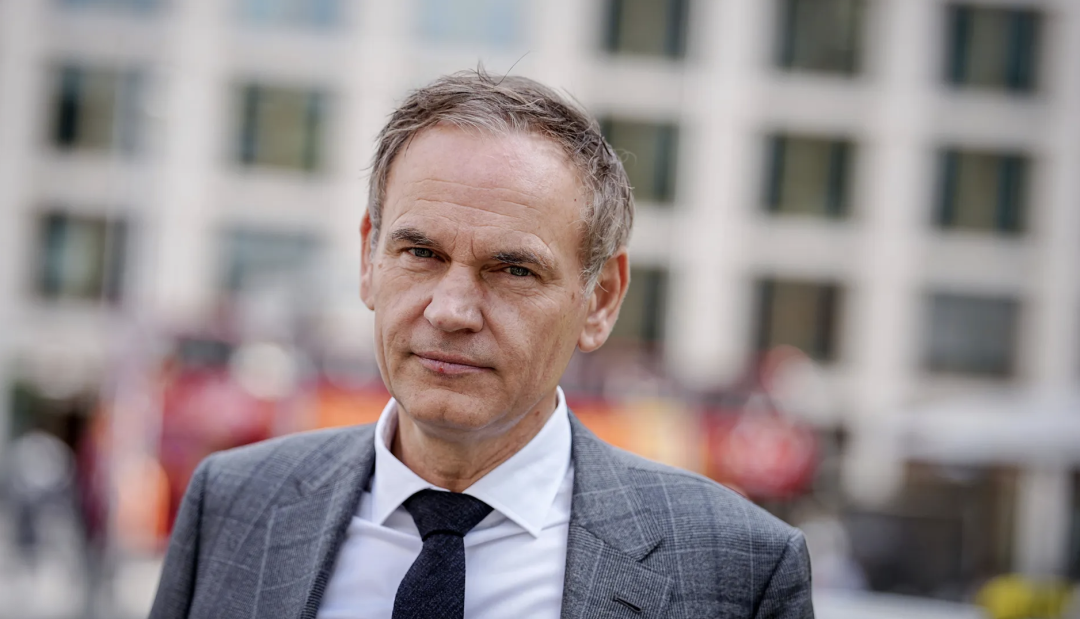
Under the more aggressive cost-cutting plan, Blume unveiled a performance metric that surprised many: he hopes Volkswagen can achieve an operating profit margin of up to 10% by 2030.
The operating profit margin guidance for the current year is 4% to 5.5%, with net cash flow expected to range between €3 billion and €6 billion. The long-term target remains an 8% to 10% profit margin range, while aiming for higher net cash flow from the automotive business, accounting for over 60% of the group's operating profit.
To put this in perspective, Volkswagen's operating profit margin was just 2.8% in 2025.
In 2025, Volkswagen Group sold approximately 9 million vehicles, generating €321.9 billion in sales revenue, roughly flat year-on-year. However, operating profit plummeted 54% to €8.9 billion, marking the lowest level in nearly a decade since 2016. Net profit after tax fell from €12.4 billion in 2024 to €6.9 billion, a 44% year-on-year decline, reflecting a significant erosion in profitability.
Clearly, while vehicle sales remained robust, profits vanished.
Volkswagen attributed the profit collapse to four key factors: the impact of new U.S. import tariffs, which alone cost about €5 billion; expenses related to Porsche's product strategy adjustments; currency fluctuations; and intensifying global price wars and product mix adjustments.
Even entering 2026, the situation has not improved. In Q1 2026, revenue fell 2.5% year-on-year to €75.657 billion, operating profit dropped 14.3% to €2.463 billion, and vehicle deliveries declined 4% to 2.049 million units. Revenue, profit, and sales—the three core metrics—continue to slide.
As is widely known, all layoffs, plant closures, and production cuts are essentially aimed at escaping the development dilemma of "stagnant revenue growth and collapsing profits." However, improving operational quality amid strategic retrenchment will be the critical variable for Volkswagen's future.
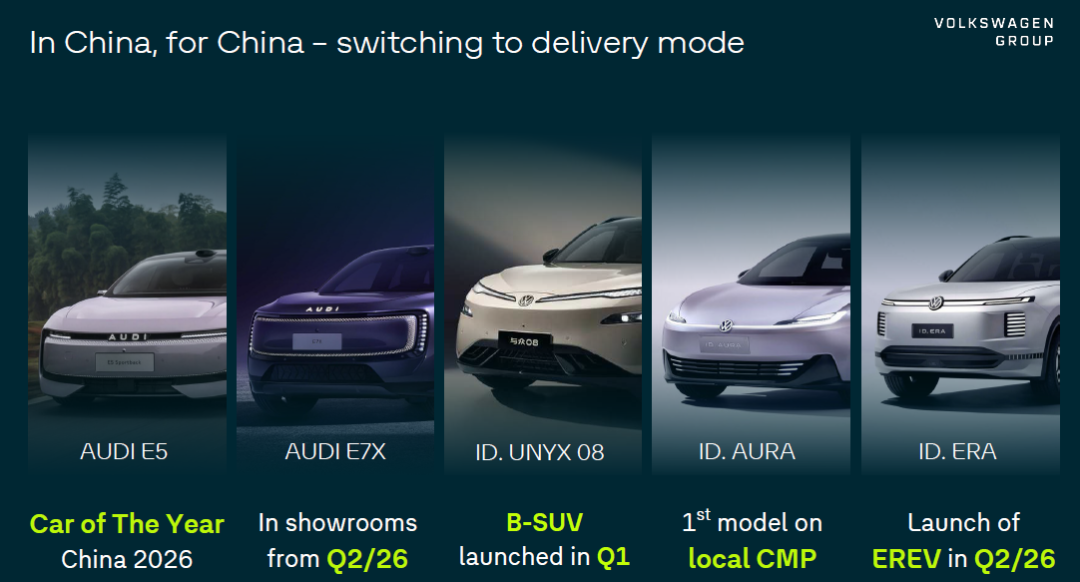
For instance, Volkswagen is launching its largest-ever product offensive in China, with over 20 new energy vehicle models set to debut across its brands in 2026, expanding to around 50 models by 2030. The company also unveiled Agentic AI for All, with new models based on Volkswagen Group's CEA architecture set to feature full onboard AI capabilities starting in 2026.
In North America, despite losing €5 billion due to tariffs, Blume sees the region as Volkswagen's largest future growth opportunity.
In 2025, Volkswagen sold only 320,000 vehicles in the U.S., far behind market leaders General Motors, Toyota, and Ford, each selling over 2 million units. For Volkswagen, this represents a significant growth opportunity.
Blume emphasized at the shareholders' meeting that Volkswagen is reviving the Scout brand in the U.S., accelerating localized production of Audi models, and advancing its joint venture with Rivian. By 2027, it plans to deploy an electronic architecture for the European and U.S. markets, aiming to reduce overall costs by 80%.
Layoffs are just the beginning. The success of these "counteroffensive" measures will determine whether they translate into improved profitability in the future.
-
![]()
When AI Dominates 618, Is Human Live Streaming the Ultimate Challenge?
-
![]()
Behind SpaceX's IPO: Musk, Boasting a Trillion-Dollar Net Worth, Still Grapples with a Severe 'Cash Crunch'
-
![]()
【OFweek Weike Cup】CASTECH Nominated for 2026 Optics Industry Outstanding Component Supplier
-
![]()
【OFweek Weike Cup】Accelink Technologies Competes for 2026 Outstanding Optical Component Supplier in Optical Industry
-
![]()
A Leading Computing Power Provider Secures 1.5 Billion Yuan in Private Placement, Expands Smart Computing Center to 12,000 Racks
-
![]()
【OFweek Weike Cup】Sundek Officially Enters for the 2026 Outstanding Contribution Award for Optical Industry Application Solutions
-
![]()
Geely's Three Strategic Cards for Future Layout Unveiled at Hong Kong Auto Show
-
![]()
GAC Toyota’s Sales Boom: Forging Vehicles with Enduring Value for the Long Haul