European Sales of Chinese Vehicles Surge 1.5-Fold in a Year! EU Takes Action: Additional Tariffs on China’s Plug-in Hybrid Vehicles
 06/23 2026
 361
361
Following the imposition of tariff barriers on battery electric vehicles (BEVs), the European Union (EU) has officially begun preparations for a new round of automotive trade restrictions targeting China.
According to an exclusive report by Germany's Handelsblatt on June 19, 2026, citing senior EU officials and industry insiders, the European Commission has completed preliminary preparations and is planning to impose additional anti-subsidy tariffs on Chinese-made plug-in hybrid electric vehicles (PHEVs). This move expands trade sanctions, previously limited to BEVs, to include PHEVs, effectively blocking the primary route for Chinese new energy vehicles to enter the European market. The proposal is now undergoing internal review and, once approved by a majority vote of EU member states, can be formally implemented.
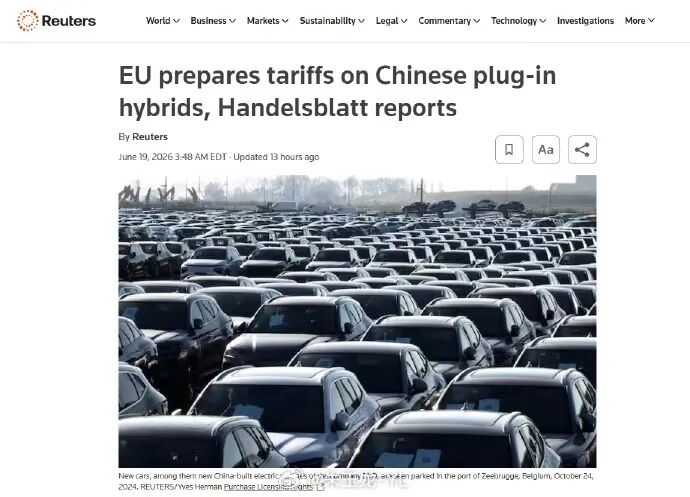
Unlike the previous controversy over BEV tariffs, which faced clear opposition from major automotive nations such as Germany and Hungary, the PHEV tariff plan has received tacit approval from Germany. This significantly reduces internal resistance within the EU and substantially increases the likelihood of implementation. In response to these rumors, EU officials have not yet made any public comments. However, considering the signals released at the recent EU summit, it is clear that the bloc has made "balancing trade imbalances with China, reducing supply chain dependencies, and curbing so-called overcapacity" core components of its economic and trade agenda. The PHEV tariff hike represents a key part of a series of trade protection measures.
The primary reason for this policy shift is that after tariffs were imposed on BEVs, Chinese automakers pivoted to exporting PHEVs.
In October 2024, the EU formally implemented a five-year final anti-subsidy tariff on Chinese BEVs. Combined with the existing 10% base tariff, the comprehensive tariff on Chinese BEV models exported to Europe reached nearly 48%, leading to a significant decline in BEV exports. Public data from industry institutions Dataforce and Rho Motion reveals that in the first quarter of 2025, China exported 115,000 BEVs to the EU, a sharp year-on-year decline of 21%, effectively blocking the pathway for BEVs to enter the European market.
Against this backdrop, domestic automakers swiftly adjusted their overseas strategies. They leveraged the policy advantage that PHEV models are only subject to the EU's 10% base tariff without additional punitive duties, to export PHEV products to the European market. Preliminary data released by market analysis firm Dataforce shows that in the first quarter of 2025, Chinese automobile sales in the European market reached 148,000 units, a year-on-year increase of 78%, with market share jumping from 2.5% in the same period last year to 4.5%. Among these, sales of PHEV models surged by 368% year-on-year, becoming the core driver of growth.
Data indicates that in 2025, the European market sold 13.3 million vehicles, a year-on-year increase of 2.3%. Full-year sales of BEVs grew by 30% year-on-year, while PHEV models increased by 34%. Chinese automakers sold 811,000 vehicles in the European market, a year-on-year increase of 99%, capturing a 6.1% market share, up from 3.1% in 2024. Additionally, data shows that in 2025, China's hybrid vehicle exports to the EU skyrocketed by 155% year-on-year.
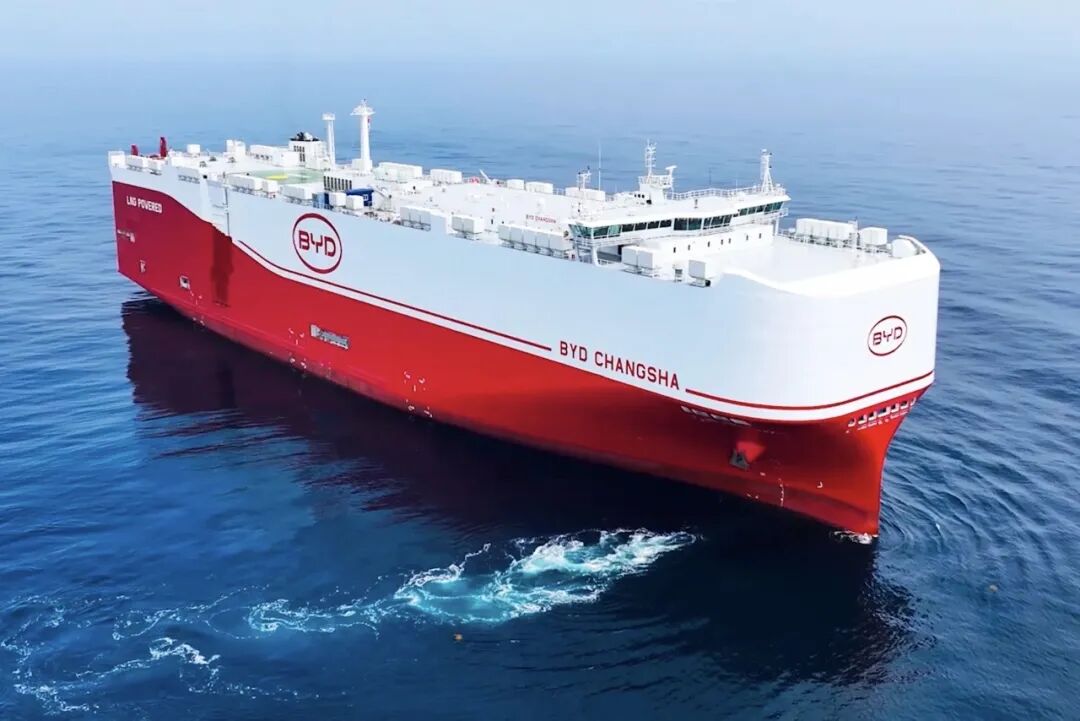
Of course, in addition to tariff factors, the relatively low base of PHEV models in the European market in the past was also one of the reasons for the rapid year-on-year growth in sales. On the other hand, major European automakers (such as BMW and Mercedes-Benz) have limited presence in the PHEV sector, creating opportunities for Chinese brands. Chinese automakers seized these opportunities and quickly captured market share with cost-effective products.
Once the tariffs are implemented, the price advantage of Chinese PHEV models will vanish entirely, significantly reducing the cost-effectiveness of exports. In the short term, export growth will rapidly cool, and the market gains previously achieved through PHEVs in Europe will face comprehensive pressure. For small and medium-sized automakers without local production capacity in Europe, their overseas business in Europe may stall temporarily. In the long term, the policy will have a significant forcing effect, accelerating two major transformation directions for domestic automakers: first, speeding up the establishment of local factories in Europe for localized production to circumvent tariff barriers; second, adjusting the product mix for overseas markets, focusing on high-end differentiated models to move away from low-price competitiveness and enhance product premium capabilities.
Exports represent the hope for growth among domestic automakers this year. In May 2026, passenger vehicle retail sales declined by 22%, significantly lower than the 5% decline in wholesale sales (which includes export data), creating a pattern of domestic weakness and overseas strength. In terms of exports, explosive growth occurred, with new energy vehicles accounting for 54% of exports (a record high). Driven by both new energy and independent brands, "going global" has become the core growth engine. Many automakers have prioritized exports as a key breakthrough area this year.
In the European market, despite the presence of many major automakers, Chinese brands have still achieved commendable performance. From January to April 2026, the top three Chinese automakers in European sales were MG, BYD, and Chery, with sales volumes of 97,444, 91,325, and 89,059 units, respectively. The fastest-growing, Leapmotor, also achieved sales of over 30,000 units from January to April 2026. Additionally, brands like Xpeng have shown strong growth in Europe. If the PHEV market faces obstacles, this will have a certain impact on the export market.
-
![]()
When AI Dominates 618, Is Human Live Streaming the Ultimate Challenge?
-
![]()
Behind SpaceX's IPO: Musk, Boasting a Trillion-Dollar Net Worth, Still Grapples with a Severe 'Cash Crunch'
-
![]()
【OFweek Weike Cup】CASTECH Nominated for 2026 Optics Industry Outstanding Component Supplier
-
![]()
【OFweek Weike Cup】Accelink Technologies Competes for 2026 Outstanding Optical Component Supplier in Optical Industry
-
![]()
A Leading Computing Power Provider Secures 1.5 Billion Yuan in Private Placement, Expands Smart Computing Center to 12,000 Racks
-
![]()
【OFweek Weike Cup】Sundek Officially Enters for the 2026 Outstanding Contribution Award for Optical Industry Application Solutions
-
![]()
Geely's Three Strategic Cards for Future Layout Unveiled at Hong Kong Auto Show
-
![]()
GAC Toyota’s Sales Boom: Forging Vehicles with Enduring Value for the Long Haul