Caocao Mobility (2643.HK) Launches RoboX Strategy: Taking Hong Kong as the First Stop to Build a Global Intelligent Transportation Network
 06/23 2026
 435
435
Over the past few years, large language models have enabled AI to transition from 'capable of chatting' to 'capable of thinking.' As model capabilities continue to improve, industry focus has gradually shifted from the digital world to the real world. It has become a consensus in the industry that AI will increasingly participate in task execution and service delivery. Whether it is human mobility, goods delivery, or service fulfillment, they all essentially require real-world mobility capabilities as support.
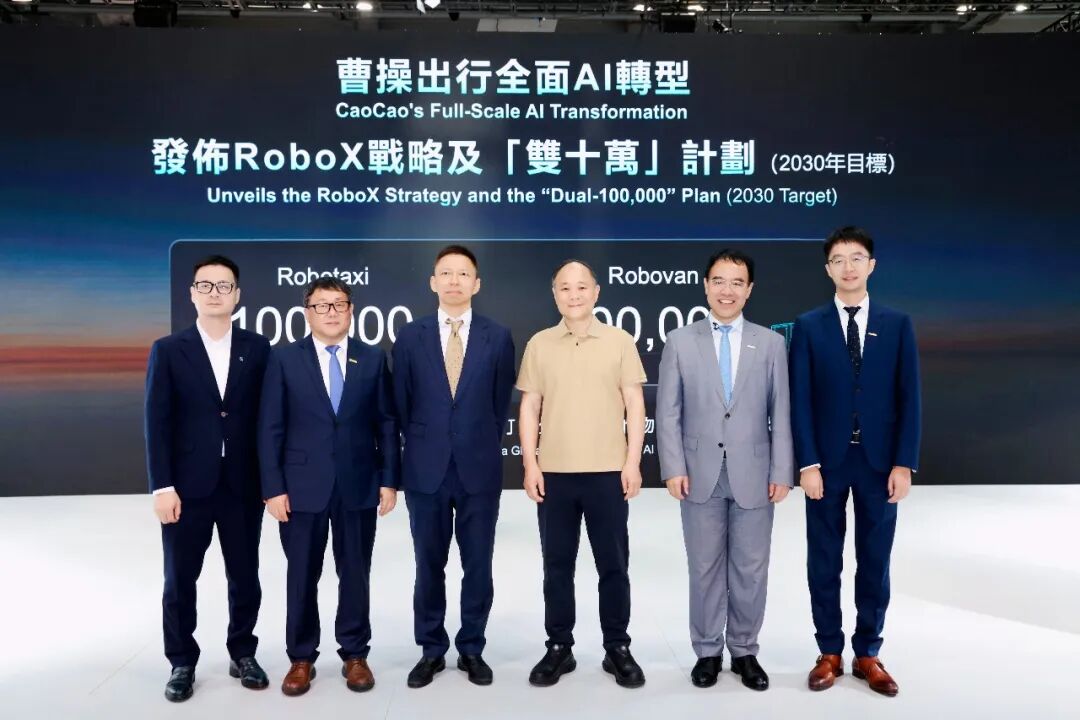
Against this backdrop, Caocao Mobility officially announced its comprehensive AI transformation at the 2026 Hong Kong International Automotive and Supply Chain Expo and launched the RoboX Strategy, aiming to create a globally leading physical AI mobility technology platform. It proposed the 'Double 100,000 Plan,' targeting the cumulative deployment of 100,000 Robotaxis and 100,000 Robovans by 2030.
From a strategic perspective, RoboX aims not just to create a single autonomous driving service but to encompass diverse application scenarios such as Robotaxi, Robovan, Robobus, and Robotruck. Behind these lies an intelligent transportation network covering passenger flow, logistics, and service flow.
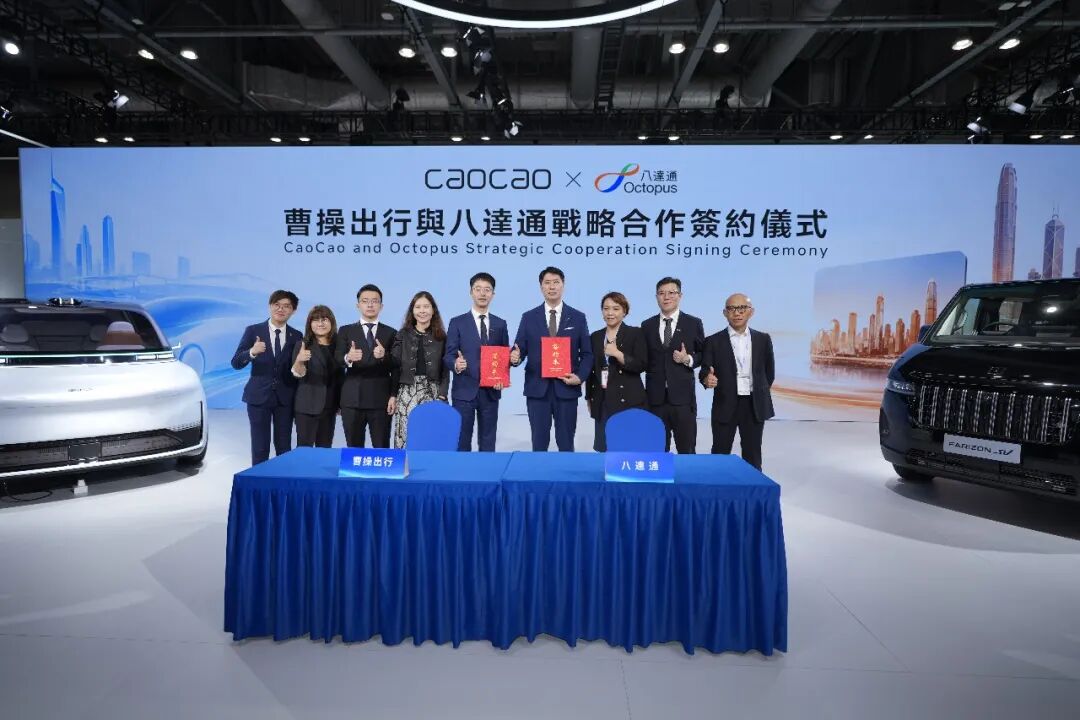
Meanwhile, the company announced that Hong Kong would be the first stop in RoboX's international expansion and reached a strategic cooperation agreement with Octopus, marking the strategy's transition from planning to actual implementation.
In other words, the RoboX Strategy represents Caocao Mobility's attempt to transform from a shared mobility platform to an operator of mobility infrastructure in the Physical AI era. This may also be an important starting point for the market to reevaluate its long-term value.
I. Trinity Capability System: Building Mobility Infrastructure for the Physical AI Era
From a global industry development perspective on autonomous driving commercialization, Waymo has validated the feasibility of autonomous driving technology, while Tesla explores the path to scaling (scalable) deployment. What Caocao Mobility seeks to answer is a question closer to the industry's endgame: how to build an intelligent transportation network covering passenger flow, logistics, and service flow.
Centered around the RoboX Strategy, Caocao Mobility proposed the 'Double 100,000 Plan,' targeting the cumulative deployment of 100,000 Robotaxis and 100,000 Robovans by 2030. The key to achieving this lies in Caocao Mobility being the most important commercialization vehicle for Geely Holding Group's RoboX. With over a decade of operational experience, it has formed a trinity capability system of 'intelligent custom vehicles, intelligent driving technology, and intelligent operations,' along with industrial synergy capabilities enabled by the Geely ecosystem.
First is intelligent custom vehicles.
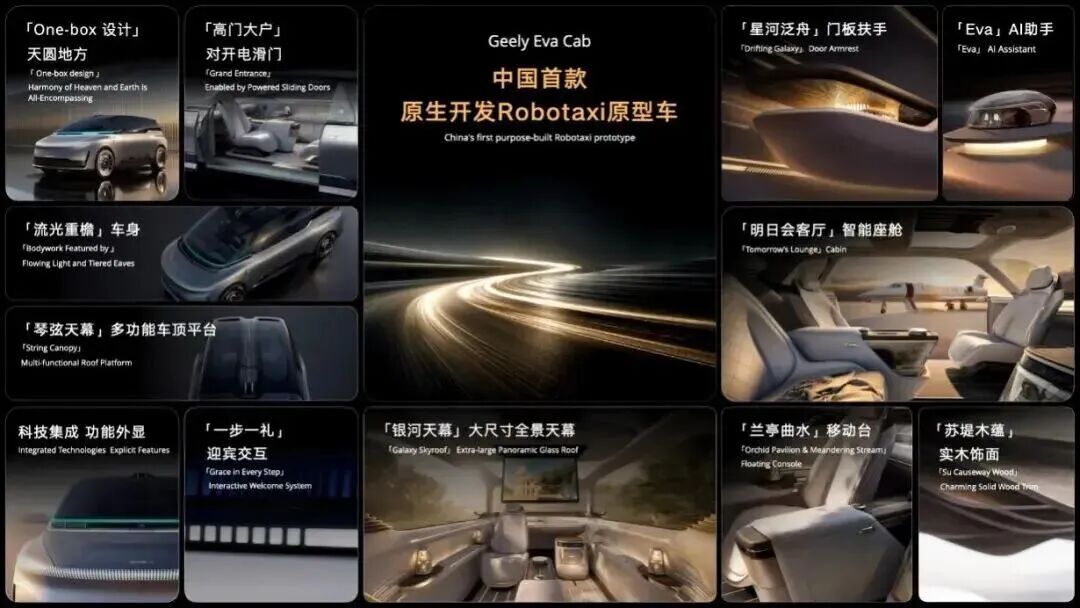
Relying on the numerous manufacturing resources under Geely Holding Group, Caocao Mobility can deeply participate in the research and development of autonomous vehicles. The Eva Cab showcased at this Hong Kong Auto Show is a representative example of this capability.
As China's first native Robotaxi prototype, the Eva Cab incorporates multiple safety redundancies in steering, braking, power supply, and computing platforms from the design stage. It features sensor self-cleaning and dual-redundant drive-by-wire systems, eliminating hidden failures from retrofit solutions at the physical level.
The Eva Cab integrates Caocao Mobility's over a decade of operational experience, featuring no steering wheel, no driver's seat, an opposing cabin layout, and supporting 60-second rapid battery swapping. From its underlying architecture to detailed design, everything is developed specifically for autonomous driving operation scenarios, giving it stronger commercialization capabilities. According to the plan, this model will enter mass production in 2027.
At this Hong Kong Auto Show, Caocao Mobility also announced a strategic cooperation agreement with Geely Remote Commercial Vehicles. The two sides will deeply collaborate on the new energy commercial vehicle system and jointly promote the scalable application of Robovan models such as the Shentong T6. It is foreseeable that this product will, together with the Eva Cab, form an important carrier for Caocao Mobility's future RoboX scalable deployment.
Second is intelligent driving technology.
Leveraging Geely Holding Group's advantages, such as its Geespace satellite network and Qianli Haohan intelligent driving system, combined with Caocao Mobility's unique rich mobility scenarios and massive data, it can rapidly drive the iteration and commercialization of intelligent driving technology.
In the future, Caocao Mobility will focus on L4 autonomous driving, continuously improving safety, operational efficiency, and cost competitiveness in passenger and freight scenarios, providing technical support for the large-scale operation of autonomous transportation networks.
Finally is intelligent operations.
Compared to most autonomous driving companies still focused on technological R&D, Caocao Mobility's greatest advantage lies in its long-accumulated operational capabilities. By the end of 2025, Caocao Mobility's business had covered 195 cities across China, with 41.3 million monthly active users and 631,000 monthly active drivers. It operated over 38,000 custom vehicles in 31 cities. The company has established a full lifecycle management system covering vehicle procurement, insurance, maintenance, and residual value management, supporting refined cost control and commercialization validation.
Under the RoboX Strategy, the company has developed its proprietary Caocao Robo OS, integrating the entire process from 'demand understanding—supply-demand matching—fulfillment services.' Combined with green intelligent transit hubs and battery swapping networks, it achieves unified management and scheduling of autonomous transportation resources. Robo OS will also support the integration and collaboration of AI agents, enabling AI to truly possess execution capabilities connecting the digital and physical worlds.
Moreover, to drive comprehensive AI transformation, Caocao Mobility has also made significant efforts in organizational and talent management: In the first half of this year, it advanced strategic focus, continuously optimized its business structure, proactively contracted non-core businesses, restructured its organization around AI, increased talent and resource investment in autonomous driving, AI operation systems, and intelligent transportation networks, and promoted the deep integration of AI capabilities into product R&D, operational management, and business systems, accelerating its transformation into an AI-native company.
II. Hong Kong Model Implementation: Opening the Path for Global Replication of RoboX
Choosing Hong Kong as the launch site and first implementation location for the RoboX Strategy holds significant meaning for Caocao Mobility.
As a leading digital payment and lifestyle service platform in Hong Kong, Octopus has not only introduced electronic payment services for taxis in recent years but also launched the local mobility platform 'Call Car Easy ,' covering various lifestyle scenarios such as transportation, retail, dining, membership benefits, and tourism.
The cooperation between the two sides will not only optimize current mobility services but also deeply explore next-generation intelligent mobility services such as Robotaxi, jointly promoting the commercialization of autonomous driving in Hong Kong.
For Caocao Mobility, the strategic cooperation with Octopus means gaining not just a payment interface but a local ecological partner already equipped with mobility scenario foundations and user access points. By conducting autonomous transportation business in Hong Kong, Caocao Mobility can continuously accumulate road condition data, user behavior data, and operational data in complex urban environments. More importantly, it can validate cost models, operational efficiency, and profitability models in real commercial environments.
As operational experience accumulates, Hong Kong is expected to become a standard model for RoboX's global expansion and form a standardized operational system covering vehicle management, transportation scheduling, user services, and commercial monetization.
In the future, the company aims to use Hong Kong as a starting point to replicate its validated operational model to international markets such as Southeast Asia, gradually building a global autonomous transportation network.
III. Post-RoboX Strategy Implementation: Caocao Mobility to Be Redefined by the Market
From a capital market perspective, the greatest significance of Caocao Mobility's RoboX Strategy may not just be the addition of Robotaxi or Robovan businesses but the opening of entirely new growth space beyond the traditional mobility platform valuation framework.
In 2025, Caocao Mobility achieved RMB 20.2 billion in revenue, a year-on-year increase of 38%; its gross margin improved from 8.1% to 9.4%; its net loss narrowed by 50.8% year-on-year; and its net cash from operating activities increased by 60.3% year-on-year, achieving positive adjusted net profit for the first time in the fourth quarter of 2025, indicating that its core business is gradually moving toward high-quality growth. Continuous improvements in operational efficiency and profitability provide a solid foundation for its AI transformation and RoboX Strategy.
Since Caocao Mobility began releasing information on its comprehensive AI transformation, RoboX Strategy, and Hong Kong international expansion, market attention has gradually shifted. Over the past month, its stock price has risen by more than 50%.
From a global capital market perspective, Uber's current market value exceeds US$100 billion, reflecting the value of a global mobility platform; Tesla's market value has long been maintained at the trillion-dollar level, incorporating market expectations for intelligent transportation networks and AI platforms; even Waymo, which has not yet gone public independently, was valued at US$126 billion earlier this year, reflecting capital market recognition of future intelligent transportation infrastructure.
As the RoboX Strategy continues to advance, the Hong Kong model is successfully validated, and overseas replication capabilities gradually form, Caocao Mobility's overall valuation is expected to surpass that of a single-business company. By then, market focus will shift from order volume and market share to the long-term value brought by the scale of the transportation network, operational efficiency, and platform synergy capabilities.
Meanwhile, the company announced a RMB 200 million share repurchase program. Initiating repurchases while continuing to advance the RoboX Strategy and international expansion reflects management's confidence in the company's long-term development prospects and current valuation levels.
From a shared mobility platform to mobility infrastructure in the Physical AI era, the RoboX Strategy outlined by Caocao Mobility represents not just a new business layout but a strategic positioning for future transportation forms.
-
![]()
Over 50% of Revenue Hinges on Yutong Optics! This Optical Equipment Manufacturer is Charging Towards an IPO
-
![]()
YOCO Optics Finalizes Industrial and Commercial Registration Update Post 160 Million Yuan Investment in Jiangfeng Biology, Securing 20% Stake to Emerge as Second-Largest Shareholder!
-
![]()
Google Market Value Plummets by $1.5 Trillion Overnight Following the Loss of Two Key Figures
-
![]()
Put an End to the EV 'Weight Gain Race'! Can Your Car Still Be Driven Under the New National Standards?
-
![]()
In 2026, 'AI Upstarts' Collectively Bet on World Models
-
![]()
【OFweek Weike Cup】Phoenix Optics Officially Participates in the 2026 Optical Industry Annual Innovation Product Award
-
![]()
Ford Ditches Mach-E: Will Its Billion-Dollar Electrification Drive Have to Start All Over Again?
-
![]()
【OFweek Weike Cup】Shuangli Hepu Officially Participates in the 2026 High-Growth Enterprise Award in the Optical Industry